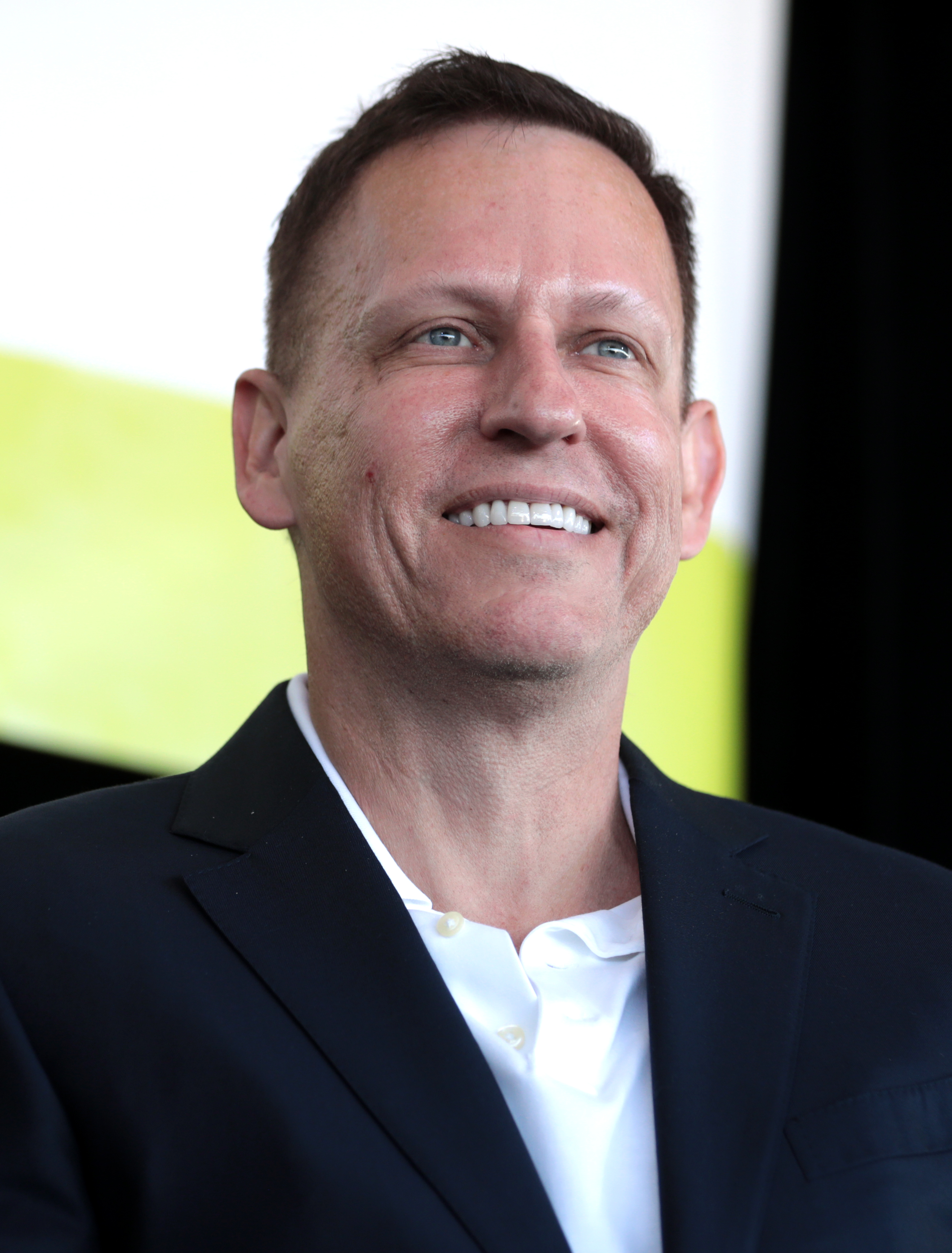
Peter Thiel
German-American entrepreneur and former CEO of PayPal
11
APPEARANCES
6
PODCASTS
Sep 24, 2026


Mathias DöpfnerHOST
Um, 10 years later, uh, how would you analyze his, uh, achievements? How would you analyze his failures? Uh, where do you stand today with regard to the last two years and then the first term of the president?

Peter ThielGUEST
Um, man, my, my, my facile answer is you should ask me in 10 years or so, and, uh, we'll, we'll see in 10 years how to, how it all works out.
Peter ThielGUEST
Uh, I still think, um, that, uh, it, it's, in, in many ways, uh, it reflected a failure of the, um, of the establishment to deal with these long-term problems the US had, with these growth problems, with, um, you know, some of the challenges of globalization, um, you know, with, um, you know, with the endless entanglements the US had in the Middle East that ha-had not really worked all that well.
Peter ThielGUEST
Uh, and, uh, and then, and then of course, uh, there, you know, there are all these, all these things that, uh, you know, you wish they'd have appointed more competent people.
Peter ThielGUEST
You know, the, um, the, I think the, the two administrations kind of made opposite mistakes.
Peter ThielGUEST
You know, the first administration, um, brought in all these people who couldn't agree, and it was just all this internal fighting.
14 MINS LATER
Unknown podcast
Peter Thiel and Jordan Peterson, “This Shifts The Metagame Entirely” ~ Jordan B Peterson
Aug 31 · 9m
Peter ThielGUEST
And I think the Girardian, and I would say Christian, intuition is that it happens much sooner and in a much more representative way than you have to, than you think.
Peter ThielGUEST
I don't know if I would anchor it as much on sacrifice, though, as the key feature.
Peter ThielGUEST
And again, this is one of the places where Girard argued that Christianity was, in Girard's telling, is anti-sacrificial.
Unknown podcast
Ep.325 ~ Everyone Misunderstands This Crucial Bible Story ~ Jordan B Peterson
Jul 28 · 6m
Peter ThielGUEST
It, it's again, you can think it's like an abstract thing, but maybe it's, maybe it's again, we should always think more concretely, and the concrete question I would have is, is there a faith of a child that's being highlighted as, um, especially noteworthy and worthy of, of, um, emulation? And I, I think there is in fact one child whose faith gets described in, uh, the Old Testament, um, and we never seem to talk about it.
Peter ThielGUEST
Um, and it's Isaac, because, um, as they're g- as they're going up the mountain, you know-
Unknown podcast
Ep.230 ~ Peter Thiel REJECTS Sacrifice - Watch Him Debate Jordan Peterson ~ Jordan B Peterson
Jul 18 · 26m
Peter ThielGUEST
And then, yeah, you can say it is a sacrifice of others versus the sacrifice of self.
Peter ThielGUEST
You could say that, but you could say the way Girard would put the stress would be that you refused, it's not there was some virtue in Christ sacrificing himself.
Peter ThielGUEST
He's not like some, I don't know, some sort of silly hero saying, you know, please let the lions come and eat me up or something like that.
14 MINS LATER
Unknown podcast
Ep.186 ~ “Outright Decline” — Peter Thiel Warns About the Coming Inflection Point ~ Jordan B Peterson
Jul 13 · 15m

Jordan PetersonHOST
And so how do you conceptualize quantifying progress, scientific and technological, and why are you skeptical about the benefits or the rate? Well,
Peter ThielGUEST
there are variations of this that I've talked about for close to two decades at this point.
Peter ThielGUEST
So how do we compare progress in AI with, let's say, lack of progress in dementia research, curing Alzheimer's? And so all these different complicated ways of how you weight all these different things.
Peter ThielGUEST
But there was a sense that the West, the Western world, was in this fast era of scientific technological progress where it was advancing on many, many different fronts.
Peter ThielGUEST
And in some ways, it started picking up in the Renaissance, early Enlightenment, 17th, 18th centuries, and then probably in important ways accelerated in the 19th, first half of the 20th.
Peter ThielGUEST
And then in some ways, I believe it's slowed down over the last 50 or so years, maybe 1970 or so is an inflection point one could cite.
Unknown podcast
Ep.105 ~ Peter Thiel and Jordan Peterson, “This Shifts The Metagame Entirely” ~ Jordan B Peterson
Jul 5 · 9m
Peter ThielGUEST
And I think the Girardian, and I would say Christian, intuition is that it happens much sooner and in a much more representative way than you have to, than you think.
Peter ThielGUEST
I don't know if I would anchor it as much on sacrifice though, as the key feature.
Peter ThielGUEST
And again, this is one of the places where Girard argued that it's Christianity was, in Girard's telling, is anti-sacrificial.


Peter ThielGUEST
But the first step is we need to come clean, we need to, um, have some accountability for, for what happened.
Peter ThielGUEST
And so I want, yeah, I, I want us, I don't wanna, I don't want us to have lots of arrests, I don't want lots of people to just get prosecuted, uh, but I do think we need to have a lot more transparency into what exactly was going on in the sausage-making factory.
Peter ThielGUEST
And, uh, my suspicion is that, um, that that sort of transparency will very much discourage a repeat of this behavior.
Peter ThielGUEST
Um, but I also suspect, you know, it was really out of control in, in, you know, the recent past.


Peter ThielGUEST
It wasn't zero, but from 1750 to 1970, 200-plus years were periods of accelerating change where we're, you know, relentlessly, we're moving faster.
41 MINS LATER

Peter ThielGUEST
It wasn't zero, but from 1750 to 1970, 200-plus years were periods of accelerating change, where we're, you know, relentlessly, we're moving faster.
41 MINS LATER

speaker_2UNKNOWN
Mm-hmm, mm-hmm.
Peter ThielGUEST
And then, you know, he- he started by, yeah, it was not just the abstract replication crisis, he started by talking about naming people, and yeah, this- this person has stole money and this person is- is a fraud, and, uh, I'm- I mean, I don't even need to tell you how that movie ended.
Peter ThielGUEST
And then my hermeneutic of suspicion is if you have an idea like stagnation in science which immediately gets, um, gets you deplatformed, that's an idea we should take very seriously.
Peter ThielGUEST
So I have- I have a few of these different ideas that, uh, we've- we've been a lot more stuck.
speaker_3ADVERTISER
That's E-X-P-R-E-S-S vpn.com/jordan to get four extra months for free.

Dave RubinHOST
So you think, so you think it's possible if you had had a leading position at one of these companies that the pressures would have been different on you and perhaps you're-
Peter ThielGUEST
Oh, I think they, I think they would have been, I think they would have been extraordinary. And, um, there was... Yeah, it's, it's always... There's always sort of a question, you know, why was Silicon Val- why were the big tech companies so liberal, so, so left-wing? And, um, one, one version was you always sort of say is, well, it's because of, you know, it's because of the, you know, it's the, it's the CEOs are sort of these woke billionaire types or Communist billionaires or something weird like that. Um, and then there's, you know, maybe it was the snowflake millennial workforce, sort of this bottom-up pressure. But I think, I think the factor that was much bigger than those two was this top-down governmental regulatory pressure, and, uh, you know, if, if you're a big company, there's a lot of surface area, there's a lot of areas where, um, you're in, possibly regulated, you're in a regulatory gray zone of sorts. Maybe it's especially true if you're doing some kind of new technology where people don't quite know what, what should be done with it. And so there was an incredible, um, amount of pressure that came from the government. Um, it tended to come m- much more from the left than the right on these companies. And, uh, and, uh, yeah, it, it, it felt very, very dangerous to, to go too much against that, I think.
40 MINS LATER
Peter ThielGUEST
Because the fact that it's so hard to evaluate the string theorists means we should be especially skeptical of it, and this is sort of a, yeah, so there's this hyper-specialization feature of, of late modernity. There are probably, um, there are probably ways that the peer review process, you know, was used for so much of the evaluation of what got published and what got funded, and this was, you know, this was, um, not necessarily a process that worked that well. It, uh, it led to consensus, uh, and then if the consensus was wrong, or y- y- you, maybe you just funded very boring things, things that were very incremental. Um, so yeah, I think there are maybe a lot of different reasons that, uh, that it's sort of, you know, developed in this way, but, uh, but, yeah, the, the sweeping, the sweeping claim I would make is, uh, we should be skeptical of the scientific enterprise in its totality. Almost all of it is, um, is way exaggerated, it's... and, um, and then, and this, this would be, um, the, the, the really tough critique of universities. You know, there's a sort of debating point. There's always, I think there always are two different ways you can go after an opponent in an argument or something. You go after the opponent... or in a, in a military campaign or whatever, you go after your opponent at the weakest point, you're most likely to score at least, you know, a tactical win.