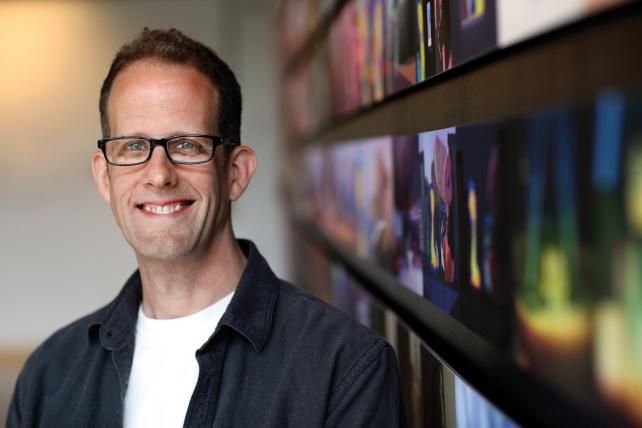
Pete Docter
American filmmaker and animator
7
APPEARANCES
6
PODCASTS
Oct 5, 2026


Pete DocterGUEST
I still have to have performance and timing, but like one of the heavy lifts has been done by the computer, and maybe there's some other tasks with that, like I have to understand how the system works and, you know.
Pete DocterGUEST
But I, I almost, I was wondering whether AI will continue to help us lift some of the heavy burdens that we have to carry as an animator, and maybe put the focus more on the performance.
34 MINS LATER

Mike BirbigliaHOST
Um, can you think of a scene or a moment in your life that you realize in, in retrospect changed your life?

Pete DocterGUEST
You know what I mean? It's just, uh, I think that's an essential part of the creative process, that you're, you're discovering this thing.
Pete DocterGUEST
If you knew exactly what you wanted from the beginning, for one, I don't think it would be very good, but it w- wouldn't be very interesting.
31 MINS LATER
Pete DocterGUEST
look at it and go like, all right, what... did we do on that movie that we never want to do again? What do we learn? And I keep thinking in the back of my head, like, it's always going to be broken.
Pete DocterGUEST
I mean, I guess the wisdom is like, let's learn from this so we don't make that mistake.
Pete DocterGUEST
Yeah, I mean, I did have an idea that somewhere out there was the perfect director and that's what I wanted to become.

Pete DocterGUEST
We initially thought we want to write it ourselves, but Disney said, "No, no, no, no.
Pete DocterGUEST
You guys have never written before." So they signed us on with two other writers who were very...
Pete DocterGUEST
They just didn't have the same vision for the film.That we wanted, and so that was a struggle.
Pete DocterGUEST
And then we would go to Disney, we'd show them stuff, and they would give us advice, and we took it very literally sometimes.
Pete DocterGUEST
And all of this drove us to a place where they basically said, "This film is not working.
33 MINS LATER

Steve LevittHOST
The math and the science underlying the animation techniques, could you talk about that a little bit?


Jake HumphreyHOST
So can you take us back to those early days of Pixar? You know, what was the animation industry like leading up to 1995 and the release of Toy Story?
Pete DocterGUEST
Yeah, it was at a time when animation, at least in my sphere, had been very, maybe marginalized is the wrong word, but there were traditions that, you know, everyone was a musical.
Pete DocterGUEST
Let's explore stories that are set in our world, but maybe, you know, from a different perspective.


Simon MayoHOST
Can you explain what differences those technologies are making and the exciting ones for the future?
Pete DocterGUEST
I think in very basic terms, people assume animation is drawn, you know, and it was for, for, you know, hundreds, well, dozens of years.
Pete DocterGUEST
Um, what we do is more like building them as little puppets, but in the computer.
Pete DocterGUEST
RenderMan is the software that makes a surface look reflective or matte or shiny or whatever kind of thing or, or color you assign and so on, textures.
Pete DocterGUEST
Um, the movement is all done in this, um, software called Marionette, which again, it's a little bit like stop motion where it's easier for people to understand if there's a puppet, and I know it's gonna be here on frame 37, and 38 it's gonna be here, 39.
Pete DocterGUEST
Every frame's just a little different, which is, of course, what creates the illusion of movement.
10 MINS LATER
Simon MayoHOST
Does that feel as though it's changed now, the political landscape that you're operating in?


Brendan VaughanHOST
So thoughts on these comparisons? Like, what do you think when you read that? How do you all intend to use AI in your process? Well, I mean, it's flattering
Pete DocterGUEST
I mean, we've been using AI in various ways for, I don't know, almost 10 years and continuing.
Pete DocterGUEST
What are those ways, if I can ask? Well, the most basic one that we've been at the longest, to render a frame of film, a single frame, and there's 24 of those every second, it can take like 30, 40 hours.
9 MINS LATER