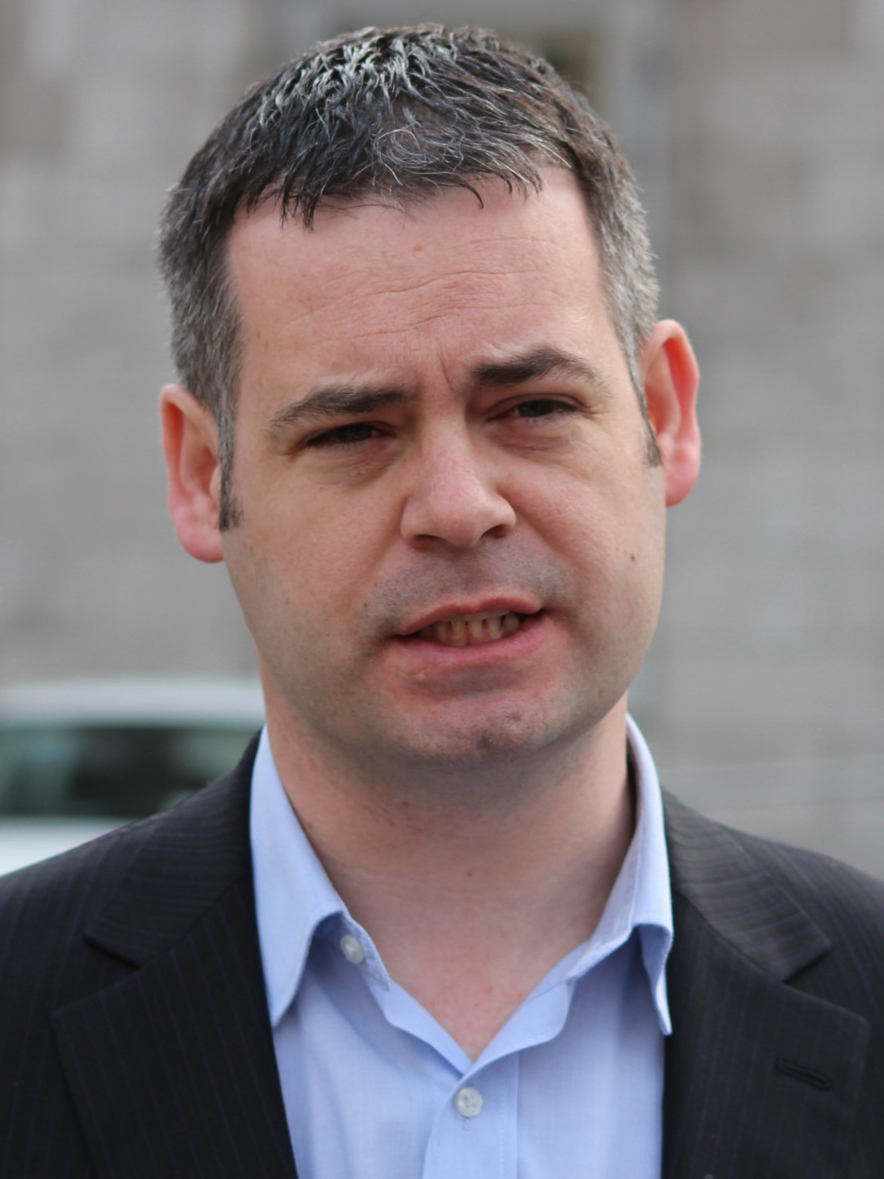
Pearse Doherty
Teachta Dála of Ireland
27
APPEARANCES
13
PODCASTS
Oct 20, 2026


Greg HughesHOST
So that's really the difference between today and the previous 26, 27 years, really, isn't it?
Greg HughesHOST
Uh, you don't believe they've done a good job in either selling it or actually, you know, what they've announced.

Pearse DohertyGUEST
You know, we've heard a lot of spin, uh, from government in relation to what this would mean, but the reality is that, um, for most workers out there, what they get is a €200 tax break, and, uh, that is gone before they get it.
Pearse DohertyGUEST
It's gone in the electricity increases that we see is rolling out this week for a mon- 100 hou- a hun- uh, a million households actually, uh, across the state that are gonna see their electricity go up by €300.
Pearse DohertyGUEST
You know, the groceries are going up, but fuel obviously going, is being charged at 2.20 in many pumps across the state.
6 MINS LATER

ClaireHOST
Won't it benefit those people to a certain extent?
Pearse DohertyGUEST
Claire, if you're, if you're earning 40,000 euro, and you're asked to pay your GP fees, or you're asked to, you know, pay your third level fees to put your child to college, you're asked to pay for higher pr- prices at, at the pumps and higher grocery bills, you are the squeezed middle.
Pearse DohertyGUEST
And what the department or what the minister has said very, very clearly, it's there in black and white in the budget tables, is they will benefit to the tune of about, I think it is 208 euro in terms of a tax reduction.
Pearse DohertyGUEST
That is an absolute insult, and it, it is testament to the fact that this government simply doesn't understand the pressures that families are under with rising costs.
Pearse DohertyGUEST
So what the best way and the fairest way to actually support those families in terms of tax cuts would've been abolishing the USC on the first 40,000 that every single earner in the state earns.
ClaireHOST
It's something you wanted, but wasn't the problem was that that was a very high cost and that everyone got it, including those that didn't need it?


Matt CooperHOST
But how much can a government do in a situation of global upheaval when you don't know what the price of things like oil and gas is likely to be over the next year?
Pearse DohertyGUEST
Yeah, there's absolutely no way that we can control the price of a barrel of oil and therefore what's being charged at the pumps.
Pearse DohertyGUEST
But what we can control is how much tax we apply to and the fact that Ireland charges some of the highest taxes in Europe on petrol, diesel, home heat and oil.
Pearse DohertyGUEST
I made the point to the Minister for Finance in response to the budget that for example, to deliver €10 a day childcare this month for all parents who need childcare in a childcare setting, we could actually fund that by just implementing the proposal that the Department of Finance put forward, which was that vulture funds in this city and elsewhere pay the same tax that companies pay on the rent roll, because at the minute they charge €3,000 for apartments in the city and more, and they don't pay a penny rent on that income.
Matt CooperHOST
But, Piers Stardy, when it comes to, say, the €10 pension increase, aren't there a range of other supports available to those pensioners who are in need, such as things like the fuel allowance?


Pearse DohertyGUEST
Yeah, the days of the budget not being announced before budget days is long, long gone.
Pearse DohertyGUEST
But look, what we're hearing is that I think the government still don't understand the really scale of the crisis.
Pearse DohertyGUEST
I think there's obviously, you know, we'll be bamboozled tomorrow with numbers and the government will try and dress it up.
Pearse DohertyGUEST
But the real question for people, and they'll be asking this question at home, Will this make their life easier? Will it make it easier for them to pay their bills, to pay their electricity bills, to put food on the table, to pay their rent? And the reality is, when you look at what we're hearing, which is, yes, there will be some cuts there in terms of tax, but it doesn't go far enough.
Pearse DohertyGUEST
interventions that we need and we've called for, the likes of the energy credits, the type of support that we wanted to see targeted at households to help them with their groceries, the supports that we needed for people that are renting in terms of doubling the renters tax credit and actually making sure that rents where increases were banned for the next number of years.

SarahHOST
Was there anything that you looked at and thought, "You know, we can't afford that"?
Pearse DohertyGUEST
There's many, um, proposals that would have to wait till, um, year two, year three, and year four.
Pearse DohertyGUEST
But I think, Sarah, what you're actually seeing here is you're seeing an alternative budget from Sinn Féin that reaches the, and matches the scale of the crisis that people are facing in their homes in, in terms of the cost-of-living crisis.
Pearse DohertyGUEST
We know from last year's budget that workers and families were left worse off.
Pearse DohertyGUEST
We've seen the struggles that people have gone through, and we've seen prices continue to rise, not just in terms of at the pumps, uh, with petrol and diesel and heating their homes, but also in terms of groceries, and that's why our budget is about making sure that we put workers and, uh, families first, and it's about meet- meeting the scale of, of that crisis.
SarahHOST
Yeah?


Jonathan HealyHOST
I'm presuming you'd welcome this as some form of a measure to help the hauliers and to help the consumers, but could more be done?
Pearse DohertyGUEST
Yesterday was the eighth opportunity that we've now brought forward legislation in relation to the cost of fuel and the need for it to be reduced.
Pearse DohertyGUEST
Now we are hearing... you know, in the media and the papers this morning that they're actually going to implement Sinn Féin's proposal that we've been proposing since March, which is to take away carbon tax from home heating oil, for example.
Jonathan HealyHOST
even if a decision is taken in the budget, is that going to be enough to help people? And even if they do offset the price of the carbon tax on home heating oil, it's still going to be prohibitively expensive for so many people right now as we head into winter.

Pearse DohertyGUEST
I think the reality is if the government doesn't act, if the government doesn't listen, if they don't really get it in terms of where people are at, of course people will take to the streets.
25 MINS LATER
Greg HughesHOST
start with petrol and diesel, Piers? What realistically, I mean the government has already done stuff, but what realistically could the government do, say even for over six months, what realistically could they do on petrol and diesel prices?
Pearse DohertyGUEST
Well, I think there's a starting point that people need to understand is that when the price of petrol goes up, when the price of diesel goes up or green diesel or home heat and oil, the government take in more money as a result of it because the government charge VAT on that.
Pearse DohertyGUEST
So every time it increases, And a quarter of that, nearly a quarter of that goes into the government's coffers.
Pearse DohertyGUEST
And we see from every month the revenue gives us the statistics of how much tax we're bringing in across different things.
Pearse DohertyGUEST
And on VAT, we're already over 300 million more than we expected to be at the end of August.
9 MINS LATER
Greg HughesHOST
Why isn't that person or why isn't that company or other companies taking some of this load? Why are we having to spend our own money when these companies are not only making record profits, but actually incentivising the people at the head of these organisations with massive amounts of money to actually even widen that profit gap?
speaker_0HOST
So how do you think this money should be spent?
Pearse DohertyGUEST
Well, I think, you know, when people listen to these results coming out yesterday and listen this morning, they're going to hear how their collective efforts have resulted in additional taxation beyond what the government expects.
Pearse DohertyGUEST
And remember, the government expected over €9 billion of a surplus this year, money that they're taking in that they won't spend.
speaker_0HOST
The corporation tax receipt, of course, is something that is we're constantly told all the different economic advisory bodies tell us that corporation tax receipts are unstable and that the government shouldn't be depending on them.

Pearse DohertyGUEST
Well, obviously, the pressure that came from the public, the demand that came from Sinn Féin to recall the Dáil and not go ahead with these increases has worked in so far as the Dáil has been recalled and September's increase and some of the October increase will not go ahead.
Pearse DohertyGUEST
And come the 14th of October, these increases start again, beginning with the carbon levy and then the 1st of November and then the 1st of December and then into January and February.
Pearse DohertyGUEST
until the government, the motion that they're passing in the Dáil is by the end of February, diesel will be up 34 cent and petrol will be up 29 cent.
Pearse DohertyGUEST
And let me be very clear, I've said this to the government, I've said this to the Taoiseach and the Tánaiste for numerous occasions now since March, there is no way that Sinn Féin will stand by and allow that to happen when these fuels prices are increased.


Alan CorcoranHOST
This is just a one-off, is it? And then you go back on, on leave again, am I sorry?
Pearse DohertyGUEST
It's, it's, it's, it's recalled for the, for the day, and it is only b- recalled, as we understand, for an hour.
Pearse DohertyGUEST
And, uh, you know, as, as your listeners will know, Sinn Féin has called for the recall of the Dáil.
Pearse DohertyGUEST
We've forced the government into this, including the public anger and the threat of further protests, and the government have been forced into an embarrassing situation where they've recalled the Dáil, um, in August.
Alan CorcoranHOST
But, uh, is there a point there being made that the government are already whining before they even stick to this?

Anton SavageHOST
realism in that though, Piers? Because presumably the fear from the government is if they don't promise a return or schedule a return, they'll never politically be in a position where they can return it because then it becomes an active decision made by government.
Pearse DohertyGUEST
First of all, the political realism has, if that's what they want to call it, has resulted in them in an unprecedented move, having to recall the Dáil in August, which is exactly what Sinn Féin pointed out, that this was a stroke they tried to get away with.
Pearse DohertyGUEST
They tried to ensure that the increases started when the Dáil wasn't sitting, when there was no political pressure, no leaders' questions, no ministerial questions, thought they would get away with the first increase.
Pearse DohertyGUEST
But Sinn Féin and indeed the public had a different view and that we weren't going to let them away in it because it's ordinary workers that would have had to carry this cost.
Pearse DohertyGUEST
The second thing is there is no way that 34 cents should be put on the price of diesel, whether it's now, whether it's next year, whether it's the year after.


Pearse DohertyGUEST
Yeah, we forced the government, let's be clear, in relation to recalling the Dáil.
Pearse DohertyGUEST
We told them back in July that the reason that they selected the 1st of September as the date that these taxes would go on petrol and diesel is exactly because the Dáil wasn't sitting.
Pearse DohertyGUEST
They thought the political pressure wouldn't build up because there's obviously no leaders' questions, no teachers' questions, no... ministerial questions and they thought they would get away with it.
Pearse DohertyGUEST
And now they're forced into a very embarrassing new claim, an unprecedented situation where it all has been recalled in August.

Pearse DohertyGUEST
And Melvin Benn, who I knew previously from, uh, the Saw Doctors era, um, Melvin asked me would I be site manager.
Pearse DohertyGUEST
So I took on the role of site manager from 2012 until 2017, and I left in 2017 to go working for Aiken Promotions then.
Pearse DohertyGUEST
Um, in 2020, I ended up working in Galway for the, uh, Capital of Culture, but then COVID kicked in, and I was kind of just farting around Galway.

Steven MillerHOST
But what do you think is sort of key to that? Because we've seen loads of other festivals come and go, but the Picnic is just, it's just unbelievable, and that, that it keeps coming back year on year.
Pearse DohertyGUEST
And we know how people felt after the budget last year, not just Sinn Féin saying this, but the ESRI making it clear that people were worse off last year compared to the year before as a result of what the government did.
Pearse DohertyGUEST
And to me, it's a government that really doesn't understand the pressures that people are under.
Pearse DohertyGUEST
I've seen your piece with Jack Chambers earlier on, and while people sitting at home might think that these numbers are big numbers when we're talking about billions, when you actually look at public sector pay, the cost just to stand still in our public sector, there is very little there for new services.
Pearse DohertyGUEST
And that means, what does that mean in reality? It means that the government are intentionally locking in a housing crisis for another year.
ClaireHOST
Are they gonna make up for that now?
Pearse DohertyGUEST
Well, look, the, the one point five billion euro tax package is the same that was in last year's summer economic statement.
Pearse DohertyGUEST
So, uh, you know, the idea that this is, uh, you know, somehow enormous compared to previous tax packages is just not the case.
Pearse DohertyGUEST
Uh, so let's look at how it will be divvied up and how it will be, uh, focused on.
Pearse DohertyGUEST
We're very clear that the best way to put money back into workers' pockets and allow them to keep some of their hard-earned money is to abolish the USC on the first forty-five thousand euro that everybody earns.
Pearse DohertyGUEST
Uh, that will put hundreds of euros back into people's pockets, and it is the fairest way as well of actually providing the type of tax cut.
ClaireHOST
Because it's certainly come into sharp focus, um, for the upcoming budget, with changes likely in this area.

Pearse DohertyGUEST
First of all, they only froze the increase that was supposed to happen in May for home heat and oil.
Pearse DohertyGUEST
And that is why, again, it's going to go up again in October, along with replacing all of the taxes that they've reduced by.
6 MINS LATER

Ciara KellyHOST
trying with the carbon tax to move people in that direction? How are you going to hit emissions if we don't have a carbon tax and there's no incentive or disincentive for people to change?
Greg HughesHOST
I mean, is there another country in the world, a civilised country in the world, where that would be allowed to happen?
Pearse DohertyGUEST
Yeah, like, you know, it's been normalised, unfortunately, for a lot of times.
Pearse DohertyGUEST
Like, you know, is it acceptable that posters of either myself or others are burnt on 12th of July? It doesn't really bother me, but, you know, personally, it wouldn't bother me.
Pearse DohertyGUEST
But what it does is it sends a signal that this type of hate, this type of intolerance is acceptable.
Pearse DohertyGUEST
And there is a wider issue here because, look, the people who build these bonfires and the people who end up putting these effigies up up on the bonfires.
Pearse DohertyGUEST
But, like, I've seen ones in the past where there's been people, you know, in nooses hanging from a bonfire.
7 MINS LATER
Greg HughesHOST
But do you want to respond directly just to that point, Piers, about elected representatives in the North doing more to raise funds to improve and address, as Niall, you can't be disputed, high levels of unemployment and great levels of disquiet?
Pearse DohertyGUEST
Um, what is reckless is, uh, making government decisions as of late, uh, today to actually increase the, um, the pressure on ordinary families at a time of real, real stress, and that's, that's what I really find that the government don't understand.
Pearse DohertyGUEST
Nobody's making that argument, but there has to come a point when you say, "What are yous doing here, folks? Why are yous putting up these tax every single year?" Like, you know, the government talks about, we know the war in Iran has brought on these prices, uh, spikes in the last, uh, couple of months, but the government themselves, before the war in Iran, has been increasing the price of petrol and diesel.
Pearse DohertyGUEST
That's why we're paying the highest taxes in Europe in relation to petrol and diesel, and it's not right, and they, they are not finished yet.
13 MINS LATER


Alan MorrisseyHOST
But if energy prices, Piers, continue to rise because of global events, how much can any Irish government realistically do to shield consumers, even if they were to introduce universal energy credits? You know, how long a period would that be for? And would there be any guarantee that, you know, if the US and Iran, this peace deal fails and they return to war, that that doesn't go on for another six months, a year, 18 months, two, three years, how long does the government continue to dish out energy credits if that was a route they were to go down?
Pearse DohertyGUEST
Well, first of all, we're very clear that energy credits has to be an emergency response.
Pearse DohertyGUEST
It is the long-term solution that has to deal with it so that you actually try to insulate people from whatever external factors that will take place.
Pearse DohertyGUEST
And the best way that you insulate people is actually driving our own energy independence agenda.
Pearse DohertyGUEST
And we've argued for many, many years that That, like, for example, the green hydrogen and all of that there, that the potential that is there off our coast needs to be really, really accelerated.
Pearse DohertyGUEST
I think it's about five years ago, Alan, that we brought forward legislation before the Dáil in relation to this year.
Pearse DohertyGUEST
So there are things, as I said, that government can do with the proper foresight.
6 MINS LATER
Alan MorrisseyHOST
Is there a risk that the proposals you're putting forward could have that effect?
SarahHOST
What do you think of that?
Pearse DohertyGUEST
Well, first of all, I think the assault is absolutely appalling and people are horrified at what they've seen on their mobile phones and on their screens in terms of what happened in North Belfast.
Pearse DohertyGUEST
Also appalling is the absolutely racist attacks that have been happening over the last two nights and they have to stop and we need to see.
Pearse DohertyGUEST
We know it's isolated to predominantly loyalist areas, but the scenes that we're seeing where masked men are going door to door looking to see the colour of somebody's skin is reminiscent of what happened in the late 60s when the same communities were going looking to see if people were Irish or Catholic and burning them out of their homes.
Pearse DohertyGUEST
It is simply unacceptable and we shouldn't be looking and witnessing those scenes In terms of cooperation, Sarah, we have been raising this issue for so many years now in terms of the government.
Pearse DohertyGUEST
Indeed, just yesterday again and this week we have been raising this with the Taoiseach in terms of the need for a bilateral arrangement with the British government in terms of migration.
SarahHOST
Is it Sinn Féin's position then that we should move to limit data centre growth because we're told by Peter Burke's department that actually data centres are contributing significantly to jobs here?

Pearse DohertyGUEST
you know, with respect to whatever the mail wants to write, we know exactly where we stand.
Pearse DohertyGUEST
We stand behind working people, supporting working people left, right and centre.
Pearse DohertyGUEST
When we were bringing forward like supports to actually reduce the issue of like the taxation on petrol and diesel and home heat and oil, we weren't getting the support from the Labour Party.
6 MINS LATER

Neil PrendevilleHOST
There are so many things wrong now that if there were an election in the morning, you should waltz into power, but you probably wouldn't.
SarahHOST
Why do you want to give them money?
Pearse DohertyGUEST
First of all, because Alan Dillon talked about the budget last year that he did.
Pearse DohertyGUEST
What they did last year in the middle of the cost of living crisis is they actually withdrew the energy credits.
Pearse DohertyGUEST
And that's why now we're seeing more people falling into rears, more people under pressure and the government still failing to act.
Pearse DohertyGUEST
We have argued for years now, Sarah, that the government needs to develop a system where the Department of Social Protection and the CRU allow for targeted measures in terms of energy credits.
SarahHOST
would, sorry?
Pearse DohertyGUEST
They were farmers, they were hauliers, they were business people, they were small transport operators.
Pearse DohertyGUEST
They were also just fathers and mothers who simply are pushed to the pin of their collar.
Anton SavageHOST
But you must admit that the large bulk of it is over and most of them have now gone home.
Scroll for more appearances