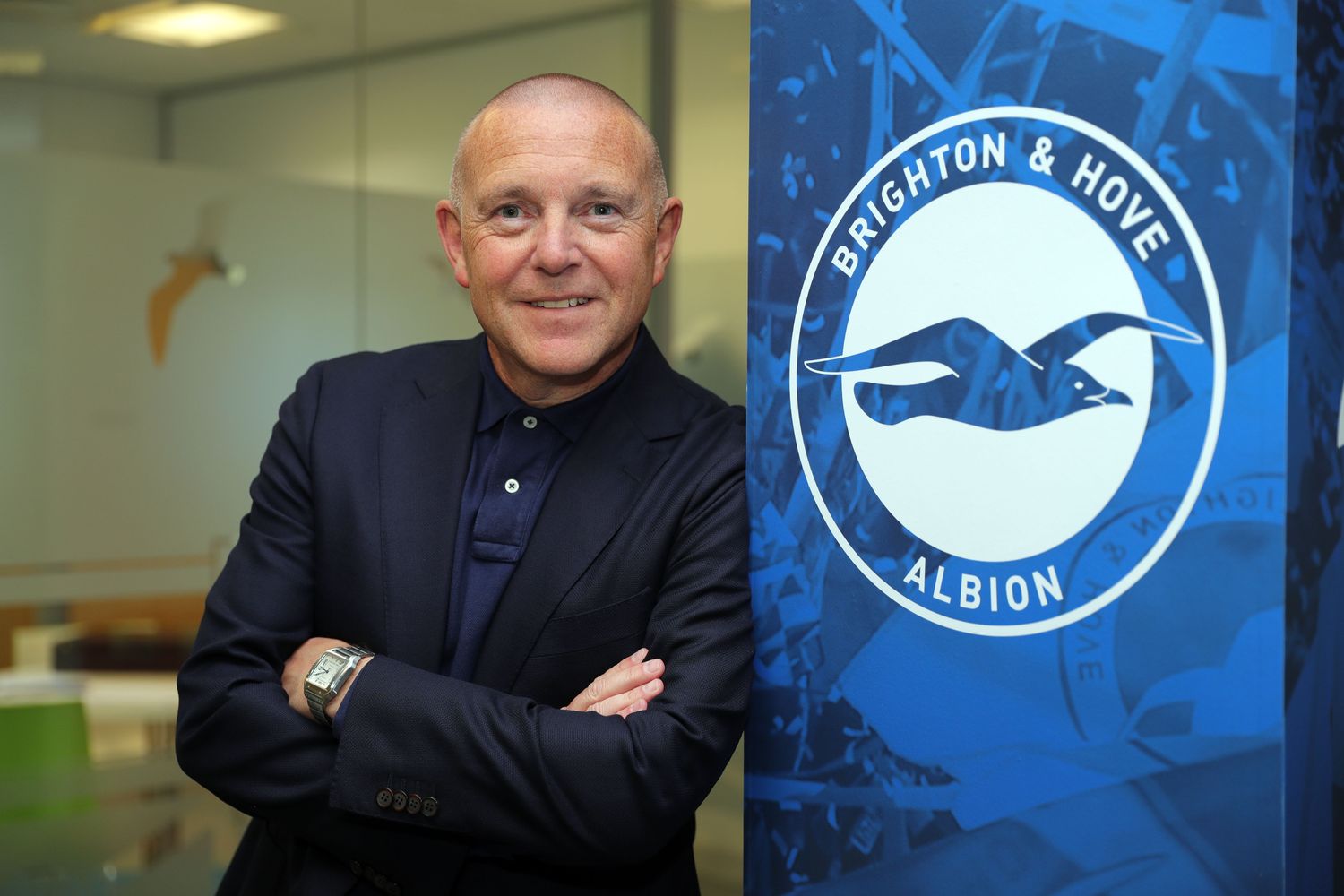
Paul Barber
CEO of Brighton
9
APPEARANCES
9
PODCASTS
Nov 20, 2026


Paul BarberGUEST
I think the one thing we went into the season confident about was the depth of the squad.
Paul BarberGUEST
We always felt that we had a number of players throughout the first 11, if you like, that were entirely interchangeable and that first 11, so-called, wouldn't be weaker if we changed majority or even all of those players.
Paul BarberGUEST
I think the togetherness in the group as I said earlier, was really an important factor for Fabian and the way they prepared during the summer, the work they put in on the field, but also the work they put in off the field to make sure those friendship groups, those bonds were established.
Paul BarberGUEST
And then I think Fabian goes into each game, and the Arsenal game is probably one of the best examples that people talk about regularly at the moment, is just a tactical plan.

Paul BarberGUEST
Um, I think, you know, finishing in a top 10 position now is our, is our aim every season.
Paul BarberGUEST
Obviously, if things go badly, you get bad luck, um, injuries and, and so on, you know, then survival becomes your default position.
Paul BarberGUEST
But I think we've, you know, got ourselves to a position where aiming for a top 10 position is, is where we're at.

Simon JordanHOST
Th- Winning the Premier League is really the precinct of maybe four or five foot- football clubs that have got 700 million pound turnovers, isn't it?


Ed BowersHOST
Paul, can we do a fun case study? Can we compare Paul Barber when he was at the Vancouver Whitecaps compared to the Paul Barber at Brighton from a leadership standpoint, reflecting?
Paul BarberGUEST
So, you know, there are big differences in terms of age and maturity and experience.
Paul BarberGUEST
I can remember going to Vancouver and, you know, one of the things that attracted me to the job working in Major League Soccer was that The transition for my family, although it was 5000 miles geographically in language and cultural terms, it was, in our opinion, going to be relatively easy compared to, say, going to a country where we had to learn a new language and where the culture was like to be extremely different.
14 MINS LATER
Ed BowersHOST
Could you just touch on what that means to you and the importance of it that working in the football industry is accessible for all?


Paul BarberGUEST
Um, and on the playing side, again, they can be the most technically gifted player, the most tactically aware player, the most, uh, athletic performer that you can imagine, but if you haven't got to the heart of what they're like as a character, as a person, um, then it's possible that you could still fail no matter what data that you use.
Paul BarberGUEST
So we try and, um, minimize that risk as far as we can by talking to their former teammates, talking to their former coaches, talking to media who, who might have come into contact with them over years, um, going back to sponsors that might have worked with them.
Paul BarberGUEST
You know, we try and build up as, as big a profile of the person as we do on the data that leads us to actually seeing them as a great left back or a beautiful, uh, center forward who's gonna score lots of goals.
Paul BarberGUEST
Um, but it's not, it's not a, a, a foolproof process, uh, Henry, because people coming from a vastly different country into a different culture, a different dressing room, eating different food, living in a very different community or environment, might not work for reasons that are not about their character.
36:14

Where do you see financial regulation today, specifically in terms of balancing this big word sustainability at the heart of a lot of the arguments for regulation, stopping clubs going bust in plain English, with allowing clubs to compete with the elite? Where do you sit on that?


Gabby LoganHOST
So with that in mind and kind of extending, you know, Mark's point a little bit further, do you have a kind of a plan about how you then go, right, OK, now we are... going to be a top six side this is what happens and this is a different financial model or you know is where you are right now enough because obviously this season Tony Bloom is experienced with the model great success north of the border and clearly enjoying that success winning is good right and lifting a trophy is good
Paul BarberGUEST
But we're never going to be in a position of buying 50, 60, 70, 80 million pound players.

Mark ChapmanHOST
Do you do everything that you would normally do, or are you checking in more, or would that make it worse?


Felicity HannahHOST
D- d- do, do ma- male players and male audience members need something different? Do women need something different? Are, are there two different kinds of stadiums?
Paul BarberGUEST
Well, if you think about it from, first of all, the pitch, um, there's a lot of injuries that female athletes get that are currently not yet explained.
Paul BarberGUEST
It could be down to the pitch surface being designed for much heavier male athletes.
Paul BarberGUEST
Um, if we look to the dressing rooms, most of the dressing rooms in UK stadiums are, uh, built with open showers, which women don't like.
Paul BarberGUEST
Um, if you move to the concourses, we're geared up at the Amex to serving thousands and thousands of pints of beer per game, and giant meat pies.
Paul BarberGUEST
If you go to a women's game, the audience there doesn't tend to walk around with lots of beer and lots of meat pies.
Felicity HannahHOST
... quite partial to a meat pie." But, um, what, what kind of is the main difference in, in demographic for the women's game that, that you feel does need a catering to differently?


Paul BarberGUEST
(laughs) Uh, well, it would be wrong for me to give the secret away, but we use a lot of data, and you know, as I say, we try and plan several windows ahead.
Paul BarberGUEST
We know the sort of players that, that, that we're looking for, what the coach needs, uh, what we can afford, who might be available, and then a lot of work goes in by our recruitment team, our technical staff, to try and make sure that the agents are where we need them to be, uh, we have good relationships with other clubs across the world, and then obviously then we try and land those targets as early as we can.
Paul BarberGUEST
There are very few windows that go exactly as you had planned them, so you have to be flexible and nimble and be prepared to adapt as well.
Paul BarberGUEST
But yeah, a lot of planning goes into every, every window that we, that we come to.
Paul BarberGUEST
Yeah, particularly on sales because, you know, our model, you know, relies on us buying young players from different parts of the world that perhaps other clubs are not looking into i- in qu- quite the same way.


Mary Rose GunnHOST
But how do you feel like your professional expertise is going to help with these challenges?
Paul BarberGUEST
Well, first of all, it may seem surprising that it was only 25 years ago the FA had its first ever director of marketing for football, but it was a recognition, I think, at that time that there was competition for people's time, for people's pounds, and that the FA and football in particular just couldn't take for granted anymore that as a national sport that people would simply follow the game just because it was our national sport.
Paul BarberGUEST
So they wanted someone with professional marketing skills to help promote the game, build a better image for the game, develop brand partnerships for football, not just at the national team level or FA Cup level, but right the way across clubs.
Paul BarberGUEST
And I think, you know, as we now look at FBB's next stage of development and expanding its work and its reach.
Paul BarberGUEST
We're going to need to market and push the FBB brand and any associated brands that it might develop more widely.
12 MINS LATER

Paul BarberGUEST
Well, it would be wrong for me to give the secret away, but we use a lot of data.
Paul BarberGUEST
We know the sort of players that we're looking for, what the coach needs, what we can afford, who might be available.
Paul BarberGUEST
And then a lot of work goes in by our recruitment team, our technical staff to try and make sure that the agents are available.