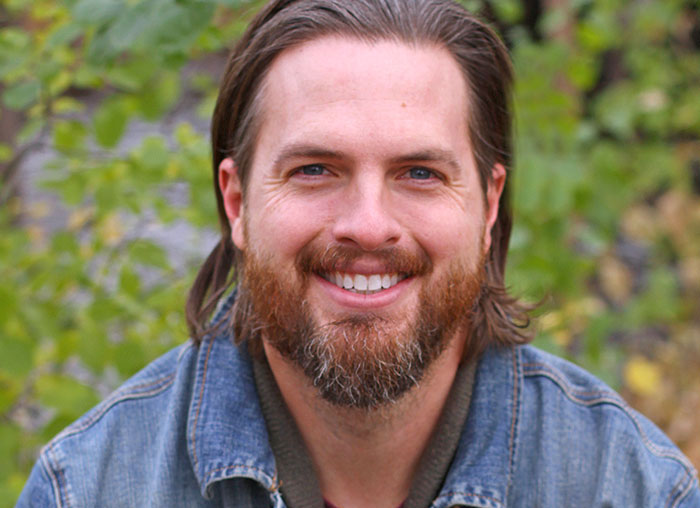
Paul Anleitner
8
APPEARANCES
7
PODCASTS
Oct 27, 2026


Paul AnleitnerGUEST
Every culture has a story that tells you this is what should be of ultimate concern.
Paul AnleitnerGUEST
Everyone's religious because we all make decisions about with our time, with our money, The pursuits of what we think should be of ultimate concern.
5 MINS LATER
Paul AnleitnerGUEST
a little bit of autobiographical backstory that might set some context here that's helpful.
Paul AnleitnerGUEST
So as you mentioned, I spent a lot of time as a worship pastor and was doing prayer room stuff, traveling all over the country.
Paul AnleitnerGUEST
And during those years, I think one of the things I just became instantly fascinated with was what is happening in this room? And as I would go from different rooms, different denominational contexts, there would be different rules, from room to room, different values, different ways that you worshiped.
Paul AnleitnerGUEST
And that always stood out to me as like, what's actually going on here? And so- I had that track and I've always, for years I was doing that, but also teaching.
Paul AnleitnerGUEST
So when I went back to seminary and started studying theology in particular, I got really fascinated with what you could call like theology of culture or cultural theology.
14 MINS LATER


Paul AnleitnerGUEST
There's a case that could be made that the cultural impact of Christopher Nolan's Odyssey is actually less than Dan Juergens' The Death of Superman comic.
Paul AnleitnerGUEST
because of the way that the death of superman comic served as a point of inspiration for dozens of other instantiations and and grapplings with that story for a fraction of the cost of production so i think one of the avenues i'm kind of having conversations with people including uh taylor foreman who's a friend of mine is the way in which um Yeah.
17 MINS LATER


Joseph HolmesHOST
Can you unpack what you think is the nature of the shift that we may be seeing, and what are you seeing that makes you think that this shift is real?
Paul AnleitnerGUEST
yeah that's a great summary and a great engagement of both sides of maybe the argument on what is actually happening is there something different than what we experienced maybe 10 15 20 years ago i think to drill down beneath that we need to maybe get at what i mean when i say a vibe shift and i think the best way to think about that is to employ a term that might have a lot of baggage, but I'm going to try to give you an analogy that's helpful.
Paul AnleitnerGUEST
To describe a vibe shift is to describe a spiritual shift that's happening in culture.
Paul AnleitnerGUEST
And what I mean by spiritual, of course, many of your listeners may come from traditional religious backgrounds and have particular associations with that word, which may not be challenging for them to enter into that.
Paul AnleitnerGUEST
Some of which may have maybe a degree of cynicism, maybe they're trapped or stuck or have spent much of their life in what I call in the book, the modern story, which is produced in us a more, we're going to sequester the spiritual into this private sphere and make it essentially irrelevant and worthless.
Paul AnleitnerGUEST
But what I mean by spiritual, maybe the best analogy is something akin to like school spirit.
Paul AnleitnerGUEST
If you went to high school, normal public high school, or even a private high school in the US, and you had a football team or a basketball team, you know what school spirit is.
39 MINS LATER


Paul AnleitnerGUEST
They have a set of rituals that reinforces or shapes people's souls to step into that story, and they have symbols.
11 MINS LATER

Joshua JohnsonHOST
What does it mean to live a good story, a meaningful story? What makes a good, meaningful story that we could start to live into?


Simon UssherHOST
Some of these other modern stories floating around, do you have a sense that they've intersected within Christianity in different ways? As in like, you know, Christians aren't immune from these sorts of problems? Well, absolutely.
Paul AnleitnerGUEST
I think one of the challenges is that in many ways, you know, I was born in 1983 and in many ways there was this sort of synchronicity between the modern story and the Christian story that people actually weren't able to parse out and sift through and realize these aren't exactly the same things.
Paul AnleitnerGUEST
Now, acknowledging I have a kind of theology of culture that I do believe Christ is present, even working within the modern story.
Paul AnleitnerGUEST
He's bringing about certain things and highlighting certain things that are good.
Paul AnleitnerGUEST
I do think the kind of, let's say, work ethic of a Rocky Balboa archetype to say, I am going to work as hard as I can for the good of others, right? I mean, that was Rocky 1.
Paul AnleitnerGUEST
Rocky 1 actually starts, the opening scene is that the camera pans down to this picture of Christ.
14 MINS LATER


John O'LearyHOST
and completely untethered and he kept referring to them in this book as part of the post-modernism world and i read that book in the late 90s and it made very little sense to me actually at the time and now as i look back on that term and the times we live in it makes perfect sense to me on the role of post-modernism in the world we live in today so tell our audience what post-modernism means
Paul AnleitnerGUEST
Yeah, I mean, first, it'd probably be helpful to note the prefix post before modernism, right? And so that gives you a hint as to what, well, if we're talking post modernism, we do need to understand that that world you're describing, let's say, in academia in the 1960s into the late 20th century, right? They were grappling with, and the simplest way I put this is they were grappling with a story, a guiding cultural story that came before them.
Paul AnleitnerGUEST
So the modern story we could kind of summarize is this story that has been in many ways core to the American identity because the American Revolution Project was born out of the modern story and it valued things like individualism.
Paul AnleitnerGUEST
So the notion that the individual has access to the truth and doesn't have to go through institutions, whether it was church or government, that you have access to the truth.
22 MINS LATER
John O'LearyHOST
How do I, as a listener, laying out of the pool right now here in this conversation or driving the kids to school or getting a workout in or whatever else I'm doing while they're listening to this conversation, apply what you're talking about in my


Paul AnleitnerGUEST
optimistic because over the last few years, I've started to see rumblings of a spiritual shift in our culture, especially among young people, especially among Gen Z people.
Paul AnleitnerGUEST
who have seen how, especially younger Gen Xers and millennials, have kind of lived in this meaning crisis.
19 MINS LATER