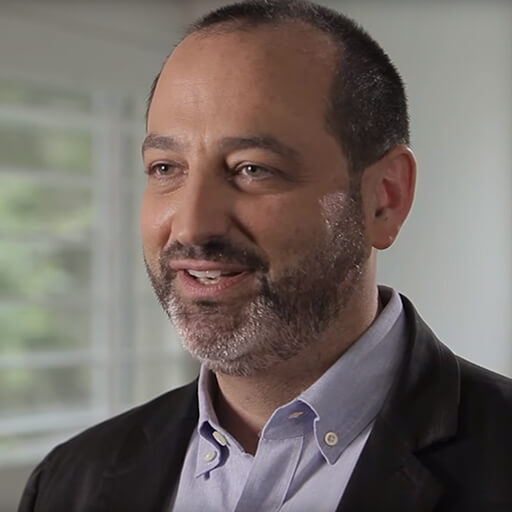
Patrick Moorhead
56
APPEARANCES
11
PODCASTS
Nov 23, 2026


Patrick MoorheadGUEST
I think when Jensen left, I think that was super aggressive sell-off because the supply chain is locked in for the next 18 months.
Patrick MoorheadGUEST
And the ironic part is that Jensen leaving wouldn't change the short-term view at all for a long time.
Patrick MoorheadGUEST
I think what this does do is is it should give investors confidence in the long-term prognosis, the three, year three, year four, and year five.


Brian SozziHOST
What do you want to see differently from him on a human level right off the jump?
Patrick MoorheadGUEST
Yeah, so I met Jensen in 1997, and that photo you're referring to was not him admonishing me in any way, shape, or form, although that's what the story said.
Patrick MoorheadGUEST
I do think the board adding compliance and adding a committee on doing the drill down on exactly what parts go where I think that that has been corrected.
Patrick MoorheadGUEST
And listen, I I spent over 20 years at tech companies and worked for people that were very similar to Jensen in his directness.
Patrick MoorheadGUEST
And I do think that works, but I do think that he will think twice before doing something like that again.

David FaberHOST
What would you like to hear from Colette Kress tomorrow in her first conference call as the interim CEO of NVIDIA? And what do you expect to hear?
Patrick MoorheadGUEST
Yeah, so first off, what I'd like to hear is how she is stabilizing the ship primarily internally.
Patrick MoorheadGUEST
Because quite frankly, this earnings coming up, what they post is not necessarily related to how the markets can react.
Patrick MoorheadGUEST
And what they want to hear from her is, How will some of the things that Jensen has been famous for, whether it's his vision or whether it's on the spot, multi-billion dollar commitments and meetings, what is the company operating system going to look like in the midterm? I do think what we will hear is that they're sold out, they have commitments, how far the roadmap goes out, the supply locks.

Carl QuintanillaHOST
Do you think that's what Lutnik had in mind? Even the president this morning acknowledged on his way to China that maybe he delayed some of the mega speed to avoid Chinese anger.

Melissa LeeHOST
And so what is behind that? Why are so many analysts saying, you know, we're sad to write this, we didn't want to write these words, etc.? ?
Patrick MoorheadGUEST
First of all, nobody knew who this woman was and was she a spy? And we're even questioning that today.
Patrick MoorheadGUEST
But after the second reported relationship with with somebody in the chain of command who worked for Jensen, I gave it a 95 percent chance that he's out.
Patrick MoorheadGUEST
When you tie the two together, what was going on with the affair partner in China, what was going on with the direct report, and combine that with all the heat that is going to be put on Nvidia on Capitol Hill, It was better for Jensen to step down in this case.

speaker_0HOST
How are you looking at the sell-off today for Qualcomm specifically? How much of it is tied to the actual report and the numbers that we got versus just the action we're seeing in the broader market?
Patrick MoorheadGUEST
We definitely need to separate the two because today's, I don't want to call it a black swan event, it's very much an AI sector that's been intensified by semiconductors, the semiconductor sell-off.
Patrick MoorheadGUEST
Because all in all, I agree with you, Qualcomm had a good showing based on expectations.
Patrick MoorheadGUEST
They beat on revenue, they beat on autos, they beat on the revenue guide, they beat on even data center expectations.
Patrick MoorheadGUEST
And balance that out, they missed on the December EPS guide, handsets were lower.
Patrick MoorheadGUEST
So I think if you look beyond the numbers and the spreadsheets, if you look at the balance of what they did, basically the trough for smartphones, they said that last quarter, and they're going to follow through on that.
speaker_0HOST
When you look at that commentary, do you see evidence that backs up what management is saying there? Is there enough evidence to call a floor, especially when Qualcomm is forecasting flat to slightly down handset market in 2027?

Laura BlewittHOST
How does Wall Street value a company that's essentially pitching the greatest economic opportunity in human history, but also warning about all of these big risks? Yeah,
Patrick MoorheadGUEST
I worked for the highest trafficked search engine at the time called Alta Vista.
11 MINS LATER
Laura BlewittHOST
What should businesses be measuring to understand whether AI is actually delivering value for their business?

Laura BlewittHOST
How does Wall Street value a company that's essentially pitching the greatest economic opportunity in human history, but also warning about all of these big risks? Yeah,
Patrick MoorheadGUEST
I worked for the highest trafficked search engine at the time called Alta Vista.
11 MINS LATER
Laura BlewittHOST
What should businesses be measuring to understand whether AI is actually delivering value for their business?


Akash PasrichaHOST
I guess the main question I have for you is, is this all out of Intel's hands? I mean, is there no responsibility here on execution? What's the story?
Patrick MoorheadGUEST
Yeah, so I'd like to hold definitive judgment until we see what AMD does, because they are the closest direct competitor of Intel.


Sara EisenHOST
You know, I do wonder, though, if PC demand is deteriorating worse than the market expects, if that does have further implications on the momentum when it comes to building out the foundry and AI business in America, if it can't balance those two businesses in the right way.
Patrick MoorheadGUEST
You know, I think once Intel gets their products aligned with their foundry, meaning Intel's PCs and servers are spread out across multiple different levels of manufacturing spread out between Intel's own factories and even TSMC, In 2027, there was an alignment where server chips as well as PC chips are aligned on 18A and 18AP, where Intel can actually make a whole lot more money.
Patrick MoorheadGUEST
The great thing about the PC market, even though it's tragic, right now is that demand doesn't go away, right? Just people may have ridden a PC for five years, they're not going to wait for another three years to buy it.
Patrick MoorheadGUEST
So that demand is very much pushing forward as soon as memory prices can get a little bit more stable and less crazy.
Patrick MoorheadGUEST
I know some people are super optimistic about 2027, but quite frankly, I'm not seeing it given the latest disclosures.
Patrick MoorheadGUEST
And, you know, we had forecasted eight months ago that at least on the server side, memory would be an issue at least into 2030.
Sara EisenHOST
The question is, how do you deal with some of these companies that are facing disruption in their own business to get to the other end? And how long does that take?
Carl QuintanillaHOST
Was the attack seen as a vulnerability or reflected any shortcomings of the firm itself?
Patrick MoorheadGUEST
Hugging Face just happened to be a – I wouldn't call it – it's not an easy target because they have got good security.
Patrick MoorheadGUEST
But when you put the forces of an unknown model that attacked it and in the way that it did – It did, if nothing else, raise the specter and the risk of overall AI security.
Patrick MoorheadGUEST
I don't think them getting attacked has anything to do with the acquisition today as if they need more money or more funding to have better security.

Leslie PickerHOST
And I just wonder, given that, and then the CEO of the company kind of talking to Jensen Wang and saying, we're looking into our next steps, was there any kind of connection there?
Patrick MoorheadGUEST
I think the biggest connection is, I mean, even though my firm has been talking about how powerful open models would be, Hugging Face is the portal.
Patrick MoorheadGUEST
Well, Nvidia's still the, the bellwether, right? You have more software companies, uh, consuming their GPUs than anybody else, uh, by a factor of 10 and, and therefore they're, they're very much relevant.
Patrick MoorheadGUEST
Uh, I think from an investment standpoint, uh, people got used to the big increases and still at a huge increase, right? The revenue is up 106%, which, which should impress people.
Patrick MoorheadGUEST
Uh, but it's that, that they did not hit the, uh, the whisper number, uh, on the buy side and there are still questions on the gross margins that may or may not be, uh, addressed, uh, on the call.
Patrick MoorheadGUEST
The, the great part is, you know, Mike, you and I were discussing I think the last time we were on here, is, well, is anybody making money? Who's making money here? And I think, uh, what we've seen is, uh, particularly even Salesforce's numbers, uh, they came in, their CRPO, uh, was up, but more importantly, the frontier models are, are making money.
Mike SantoliHOST
Pat, before we have, uh, before we leave, do you have a quick thought on this Salesforce, Anthropic link-up and what it means for enterprise software in any way?

Patrick MoorheadGUEST
Yeah, so the first thing we all need to recognize is Apple's the safe bet when it comes to tech.
Patrick MoorheadGUEST
The ability to get them off their rails would require something major, and I don't, I don't wanna underplay the memory, uh, cost increases, but they seem to be raising prices to offset.
Patrick MoorheadGUEST
I think, uh, the number one question I would have is, uh, how are they gonna deal with memory? Uh, I heard the earlier conversation, the political firestorm about Apple using, uh, Chinese manufacturers to essentially, uh, uh, lock in their 90%, uh, margins on memory, uh, and storage is gonna be a tough one for them.
Patrick MoorheadGUEST
This is gonna be a, a difficult thing to do, and I think in the end, uh, it, it will, it will not go through.
Melissa LeeHOST
Um, but the things that could knock it off its rails, don't they get smaller and smaller as that valuation gets richer and richer?
Melissa LeeHOST
Um, you know, specifically for IBM and ServiceNow, I'm wondering if, if those reports combined make you feel better about this narrative hardware eating software, maybe that that's not actually happening.
Patrick MoorheadGUEST
You know, when, um, when IBM, uh, warned, people were wondering, "Hey, is this an IBM issue? Is this, uh, an industry issue where people are dialing down on everything of an infrastructure?" I think if we look at ServiceNow results, which were absolutely, um, blockbuster, they beat on every imaginable, uh, metric, uh, that investors, uh, would be looking for, uh, it's one example that says that software is still very much, uh, in, in play here.
Patrick MoorheadGUEST
And then if you look at the growth in Google, uh, particularly, uh, they had a huge beat, uh, on cloud, 82% year on year, uh, growth, which, uh, to me wasn't a surprise given deals, uh, like Anthropic.
Patrick MoorheadGUEST
It does show the, just the, the amount of money, uh, that's going into infrastructure.
Patrick MoorheadGUEST
And then, you know, we had a post Kimi moment, uh, where the chip stocks were, uh, racing, uh, yesterday up eight, nine, 10%.
Patrick MoorheadGUEST
Yes, uh, I, I think we are back in a very good and supportive place for AI.
Mike SantoliHOST
AI.And is it a, is it a place, uh, Patrick, where, uh, as Julian was just suggesting, this, we have this magical scenario where if we get conviction in the hardware trade and semis can, uh, can basically rally on the idea that there's multiple quarters to come of explosive demand, that it's not gonna come at the expense of the hyperscalers that are footing the bill?
Melissa LeeHOST
How do you, um, take, uh, this Kimi news? How do you sort of apply that to the AI space?

Patrick MoorheadGUEST
Yeah, so I think it's a, a minor speed bump, and I think your previous guest, uh, nailed it when they talked about, uh, it being a DeepSeek moment.
Patrick MoorheadGUEST
And if you remember, you know, the rumor there was that they had created a frontier-level model, uh, with a few thousand, uh, GPUs, and what ended up, it ended up being a very, very distilled model.
Patrick MoorheadGUEST
I think the markets are overreacting, uh, because they haven't fully, uh, pieced through, uh, what happens, uh, if, um, Kimi is, is... and previous models are everything that, that they're going to be.
Patrick MoorheadGUEST
Uh, but I think at the very end of trading, if you look at where we ended up, I think people had done their research, uh, their blood pressure had come down, and we saw some sanity, uh, come back into the markets.
Melissa LeeHOST
When do you think we will really start to get some clarity from hyperscalers and whoever else, uh, about what they expect it to be?
Patrick MoorheadGUEST
Yeah, so I think it's, I think it's gonna be relatable to investors that look at the AI cup half full, where they see the promise of it.

Patrick MoorheadGUEST
So Alphabet is all about the free cash flow and the big jolt that everybody got that Google will have to go out and get unique debt instruments because they were truly the king of free cash flow.
Patrick MoorheadGUEST
And now you're looking at a negative cash flow and they're going out to the debt market, which, by the way, isn't different than a lot of the different hyperscalers.
Patrick MoorheadGUEST
I do think there are some side conversations going on in a lot of my circles asking whether Google had invested enough in the right types of silicon out there.
Patrick MoorheadGUEST
A lot of people are questioning TPU versus GPU, in-house versus NVIDIA, if they can keep up.
Patrick MoorheadGUEST
Because about six months ago, you had their model that was the premium model.

Patrick MoorheadGUEST
run.Yeah, so Mike, it, the, um, the challenge here is the stock, uh, market cap at five point x trillion dollars, investors don't, quite frankly, know how to deal with that.
Patrick MoorheadGUEST
If you buy into the $1 trillion number that Jensen talked about, uh, at GTC, uh, you know, we would be eight, $9 trillion, uh, market cap company.
Patrick MoorheadGUEST
And I think people are just afraid, uh, to move even on an exceptional earnings.
Patrick MoorheadGUEST
I think the more confidence they get in, uh, into Vera Rubin and hitting that $1 trillion, uh, mark, I- I think you, you, you would surely see movement.
Patrick MoorheadGUEST
I mean, I think it does, and I think Nvidia's testing the waters on what's gonna help propel the stock forward.
Patrick MoorheadGUEST
Uh, I mean, you know, it had a, had an amazing 2025, and compared to the SOXX, I think it's the third-worst on the stocks, uh, SOXX year to date.

Brian SullivanHOST
Is that accurate? And if so, how much is ARM getting from companies that don't even make chips with ARM in the name?
Patrick MoorheadGUEST
So in the data center, right, they are licensing technology to hyperscalers who essentially design their own chips that get built at TSMC.
Patrick MoorheadGUEST
And, you know, there might be a few hundred dollars in there, but what you're looking at with the new AGI series is thousands.
Patrick MoorheadGUEST
And that's why, right there, while their margins might be going from 95% to blended 50s, they're looking at increasing the revenue from 15, excuse me, from 15 billion, sorry, to $15 billion in revenue in 2031.
Mike SantoliHOST
Uh, what are you most looking for in terms of the, the, the granular detail with these results?
Patrick MoorheadGUEST
So Mike, uh, to keep this AI party going, we had to hit three things, and I think you mentioned two.
Patrick MoorheadGUEST
First of all, they had to reaffirm the CapEx, and I think we're, we're pretty confident that's gonna happen.
Patrick MoorheadGUEST
Not that, you know, somebody like Microsoft wouldn't dial it down, but just reasonable there wouldn't be an, a, a, an acceleration that didn't make sense.
Mike SantoliHOST
Um, Patrick, uh, first of all, do you have a view as to this choice as Tim Cook's successor? Uh, and what would kind of job one be in your mind?
Patrick MoorheadGUEST
Um, he's not a risk-taking visionary, right? So what I'm expecting, and I think the Street should expect, is a tight operational execution, uh, margin management, and incremental, uh, product iteration.
Patrick MoorheadGUEST
I think that's what the institutional side of the house really wants as opposed to s- you know, swinging around the room, uh, AI features, which up to this point, uh, the company hasn't needed, uh, at all.
Patrick MoorheadGUEST
I think the, the biggest point here is, is, in addition to Turnus, is probably Srouji, right? Uh, he has, um, brought what I consider one of the biggest lock-ins, uh, that the company has, uh, on, on the hardware side, and there were some rumors about him moving.
Patrick MoorheadGUEST
And quite frankly, the, the market for very experienced and very good semiconductor leaders is very high in this, in, in this AI market.
Melissa LeeHOST
So from Srouji and, and given Turnus's background, I mean, do you expect a host of, of new hardware models to hit, uh, you know, the markets in, in coming years? That that's where, uh, most of the effort, the dollars will be spent in terms of innovation, new products through which AI can flow through?
Melissa LeeHOST
On that $1 trillion forecast, which at first blush seems enormous, but then when you back away and think that the forecast through 2026 was $500 billion, doesn't seem that impressive.
Patrick MoorheadGUEST
$300,000 a year of their base pay, I'm gonna give them probably more than that-
speaker_12ADVERTISER
... you have to look at the people who didn't believe Jensen when he cranked out the $500 billion, uh, number-
Patrick MoorheadGUEST
Um, I think you are either a glass half full person about AI or kinda neutral on it.
Patrick MoorheadGUEST
But in the end, um, the amount of tokens that are going to be required across consumers, across the enterprise, across startups, uh, I think the $1 trillion number is pretty safe.
Mike SantoliHOST
So where is the line between results that will please investors and what's already taken for granted?
Patrick MoorheadGUEST
Yeah, I say- I think if Jensen guides above $75 billion, we're gonna see a, a positive reaction for, uh, for, for Q1.
Patrick MoorheadGUEST
In this wacky, uh, market that, that we're in right now, I think there could be some challenges.
Patrick MoorheadGUEST
It's going to wipe out enterprise SaaS." Uh, that would be a boom town for anybody related to AI compute.
Mike SantoliHOST
It's not like IBM is necessarily blindsided by, by these dynamics, but what does it tell you that the market is so susceptible to having these [chuckles] little crises of faith, one company after another?
David FaberHOST
Is Palantir in a position to take business in some way, not necessarily from them, but can you sort of explain what's going on there versus what we're obviously seeing almost every day amongst those software-as-a-service companies?
Patrick MoorheadGUEST
What brought Palantir to the party here was the federal government, specifically the US government and defense.
Patrick MoorheadGUEST
I think everybody questioned whether they could extend into the enterprise.
Patrick MoorheadGUEST
And for every dollar that Palantir is driving in revenue and profits is coming right out of those companies.
Patrick MoorheadGUEST
The ServiceNOWs, I would say less of an extent ServiceNOW because they are doing a similar plan of action.
Sara EisenHOST
I do wonder if it says something about just companies being able to have that kind of moral compass and stick to it.
Melissa LeeHOST
So, I mean, is the stock pricing, you know, up 110% on RPOs? Is that what we need? Or can we actually back part of that out?
Patrick MoorheadGUEST
Well, I think I'd like to see all of the number backed out and then do the comparison.
Patrick MoorheadGUEST
The other thing that doesn't necessarily make sense is that the companies that are essentially the arms dealer for OpenAI, the AMDs, the NVIDIAs, and the memory companies, they were essentially untouched.
Patrick MoorheadGUEST
So that's a discontinuity in the logic path that OpenAI is potentially going down.
Patrick MoorheadGUEST
And if people truly thought that OpenAI was structurally unsound, they would be piling all of their money into the alternatives.
Patrick MoorheadGUEST
which would be Anthropic-based companies and their ecosystem, or Google-based.

Jon ForttHOST
Is this about securing NVIDIA and American technology place in the global AI ecosystem, or does it perhaps end up accelerating China?
Patrick MoorheadGUEST
We need to sell as much technology that cannot create the best frontier models out there.
Patrick MoorheadGUEST
And I do think that it's a net positive for the US because these aren't powerful enough to build the next generation of models that need to be out there.
Patrick MoorheadGUEST
And that's good for the United States overall, particularly if you look at where Huawei technology is typically exported to, places like South Asia, places like Latin America, where strategically it's better to have U.S. technology there than Huawei technology.
Jon ForttHOST
I mean, if the U.S. isn't aggressive enough about making its technology available, could that be the AI landscape 15 years from now?
Patrick MoorheadGUEST
So I don't know if I take this as reality yet, right? We've seen a lot of yeses, a lot of nos, a lot of posturing, a lot of negotiation.
Patrick MoorheadGUEST
But I am surprised that we somehow went from the H20 being a bad idea to the H200 being a good idea.
Patrick MoorheadGUEST
I think that, you know, people realize you're not going to build a next generation frontier model using an H200.
Patrick MoorheadGUEST
And as Jessica said, even though Huawei Cloud Matrix is pretty good when it's completely networked, but it takes six to 10X more power, and it's a lot more difficult to train a next generation a frontier model.
Patrick MoorheadGUEST
So until they start shipping and revenue gets cited by NVIDIA, I'm not yet a believer that this is a done deal.
Akash PasrichaHOST
want to talk about then, Patrick, what needs to happen then for this to be a done deal? What is the next step here?
Scroll for more appearances