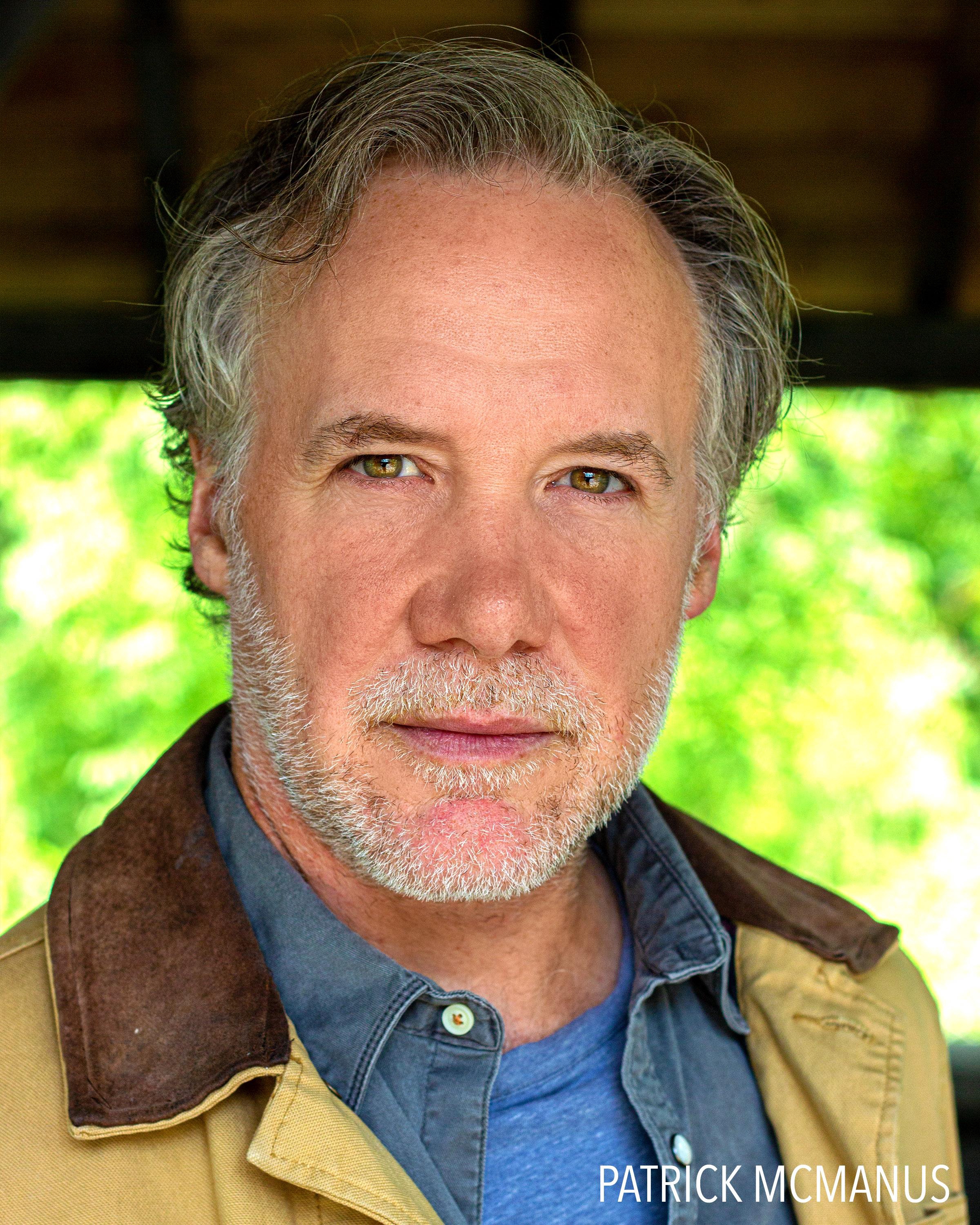
Patrick Macmanus
Patrick Macmanus is a TV writer, showrunner, and creator of Peacock's "Devil in Disguise: John Wayne Gacy," known for true crime series like "Dr. Death" and "The Girl from Plainville."
5
APPEARANCES
4
PODCASTS
Oct 1, 2026


Elisa DonovanHOST
So you went into this maybe thinking that you knew the Michelle Carter story, but what did you learn that made you realize what you thought you knew wasn't actually the whole story?

Patrick MacmanusGUEST
And I'm and take it just a second and also uh loop in um liz hannah who co-created it with me um because she was an extraordinary partner and uh and we were we were writing that and filming that in the heart of the beginning of covid uh and so we we were we were in it together and um she is uh she's a very very talented writer and as it turns out director because she directed for the first time on the show as well and um And so any praise that comes my way, three quarters goes back to Liz.
Patrick MacmanusGUEST
So when I got Jesse Barron's article, which is what kicked this entire thing off, I had landed very solidly on the idea that Michelle was just a deeply broken, bordering on psychotic individual.
Patrick MacmanusGUEST
And so I came in with a judgment, which is never a really good place to start as a writer, especially a writer of true crime.
29 MINS LATER

Patrick MacmanusGUEST
I have a few numbers in my phone that make me cool and a lot of numbers in my phone that I'm very uncool.
34 MINS LATER
Elisa DonovanHOST
One, were you surprised that she was convicted of involuntary manslaughter? And did you or anyone involved with the series ever try to contact her?

Patrick MacmanusGUEST
And, um, and so, uh, any praise that, uh, comes my way, uh, three quarters goes back to Liz.
Patrick MacmanusGUEST
So when I got Jesse Barron's article, which is what kicked this entire thing off, I had landed very solidly on the idea that Michelle was just a bor- a deeply broken, bordering on psychotic individual.
Patrick MacmanusGUEST
Uh, a- and so I came in with a judgment, um, which is never a really good place to start as a writer, and espe- especially a writer of true crime.
Patrick MacmanusGUEST
Um, I will say that I quickly tried to push that away, like, once I had, had the, the opportunity to begin to delve into the research.
37 MINS LATER

Patrick MacmanusGUEST
Well, I think that part of it had to do with the fact that I had told the studio network that I wasn't going to show a single murder.
Patrick MacmanusGUEST
And so if that becomes sort of your thesis statement of what you're going, how you're going to approach the work, then it almost assuredly, and by the way, and then by extension, you're not making it about John Wayne Gacy, then almost by extension, the logical next move is, is for you to pick up with him being caught and then try to...
Patrick MacmanusGUEST
And then you're building a story about not who did it, but why did it and who did they do it to.
Patrick MacmanusGUEST
You know, I didn't really, you know, to go back for a second on this whole idea of focusing on the victims, I didn't really know what that meant.
15 MINS LATER
Elisa DonovanHOST
But was there anything about the physical scale of the crime scene that was particularly difficult to recreate?
Patrick MacmanusGUEST
Well, I think that part of it had to do with the fact that I had told the studio and the network that I wasn't going to show a single murder.
Patrick MacmanusGUEST
And so if that becomes sort of your thesis statement of what you're going, how you're going to approach the work, then it almost assuredly, and by the way, and then by extension, you're not making it about John Wayne Gacy, then almost by extension, the logical next move is, is for you to pick up with him being caught and then try to...
Patrick MacmanusGUEST
And then you're building a story about not who did it, but why did it and who did they do it to.
Patrick MacmanusGUEST
You know, I didn't really, you know, to go back for a second on this whole idea of focusing on the victims, I didn't really know what that meant.
18 MINS LATER
Elisa DonovanHOST
But was there anything about the physical scale of the crime scene that was particularly difficult to recreate?