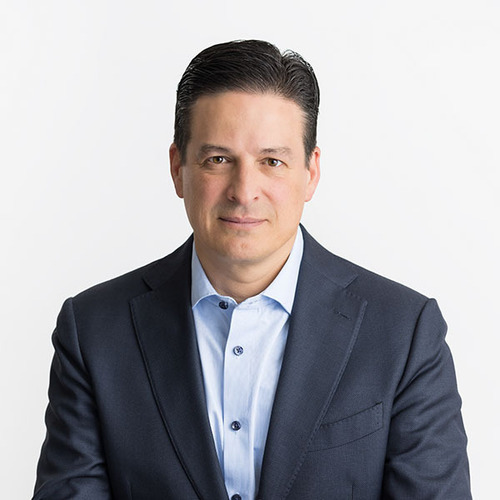
Paolo G. Carozza
Professor
4
APPEARANCES
4
PODCASTS
May 25, 2026


Audie CornishHOST
Um, therefore it is not permissible to entrust lethal or otherwise irreversible decisions to artificial systems." Can you talk about this in the context of the US' back and forth with, say, Anthropic and the Defense Department?

Paolo CarozzaGUEST
Uh, obviously, the, the Pope in the document draws some clear red lines, like you cited, no automated lethal killing.
Paolo CarozzaGUEST
He also expresses a great deal of concern about the way in which artificial intelligence accelerates the processes of war and decisions, which, uh, can be great from an efficiency point of view, but can lead to massive destruction and more indiscriminate kinds of targeting.
Paolo CarozzaGUEST
Um, and so I'm, I'm sure that the, the increasing prevalence of wars around the world over the last few years, uh, uh, been a provocation for the Pope to explore these things.
Paolo CarozzaGUEST
But I also think it's important in the context of this encyclical to put it in a little bit of a broader context.
Audie CornishHOST
But looking at the original Leo, he also presided over a period of massive technological advance.


Ben WhitelawHOST
Before we go in, uh, that point around the communication with Meta and- and receiving kind of thanks from the company for looking at specific cases, what does that communication process look like in practice? Who is liaising with who? Give us a kind of a sense under the hood of the dynamics there and what you've maybe been most surprised by.
Paolo CarozzaGUEST
You know, I'd say there are... it's important to answer the question on two different levels.
Paolo CarozzaGUEST
There are a lot of very formalized structured points of contact in order to exchange information, right? I mean, part of the reason that the board is such a valuable institution in my view is because we have a particular kind of relationship of confidence in which we can request and receive a great deal of confidential information from Meta.
Paolo CarozzaGUEST
That requires a certain institutional trust, certain structured guarantees to protect that information, negotiations around what we can reveal and things like that.
Paolo CarozzaGUEST
And in order to do that in a way that protects the board's independence, that's highly structured along certain very formal lines between our permanent staff and their counterparts board.
Paolo CarozzaGUEST
But n- necessarily at a different level, there are also much more informal kinds of conversations, you know, that take place simply because we- we meet, we see each other, we have, we have conversations.
Paolo CarozzaGUEST
And it's in that latter sort of group of exchanges that I think one of the things that was most interesting and surprising to me coming from a context where I've worked either in universities or in public institutions and not in the private sector is simply how complex an institution Meta is and how many different points of view there are.
20 MINS LATER
Ben WhitelawHOST
What will the ten-year board report look like? What would it say? What would its title be if you could have your way?