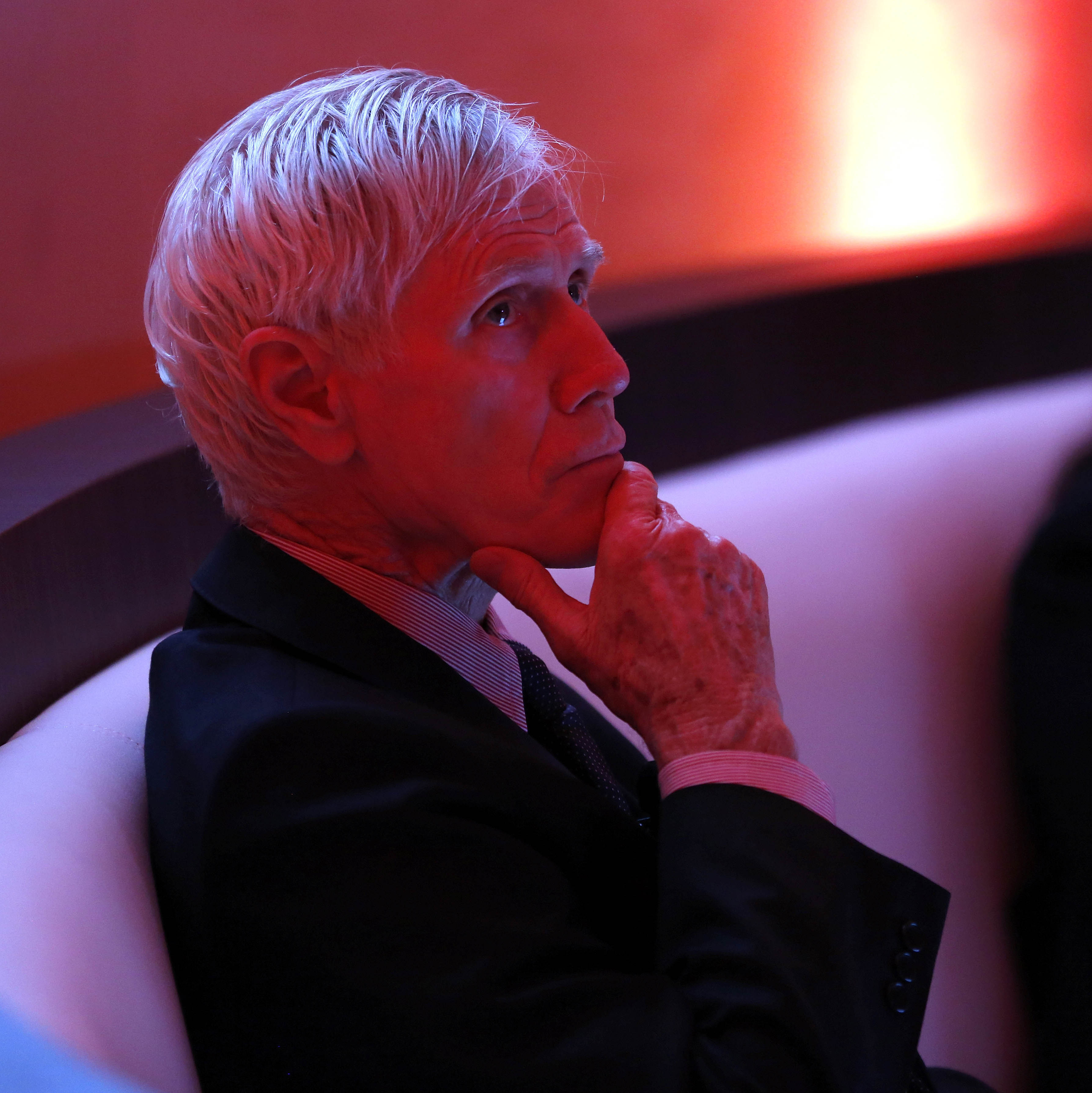
Orville Schell
American teacher
9
APPEARANCES
7
PODCASTS
Oct 1, 2026


Orville SchellGUEST
Uh, this book was a very strange book for me, uh, having written many about China, and I just will very quickly tell you, uh, and then look forward to the conversation with Rowena and Frank about all of the issues that it, it, it, it, it raises.
Orville SchellGUEST
Um, I was approached by sixty minutes, uh, three decades ago with an outlandish idea that they wanted to do something on political imprisonment in China, and I thought it was really impossible.
Orville SchellGUEST
How would you get a network TV crew into, into prisons? Nobody would wanna talk to you.
36 MINS LATER


Mina KimHOST
What, what, what were the things that changed for you personally that made it okay for you to release this now?
Orville SchellGUEST
You know, I think that [sighs] having been so closely involved with China my whole life, and indeed my grandfather, who bor- I bear his name, went to China.
Orville SchellGUEST
He graduated from Yale, went to Johns Hopkins, became a doctor, went to China, went up the Yangtze River, and was part of the team that set up the Yale Medical School, China's first medical school.
Orville SchellGUEST
And, uh- My father was almost born in China, but my grandmother got such morning sickness they had to come home.
Orville SchellGUEST
And I thought, um, [lips smack] "Well, uh, this, this-- it's time for me to publish this now," and, uh, uh, at my stage of life, my career is n-not yet to be made.
16 MINS LATER
Mina KimHOST
And Jeff writes on Discord, "Despite decades of legislation ranging from nineteen nineties customs bans on prison labor imports to the contemporary Uyghur Forced Labor Prevention Act, how easily do modern global supply chains still absorb forced labor commodities through transshipment hubs, front companies, and obscured component manufacturing?" I mean, essentially, you said it's almost impossible for us to know, right? Because, you know, you give the example of cotton and how you could combine a cotton shirt with cotton that was, you know, made in a, a forced prison camp with cotton that was made legally and so on, right?


Orville SchellGUEST
But, a- after the whole thing was over, uh, and I should say that I missed the birth of my, uh, second son.
Orville SchellGUEST
And my second son, uh, because it was the end of the program and my wife was pregnant, I just came out of China and was in Hong Kong, and I was walking through the lobby of the Mandarin Oriental Hotel, and an assistant British manager approached me and cleared his throat and said, [clears throat] "Uh, Mr. Schell?" And I said, "Yes." And I thought, "Oh, my Lord, what am I gonna be accused of? You know, have I taken towels, or what's going on here?" And he said, um, "I've just gotten a phone call, and your wife has just given birth to your son." And I was, uh, almost on my way home, and she-- it was an early birth.
Orville SchellGUEST
And anyway, um, what happened was, after the program ended, I had kept a journal about the sort of hair-raising stories of us sneaking around in China and going into these prison camps with this guy who works at the Hoov- worked at the Hoover Institution, where Larry now is, uh, on trying to document this system.
34 MINS LATER


Ian MastersHOST
So walk us through that connection to your 60 Minutes piece, the extent to which you felt you had to censor yourself by holding back an article to the New Yorker.
Orville SchellGUEST
And then after it came out, it won many awards, a DuPont Award, an Emmy Award.
Orville SchellGUEST
I was then the correspondent for the New York, China correspondent for the New Yorker.
5 MINS LATER
Ian MastersHOST
At the same time, the Chinese Communist Party run probably the most ruthless capitalist system on the planet.


Dan Kurtz-PhelanHOST
You've been onHow many presidential visits to China at this point do you know off the top of your head? Going-- Does it go back to Carter or before-- or forward even?
Orville SchellGUEST
I started when Deng Xiaoping came to extend diplomatic relations with Jimmy Carter, and that was quite an extraordinary trip.
Orville SchellGUEST
I went on the trip with Clinton in ninety-eight, uh, when Jiang Zemin was party general secretary, the last Trump trip, and I went on a, a Bush Senior trip, uh, in, uh, I think it was nineteen eighty-six.
Orville SchellGUEST
Uh, and so I, I mean, to, to, to watch these, these kinds of trips evolve, uh, has been very interesting.
31 MINS LATER
Dan Kurtz-PhelanHOST
As you've been back this time, as you've read the, the rhetoric and symbolism of this visit, where, how, how do, how do you see that developing? Do you see interesting changes in the national spirit, as you put it? Do you see it being constrained and repressed? How, how, how do you read that at this moment?

Orville SchellGUEST
At the same time, they are, I think, irremediably gonna go towards greater autarky.
Orville SchellGUEST
Become as independent as we can in everything from critical minerals, rare earths, to, you know, EVs and battery technology.
Orville SchellGUEST
But get Europe and the United States and Japan, et cetera, more dependent on our supply chains.

Nick SchifrinCORRESPONDENT
We wanna be investing in China." Is there a way to square that circle?

Orville SchellGUEST
At the same time, they are, I think, immediately gonna go towards greater autarky.
Orville SchellGUEST
So Xi Jinping's game plan is this: Become as independent as we can in everything from critical minerals, rare earths, to, you know, EVs and battery technology, but get Europe and the United States and Japan, et cetera, more dependent on our supply chains.
Dan Kurtz-PhelanHOST
With a Mona Lisa-like hint of a smile permanently etched on his face, Xi's mien is hard to read." W- why, as you, as you reflect on attempts to understand Xi Jinping by American policymakers over the last 15 or 20 years, I suppose, since there was early speculation that he might be the next Chinese leader, why have they struggled and how have you understood that arc, the way we talk about Xi Jinping?
Orville SchellGUEST
In this sense, he's very much like this early school, way back thousands of years ago, of political statecraft called legalism, where the leader wants to be as elusive as possible, reveal very little, keep people on edge, b- always uncertain so everybody has to tiptoe around him.
Orville SchellGUEST
If you compare Xi to the whole group of last leaders who I've watched come and go, uh, Mao was a bit enigmatic, but Hu Yaobang, the next party general secretary, was incredibly open and sort of creative, and you could read him easily.
Orville SchellGUEST
And then came, uh, you know, Zhao Ziyang, who was really a, like a normal person, had a daughter who'd been to college in Hawaii, and he would give interviews and sit and drink a bottle of beer.
28 MINS LATER
Dan Kurtz-PhelanHOST
How much is there that we're not seeing on the surface? How do you understand that deeper debate about the future of China and its political system that's unfolding today?
Dan Kurtz-PhelanHOST
Just to linger on Xi Jinping's father for a second, say a bit more about who he was and how we thought that might have shaped Xi Jinping and how he thought about China.
Orville SchellGUEST
Well, Xi Jinping's father, uh, Xi Zhongxun, was somebody who, during the Cultural Revolution, had a very bitter experience.
Orville SchellGUEST
And like so many other people, was accused of b- being a counterrevolutionary anti-Party element.
Orville SchellGUEST
And it was in that climate of sort of the Maoist, the most intense period of Mao's revolution, the Cultural Revolution, that Xi Jinping came of age.
Orville SchellGUEST
And there is a, a scholar at American University, Joseph Turegian, who's been writing about his father, and actually discovering some very interesting stuff.
Orville SchellGUEST
But we still are left to sort of divine, you know, how did that impact his son? And I think oh- the only thing that, that, that we can say is that when you're a teenager and your father is pilloried, and of course you yearn to love and respect your parents, that casts a tremendous shadow on your life.
Orville SchellGUEST
And he got sent away to the countryside, to the family sort of Shanxi Province, which is where the father came from.
17 MINS LATER
Dan Kurtz-PhelanHOST
Orville, does the, does Xi Jingping's view of history align with that? How, uh, when you, when you talk about that sense of reclaimed greatness and how it relates to humiliation in his own life experience and his country's, how, how does he trace that narrative?