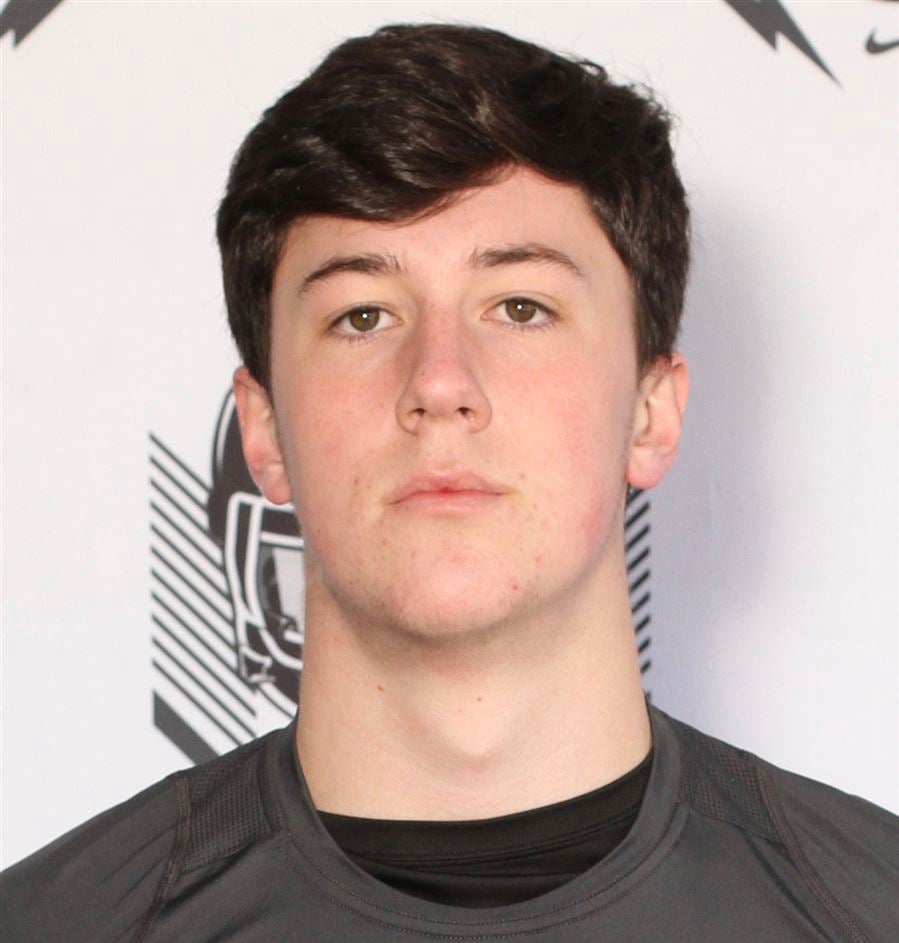
Noah May
Alabama-based journalist and podcast host of Lethal Venom and three other shows, Auburn University journalism graduate, and mental health advocate affiliated with PodMatch.
11
APPEARANCES
11
PODCASTS
Oct 30, 2026

speaker_2UNKNOWN
realize that you needed to look deeper?

Noah MayGUEST
Well, when I was 13, 13 was kind of the troubling time for me when I first got diagnosed with my mental health journey.
Noah MayGUEST
And I started noticing this shift in my overall behavior and just how I was acting during the day and just in regular life.
Noah MayGUEST
So I... we started having to go to doctor's appointments, which I was kind of against at the time because I was like, I don't want to go to a doctor right now.
12 MINS LATER
speaker_2UNKNOWN
So if you have to give one advice to the listeners today, what would you give? I would say for

speaker_1ADVERTISER
really
Noah MayGUEST
But with this being more of a personal one, basically everything that I had really talked about, I had actually discussed.
Noah MayGUEST
So I was starting to run out of ideas of like, what can I cover, what can I talk about, because I couldn't think of anything.
Noah MayGUEST
But then I got an email from PodMatch, Alex, the founder of it, and he was like, by the way, I found your podcast.
Joseph EvaldiHOST
But, you know, I don't know, it's like, you know, Who, like, what type of guests have been your favorite? I guess that's my question that I'm leading into.

FayeHOST
What made you decide that sharing your story was something you wanted to do?
Noah MayGUEST
I wanted to bring awareness to mental health and talk about it and show people that It's okay to have a mental health disorder that is not going to make you be seen as different.
Noah MayGUEST
And I wanted people to just see from a visual standpoint that no matter what you go through, no matter what you have experienced, this does not define who you are as a person this does not define what you do people shouldn't treat you differently people should not be um people should not just ridicule you for everything it's about looking inside and seeing that you know people can obviously change and people can obviously live life very much typically fine with mental health disorders.
Noah MayGUEST
So I want people to see that you don't have to be kind of sheltered or be kind of kept quiet, that you can openly talk about it and not feel shameful.
Noah MayGUEST
Looking back, I really wanted to open up and show to people that this is something that I live with.
FayeHOST
Is podcast simply a career or a creative interest for you? Or have you found your voice through it that makes you understand other people and relates to them?

FerdinandHOST
So, uh, did these experiences affect your interactions with other people?
Noah MayGUEST
I don't think it happens as m- much now, but back in twenty sixteen, twenty fifteen, when I had it, mental health was seen as like a, like a taboo thing.
Noah MayGUEST
It was a taboo subject no one really talked about, no one really brought to anyone's attention, and no one was really actively advocating for it.
Noah MayGUEST
I think society has this kind of idea about mental health, and it's not put in the best light.
Noah MayGUEST
Whenever you're watching the news, and, and this can go for anything, when you see something that a criminal does that's like, oh, he was a school shooter, he was a kind of a...
16 MINS LATER
FerdinandHOST
So can you share with us how did podcasting become part of your journey, and how has podcasting really helped you in the everything that you are becoming currently?


Joy SekaniHOST
So, you know, you've been open about your battles with depression and anxiety and So what helped you begin moving from surviving to healing?
Noah MayGUEST
Well, for me, it was personally a lot of just being open about what I had been going through during all my years and basically opening up about what I had experienced.
Noah MayGUEST
I really didn't really open up and talk to a lot of people about what I was going through because no one really...

G-RexHOST
Mm
Noah MayGUEST
I was a COVID ch- COVID gra- graduate, so we didn't have the typical graduation thing, and a lot of what we usually do for senior year kinda got cut short, which I wasn't really mad about, 'cause that's when my anxiety was really bad.
Noah MayGUEST
But when college started, I was, had just started battling it, and it was kind of, it, my anxiety was really crippling.
7 MINS LATER
G-RexHOST
So you don't feel so, like, alone in your own journey?

FortuneHOST
So how did that period affect you?
Noah MayGUEST
Well, as I had kind of briefly touched on earlier, 2020 was not a good year for me and I don't think it was a really good year for anyone that lived through the pandemic.
Noah MayGUEST
I got diagnosed with COVID later in the year and earlier that year, I was dealing with my anxiety diagnosis.
Noah MayGUEST
That's when I first got diagnosed with my anxiety disorder and I was trying to live with it try to figure out like okay how to tackle this inner demon and try to work work on this route um but yeah later on in 2020 i got diagnosed with covid i was actually kind of misdiagnosed at this time um so i actually had it for a long time and it just took a while for them to find it detected and a lot of what i had worked for earlier in the year had kind of just relapsed um I lost a lot of weight because the main symptoms I had for COVID were I didn't have any sense or smell or taste.
FortuneHOST
So what does your mental health look like now?

AbrahamHOST
What have you learned about yourself from consistently putting yourself out there and having conversations with other people? Noah, can you hear me?
Noah MayGUEST
Growing up, I thought that the mental health struggles that I had were odd and that no one else really had those same feelings as me so I felt kind of alone but podcasting to me has really shown that oh I'm not the only one that really went through it and there have been times where I'm like people actually had it worse than I did and it's kind of really come full circle kind of you know i wish i found these people when i was going through that darkest time because these are these are the people that i wanted i needed to be around so it was just a lot of wishing and looking at it it's like why isn't why couldn't i have had that so um it ended up working out.
Noah MayGUEST
But, you know, it's just been really interesting to hear other people's stories and just kind of self-reflect on.
6 MINS LATER
AbrahamHOST
When the results are not immediate, how do you stay committed to your goals?

GiftHOST
What does that phrase mean to you personally?
Noah MayGUEST
Once a fighter, always a fighter to me is... a thing of once you fight once it, you always fight.
Noah MayGUEST
I, there's not one have been a moment where, you know, I fought one time, but I can't fight this one.
Noah MayGUEST
And I want people to see that as a, don't let whatever you're going through to defeat you.
Noah MayGUEST
I want people to know that when it comes to these mental health struggles, you can become the victorious one out of it, that you can win the gold medal.
GiftHOST
How did podcasting become part of your life? Well,

MosesHOST
So, when did you first realize something wasn't right?
Noah MayGUEST
So when I was in eighth grade, I started noticing that there was just kind of a change in my personal attitude and there was just a change in my thought process.
Noah MayGUEST
My grandmother started getting really, really sick at the time and was just really declining in health.
6 MINS LATER
MosesHOST
Okay, so how did COVID-19 pandemic affect your mental health, both emotionally and physically?


Roy CoughlanHOST
I suppose let's kinda start off with your kinda podcasting journey and which show was first and how you got all into it.
Noah MayGUEST
So the podcast started, um, about two years ago, but it was like kind of a four-year work in progress.
Noah MayGUEST
One day decided I wanted to start a podcast, but of course had no idea where to begin.
Noah MayGUEST
So I did some research about what the best platforms were, um, how to upload podcasts on the podcast platforms, and I came across this, um, program called Anchor, which has been rebranded as Spotify for Podcasters now, but at the time it was called Anchor, and all it was was a p- a platform where you could record your episode and it would just immediately upload and be published out.
Noah MayGUEST
And so I had gotten everything situated and I thought, "Well, I can just record it on my phone," 'cause it was...
32 MINS LATER