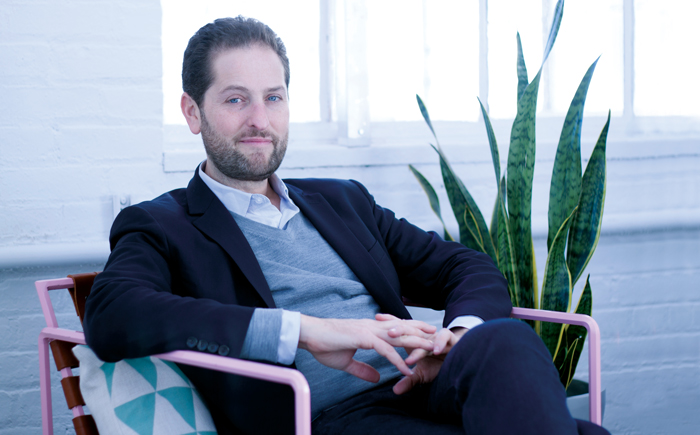
Noah Horowitz
American art historian
7
APPEARANCES
7
PODCASTS
Oct 11, 2026

Tom EdwardsHOST
Just tell me about how you're calibrating that and perhaps how Art Basel needs to and is adapting to reflect those differences.

Noah HorowitzGUEST
We're finding ourselves, you know, the start of a very busy fall season in 2026, you know, at a moment of significant change in the collecting landscape and indeed in the broader art market and gallery ecosystem.
Noah HorowitzGUEST
We're seeing many more women driving decisions and present and leaning into the market.
Noah HorowitzGUEST
And indeed, one of the statistics that stood out in the SGC was, you know, the extent to which women in particular lean in and attend events.


Josh BaerHOST
So one of the things that's most interesting about Art Basel is its willingness to iterate and adapt, so talk a little bit about the recent ones, and we'll go a little more in-depth to that.
Noah HorowitzGUEST
You know, I'd go back in time to about a year ago, um, as we were, um, coming through the other side of, of what was a challenging fair last year and, you know, the, the, uh, end of last year's fair, you'll recall, was the news around Tim Blum's closure.
Noah HorowitzGUEST
And so, um, you know, coming through that difficult market cycle, and it's been a challenging market cycle for sure, we've really looked across our platform, um, across all of the fairs, um, that we run and operate.
Noah HorowitzGUEST
At that time last year, we had just announced that we were going to Doha, um, but hadn't yet pulled off the first edition of a fair.
Noah HorowitzGUEST
And, you know, we've, from that period forward, really looked across the platform at what we can do to continuously improve, fine-tune, and support galleries in the industry through a challenging moment.
15 MINS LATER


Katya KazakinaHOST
I mean, we've known each other for almost twenty years, so [chuckles] I feel like we've seen a lot of changes, but it's like we're going back to something that was very fundamental fifteen years ago, right? And now you have to impose it again as a structural change.
Noah HorowitzGUEST
One, we continuously think, rethink, adjust, fine-tune our platform on a day-to-day.
Noah HorowitzGUEST
With five fairs now and a number of new initiatives as well that happen during, at, and around those fairs, we have the ability to constantly have our ear to the ground, speak with clients, see what's working, and, and adjust things in real time.
Noah HorowitzGUEST
Before directly touching on Basel exclusive, I'd roll back to last summer as well, where we started looking at the Paris fair coming out of this challenging summer and taking a more proactive role also in addressing a fundamental challenge in that fair, which is that, you know, there's this extraordinary demand that the venue itself is appreciably smaller in terms of the size.
Noah HorowitzGUEST
And so we inaugurated Avant-Première, which was the first cut of invitations that we really worked hand-in-hand with the galleries to self-nominate clients.
5 MINS LATER

Emma NelsonHOST
It sounds like you've had to think very, very hard about what you do this year because all the reports are suggesting that, that the, the, the art world is incredibly high octane at the moment, and that the market is very demanding.
Noah HorowitzGUEST
Um, you know, there's a huge upward trajectory for, you know, the last twenty-five years in the market.
Noah HorowitzGUEST
Uh, coming out of COVID, it spiked even further and, and then the market softened.
Noah HorowitzGUEST
So I think the entire industry has had to think, rethink, and fine-tune their programming, their platforms, and, and Art Basel is part of that.

4:21

And I'm wondering, did those attacks maybe actually increase his support? I'm sort of tend to think the latter.
Noah HorowitzGUEST
Yeah, I mean, look, the stuff about the tattoos and the Reddit posts came out pretty early into the campaign last fall.
Noah HorowitzGUEST
I don't know how you survive, you know, uh, having a Nazi tattoo, but he kinda steamrolled right through that.
Noah HorowitzGUEST
A big part of his message about himself has been a story of redemption, right? He, uh, was a combat veteran.
Noah HorowitzGUEST
It took him a long time to overcome a lot of the, uh, the effects of that, right? He's talked openly about his struggles with alcohol, about his post-traumatic stress disorder, and about how he was a very angry young man, um, and found some level of peace after he came back to Maine, where he grew up.
Noah HorowitzGUEST
The new stuff, right, in the week before the primary, first there was a article about him having sexed with women after he was married, you know, quite recently.
10:16
Noah, you've done a lot of really great nuanced reporting on this race, which by the way, everyone should check out, but what do you make of the reaction to Platner from both sides of this political divide?


Imran AmedHOST
Why, why is Art Basel standing out in the market at the moment? And what are you seeing in your customer base, um, today?
Noah HorowitzGUEST
Well, I think much the same, right? There's a focus on unequ-unequivocal quality and top of the funnel, um, experience, and Art Basel delivers that.
Noah HorowitzGUEST
Um, we've grown quickly recently, but steadily, assiduously, and, and actually quite slowly if you, if you track back.
Noah HorowitzGUEST
Um, and it, it very much follows the arc of, of, of our industry, which has gone from being very insider industry with a very small, um, uh, group, mainly of European and, and American consumers, to a more global, increasingly diversified, much more female-forward, um, audience base.
Noah HorowitzGUEST
And Art Basel, with the addition of Paris, uh, four years ago, we launched, as, as you referred to, um, in Qatar just beginning of February this year, just ahead of, um, you know, it's become a really challenging geopolitical crisis for all of us.
5 MINS LATER


Noah HorowitzGUEST
And in doing that, the foremost objective is to continuously deliver for our gallery clients, for the artists that they represent, that they work with, but also for collecting communities, professional communities the world over.
Noah HorowitzGUEST
And we have a mindset of continuously advancing opportunities or being an opportunity accelerator for the art world or the world of art writ large, right? This idea that we don't directly, although increasingly more and more, we're commissioning more things, but for a lot of what comes through the Art Basel platform, we don't directly create it, but it comes through Art Basel and then it accelerates and explodes from there and more opportunities, whether commercially in terms of market making, but also in terms of advancing artists' careers and you know, creating more touch points for the global community of art.
Noah HorowitzGUEST
You know, if you go back to the beginning in 1970, when Art Basel was founded by Ernst Beiler and Trudy Bruckner and a few others in Basel, Switzerland, it wasn't the first art fair of its kind.
41 MINS LATER