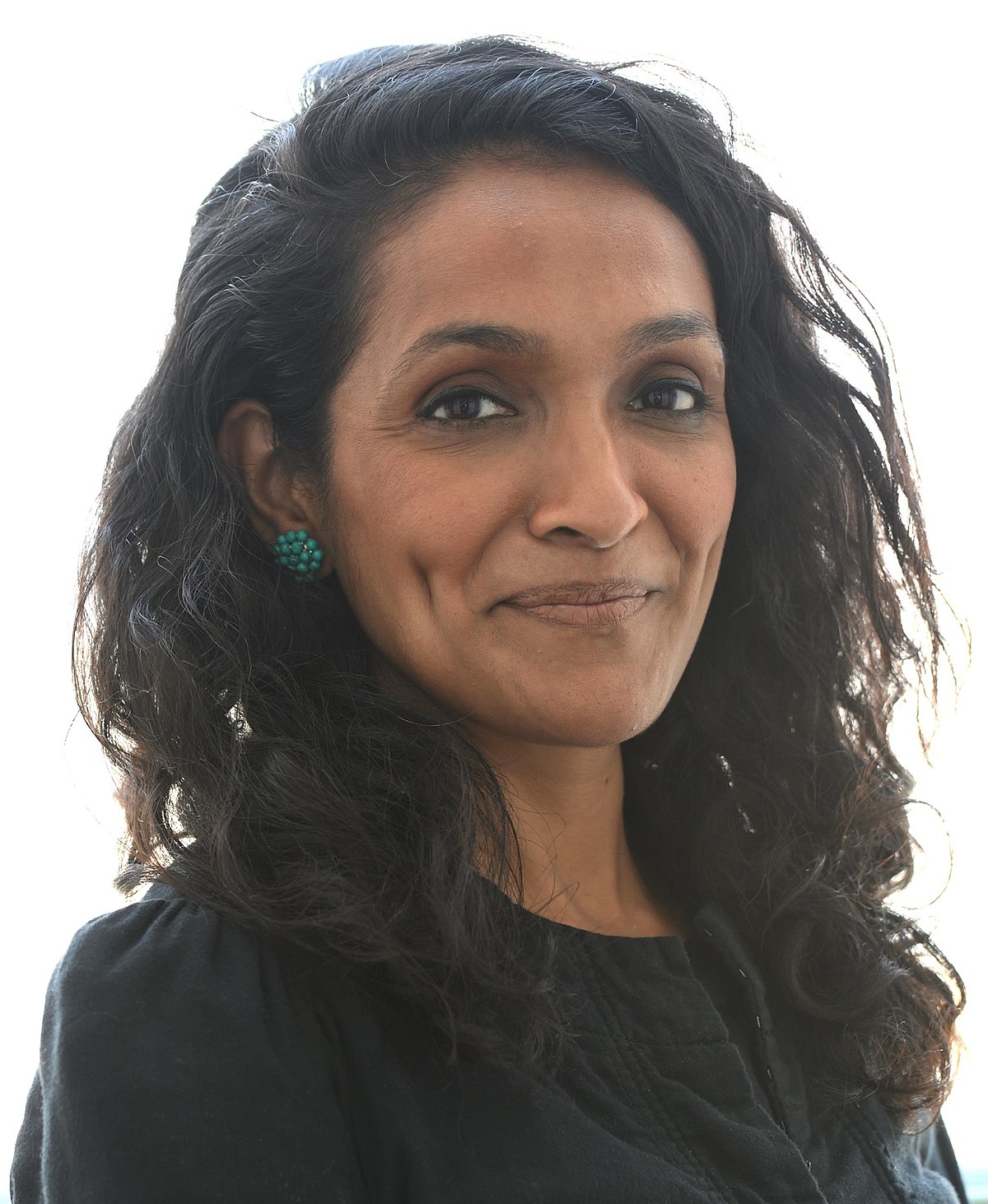
Nithya Raman
Member of the Los Angeles City Council
18
APPEARANCES
17
PODCASTS
Sep 24, 2026


Emma VigelandHOST
Can you talk about how about that and why she was forced to step down, essentially, because it was so embarrassing and how your approach would be different than that of the incumbent?

Nithya RamanGUEST
Yeah, so homelessness, I think, is the defining issue of LA right now in so many ways.
Nithya RamanGUEST
It's connected to our housing crisis that's driving people out of their homes and out of the city and onto our streets.
Nithya RamanGUEST
And the mayor appointed herself to the Homeless Services Authority Commission, which is a city-county agency that oversees hundreds of millions of dollars in spending.
Nithya RamanGUEST
And at that moment, it felt like she was really getting in there and taking charge and then proceeded to miss half the meetings.
5 MINS LATER
Emma VigelandHOST
And how do you plan to keep the lines of communication open with the DSA and potentially even, you know, collaborating with some of their efforts when you're hopefully in office?


Jennifer WelchHOST
... or if they're common sense because this seems to be this messaging vortex that everything goes into, and I just want to simplify it down.
Nithya RamanGUEST
Uh, they, they paint you as radical when you're pushing back against a system that's been in place for a very long time, and I think to me, here in Los Angeles, what we are seeing is that voters here in LA are sick of the system.
Nithya RamanGUEST
They're sick of this broken status quo, and the things that I wanna do, again, they, you know, m- maybe they are radical, but I think the city should not be this expensive.
Nithya RamanGUEST
I don't think the cost of housing should be so high that it is driving working people out of the city every single day.
Nithya RamanGUEST
I think we can protect renters who are getting pushed out by unscrupulous landlords, and that the city can stand up for vulnerable renters in a city that is majority renters, by the way.
Nithya RamanGUEST
And I think we can build exactly the kind of housing that working families need by cutting red tape, by making sure that the city, which has historically stood in the way of housing, does not do that anymore, that we can actually build the housing that we desperately need.
Jennifer WelchHOST
How, how are you as mayor willing to address, uh, federal overreach into your city?


Bill EsparzaHOST
So what is your plan to get ice off our streets and let us get back to eating tacos Dorados? Yeah.
Nithya RamanGUEST
Well, I mean, I think as a, I was just talking to the owners here at this restaurant, which I'm excited to try the food.
Nithya RamanGUEST
And they were saying that in the wake of the lineage fires, they saw their traffic drop by 40%.
Nithya RamanGUEST
It has been blow after blow at an inflationary time here in this city for restaurants.
44 MINS LATER
Bill EsparzaHOST
So what's your plan to take care of the situation here and respond to crises like that in the future?

speaker_4NARRATOR
WNYC Studios is supported by Quince.
Nithya RamanGUEST
Autumn is right around the corner, and those back-to-school vibes have me excited for a reset, starting with my wardrobe, and that's why I'm heading to Quince.
Nithya RamanGUEST
They focus on everyday staples you'll reach for again and again, like ultra-soft organic cotton tees and premium Mongolian cashmere sweaters.
Nithya RamanGUEST
Are last year's basics looking a little threadbare? Quince has you covered with premium denim and tailored chinos that start at just $60, but wear like a luxury brand.
Nithya RamanGUEST
That's because everything at Quince is priced 50 to 80% less than similar brands.
Nithya RamanGUEST
They work directly with ethical factories and cut out the middlemen, so you're paying for high quality, not brand markup.
5 MINS LATER


Josh HaskellCORRESPONDENT
Bass blamed the rise on the sky-high cost of living and cuts in federal funding.
Nithya RamanGUEST
What's going on in homelessness has been frustrating and unacceptable to so many Angelenos.
Nithya RamanGUEST
We've seen a system that's shoveled huge amounts of money towards the issue, but without this mayor really holding every dollar accountable and ensuring that every single program is working as effectively as it can be.
Nithya RamanGUEST
When I'm mayor, I want to make sure that I don't offer any excuses for the results around homelessness.
Josh HaskellCORRESPONDENT
If you were mayor, what would you have done differently in Boyle Heights reacting to the lineage warehouse fire?
Nithya RamanGUEST
I think we saw in Boyle Heights was emblematic of so much of the emergency response that we've seen from this mayor and her leadership.
Nithya RamanGUEST
Just a lack of urgency in being out there, quickly making sure that people have the information that they need.
Nithya RamanGUEST
In the days after the fire, she told people that the smoke was safe to breathe, that the air was safe, that evacuations were not needed, contradicting the advice of public health officials.

Nithya RamanGUEST
You know, when you're an incumbent in City Hall and the mayor asks for your endorsement, uh, you have to fight for your residents.
Nithya RamanGUEST
And I gave my endorsement, uh, to this mayor, not seeing anyone else getting into the race, and thinking about what I would need to do in order to be able to serve my constituents as, as their council member.
Nithya RamanGUEST
How do I make sure that I get everything that they deserve from the city? And the mayor is a key piece of that.
Nithya RamanGUEST
But as the end of the filing deadline came closer, I expected that more people would get into the race.
Nithya RamanGUEST
This was a period, last year was a profoundly challenging year for the city of Los Angeles, between the fires and the ICE raids and economic, uh, instability in the city, and I felt, like many Angelenos, that there's just this profound feeling of rudderlessness-
36 MINS LATER
Nithya RamanGUEST
Yes, I have been a member of the DSA for a number of years, and I'm not trying to hide that fact from anybody.
Nithya RamanGUEST
I will also say that my record on the council has demonstrated that no matter who has supported me or no matter, you know, Where I've been a member, I have stood up for what I think is right.
Nithya RamanGUEST
I've stood up against, for example, I've stood up for reforms in ULA, something that many people across organizations that had endorsed me in my last election did not support because I believe that that was the right thing to do.


Nithya RamanGUEST
Well, the, you know, the, we're seeing the impacts to everyone in Los Angeles or many, many people across Los Angeles of the reduction in, in production here.
Nithya RamanGUEST
Restaurant closures are connected to the drop in production here and the drop in, in, in Hollywood here, and those connections I, I believe are very clear to Angelenos who may not be directly involved in the industry but who still depend on the industry.
Nithya RamanGUEST
You also look at studies like the one from LAEDC, which showed that, you know, when you, when you're, a dollar of the tax credit is giving you, uh, huge amounts of economic benefit in return And it goes far beyond the industry.
Nithya RamanGUEST
So you're seeing it not just kind of anecdotally as you're looking across the impacts of, of what's happening in the city, but you're also seeing study after study that's showing that investment in the industry is kind of magnified in economic impact across the city.


Nithya RamanGUEST
So it used to be done through a commission that would get together appointed commissioners appointed by elected officials would come together and kind of think about how to redraw the lines to make kind of new lines that could accommodate changes in population that could make sure that we were drawing lines that were able to elect candidates.
Nithya RamanGUEST
you know, districts that really represented LA so that we, you know, we could elect Latino council members or, you know, more Asian council members or whatever it was.
Nithya RamanGUEST
So there's these rules that you have to follow, but a lot of the line drawing is just kind of people just come together and do it.
12 MINS LATER
46:45
So let me ask you, how do you how do you see yourself in your constituents?


Jake TapperHOST
So theoretically, how can you encourage more officers to join the force if they're starting off with fairly low salaries in a city where housing is prohibitively expensive?
Nithya RamanGUEST
Well, I believe that city workers should be paid well, and I've supported multiple budgets that have provided for maintaining and even expanding our police force.
Nithya RamanGUEST
But I have voted against raises for police officers that bankrupted the city then, and that actually left the city worse off in terms of public safety outcomes.
Nithya RamanGUEST
We now have, uh, 1,500 fewer officers in LAPD, and we're f- paying half a billion dollars more per year for them.
Nithya RamanGUEST
And our fiscal situation, which our mayor led us into, our precarious fiscal situation, has meant that we're investing less in other parts of our public safety response that are leaving our city feeling less safe.
Nithya RamanGUEST
As mayor, I would wanna make sure that we were actually hiring 911 call takers so that 911 call times could be shorter.
Nithya RamanGUEST
I would wanna make sure that we were building out a system of mental health crisis responders that could take call load off of LAPD and ensure that when people called for help, the right person would come when they called, whether it's an armed officer when they needed that response, or whether it's an unarmed crisis responder who could make sure and deescalate situations and provide the support that residents need.
Jake TapperHOST
Um, do you take any responsibility for the lack of progress in these areas? How can you fix it as mayor in a way you haven't been able to do in the City Council?


Anthony DavisHOST
You know, do you see him as a, as a threat? Because he says all the right things, and he does, he's a very good performer, but the substance i- is, you know, we would learn that the substance is actually really missing.
Nithya RamanGUEST
Yeah, I mean, I think he is, he is absolutely a real threat, and in recent polls, we are polling neck and neck in, in this race, and I think it is a real question about who will end up in this runoff.
Nithya RamanGUEST
Will it be, uh, you know, the very broken status quo versus me, uh, someone who is trying to challenge her with plans and, and, and, and to have a, a real adult conversation about the future of LA, or is it going to be our broken status quo versus a MAGA Republican whose ideas about the city appear designed to generate Twitter likes as opposed to actually solving the problems that we have on our streets and that, which seem truly completely divorced from, from many of the realities that we're seeing on the ground.
Nithya RamanGUEST
I think Spencer Pratt is giving voice to a very real frustration that Angelenos are facing.
Nithya RamanGUEST
I feel incredible empathy for him that he lost his home, uh, and I think a lot of people who lost their home in the Palisades are feeling that same anger that he is feeling.
6 MINS LATER
Anthony DavisHOST
And, and, and so, you know, h- how, how do you feel at this really difficult and delicate time when we know that these ICE agents are, are, are doing some of the darkest things that, that history could imagine?


Nithya RamanGUEST
So how do you address it? To me, it's by making sure that our shelter system expands and that it brings many more people in, and you can do it quickly by ensuring that the system is working much better than it is right now.
Nithya RamanGUEST
Despite my efforts to create oversight and to make sure that we're using every bed, that we're using every dollar to bring as many people indoors as possible, no one is in charge at City Hall, and I would put somebody in charge and make sure that we were using every bed and that every bed was as effective as possible to bring people indoors, and not just have them stay there for a year, but really move on to their next step, whether it is reuniting with their family, getting mental health support, getting access to rehab beds, making sure that you're going to a short-term rental voucher subsidy.
Nithya RamanGUEST
There's a way to create a process through which you're bringing many, many more people indoors, and I've demonstrated that in my district.
7 MINS LATER


Nithya RamanGUEST
We have a family shelter where there's a shared kitchen and, um, eating area, and then rooms where families can live together.
Nithya RamanGUEST
Uh, we have a women's shelter, which is similar, and a hotel site which has been in under a long-term lease where two people stay in a room, and you get your own bathroom, and you get a little bit of privacy, but you're still sharing the room with somebody else.
Nithya RamanGUEST
So this very different types of options, and we try and put people into the option that works best for them so that they're likeliest to say yes.
19 MINS LATER


Nicole KillianHOST
So what changed for you, and do you believe your candidacy could split the vote and force a runoff?
Nithya RamanGUEST
You know, the mayor's polling was very low even before I got into the race, and there was a very, very high likelihood of a runoff no matter what.
Nithya RamanGUEST
Uh, and there were a number of candidates who had challenged our incumbent mayor.
Nithya RamanGUEST
What I'm trying to offer is a choice between a very broken status quo that I think has failed a lot of Los- L- Angelinos.
Nithya RamanGUEST
People look into our city, and they see a city that is harder to live in than it was before Mayor Bass took office.
Nithya RamanGUEST
It's not meeting the issues that they're facing with urgency or accountability or results.


Will MenakerHOST
What is the difference between your approach to homelessness and, uh, the, the Spencer Pratt and Karen Bass's campaign?
Nithya RamanGUEST
Well, you know, I think homelessness is, is still an incredibly important issue here, and I think we have to be able to take it on head-on.
Nithya RamanGUEST
What I think has been frustrating for a lot of Angelenos is that we have asked and received, uh, a lot of, a, a, a lot of tax dollars from residents here.
Nithya RamanGUEST
Angelenos have now taxed themselves, voted to tax themselves three times in the last few years to respond to our homelessness crisis with housing and with services, and that is an extraordinary thing about this city.
Nithya RamanGUEST
That's what I love about representing the city, that that's how this city wants to approach the crisis on our streets.
Nithya RamanGUEST
Unfortunately, even though in my district I've made real progress, we have actually reduced tents and encampments by 54% in just a space of three years by providing housing, moving people indoors into safety, not arresting people, not moving people down the block or into another neighborhood.
Nithya RamanGUEST
That approach is very, very successful in my district, but across the entire city, what Angelenos are seeing is that we're paying extraordinary amounts of money to address this issue, and they're just not seeing enough progress.
13 MINS LATER
Will MenakerHOST
Could you talk a little bit about how that's been working and what, uh, w- were you to, uh, uh, emerge victorious from this election, may- how would your mayor's office, like, how would... what would be their policy towards dealing with something like ICE and federal immigration enforcement in a city like Los Angeles?


Nithya RamanGUEST
For a lot of Angelenos, it feels like we are moving in the wrong direction rather than in the right direction, and that isn't just a consequence of the fact that economically things are harder.
Nithya RamanGUEST
It's also a consequence of the fact that even some of our most basic services in the city, like streetlights and potholes, are worse than what they were before.
Nithya RamanGUEST
There's more potholes than there were, and our homelessness crisis continues to exist on our streets.
Nithya RamanGUEST
And I, I think this is the same issue that we're facing nationally, which is if you feel like the country is moving in the wrong direction, and if you feel like establishment Democratic politics is not feeling that urgency to solve those issues or to prevent them from happening in the first place, people lose faith in government, and I feel that frustration around me in Los Angeles every day.
Nithya RamanGUEST
Um, and that's, you know, m- it, it's, it, it, it drives me in my work, and it drove me to run for this seat.


Nithya RamanGUEST
You know, I, I have endorsed her, and she endorsed me, and I was really hopeful when she came, uh, into office that she was confronting our homelessness crisis head-on.
Nithya RamanGUEST
But I will say that over the last couple of years in particular, as I have pushed to create a real system in response to our homelessness crisis that can get as many people indoors and off the streets with efficacy and with transparency, I face real resistance from the system as a whole, and specifically from the mayor's office that has the urgency, the authority to create that system in response.
Nithya RamanGUEST
On our housing crisis, something that I think is absolutely essential to the future of Los Angeles, it is essential to our resiliency, the cost of housing is driving so many working families out of this city.
Nithya RamanGUEST
We have pushed back against state mandates to create more housing in LA instead of telling the state exactly how and where we wanna build that housing and really accommodating that housing in our existing city.
Nithya RamanGUEST
The cost of housing continues to rise, Angelenos continue to suffer, and our mayor and our city is not taking this with the seriousness that it requires.


Jon LovettHOST
Ah, can you talk about, ah, what is standing in the way right now of Los Angeles building enough housing supply to meet the need?
Nithya RamanGUEST
I, I was very focused on affordable housing when I first started my first race, building more affordable housing, building more shelter, making sure that we were building a kind of, um, what people talked about, ah, needing here in LA.
Nithya RamanGUEST
But as I was in office and I started getting calls from constituents who were struggling with their rents, I realized these were often people who would never qualify for affordable housing, but they had no choice but to live in a unit with a terrible landlord in terrible conditions because there was simply nothing else available to them here in Los Angeles.
Nithya RamanGUEST
And LA is a city where there has been an active anti-housing movement that has shaped our local politics for decades.
Nithya RamanGUEST
In the '80s, there was an anti-Manhattanization movement that down zoned, that reduced the capacity to build more housing along every major boulevard and thoroughfare, that reduced capacity to build multifamily housing across the entire city, leading to what estimates...
15 MINS LATER
Jon LovettHOST
... uh, uh, with that program, and, like, what does it tell you about how you'd do it differently?