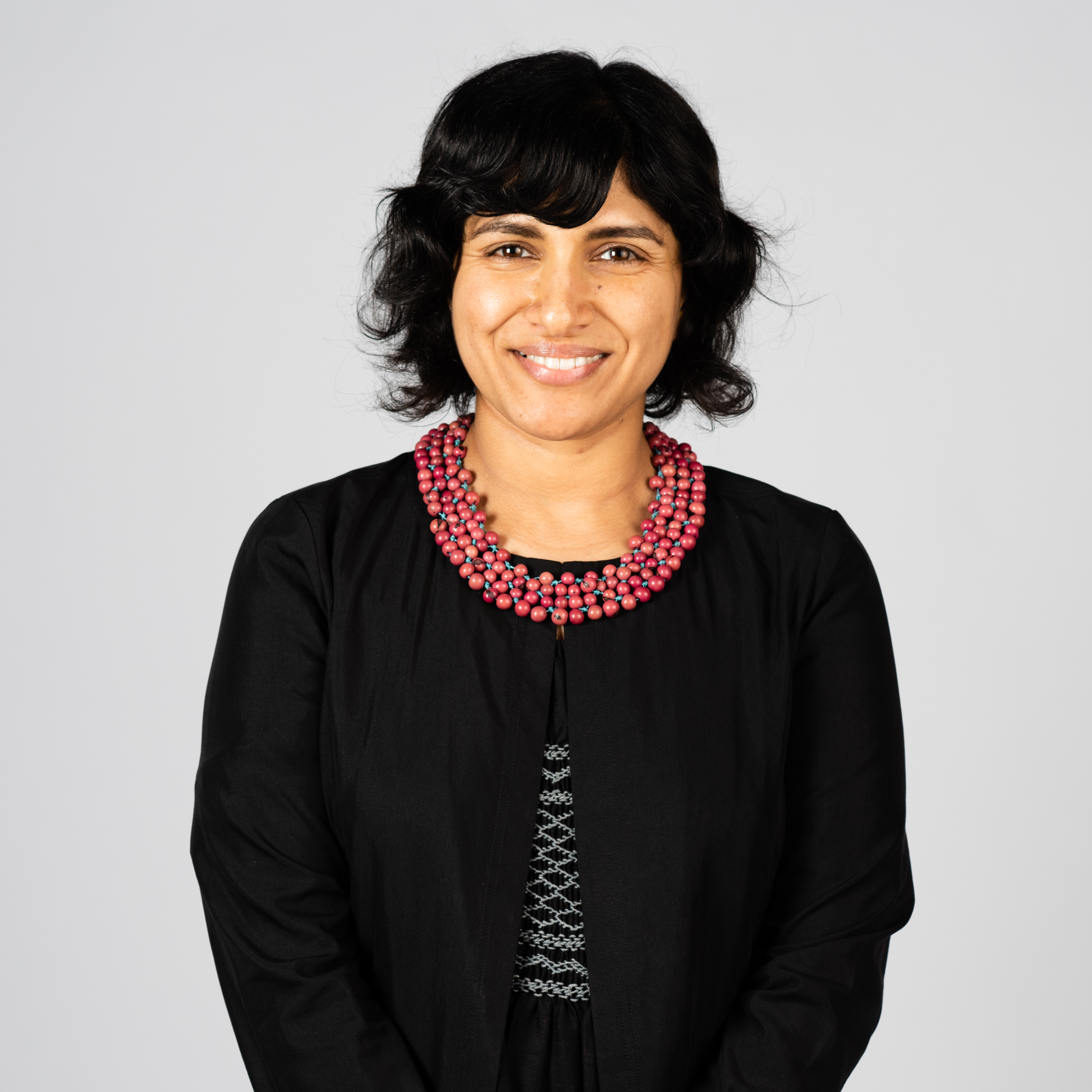
Nitasha Tiku
16
APPEARANCES
4
PODCASTS
Oct 30, 2026


Oz WoloshynHOST
Natasha, I want your reaction, particularly, I loved your smile at Daniela's interjection.

Nitasha TikuGUEST
I think that was actually the part where he, like, you know, moved his hands and said, like, Daniela, you take over.
Nitasha TikuGUEST
I'm assuming that's because they said, Dario, you're way too charged up to actually make comments about Sam in any interview.
Nitasha TikuGUEST
That whole section was so fascinating because, you know, obviously this animosity and disapproval hatred in some cases.
9 MINS LATER
Oz WoloshynHOST
Natasha, I want your reaction, particularly, I loved your smile at Daniela's interjection.
Nitasha TikuGUEST
I think that was actually the part where he, like, you know, moved his hands and said, like, Daniela, you take over.
Nitasha TikuGUEST
I'm assuming that's because they said, Dario, you're way too charged up to actually make comments about Sam in any interview.
Nitasha TikuGUEST
That whole section was so fascinating because, you know, obviously this animosity and disapproval hatred in some cases.
9 MINS LATER


John HeilemannHOST
But it's, but I think you can do a relatively nuanced and complete thing of it in the course of X number of minutes.
Nitasha TikuGUEST
Yeah, so let me try to actually start sort of where we are now, 'cause I think that helps, um, put everything in context.
Nitasha TikuGUEST
So for example, when we heard these recent Anthropic whistleblowers talking about, you know, "Hey, this is the discourse inside the labs.
Nitasha TikuGUEST
Um, you know, many of the people building this technology believe we are going to be extinct in the next 10 years," and you have, you know, current Anthropic employees affirming this, I think it is naturally interpreted by the public as these are the people on the front lines building the technology.
Nitasha TikuGUEST
Um, you know, we're hearing all of these announcements about, uh, solving millennial math problems, um, you know, swarms of rogue agents.
Nitasha TikuGUEST
And so you interpret it as, like, they are seeing something in, in these reports that is going, accelerating faster than anyone can think, and that they are speaking from a particular place of expertise.
35 MINS LATER
Ezra KleinSOUNDBITE_SPEAKER
Yeah.
Nitasha TikuGUEST
Yeah, so I've been reporting on this, um, third-party evaluator, auditor ecosystem that is all of a sudden, you know, like, the agreed-upon first line of defense for all the harms we talked about last week, um, you know, from existential risk to, like, teen mental health.
Nitasha TikuGUEST
Um, so this is really interesting because this ecosystem, I think, was already growing, um, a bit nascent, but, um, there was a lot of money and interest going into these evaluation startups.
Nitasha TikuGUEST
Like, now they're kind of national names, Meta, Apollo, um, Redwood Research, but, you know, that particular part of the ecosystem was already getting good funding, and it's, like, considered very prestigious, I think.
Nitasha TikuGUEST
You know, if you're gonna leave a lab, a frontier lab, then, like, it's a great place to go.
Nitasha TikuGUEST
Um, but then there were also companies like Val's AI, which has, uh, just raised from Andreessen Horowitz, and they previously raised from 8VC, and I think they have been thinking a little bit more about, like, public sector, you know, working for the government, making sure they have a bipartisan kind of appearance, um, working better with DC, and then you have the, like, Accentures and the Ernst & Youngs, which I see are now advertising for jobs on 80,000 Hours, which is an EA jobs board.
Nitasha TikuGUEST
So yeah, everyone is just, like, I think seeing that legislation likely won't get passed, but this is something that the companies agree on, and that there's already funding for it, and there is a deep need even just to, like, vet the basic claims of the companies because otherwise it's like-

Reed AlbergottiGUEST
Like, I think this is, this stuff could be great, but it's, it's gonna take, uh, I think, a lot more time.
Nitasha TikuGUEST
I mean, I think they've done a terrible job, like, trying to relate to normal people and articulating a use case for them, or even just, like, going out and seeing how their users are doing it, and they're so...
Nitasha TikuGUEST
I mean, they do pay a lot of women influencers, but, you know, for, for content, but they're so behind.
Nitasha TikuGUEST
I mean, the other interesting thing that was, like, theorized around the time of the Scale AI acquisition, acqui-hire, was that, um, as, as a company that was helping Google, um, OpenAI, Anthropic, like, everybody do post-training and other parts of the, um, development process possibly, that he would've had a lot of ideas about, like, who's good, how are...
14 MINS LATER

Oz WoloshynHOST
Were they consciously adding fuel to the fire or were they just going to do it anyway and they didn't reflect on how much the timing of their announcement right after the Coxon thing would kind of send this to the stratosphere? What was it that they did this week and how is it different from last week's news cycle driven by Coxon, Natasha?
Nitasha TikuGUEST
I mean, I think Dario Amadei has said multiple times that he was hoping for some kind of coordination, you know, for the labs to all agree or, you know, multiple countries to agree to a slowdown.
Nitasha TikuGUEST
I do know that Sam had been having these conversations, but I think it's also just like in a way like a recruiting retention tactic, right? they know that their employees care a lot about this.
Nitasha TikuGUEST
It looks like there's an opening, you know, and tech companies are nothing if not like total sheeps in a way.
13 MINS LATER
Oz WoloshynHOST
Natasha, how much how much of the pacing the frontier conversation has been driven by what you've called AI's tendency to hack?
Oz WoloshynHOST
Part of the research was on Redwood Research, which is an AI safety nonprofit that has deep connections to EA, right? Effective altruism.
Nitasha TikuGUEST
the woman that he interviewed is from meter, but yeah, Redwood research and meter are the two quote unquote independent organizations that analyze the open AI hugging face hack.
Nitasha TikuGUEST
And they had access, limited access to information about how the hacks unfolded.
Nitasha TikuGUEST
I think also in a limited way, but the chain of thoughts, that's their like internal reasoning.
Nitasha TikuGUEST
You know, where they say, oh, we found a message board or like, I will sacrifice myself for the group.
21 MINS LATER
Oz WoloshynHOST
Is that because the horse has already bolted the stable or why are teachers no longer and institutions no longer trying to like catch AI use or just non-effective pedagogical approach? What's driving the change?
Oz WoloshynHOST
I mean, what, where do you think this anti surveillance sentiment goes? Like, does it does it lead to any real change?
Nitasha TikuGUEST
I remember around the height of the Black Lives Matters protest, there were organizations in Oakland that were getting people together to talk about surveillance of activists.
Nitasha TikuGUEST
And they talked about, I mean, so this is at this point, you know, maybe six years ago.
Nitasha TikuGUEST
And they were talking about license plate readers in Black neighborhoods and how it's being pitched as safety, but it's disproportionately discriminating against Black people.
12 MINS LATER
Nitasha TikuGUEST
So this is something of a narrative war between the US leading AI companies and the leading Chinese AI companies.
Nitasha TikuGUEST
So what companies like Anthropic and OpenAI are alleging is that these Chinese companies are accessing their models, which are not supposed to be, um, available in China and Hong Kong.
Nitasha TikuGUEST
They're accessing their models in order to do this process called distillation, which basically involves kind of, you know, distilling, taking the learnings from a larger model and applying it to a s- to improve a smaller model.
Nitasha TikuGUEST
And distillation is a process that has been used in the AI industry for a really long time.
Nitasha TikuGUEST
It's how state-of-the-art improvements are diffused throughout the system, um, you know, through academia and open source.
11 MINS LATER
Oz WoloshynHOST
Like, how is the secret war playing out? Like, h- who, who, who are the combatants and, and what are they doing to each other?
Oz WoloshynHOST
And so, yeah, how much should we care about Sri Ramakrishna's departure and why?
Nitasha TikuGUEST
Yeah, I think the interest for regular people, for the broader audience, is the fact that it's representative of this battle that we're seeing play out with, you know, recently when Trump was about to sign this executive order on AI and And then David Sachs, who was the former White House and crypto czar and Sriram's boss in the White House, he intervened, Musk intervened, you know, a number of tech CEOs.
Nitasha TikuGUEST
And I think we're seeing that in this power vacuum, other members of the Trump administration, in particular, Susie Wiles and Trump, and Treasury Secretary Scott Fessin are both having a lot more influence and pushing back against the the kind of policy stance that the Trump administration had taken on the AI market so far, which was, you know, total support, you know, kind of deferring to the industry itself, to the representatives for the industry itself, you know, eagerness to help work with the data center build out that they want to ensure that, you know, one of the first actions Trump did in office was to repeal the Biden campaign.
Nitasha TikuGUEST
But with the release of Mythos, Anthropic's latest model, most powerful AI model, which is much more capable in cybersecurity, you know, you're having this split that we've seen since the beginning of Trump 2 between his very wealthy tech donors and the more, you know, in his MAGA base.
Oz WoloshynHOST
Talk a bit about, yeah, talk a bit about him, how you know him and this kind of, yeah, that story, you mentioned it began at Christmas in 24, I guess.
Nitasha TikuGUEST
This is, like, the one woman, right, like, that is, um, that has become a, uh, central figure in this trial, and what she's doing is essentially kind of, um, you know, in some cases, like massaging egos, um, smoothing tensions, you know, trying to translate one person's needs for another, like I said, like, emotional labor for these men.
Nitasha TikuGUEST
[laughs] Um, there's one exchange where, uh, Sam Altman is asking her, is she gonna attend, um, you know, one of the rocket events, and she said, "Oh, no, no, no, no, I wouldn't even dare ask." And it just, you know, this deference that she has towards Musk, um, you know, we just, it...
Nitasha TikuGUEST
I guess it, it makes me wonder, you know, how she describes some of these things to her friends or to her family, if she does at all.
Nitasha TikuGUEST
We also learned on the stand that her, until the Bus- until Business Insider reported that Musk was the father of her children, even her own father did not know that.

Nitasha TikuGUEST
Well, I just, if we back up and look specifically at this most recent Google letter, I think, you know, this was an opportunity to think about, like, who...
Nitasha TikuGUEST
Are there tech workers that still have market power, that are still able to, um, you know, w- win some concessions from management? And it was in particular, like Emil Michael, um, you know, the, the Under Secretary of the Department of War, he has talked about having, you know, he kind of compared it to Moneyball.
Nitasha TikuGUEST
He was like, "There's these thousands of researchers who get traded back and forth between these top AI companies, and they are the ones that have-Um, you know, power to push back against the CEO of Anthropic or at OpenAI, and these people, um, you know, a lot of them come from the, like, quote unquote AI safety community.
Nitasha TikuGUEST
I mean, they have a specific set of concerns, but I think it's very interesting.
Nitasha TikuGUEST
Um, you know, obviously, um, the mass layoffs in tech, um, pushback against any kind of, um, employee activism has really dampened, you know, the ability for, uh, like the market power of tech workers.
17 MINS LATER
Oz WoloshynHOST
I'm curious if there's any, if there's any, if it's all similarities or if there's any differences.
Nitasha TikuGUEST
He, he had a post coming out and he said, "There was recently an incendiary article about me." He put a picture of his child and, um, you know, subsequently we found out that the, that the individual, um, you know, he had been a member of some, um, existential risk groups that are calling for a pause in AI development.
Nitasha TikuGUEST
Um, but you know, his parents also said he was dealing with some mental health issues, um, before that.
Nitasha TikuGUEST
I think there's been a, uh, there's been a blame game about who is responsible for the incendiary rhetoric.
Nitasha TikuGUEST
Is it, um, you know, the, uh, the ex-riskers who are worried about human extinction, who have been talking about, um, you know, what these CEOs and companies plan to do with you? Or is it Sam Altman [chuckles] and Dario Amodei, who routinely go on, um, you know, on every stage imaginable, every podcast imaginable, and talk about how they are going to take everybody's jobs and, you know-
Nitasha TikuGUEST
Like, basically, Reid, um, uh, you probably have interviewed half the people on it at least or, or more.
Oz WoloshynHOST
Who's the, who's the movie for actually, and, and what does the marketing of the movie say about it?
Nitasha TikuGUEST
It was, it was really damning because they had, um-- you know, Meta had data looking at, uh, like thirty percent of, I think, ten to eleven-year-olds in the US are on Instagram, and they knew that, even though they have an age limit of thirteen.
Nitasha TikuGUEST
Um, that is, I think, one of the stats that, um, when Mark Zuckerberg was testifying, you know, there was, like, a lot of, uh, tension between him and, and the lawyer who was questioning him over, over this kind of stuff.
Nitasha TikuGUEST
You know, he, he kept kind of pushing back and saying like, "You're, you're misrepresenting this." Like, you know, "This wasn't intentional." Um, he said, you know, the idea of banning beauty filters, which was something that came up again and again because it was related to the plaintiff in the case, he said it would have been paternalistic to do something like that, and they, um, they just stopped, like, automatically offering them.
Nitasha TikuGUEST
I mean, to me, it was just like-- I remember when we first started talking about these-Features as addictive.
Reed AlbergottiGUEST
I was gonna ask you if you think this will stand up on appeal, you know? And does this, does this ultimately go to the Supreme Court? What, what happens?

David SacksSOUNDBITE_SPEAKER
I want to thank President Trump for accomplishing what nobody thought was possible, and it's true-
Nitasha TikuGUEST
Trump and Sacks have a very close and mutually respectful relationship, and he has ended up playing a extremely pivotal role in these, um, two technologies that he has been put in charge of, and we've all witnessed the power of the AI industry through this post ChatGPT boom.
Nitasha TikuGUEST
So it ends up having a lot of geopolitical significance in terms of how we think about national security in China.
Nitasha TikuGUEST
All of that is tied in with GPUs and chips that are needed by companies like OpenAI, Anthropic, Meta, chips that are built by Nvidia, depending on the day, the top of the stock market, trillion-dollar company.
speaker_22UNKNOWN
(tape recorder plays)
Nitasha TikuGUEST
So I would say, you know, before maybe some of the chatbot pushback, you would have had, uh, the industry get its way, and I think that the industry will still be able to win, um, and I think that some of the, like, the ability to do little carve-outs for child safety, for issues that are kind of like kitchen table issues, or things that just sound terribly bad, like encouraging a child to commit suicide, um, you know, you might be able to get some restrictions on that.
Nitasha TikuGUEST
But the thing that will really shape how the tech industry has to behave is any checks on its ability to grow.