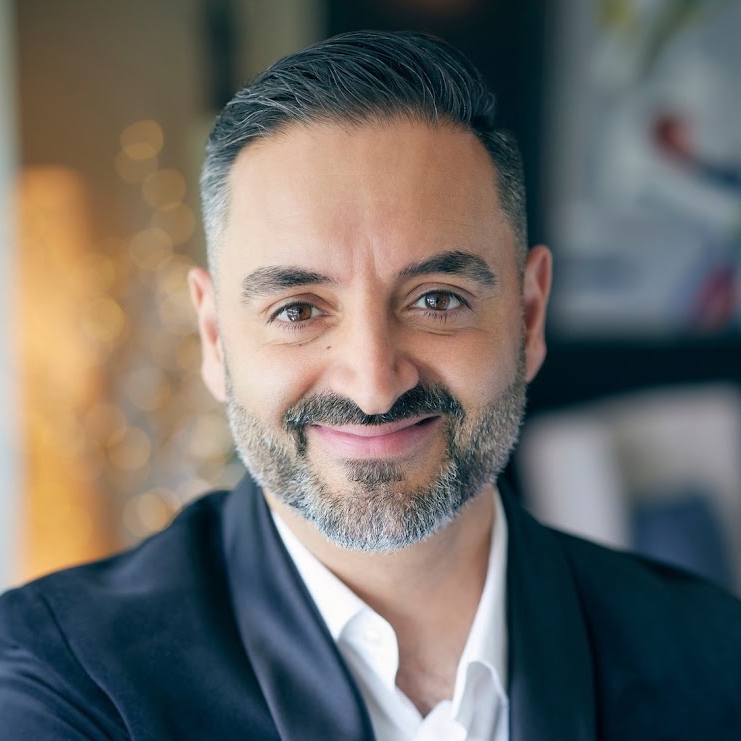
Nima Rahmany
Dr. Nima Rahmany, DC — former chiropractor turned trauma and attachment coach, founder of the Overview Method and Becoming Trigger-Proof programs.
12
APPEARANCES
11
PODCASTS
Nov 11, 2026


James MitchellHOST
And if that's going to help you in your own world of loving and building compassion for the shadow, how do you rebuild or build compassion for your spouse's shadow? So

Nima RahmanyGUEST
It comes back to yourself, James, because if you don't have compassion towards your own shadow, and how do you do that? Well, you're telling men to get into their hearts.
Nima RahmanyGUEST
But what a lot of people don't realize is there's a lot of pain in our hearts.
Nima RahmanyGUEST
like get you're telling me to get into my heart if i was to get into my heart i would be confronted with a ton of pain and i don't want to do that so i don't want to get into my heart because there's so much pain in my heart so the answer i've discovered in the latest of my work is you have to renegotiate your relationship with pain itself the painful emotions like shame of rejection of abandonment of guilt and what we do is we sit and we expand your capacity to feel all of those and we mix and blend it with the physical and what happens is you let yourself really go into the pain that's there And all of a sudden, all the joy, all the gratitude, all the compassion just floods in because it's no longer, you're no longer blocking away pain.
Nima RahmanyGUEST
And so to connect with your heart, we must first connect with the pain that's there.


Mr. WhiskeyHOST
I had no idea what that was.
Nima RahmanyGUEST
But all I knew was that all I was modeled growing up was two parents that absolutely loved me, but their bodies were in survival mode from religious persecution, leaving Iran to come to Canada with two twins who are like four years old.
Nima RahmanyGUEST
Imagine the amount of survival stress in the body, religious persecution, leaving like the regime, the Islamic regime.
Nima RahmanyGUEST
They were in their mid twenties, which left little in the tank for emotional attunement.
17 MINS LATER
Mr. WhiskeyHOST
It's when and how you do it that changes the whole meaning and context of it.

Zach JurekHOST
Could you lead us through that journey of your own personal transformation and how you came to where you are now and going from doing that great work of being a chiropractor into the work that you're doing now?
28 MINS LATER
Zach JurekHOST
And then do you see people who've maybe had some chronic illness or severe disease go through your work, resolve an issue from 70 years ago and then feel remarkably better


Nima RahmanyGUEST
The reason why they're vulnerable in the first place, they're afraid of their vulnerability is because there was a period of time where they were vulnerable and they were hurt and they're holding onto an incredible amount of pain.
Nima RahmanyGUEST
So if a leader, the deeper that the leader goes in healing their traumas, the greater that they grow, that their impact is.
Nima RahmanyGUEST
Because when you look at it, A tree, when you see a tree growing, everybody thinks, oh, a tree is growing one way, but it doesn't.
7 MINS LATER

speaker_5ADVERTISER
yeah
Nima RahmanyGUEST
right yeah it passes the it passes the wound off so how do we resolve that well we're going to find out like in that moment that you flew off the handle this is how i resolved it this is actually how i got to this is i flew off the handle in my last relationship and things got physically violent And I had to go through this entire process of really understanding what happens to us when we dissociate from kind of like our bodies and we go into dissociative rage and we fly off the handle.
Nima RahmanyGUEST
whatever is said to us in that moment that causes you to fly off the handle, if you go back in time and think of a time that you flew off the handle, it was something was done or said that produced what you perceive to be a threat to your ego, a threat that evoked shame.
Nima RahmanyGUEST
Something that was triggered was some sort of a shame that came up in my body.
Nima RahmanyGUEST
And that shame was so painful that we react with the fight response to try to protect ourselves.
20 MINS LATER


Nima RahmanyGUEST
Because you gotta think, y- the, yes, you're talking about people kind of dissociating and going into different versions of reality.
Nima RahmanyGUEST
Why would we wanna do that? Because we haven't developed the skill of being in our bodies.
Nima RahmanyGUEST
Because when we sit in our bodies, we'd have to get real with the fact that we're carrying so much pain.
Nima RahmanyGUEST
There is so much pain that we're carrying that we don't want to admit, that we don't wanna feel.
Nima RahmanyGUEST
And because we don't wanna feel it, we feel safer in going into these fantasy lands, whether it's romance novels, whether it's porn, whether it's, um, virtual reality.
17 MINS LATER

Jim EmerickHOST
Take your time and walk us through that, because I think we've all seen that phenomenon before or know somebody who believes that they can be two people.
Nima RahmanyGUEST
Well, I want you to think of anybody that you know who's been successful in business.
Nima RahmanyGUEST
I mean, we can use the most successful businessman in history right now, Elon Musk.
Nima RahmanyGUEST
This dude can put shuttles on Mars, but he can't figure out relational dynamics.
6 MINS LATER

MichaelHOST
Yeah.
Nima RahmanyGUEST
What changes it is a, a, a presence with the biology [laughs] which nobody's gonna wanna hear.
Nima RahmanyGUEST
What changes it is, okay, go to a moment, Michael, right now where you got triggered, you got activated, and notice the clench- clenched tension in your body that came up with a, a recent conflict.
Nima RahmanyGUEST
And as you take a deep inhale and bring your awareness to it, you might even wanna shut your eyes and put your hand over that part.
7 MINS LATER
MichaelHOST
Yeah.
MichaelHOST
What did you notice?
Nima RahmanyGUEST
And so instead of talking about them, I wanna tell [laughs] you about the patterns that were really challenging, which is I've did a lot of personal development work, followed the big names.
Nima RahmanyGUEST
Um, but on a cognitive level we can get to an understanding of these changes, but the embodiment of all of these concepts are really what are demonstrated.
18 MINS LATER
MichaelHOST
Yeah


Nima RahmanyGUEST
Well, when I was 13 years old, I had my first chiropractic adjustment and I was like, lo and behold.
Nima RahmanyGUEST
And I just started to align all of my courses in high school and university programs so that I could graduate from chiropractic school and become a chiropractor because I wanted to help others feel the way that I did after that adjustment.
Nima RahmanyGUEST
I went to this kind of school-wide kind of assembly in the first month of my chiropractic school.
50 MINS LATER


Nima RahmanyGUEST
Because on one hand, I have this altruistic nature that really wants to serve and make do good in the world, and then this other part that has a material reality.
Nima RahmanyGUEST
So that start of that practice, that becoming a chiropractor, that building a business, I was forced to kind of face this, this split in my psyche, which led me into the world of personal growth, because it wasn't sustainable the way that I was operating in practice, the way that I was living with anxiety.
Nima RahmanyGUEST
Like, this split was not sustainable, and I needed some sort of a resolution for it.
Nima RahmanyGUEST
So it led me down the world of personal development, John Demartini, Byron Katie, all of the great minds in personal growth.
Nima RahmanyGUEST
So that deep down what I was trying to do was to, which I didn't know at the time, which was to integrate this split in my psyche, and it led me down a path of learning more and more and then understanding more and then getting some success within the financial, uh, realm.
15 MINS LATER

Nima RahmanyGUEST
'Cause as I'm hearing you, and you've, on that journey, um, and you keep affirming, and, and I get why you're doing it, "I'm a narcissist.
Nima RahmanyGUEST
In that journey of us growing up, and this is all about mental health, when you, when you uncover, when you are, are a child and you're born to a parents that don't, haven't done their trauma healing work, they don't have the capacity to really see you as a, as a, a sovereign being.
31 MINS LATER