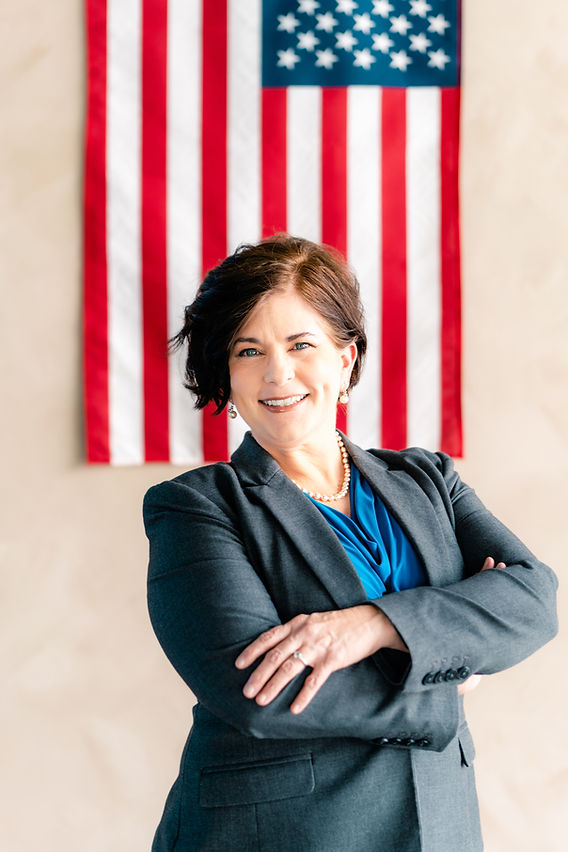
Nikki Gronli
5
APPEARANCES
3
PODCASTS
Oct 17, 2026


Nikki GronliGUEST
When I did those town halls around the state and people started asking if I would run, um, my husband and I had talked about it for like five months.
Nikki GronliGUEST
You know? It was like that constant like things come up, and you're like, "Well, if I ran, you know, here's what it would look like." And when I finally decided to run, it was like a- an evening and we're having a conversation.
Nikki GronliGUEST
I looked at him, I said, "I think I'm running for office," and- He looked at me, he goes, "I knew that about two months ago." [laughs]
9 MINS LATER

Jonathan EllisHOST
... find co- common ground, you know, fi- you're gonna have to probably compromise on both of those areas I would think, but-
Nikki GronliGUEST
There's also, um, some loopholes, corporate loopholes, where you do have some corporations that aren't paying in, um, to the payroll taxes that, that probably they should be.
Nikki GronliGUEST
And some of it has to do with changes that have happened because of the gig economy.

Nikki GronliGUEST
Yeah, let's dig into what's happening with our cattle ranchers and producers and beef prices.
Nikki GronliGUEST
Of course, we saw this executive order where 300,000 metric tons of beef is going to be brought into America.
Nikki GronliGUEST
I don't think we've ever had clarification on exactly where all of this is coming from.
Nikki GronliGUEST
And in truth, those 300,000 metric tons of beef are not going to help the consumer.
Nikki GronliGUEST
The reason being that's really about 2% to 3% of actual ground beef that will be sold.
Nikki GronliGUEST
And what President Trump has said is this is about the consumer bringing those beef prices down.
22 MINS LATER

John HultHOST
What could or should the federal government do to manage its response to these disasters and the cost of that response as we move through this new era?


Nikki GronliGUEST
The hardest thing for folks in agriculture right now, and the thing I hear time and again is, it is so hard to know what the future looks like.
Nikki GronliGUEST
Now, there's always some uncertainty we deal with because weather, drought, those sorts of things.
Nikki GronliGUEST
But now we're throwing on top of that, not knowing where trade is going to head.
Nikki GronliGUEST
And that is, I mean, at any point in time, an announcement can come out of Washington, D.C. drastically reduces what they are going to get for their cattle or their crop.
5 MINS LATER
SteveAUDIENCE
Because I had all the respect in the world for Senator Daschle, Senator Johnson, Congresswoman Herseth, and just want to know where you align.
Nikki GronliGUEST
And even maybe with these bailout dollars that come in, those producers are looking at the fact that they just had historically expensive crops to get in the ground, right? And the fact that this is coming in, but how much is it really going to impact them? when they don't know yet at the end of the season what their yields are going to look like and what they're going to get back.
Nikki GronliGUEST
Because I've got three different farmers now that I've talked to that chose not to do fertilizer on their soybeans because of the high rate of fertilizer costs.
Nikki GronliGUEST
We've still got spotty areas of drought and even some areas with too much water.
Nikki GronliGUEST
So there are a lot of areas of the federal government that are not modernized in the way that we still have a lot of things, including, if you think of Farm Service Agency, uh, USDA Rural Development, people are still filling out paper applications, bringing them in.
Nikki GronliGUEST
An employee of the federal government is entering into one system the information, and then it's being passed on to somebody else to enter somewhere else, 'cause the systems don't talk to each other.
Nikki GronliGUEST
And what happened over time is the government often says, "Here is money for a program.
Nikki GronliGUEST
You need to deliver it." But they don't provide any money to actually upgrading our systems.

Jamie SelzlerHOST
You've talked about healthcare being a human right.Um, what does that mean in actual policy for how you implement that belief that it's a human right into action as a member of Congress when it comes to healthcare in rural parts of, of South Dakota?