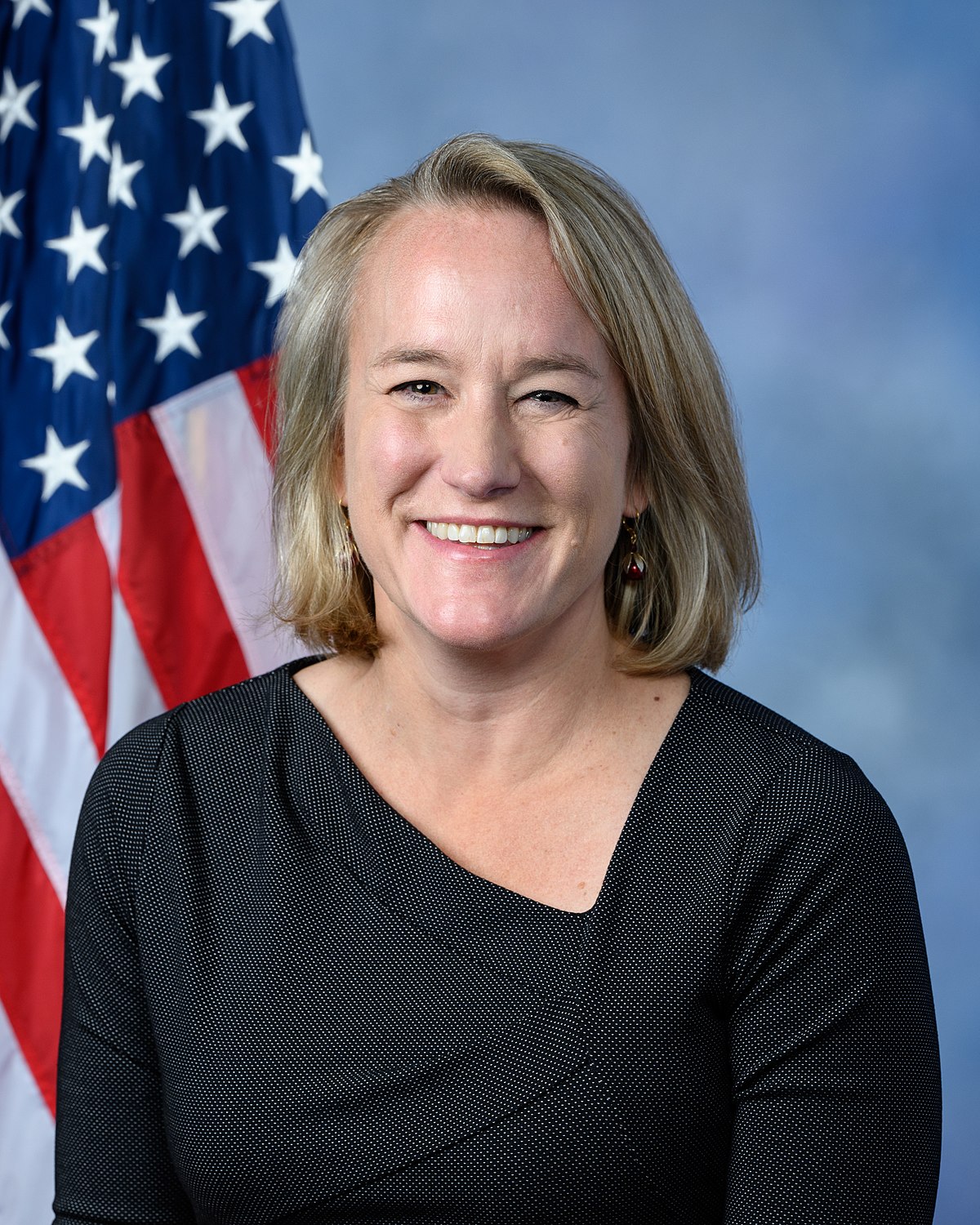
Nikki Budzinski
United States Representative
15
APPEARANCES
15
PODCASTS
Nov 4, 2026


Nikki BudzinskiGUEST
After really a historic election last night, I want to just first say I'm so thrilled to get a third term in the House of Representatives to represent the 13th Congressional District.
Nikki BudzinskiGUEST
I think this was a rejection of the Trump economic policies that we've seen over the course of these last two years that have led to increased costs across the board, whether it's people being unable to afford health insurance today, gas prices at over $4.50 a gallon in the district, a war, a needless war that no one asked for, no one wanted, and we clearly don't have any strategy on how to get out of.
Michelle AcklesHOST
How do you balance both of those things and not just make this continue to be a political fight?


Steve BridgeHOST
And on an election night, Congresswoman, how are you feeling here as polls are closed but not all the results are in?
Nikki BudzinskiGUEST
I think the early vote tallies are showing that that we're seeing and hearing about record numbers of early vote turnout.
Nikki BudzinskiGUEST
So we have to kind of balance that out with the results that we're going to see from today.
Nikki BudzinskiGUEST
But I think that the early vote numbers, and I just anecdotally tell you at SIU, we've heard SIUE and Edwardsville, they ran out of ballots for the first time ever.
Steve BridgeHOST
What are the district's priorities and what might be the priorities of a Democratic caucus now that might have some different ideas about how to govern in Congress with the majority?

Katie GravichHOST
What would be your policy's prescriptions to make health care more affordable with your residents?
Nikki BudzinskiGUEST
Yeah, I think first and foremost, there's a universal in the House Democratic Caucus about reinstating the ACA tax credits.
Nikki BudzinskiGUEST
I also think that one of the things that was cleverly, cruelly genius about what the Republicans did with the big ugly bill is these Medicaid cuts aren't being felt yet.
Nikki BudzinskiGUEST
And I do believe if we don't take action to roll back those Medicaid cuts, we're gonna see rural hospitals closing, nursing homes in rural communities closing.
Katie GravichHOST
Where have the policies pushed by the current administration and Republican Congress most harmed this population? Oh,

3:15

What do you hear from workers about the cost of projects being delayed or canceled? And where could this deal, Baja, really make a difference?
Nikki BudzinskiGUEST
I do just want to say, you know, I think on a couple of different fronts, I think what I hear is, you know, first of all, going back to the Inflation Reduction Act and the loss of those tax credits and building out many of these energy projects, specifically the clean energy and the renewable energy projects that were terminated and You know, they estimate that nationally that's been directly attributed to a loss of about 122,000 jobs.
Nikki BudzinskiGUEST
And, Pavan, you make the point about the work I did with Climate Jobs Illinois.
8:48
As a coalition's policy vice chair, how are you and your colleagues approaching it? Are there any parts of the package that offer a really strong basis for getting House Democrats on board?

7:07

Congresswoman, you told the Associated Press that the antidote to Democratic infighting is, quote, "getting things done." With President Trump in the White House, what can a Democratic House actually get done?
Nikki BudzinskiGUEST
Well, we can demonstrate that first we can govern right out of the gate and address the biggest concerns that the American people have, which is cost.
Nikki BudzinskiGUEST
We need to build on the 21st century road to housing law, making affordable housing really attainable in this country.
Nikki BudzinskiGUEST
Um, we have a lot of work to do, and I agree with Senator Manchin that it should be laser-focused on cost, bringing down cost, hitting the ground running in January.
Nikki BudzinskiGUEST
We can show that we can lead, and I think it's equally important that we can govern.
5 MINS LATER


Nikki BudzinskiGUEST
You know, first of all, let me just say, I really wanna get a bipartisan farm bill done.
Nikki BudzinskiGUEST
I was just with some growers, actually, a horseradish, uh, group of farmers that do some specialty crop in addition to beans.
Nikki BudzinskiGUEST
My feeling about the House version of the farm bill that got out that I couldn't support, a couple of things.
5 MINS LATER


Nikki BudzinskiGUEST
That was a billion dollars that the Trump administration decided to roll back when they eliminated that program.
Nikki BudzinskiGUEST
And I can tell you from an Illinois perspector, this-- perspective, this was a wildly successful program connecting our organic farmers that are growing a lot of, yes, specialty crops, but fresh fruits and vegetables with our food banks, and so otherwise some of their-- what they're producing, what they're growing might not have ended up being sold.
Nikki BudzinskiGUEST
So because of the local food purchasing grant assistance program, those organic farmers were able to get a little bit of a subsidy in order to sell and not lose money on what they've grown and get their-- get what they've grown to a local food bank.
17 MINS LATER

Nikki BudzinskiGUEST
... because of the devastating cuts to SNAP, because of the fact that we've, this administration, I say we, none of us, but the Trump administration has eliminated some really successful programs to getting healthy food options to people that are most vulnerable.
Nikki BudzinskiGUEST
'Cause I, too, like Maxine, I believe healthy food is preventative healthcare.

Nikki BudzinskiGUEST
Well, I think, and push- pushing back has been what we've been doing, [laughs] you know, over these last two years to this administration.
Nikki BudzinskiGUEST
Um, you know, Russell Vought has certainly been one chaos agent, but we, we both well know that there have been many, and they've been effective in creating that chaos all across the country.
Nikki BudzinskiGUEST
I actually served as the chief of staff at the Office of Management and Budget under President Biden, so have a little bit of u- a unique familiarity with the, the office.
Nikki BudzinskiGUEST
And I know for a fact that the office is tasked with administering and moving out resources that have been appropriated by Congress.

Richard ChuHOST
Help, help us understand where you are, what you've been doing in that space, Congresswoman.


Brian MackeyHOST
What does everything that has happened there tell you about the state of domestic manufacturing?
Nikki BudzinskiGUEST
Well, first, let me just say what it says to me about the people of Granite City is the grit and resilience and the fight that these people have.
Nikki BudzinskiGUEST
And they're not going to let a corporation, U.S. Steel, Nippon Steel... shut it down without a fight.
Nikki BudzinskiGUEST
But the credit really goes to them because this was a fight that had been waged well before I got to Congress.
26 MINS LATER
Brian MackeyHOST
Give me, for instance, what did you see? Do you think they cleaned it up when a member of Congress, two members of Congress were coming by?


Sam MadoniaHOST
All right, so what's on the people's minds as you work the state of Illinois, work your district in particular? What are on the minds of the voters? What concerns them?
Nikki BudzinskiGUEST
I think in Springfield, somewhere around $4.10 plus cents a gallon, which is high.
Sam MadoniaHOST
Why can't we meet somewhere or get some agreement on how to handle this? Is it just basically a major difference between two philosophies?


Nikki BudzinskiGUEST
Well, I will just say the thing that I am really concerned about is, you know, we took a billion dollars out of our conservation title in the House bill, and the Senate version actually takes about $1.9 billion, so even more, unfortunately.
Nikki BudzinskiGUEST
And what I would just say is, you know, EQIP in and of itself is oversubscribed today at best.
Nikki BudzinskiGUEST
These are programs that, conservation programs that our farmers are taking advantage of.
Nikki BudzinskiGUEST
And without those dollars, it's just going to make it that much more difficult for our farmers to fully utilize it and for all of the potential, I think, for conservation practices to be realized.
Nikki BudzinskiGUEST
And I really wish we wouldn't have touched the conservation title as House and Senate Republicans did.
8 MINS LATER


Nikki BudzinskiGUEST
And I think sometimes as Democrats, our policies can kind of feel a little too prescriptive when we should really be showing up in communities with ideas and ideas to bounce them off the farmers and to hear from them.
Nikki BudzinskiGUEST
What is working? Since I came to Congress, some of the things I've heard the most about is that corn and soybean prices are at record lows, input prices are at record highs.
14:55
And so as the climate is warming, it seems like they should actually be the most on high alert of anyone impacted by climate change.


Nikki BudzinskiGUEST
But one of the things that was very formative is an experience for me in learning about the art of negotiation and legislating.
9 MINS LATER


Phil MattinglyHOST
Do you think this is the type of bill that could actually get support in both the House and Senate?
Nikki BudzinskiGUEST
I definitely think that, and I think that because I'm standing here with my Republican colleague, Congressman Smith.
Nikki BudzinskiGUEST
I think together on a bipartisan basis, we're the only bipartisan House bill to address, uh, prediction markets and, um, to look at how those trades are happening and, and eliminate the ability for elected officials and our senior staff to potentially take advantage of those.
Phil MattinglyHOST
What are you hearing from their representatives, from, uh, the folks who are lobbying on their behalf about this right now?
Nikki BudzinskiGUEST
I will say CalCI in particular is supportive of the legislation that Congressman Smith and I have introduced, and we're continuing to have ongoing effort, uh, conversations with the industry as we put forward this legislation just today.


Kayla TauscheHOST
What would it look like if you were on the receiving end of that hr.opm.gov email and you were flooded with all of the responses from hundreds of thousands, in some cases, federal employees? How possible is it even to take the accounting of who responded and who didn't respond and then notifying them of their termination?
Nikki BudzinskiGUEST
Not only is it confusing, but what you're seeing is this administration is actually making mistakes.
Nikki BudzinskiGUEST
You know, first, let me say that when I had the opportunity to serve as chief of staff at the Office of Management and Budget, I served firsthand the professionalism, the thoughtfulness of the federal workforce.
Nikki BudzinskiGUEST
And the fact that they would be bullied as they are being right now and getting these emails is really just horrific.
Nikki BudzinskiGUEST
But what I would say is that this administration, in their rush to make these decisions, are clearly making mistakes.
Kayla TauscheHOST
So harsh words from a stalwart of the Democratic Party, but is there some truth in it?