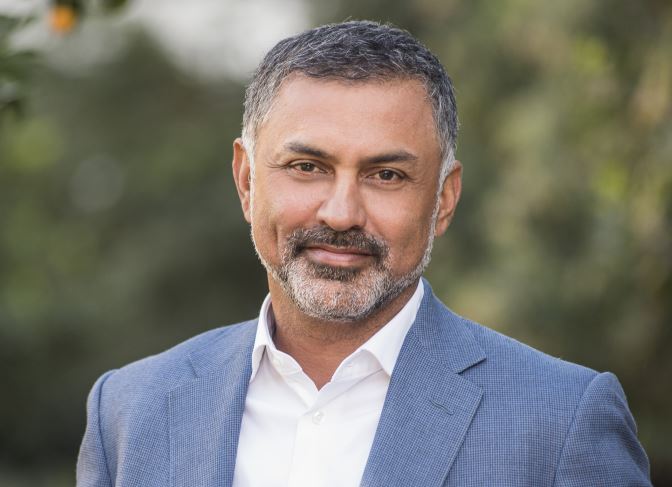
Nikesh Arora
CEO of Palo Alto Networks
38
APPEARANCES
19
PODCASTS
Oct 23, 2026


Nikesh AroraGUEST
But before we jump into the end of days, I do want to say something to what you guys were talking about earlier, about the open source versus the sort of the hyperscalers providing influence.
Nikesh AroraGUEST
And we've gone through all the understanding, all the analysis, open source versus cloud models.
7 MINS LATER

Jason CalacanisHOST
When did you first learn about this? And how severe is it? Is this an acute issue? Or is this a harbinger of things to come? And is this going to happen every 10 days for the next year, as these models have gotten incredibly powerful at what we call cyber, which really means cyber security, not just cyberpunk, but cyber security?

Nikesh AroraGUEST
So what you do is you take a small language model, you compress it, you make it task specific, you keep, keep training it until it gets to 99.9% accuracy and say, "Instead of using it, using machine learning algorithms, we're gonna use generative AI, small language models, and they're gonna do that" yeah.
Nikesh AroraGUEST
So my point is what we're doing is we're trying to figure out what tasks requires what level of intelligence, and what is the cost of that intelligence for that particular task? And you'll suddenly discover you don't need a Ferrari for every task.
24 MINS LATER


Nikesh AroraGUEST
The clear rule of engagement is, if you find something, the first rule is you've got to tell the person whose code it is.
Nikesh AroraGUEST
You've got to go back and tell them that, listen, I found something wrong in your infrastructure product or your software product.
9 MINS LATER

Nikesh AroraGUEST
Look, I also endorsed it, and I said, look, we cannot deploy AI if we don't get the observability, if we don't get to look at how AI is operating.
Nikesh AroraGUEST
Because, look, every industry has this notion of verifiability, the notion of explainability.

Scott WapnerHOST
They're thinking about the worst-case scenarios that could exist, and I don't want to enable that with something that could take my job down the road in my backyard.

David FaberCORRESPONDENT
I mean, do you not take them seriously when many of these safety people inside these labs seem to be very concerned?
Nikesh AroraGUEST
The focus needs to be on increasing the pace of deploying this technology safely and securely.
Nikesh AroraGUEST
The challenge is to make sure that we put the right safety and security harnesses around this technology, and I think that is immensely doable.
Nikesh AroraGUEST
It's as much of an engineering problem as it is to build these amazing frontier models.


Nikesh AroraGUEST
saw it come out, I figured that clearly the AI labs understand this is a problem.
Nikesh AroraGUEST
It is a possibility that if not managed right, we should not be in a haste to release these models.
Nikesh AroraGUEST
I think the notion of a ninja move I thought was, well, maybe they're going to try and get the sympathy of the regulators and sympathy of lawmakers saying, hey, wait a minute, this thing's going to be dangerous.

Nikesh AroraGUEST
Well, Jim, I've been listening very carefully to all the rhetoric about what should happen, should AI be slowed down, and what are the bad effects of AI.
Nikesh AroraGUEST
I think what we have in front of us is once in a lifetime opportunity to embrace something that is so, gonna be so impactful across the board.
Nikesh AroraGUEST
There is no competitive sport where I found people saying, "Oh, wait a minute.
7 MINS LATER

John CooganHOST
What actually changed? What was, what was the conversation like and what what, How did that process go? How much of a boogeyman was open source? Because it was discussed early, but there were a bunch of different takes.
Nikesh AroraGUEST
Look, I think what has happened is even in the last six months, you've seen the capabilities of these models continue to rise.
Nikesh AroraGUEST
Their new model is so powerful that they're going to have to clip its wings and trim it down.
Nikesh AroraGUEST
I'm sure those capabilities will be caught up with, whether it's with other frontier LLMs or the open-source community, the open-source models or Chinese models, for that matter.
Nikesh AroraGUEST
Good news, Jim, that we have been very consistent in our approach of making sure that we build an AI-first product.
Nikesh AroraGUEST
We bought a company called Chronosphere, which focuses on AI-driven observability.


Nikesh AroraGUEST
If you look at what the markets reward, if you look at what, how business gets rewarded, business gets rewarded effectively in metrics like market cap, perhaps.
Nikesh AroraGUEST
What is the market cap? The market cap is the sum total of the expectations of world about the strategy, execution, and the potential for your business, right? Nvidia trades at 5 trillion because people believe it has trends of demand that's gonna happen.
Nikesh AroraGUEST
So you can actually work your way back from market expectations, what the market expects, that makes for a successful business.
Nikesh AroraGUEST
It says, "If you have a durable business that grows at a robust rate, which you can run profitable and generate tons of cash flow, we like you." Now, that's great, which means you have to run a good business, must have good cash flow, and must grow well.
24 MINS LATER


Nikesh AroraGUEST
So the question becomes, if you know it's a known bad, you stop it at the perimeter.
Nikesh AroraGUEST
If it gets through, how quickly can you find it and stop it before it creates harm or damage? So from a cyber perspective, you wanna be in the perimeter business.
Nikesh AroraGUEST
You wanna be on as many perimeter endpoints in the world as you can because that becomes a sustaining business.
Nikesh AroraGUEST
So I'm on endpoints, I'm on, you know, devices, I'm on servers, I'm on firewalls.
25 MINS LATER


Nikesh AroraGUEST
They're showing the immense capabilities of what AI models can do, and this is true that we had an incident where an AI model using agentic capabilities was able to escape its sandbox and be able to go ahead and attack sort of infrastructure of, effectively, Hugging Face to go look for, uh, exploited sort of capabilities.
Nikesh AroraGUEST
So, I, I think what it tells us is, one, AI models are gonna be s- more and more capable over time from a cybersecurity perspective.
Nikesh AroraGUEST
I think, two, it's a lesson for our friends at Frontier LLMs to make sure that before they create capture the flag exercises to go find something in their external infrastructure, they should probably make sure that their sandboxes are secure and they are not suffering from any vulnerabilities before they start pointing the models outside.
Nikesh AroraGUEST
I think from a more industry perspective, as you saw, what we have to do is we have to start fighting this notion of AI with AI on the defense side.
Ed LudlowHOST
Nikesh, what is the token economics consideration where AI is increasingly used in, in the, in the form of swarms of agents in defense?
Nikesh AroraGUEST
Look, tokens, I've said, I said a few weeks ago that I think tokens are overpriced.

David FaberHOST
the catches david i know you've also said in the past you feel as though the consumers being subsidized by the enterprise when it comes to token economics i'm curious as to how you see that playing out over time
Nikesh AroraGUEST
So as a concept, all this compute that is being used by consumers around the world, when we tout 2 billion or 3 billion people using all this AI capability, whether it's embedded in our social media applications, whether it's embedded in our efficiency applications, workforce applications, or we're using them for deploying OpenClaw across all of our different things we do.
David FaberHOST
I just wonder, from your perspective right now, with the CapEx budgets that we're seeing from the hyperscalers, with the raises of capital that we're seeing from the likes of companies such as Alphabet or SpaceX or Amazon the other day in the bond market, how do you view this in terms of the overall return on invested capital that we're going to actually see from this investment, the likes of which we've never seen?
Nikesh AroraGUEST
Yeah, look, I, I've been r- listening to some of your podcasts, and I've been paying attention to what happens to market, because I want to understand where all this settles down, not just because, you know, I wanna understand it, but it also impacts how I build my own business.
Nikesh AroraGUEST
So you got these phenomenal frontier models, and they keep sort of leapfrogging each other.
Nikesh AroraGUEST
Every few days there's a net new model that's delivered by OpenAI or by Google or by our friends at Anthropic.
Nikesh AroraGUEST
What do I need to build? What do I need to do with these models? And as we came to that Mythos moment when everybody was busy chasing Mythos, and that was kind of important, you realize even the best model has a high false positive rate.
35 MINS LATER

Harry StebbingsHOST
What is true and what is right? Do you have to have FDs to sell into enterprise?
Unknown podcast
Nikesh Arora: Mythos is Real, Analytical SaaS is Dead, and Google can be a $10T company
Jun 8 · 31m
Nikesh AroraGUEST
I think it's exciting to see all the stuff that's gone down in the last possibly 24 months.
Nikesh AroraGUEST
They were right in anticipating the huge amount of compute that was going to be needed.
12 MINS LATER
13:43
Do you think that there's a world in which these models become so good that you could see yourself advocating for more nationalism around how they're controlled and how they're managed and where we point them? Or do you think there should be maybe a set of these models that never see the light of day, that only the NSA and other folks could have access to, or guys like you?
Nikesh AroraGUEST
I think it's exciting to see all the stuff that's gone down in the last pos- possibly 24 months.
Nikesh AroraGUEST
They were right in anticipating the huge amount of compute that was gonna be needed.
Nikesh AroraGUEST
So all that stuff's going on, but you can see that, you know, this, this notion which we talked about briefly last time, that AI is really democratizing intelligence.
27 MINS LATER
28:51
How do you maintain the discipline, or do you see yourself at some point considering things that are not nearly so much right down the middle of, of cyber?
Nikesh AroraGUEST
I can use an open source model to solve that problem because it's task specific.
Nikesh AroraGUEST
So we're trying to be judicious about the use of AI, but at the same time, I think we're not using it as well as we should be using it.
Nikesh AroraGUEST
I don't think anybody in the world, except unless you're a frontier AI model company, has got it perfectly right in terms of how we need to use it, so we've got to get up the learning curve, and we'll get there.
Nikesh AroraGUEST
I think the, the part which I was trying to say to you earlier, I think it's a very important point.
12 MINS LATER

Jim CramerHOST
We, we got machines all over the place, and they've gotta be stopped, and I don't know who else has a solution like you.
Nikesh AroraGUEST
Well, Jim, look, I think what we've seen, a lot of people have discussed Mythos, uh, in different public environments, and I think what is very important to understand, AI has the capability to understand bad code.
Nikesh AroraGUEST
AI has the capability to take vulnerabilities, stitch them together, and figure out a way to attack cyber infrastructure.
Nikesh AroraGUEST
The antidote in the short term, there's a lot of testing, a lot of blocking and tackling, which I think a lot of people are trying to do as we speak.
Nikesh AroraGUEST
Lots of consulting companies that are involved, cybersecurity vendors involved.


Casey NewtonHOST
Casey and I have talked with people at these companies for many years, usually because something terrible has happened, and I feel like the vibe we get is like, "This is the worst, most dangerous time ever in cybersecurity." What is your subjective experience as someone who's been in this field for a long time?
Nikesh AroraGUEST
I'm a little more perhaps relaxed than what you're trying to ascribe, that people come here tell us it's the worst moment.
Nikesh AroraGUEST
Historically, what's happened is, in the last seven years, you've seen the time from somebody breaching an organization and being able to a- extract, we'll say, crown jewels, has been measured in days.
Nikesh AroraGUEST
Unfortunately, with the emergence of AI, the arrival of vast technologies, that timeframe has shrunk down to minutes.
Nikesh AroraGUEST
And when that happens in minutes, your defense systems have to be able to be activated and defend yourself some minutes.
Nikesh AroraGUEST
Some parts of it are making it to seconds, the good parts where you know how to stop them.

Nikesh AroraGUEST
What we do, what the industry does, us and other players in the industry, we build the constant scaffolding required to deliver cybersecurity.
Jim CramerHOST
What this maybe feels like is that someone who may not be all that skilled may not realize they can click on something, and that could end the practice of whoever they're working for.

Nikesh AroraGUEST
Well, first of all, you know, I'm really excited that more people are trying to solve the cybersecurity problem.
Nikesh AroraGUEST
So, uh, I do think there's a bit of hubris around AI, that people believe that AI is the panacea, will solve everything that we haven't been able to solve in the past.
Nikesh AroraGUEST
Um, I think all players in cybersecurity, if you see at RSA, the entire rage is AI.
Nikesh AroraGUEST
Everybody's trying to put generative AI into work so we can solve the problems in training our models.
Nikesh AroraGUEST
So I think what he's telling you is that the customers are demanding more AI be used to solve this problem because we need to shorten the time to remediate these attacks because the old method's not gonna work.
Deirdre BosaCORRESPONDENT
Isn't that a harder competitor to fight than another cybersecurity firm?
Nikesh AroraGUEST
But it becomes part of your sort of muscle memory, and I think that's what happens.
Nikesh AroraGUEST
Spend a lot of time listening, reading, talking to people about this stuff, and you just get muscle memory over time.
Nikesh AroraGUEST
And I think the part which we sort of underappreciate, people who do well are people who go back to first principles and try and abstract and say, "From a first principle basis, is this important? Is this not important?" For example, I don't have to manage my stock price.


Nikesh AroraGUEST
I think if you look at the evolution of foundation models, if you look at the amount of money that's being spent, it looks like it takes tens of billions of dollars to train the next impressionable model.
Nikesh AroraGUEST
If you look at it, there's actually three large companies that are doing that sort of activity, and they're spending tens of billions of dollars and raising tens of billions of dollars.
Nikesh AroraGUEST
So if you read the math, let's say $650 billion are going to be spent in CapEx in the US from technology companies, half of that to deploy these models, and a majority of that to build and train these models.
Nikesh AroraGUEST
So if one wants to be in the models race, you have to make sure you're willing to commit that kind of capital.
Nikesh AroraGUEST
The idea that you can build models with a lesser amount of capital, maybe you can be 20% more efficient, 40% more efficient.
5 MINS LATER

Nikesh AroraGUEST
Well, remember, observability is beyond the model, right? The model, LLM people are focused on making sure their model is amazing, it does all the things that you expect it to do.
Nikesh AroraGUEST
But observability is to look at it from an end-to-end perspective to see how do they make sure that the customers of theirs who are using these things and the usage continues to double almost every quarter, How do they make sure that all their systems are low latency, are working perfectly, and there's nothing in the entire end-to-end delivery chain that is underperforming? So that's what observability does.
Nikesh AroraGUEST
The reason they're coming to us is because they're busy building the best models, applying their AI research to the models.
Nikesh AroraGUEST
We're busy with Chronosphere making sure that the end-to-end proposition works, and there is very low latency, by the way.
Nikesh AroraGUEST
This is true for every consumer app that is out there, whether you take Uber or DoorDash or YouTube.
Ed LudlowHOST
The idea is greater visibility into AI threats, but just succinctly, what problem did that solve for you on the team? What are you getting?
Ed LudlowHOST
Is that strategy working to convince software companies in particular that it's better to come to Palo Alto Networks than do business with a handful of different players?
Nikesh AroraGUEST
We continue to add 50 to 75 customers every quarter and sometimes more in about the fourth quarter.
Nikesh AroraGUEST
But I think more importantly, if you look at the evolution of technology, almost every industry vertical in technology has started that way.
Scroll for more appearances