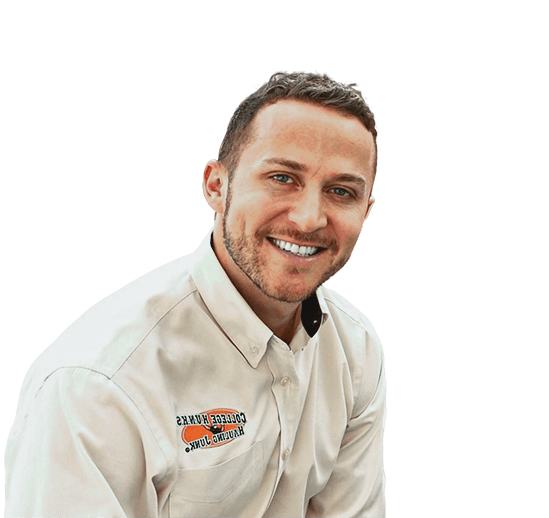
Nick Friedman
American entrepreneur
16
APPEARANCES
15
PODCASTS
Sep 30, 2026

Dylan GemelliHOST
"How do we take care of ourselves? What do people that are doing so much so often, what do they do?"

Nick FriedmanGUEST
Um, I, I, I credit the fact that I hit six feet because I slept more than anybody in middle school.
18 MINS LATER


Chad HyamsHOST
Can you talk about daily habits? Can you talk about this chief repetitive officer's mindset? This was the thing that I knew we were going to both eat up as a conversation with you.
Nick FriedmanGUEST
One, it's on the habits of the daily execution, doing the little things, whether it's making the sales calls, following up, this analogy of small streams turn into big rivers, like the micro habits turn into macro results.
15 MINS LATER


Nick FriedmanGUEST
Everybody's invested in the same common enterprise, which is the brand and the system.
Nick FriedmanGUEST
And, uh, there's gonna be curve balls that come up, COVID being one of them, or the housing crisis of '08, '09, or even the, the high mortgage rate climate that we're in today that creates some headwinds for the housing industry that, that impacts our business.
Nick FriedmanGUEST
And so we don't claim as the franchisor to always have all the answers, but we are looked to as the leader, as sort of the beacon of the support and the systems and the brand to help, you know, guide through the, the uncertainty.
Nick FriedmanGUEST
I would say the broad brush negative, uh, slant that sometimes people put on franchising is that if a franchisee is unsuccessful, they may blame the franchisor because, you know, they bought into a system, they were supposed to become successful.
6 MINS LATER


Nate HaberHOST
Now you get to have people that leave a slanderous type reviews that go viral on social media.
Nick FriedmanGUEST
And we ended up doing the job for free, offering some additional services just to try to remove ourselves from the situation.
12 MINS LATER
Nate HaberHOST
So was it just that now that intimate knowledge and know how like we've done this for 36 months?

Nick FriedmanGUEST
And I was, uh, actually just about to head back to Washington for summer workouts when I got a call from, um, Assistant Coach Matt Woodley that they were looking for, um, an offensive coordinator, somebody who had had both NBA and G League experience, and ended up getting on a Zoom with Coach Forbes.
29 MINS LATER
Mike KlinzingHOST
And then just kinda walk me through the entire experience, what it's been like, how it's been so valuable to you in your career, and then what you feel like you've been able to give to the country of Haiti and their basketball program.


Robbie ChrismanHOST
Can you tell us about maybe the report at a high level briefly, but then kind of l- takeaways, uh, from the most recent one?
Nick FriedmanGUEST
I think, uh, kind of the biggest high-level things that were talked about, um, that I thought were interesting were, one, uh, people talked a lot about, uh, not how rates need to get lower, but, uh, how home prices are just basically impossible for first-time home buyers to get into.
Nick FriedmanGUEST
Um, the idea of a starter home doesn't really exist as much anymore, um, with inventory being so tight.
Nick FriedmanGUEST
Uh, when new homes do come on the market, they're typically not the kind of starter homes that exist.
Nick FriedmanGUEST
So a lot of, a lot of loan officers, uh, were talking about solutions around building more inventory that's helpful for or affordable for first-time home buyers or home buyers who are maybe right now in a 200 to $300,000 home, um, and need to get into another one, right? So that's kind of been the, the overall theme.
Nick FriedmanGUEST
Um, I think a second kind of overall theme is just, uh, high debts for first-time buyers right now, even d- even buyers who, who have existing equity in their house.
9 MINS LATER
Robbie ChrismanHOST
What's the Fed going to do, especially with less communication? What's going to happen in the Middle East? Are, are, is the labor market going to remain robust? Those sorts of things.

Nick FriedmanGUEST
And the way I think of it is, you know, aspirationally, you know, you look at where is their manual tasks? Where is their handoff from one person or one department to the other? And then where does, you know, data need to be able to communicate across different platforms? Yeah.
Nick FriedmanGUEST
Even if you have a checklist, you know, if the information doesn't get properly passed or handed over, because we operate a central call center now, as an example, we book all the calls for our franchise owners all around the country.
Nick FriedmanGUEST
And, you know, we book it into a... central CRM, but if the information doesn't get transferred from the call center agent booking the job to the franchise owner that's pulling up the job to the hunks that are going out to perform the work, something doesn't get communicated properly, then the ball can get dropped.
Nick FriedmanGUEST
The crew shows up unprepared, without the right equipment, and now we're behind trying to play catch-up to earn the customer's trust back.
Nick FriedmanGUEST
And now, again, with, you know, some of the tools and whether it's AI or just simple, you know, technology tools, I mean, there's AI listening that can listen to the phone calls and shift over that information seamlessly and then create a digital checklist so that, you know, the guys can't leave the shop without listening.
8 MINS LATER
Travis ChappellHOST
What was the biggest period of growth for you guys? Was there like a certain period of time where it was like, oh, there's more hockey state level growth during this period?


Richard JacobsHOST
When did systems come into play? Like, I was gonna ask you, how long were you on the truck until you, you know, did you have a realization like, "You know, this, this is great, but I don't wanna be on this truck, you know, the rest of my life." Um, how did you start to grow it? When did that thinking come in?
Nick FriedmanGUEST
We always were like, "Man, wouldn't it be cool if you could see these trucks in every city or every state across the country?" And, uh, we didn't know- ...
Nick FriedmanGUEST
And one of our mentors, he recommended that we read a book by a guy named Michael Gerber, and it was called The E-Myth Revisited.

Cas AarssenHOST
Do you have a message? Are the kids excited to inherit all the garage and basement and attic full of stuff?
Nick FriedmanGUEST
And you hit on a just a very, um, I guess sort of, uh, common theme here when it comes to aging parents, uh, thinking that the items that they have are gonna be, you know, wanted and valued and appreciated.
Nick FriedmanGUEST
And, you know, the kids, the adult children of these aging parents don't wanna offend their mom or dad by saying, "Hey, that's junk," or in some cases it ends up turning into a fight or an argument and, and it, you know, creates a lot of friction within the household.
Nick FriedmanGUEST
'Cause we do a ton of junk removal as well as moving for folks who are downsizing in the homes they've lived, you know, 20, 30 years into maybe assisted living or a condo or apartment for, you know, for a time.
Nick FriedmanGUEST
And usually it's the adult kids that are helping to sort of quarterback that process.
9 MINS LATER

45 MINS LATER

John DavidsHOST
What were some of the big challenges around that kind of one to three million phase?
Nick FriedmanGUEST
Like, right around this time where we were roughly around a million, uh, in revenue, we got this hair-brained idea that we wanted to franchise our company, and this was, like, w- way premature in hindsight of us going down the path of trying to franchise.
Nick FriedmanGUEST
But in the book "The E-Myth," he talks about, you know, creating systems and, and creating a business as if it were a franchise so it could replicate itself, and you can... you know, it could function without you.
Nick FriedmanGUEST
And so this light bulb went off, and I think we had this naive view that franchising was gonna be this, you know, I don't wanna say easy street, but, like, we thought of royalty in the synonym- like, almost synonymous as passive income, which it was, like, completely, you know, not passive to become a franchisor.
Nick FriedmanGUEST
But we had a, uh, a manager who we hired to kinda run the operation in the DC area where it had grown.
22 MINS LATER

speaker_1NARRATOR
If you're looking to scale your business and build a business that allows you to live the life of your dreams, please visit investor fuel.com today and book a call with our team.
Nick FriedmanGUEST
There was a Newsweek article that was written once several years ago, and it was talking about guys who started businesses in college that had gone on to be successful.
Nick FriedmanGUEST
But they also mentioned Mark Zuckerberg from Facebook, Michael Dell from Dell Computers, Bill Gates from Microsoft.
11 MINS LATER
speaker_1NARRATOR
Learn more about Investor Fuel Club at InvestorFuel.com slash club.


Nick FriedmanGUEST
So we realized that actually within our third month of our business, we actually got a call.
Nick FriedmanGUEST
It was just a very major stroke of luck from a Washington Post reporter who had seen one of our bandit signs or yard signs that had been staked on the side of the road.
8 MINS LATER
Nick FriedmanGUEST
Like, we would sit and spend most of the interview telling the person about what we do at our company as opposed to asking them why they wanna work here, you know, past experiences, past failures, impacts that they've had, impacts they wanna make, try to identify.
Nick FriedmanGUEST
We didn't have core values defined yet in our organization where we could try to find people that fit a, quote-unquote, "culture," 'cause we didn't have a culture.
Nick FriedmanGUEST
So I think the early mistakes was just hiring anybody to lift the other end of the couch, to drive the truck so we didn't have to, to answer the phone so we didn't have to.
Nick FriedmanGUEST
And there was no screening criteria for the right person having the right seat.

Nick FriedmanGUEST
It was like looking for entrepreneurs to pitch a business idea for a national TV show.
Nick FriedmanGUEST
And we had just started franchising and we had already experienced some power PR, both local and, you know, some national.
25 MINS LATER

Kyle MatthewsHOST
So why don't you talk to, talk to, talk to the audience about what, what did your kind of work life or lack thereof look like in that first decade of scaling a company? And how do you manage it today, having four children, being a present father and husband, but also being a present CEO or, you know? Yeah.


Dan FleyshmanHOST
So on the make money side, franchising. Why does someone go franchise from College Hunks versus just go buy a truck or two and go do it themself with their own brand?
Nick FriedmanGUEST
So I think anybody who starts a business, they have to learn very quickly how to work on the business, not just in the business. And i- in our case, you know, like I said, we were answering the phone, hauling the junk. People would call to complain about driving, I'd be the one answering the phone in the driver's seat. I think anybody who started a business can relate to doing every th- single thing from top to bottom. But if you wanna grow a business and not just be self-employed by your own operations, you've gotta learn how to create systems and processes. And so, we read a book called The E-Myth Revisited by a guy named Michael Gerber, looks... you know, talks about people not failing, systems failing, and creating those systems and processes so you can scale, and it talked about franchising and this franchise model. And I think a lot of people maybe have a, uh, like we did, a naive view of what franchising means. Really what it is, it's a way to expand the brand without having to deploy your own capital. Because we didn't have capital, we didn't have a lot of human management personnel that we could deploy, but we did have this lofty vision of taking a brand and making it nationwide. So in order to package up what we had made successful locally, we went down the franchise path, where every time somebody purchases a franchise, we get a small injection of capital that we can reinvest into building out the infrastructure, the support, the branding, the marketing, and everything else that goes along with the business model. And so, uh, that's the path that we chose, because again, we, we wanted to expand the brand quickly, we wanted to give people an opportunity to own their own business, and, uh, we didn't have the capital to do it. So, uh, I think what people don't say about franchising, though, is you need at least, I would say, 30, 40, 50 franchisees, uh, for it to make sense, because the royalty stream doesn't really aggregate until you've got a critical mass number of franchise owners. And as the franchisor, our responsibility is to help our franchise owners be successful, uh, because if they're unsuccessful, they're gonna blame us.
27 MINS LATER
Nick FriedmanGUEST
And, uh, so I think it's... the idea is, you know, identifying that list, and we chart it out on, uh, how much money can you make on one axis, and how much heavy lifting, money, resources, time, distraction is gonna be on the X-axis. And if something is really high earning potential, doesn't take a lot of effort, that's a no-brainer. And I'll give you an example of something we did, was, uh... or we're doing now, long distance moving. You know, uh, we just... we've got the trucks, we've got the labor, we've got the network now with 200 locations. Uh, we can start offering that and leveraging our network. Uh, or we started an accounting service, bookkeeping service for our franchise owners that works so well, we're gonna offer it to other franchise systems as well because we already got that set up. We were doing... it's something we were doing internally as an internal service, it's a no-brainer for us to use-... AI and offshore DAs to be able to offer it to, to franchise systems to have clear, transparent books and accounting. Um, but then there's stuff that, you know, might be a little bit more far-reaching, uh, truck manufacturing or truck sales. Like, I don't know the first thing about-