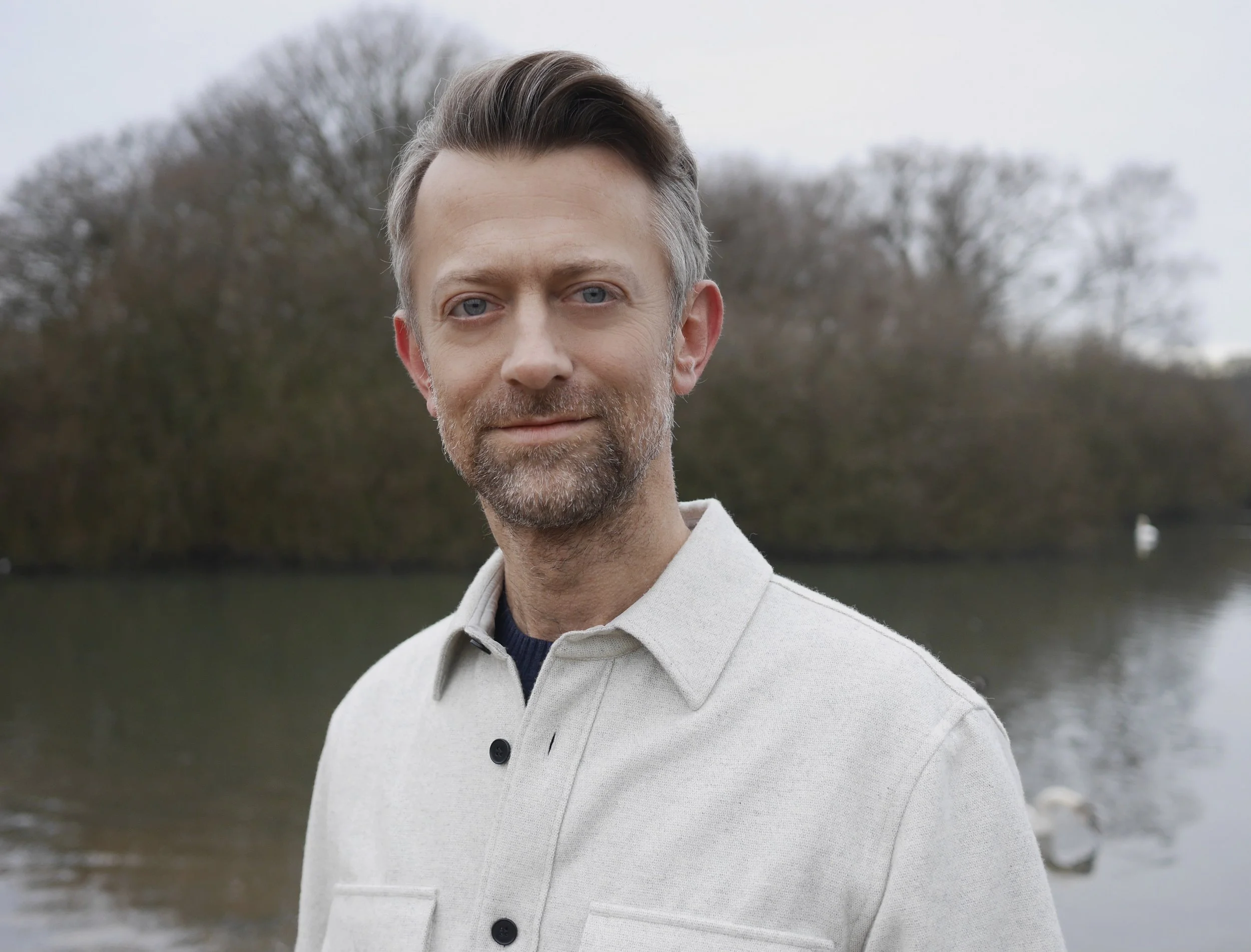
Nick Foster
British composer and songwriter
10
APPEARANCES
10
PODCASTS
Sep 2, 2026

LaurenHOST
But I think that your team was probably uniquely qualified within this mindset shift where you may have already been thinking about Lulu as a technology company.
Nick FosterGUEST
Yeah, I mean, we're, you know, our team is elbows deep in the technology side of it, in the product side of it.
Nick FosterGUEST
I think, you know, what we have been able to accomplish over the past six years is really solidify that, especially when we, you know, relaunched the platform recently.
Nick FosterGUEST
and kind of got it away from the old legacy platform that was really holding Lulu back from advancing as a technology company.
Nick FosterGUEST
And now we have this great foundation that's new that we are able to build on and really kind of flex the technological muscles that our team is capable of doing.
25 MINS LATER
LaurenHOST
okay again putting it under the lulu direct umbrella was was post 2020 right like the official brand yes 20 okay but so you're you we're predating that you're talking about right the the we're talking about just the shopify yeah okay yep so this is even longer than like you've been percolating this idea for even longer than than i thought okay yeah

Nick FosterGUEST
And so it's like, it's that, you know, 10 years ago it was like I was on the first mountain.
Nick FosterGUEST
Two years ago, I was still on the first mountain, right? And, and it's weird, and talking about my wife or bringing something up is, like, me being on the first mountain of, like, achieving and success, we've been blessed that my wife's always been a stay-at-home mom.
Nick FosterGUEST
And so me being on this mountain, I was kinda like, "Well, why isn't she there with me?" Kinda like, oh, you know.
1 HR 18 MINS LATER

Nick FosterGUEST
When we talk about human centricity in relation to AI, let's say, I think, One thing that's starting to happen, and obviously this is a very quickly evolving conversation at the moment.
Nick FosterGUEST
I think for quite a long time, design has been focused on the outputs of the design process, the end artifact, the image, the piece of motion graphics, the interactive surface, the chair, whatever it is.
Nick FosterGUEST
And now that AI tools are able to sort of either get there or mimic those end results, they can produce high fidelity video, they can produce high fidelity applications, they can produce potentially templates for future products.
Nick FosterGUEST
I think what that's doing is having a... a sort of self-reflection on the design industry and designers as to like focus a bit more on the process and focus a bit more on the craft and focus a bit more on what it means to go from zero to one and not just what the one is.
Nick FosterGUEST
And I think that's the part that I'm interested in, whether that will have a net positive or a net negative impact on the design industry.
Nick FosterGUEST
I think we're still waiting to see, but I do think that at the moment, the conversation certainly around here where I'm based is much more on like not the end goal anymore.

Nubia HendersonHOST
So can you share with us a little bit about what that title means to you and how you think about impact at that level? And even also just start by, for those who don't know what Royal Designer of Industry, what that distinction is.


Andrew LaneHOST
But practically, when you're out talking to people, when you're doing your work, when you're writing your book, how does that play out? What does that actually mean in practicality?
Nick FosterGUEST
But I feel like I've been involved in conversations about explicitly about the future, particularly about the future of technology and how that plays in society and culture and all of those other things.
Nick FosterGUEST
what the future looks like, what we might make, what we want to make with all sorts of different people.
10 MINS LATER


Kara SwisherHOST
But we're- we're in the middle of this crazy arms race, and so what approaches should business leaders use to navigate that?
Nick FosterGUEST
Yeah, so should futurism is just defined by some form of certainty about the future, and I think that can come from two places.
Nick FosterGUEST
One is a sort of ideological position, either from your religions or the state of morality that you'd like to see in the world, and we should point towards there.
Nick FosterGUEST
The should futurism I see played out a lot in business is- is this notion of observing the world through- through numeric practices, creating models of how we think the world works, and then the sort of- the temptation to project those models out into the future becomes almost irresistible, and people do that.
Nick FosterGUEST
But the challenge that I have with should futurism is that once that solid line turns to a dotted line, it ceases to be data, and it becomes-
9 MINS LATER


Ari MelberHOST
Uh, and yet these fundamental questions, do we want to guard against humanity, do we want the government to be involved in protecting, say, how children interact with future tech, uh, are important, no?
Nick FosterGUEST
Yeah, I mean, one of the major, uh, challenges we're facing is the speed at which change is coming.
Nick FosterGUEST
All these sortsa things are changing underneath us and it's sort of hard to get a footing for all of us, not just lawmakers and people who are trying to sort of regulate industry.
Nick FosterGUEST
It's hard for us to get a footing and because a lot of these technologies are digital, they can be rolled out en masse very, very quickly, and the change sort of feels like it's moving even faster than regular laypeople can handle, let alone whether they're too old or too out of touch.
Nick FosterGUEST
Um, and I think that's a real challenge and I think what we really need to do is to try and find ways to think about the future with more depth and more rigor, because we're all currently living in a sort of accidental time capsule that was planted by our predecessors who didn't think very much about the future either or weren't able to think in great detail about the future either.
Ari MelberHOST
D- do you think we should approach AI like the Industrial Revolution, painful but all of this good stuff on the other side, more like tobacco or alcohol, can be fun but boy, you don't wanna get addicted, uh, or s- or some other comparison?


Jake HumphreyHOST
So would you mind, Nick, sharing some of those buckets, some of those ways of thinking that we're all wedded to because we don't know many different but that aren't actually serving us?
Nick FosterGUEST
Yeah, I mean, what I've tried to do here is break up, like when we think about the future, it's a massive thing.
Nick FosterGUEST
And all I've tried to do with my sort of most recent work and the book that I've written is break that work up into four big buckets that I've called could, should, might, and don't.
12 MINS LATER
Jake HumphreyHOST
So I guess really my question is, how do you want this book to make us think about the world differently or see the world differently that we can all adopt in our own everyday lives?


Nick FosterGUEST
The corporate strategists, the people who have sort of worked out the numeric patterns in the world and tried to decode the world and say, "We've done the numbers and the arrow points there, so we should do that." Now, I'm not here to say that that's always wrong, but it is o- it is wrong quite often.
Nick FosterGUEST
And I think the thing that we always miss is that no matter how good your data is, when that solid line turns into a dotted line, it ceases to be data and it becomes a story.
Nick FosterGUEST
So I refer to it, there is a bit of stink on this, but I refer to it as numeric fiction because I tell stories too as a designer, but I use films and objects and prototypes and, you know, bits of conversation.
Nick FosterGUEST
But people who come from maybe a corporate strategy or an analyst perspective, they'll use numbers.
Nick FosterGUEST
And because numbers hold this sort of lovely place in our hearts, we ha- we believe them to be rigorous and we believe them to be sort of honest and true and empirical.


Nick FosterGUEST
N- n- I'm a designer, I've worked in tech, but none of us is particularly good at thinking about the future.
Nick FosterGUEST
And what I mean by good is rigorous, well-balanced, detail-oriented, uh, tenacious, uh, long-termist.
Nick FosterGUEST
We all tend to find ourselves falling into one of these four pots that I've isolated and sort of ignoring or diminishing the other three.
Nick FosterGUEST
And I think we're all living in a sort of accidentally planted time capsules that our previous generations just sort of dropped on us and we're dealing with those things now.


Alison BeardHOST
How, in your experience, do organizational leaders typically approach this work, and what do they tend to get wrong?
Nick FosterGUEST
My opinions are all tainted by the companies that I've worked for, so, you know, my experiences are quite narrowly focused on large technocratic organizations, which is where I've spent the majority of my career.
Nick FosterGUEST
But I think th- it's a spectrum, and I think I've been fortunate to work in companies that have, you know, typically a separate team or a group of people explicitly focused on long-term, futures-oriented projects, which is, I think, a part of the problem and a sort of a blessing and a curse in equal measures.
Nick FosterGUEST
You need a lot of time and money typically to build those sorts of units, and you need to have a company where there's that amount of flexibility and the desire to explore and shape the future.
Nick FosterGUEST
Quite often, it's cleaved off into these sort of separate labs and separate units.
Nick FosterGUEST
It sort of others this kind of work in an, I think, an unhelpful way, and it sort of means that other people in the rest of the organization feel like it's not their job.
16 MINS LATER
Alison BeardHOST
Would you say for organizations, that is the goal, to just sort of get everyone thinking with, through the four lenses, or can you build teams to sort of make sure you have a could thinker, a should thinker, a might thinker, and a don't thinker all working together?