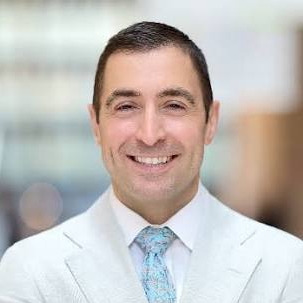
Nicholas Gavin
Emergency physician and Vice President, Chief Clinical Innovation Officer at Mount Sinai Health System.
3
APPEARANCES
3
PODCASTS
Aug 20, 2026


Stephen CalabriaHOST
Was there a moment in your career when an especially difficult shift fundamentally changed how you think about resilience and how you think about your job?

Nicholas GavinGUEST
I remember having to tell a family that their 14-year-old son had died of a gunshot wound, and it was out of the movies.
Nicholas GavinGUEST
I remember telling his grandfather, who was his caretaker, his parent, and just watching this man crumble.
Nicholas GavinGUEST
You get training on this, but then when you're actually doing it and giving someone the worst possible news that you could provide, it's a really different thing.
6 MINS LATER
Stephen CalabriaHOST
From your perspective, what are the biggest factors that determine how long someone may have to wait in the ED?

Tyler SmithHOST
Is that something unique to Mount Sinai? Or maybe if you could expand a little bit on that?
Nicholas GavinGUEST
You know, we're really trying to be the premier academic health system that operates as a learning health system.
Nicholas GavinGUEST
And one of the core principles of being a learning health system is to engage patients and families.
Nicholas GavinGUEST
And this is an area, you know, we don't get this right 100% of the time, but it's an area that we really want to lean into.
Nicholas GavinGUEST
So as a, for instance, we were building a digital tool for navigation once patients get into the hospital.
Nicholas GavinGUEST
And we've, many of your listeners probably have access to the bedside products from Epic.
16 MINS LATER

Laura DiertaHOST
But when you think about the last year or so, can you tell me about a project or initiative that you led and have been working on? What did you do, and what were the results?
Nicholas GavinGUEST
Um, we have been really thinking about our digital front door in the health system, and one of the projects that we led over the last year was really expanding our access to asynchronous care.
Nicholas GavinGUEST
And this is a care modality that I think is in its infancy in terms of how it can be leveraged.
Laura DiertaHOST
And so, you know, when you're looking at, um, the ways that you're preparing today or how, you know, you're, you're getting ready for that type of reality, what does it look like from a technology perspective? Are there things that, you know, um, you have been able to put in place or, or are planning to, to start digging into deeper as, um, you know, access to care and those kinds of things I can imagine are going to be, um, a really big focus in the next couple years?