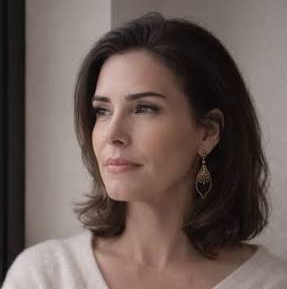
Nerissa Balland
Visual artist, award-winning author of Canvas of Courage, speaker, and therapeutic arts practitioner; two-time melanoma cancer survivor.
5
APPEARANCES
5
PODCASTS
Nov 3, 2026


Michelle PatidarHOST
So what advice can you give anybody that's listening of how to start that process of finding yourself again?

Nerissa BallandGUEST
Just to backtrack one moment is I also feel it's interesting as you were speaking that There is an identity process in the cancer club in itself, right? Survivors, thrivers, active participant, like what category do you fit in? And I was very bothered by a lot of those terms.
Nerissa BallandGUEST
I felt that the word survivor should be held for somebody who was like in the Holocaust or something like not this.
Nerissa BallandGUEST
And thriver didn't feel right because I was like, my mindset and mentality right now, I don't feel like I'm thriving.
14 MINS LATER
Michelle PatidarHOST
When you're doing these different modalities, some of it might be through talking, some of it might be through visualization or drawing, or what would people actually be doing to help them get to that spot too? Like what are the activities, I should say?


Nerissa BallandGUEST
Um, I was in that waiting room, and I also didn't see anyone around that looked like me, which is very prevalent to my story later as we continue.
Nerissa BallandGUEST
But when I say looked like me, I meant someone in their 30s who was pregnant.
Nerissa BallandGUEST
And so at 6:00 PM I went in and I saw him, and I spent 10 minutes with him, and I was pretty much dismissed because I was pregnant and, uh, I was...
Nerissa BallandGUEST
I'll... just to sum it up, I think more or less he told me if I wasn't willing to terminate the pregnancy, then, uh, he, he couldn't treat me, and I really see that he saw me more as a liability, um, at that moment.
13 MINS LATER

speaker_2UNKNOWN
Mm-hmm
Nerissa BallandGUEST
And so with those three things, I was able to shift my perspective and stop fighting, uh, what I felt was so bad and horrible.
Nerissa BallandGUEST
And I'm not taking away from the fact that it, it, there was many things about it that weren't good.
Nerissa BallandGUEST
But there was some good in it that came out of it wh- while I was going through it.
Nerissa BallandGUEST
Um, and it, I needed someone to help me figure out how to identify what those things were, and he did.
Nerissa BallandGUEST
So when I left Colorado, I made a decision that, like, I wanna live, and I want to live more authentically.
14 MINS LATER


Laura CarfangHOST
How did you come to process all of this and what role did that play as you kind of pivoted your career into the therapeutic arts? Great question.
Nerissa BallandGUEST
During the treatment, I was focused like many people on survival and I didn't have a lot of bandwidth for the emotional component.
Nerissa BallandGUEST
Also having a two-year-old at the time at home, not yet old enough to understand what was going on But children still sense a change, right? They may not have the words yet for it, but they understand something's going on.
Nerissa BallandGUEST
I very much was protective and tried to suppress and control the emotional component to give as much normalcy as I could for both my children, but specifically the two-year-old who was a little older than the infant.
Nerissa BallandGUEST
But what I will say is that what started to happen as I was no longer in treatment and I had, so for our listeners, the treatment for me at the time, I had several surgeries right after I gave birth and nuclear medicine to trace where the disease had gone so we could try to follow it.
Nerissa BallandGUEST
And I had eight months of immunotherapies and then the cancer had returned again.
11 MINS LATER

Nerissa BallandGUEST
are you? Who are me? Who are me? Who are me? Who are me? That's the morning talking.
Nerissa BallandGUEST
Well, so for your listeners, I am a therapeutic arts practitioner, a visual artist, and an author, and I enhance a person's well-being through the arts to create a healthier world.
Nerissa BallandGUEST
Now, let me unpack that for you because that was a lot in that first sentence about me.
Nerissa BallandGUEST
So I've explored what happens after survival when life changes you and you have to decide who you're going to become next.
Candace PatriceHOST
And how did you survive the toddler stage while doing something that the hardest part of a woman's journey, raising or creating a child within and then having to do the next hardest thing, surviving, surviving? How did you maneuver and manage during that time as a mom, an incubator? a cancer diagnoser, diagnosi.