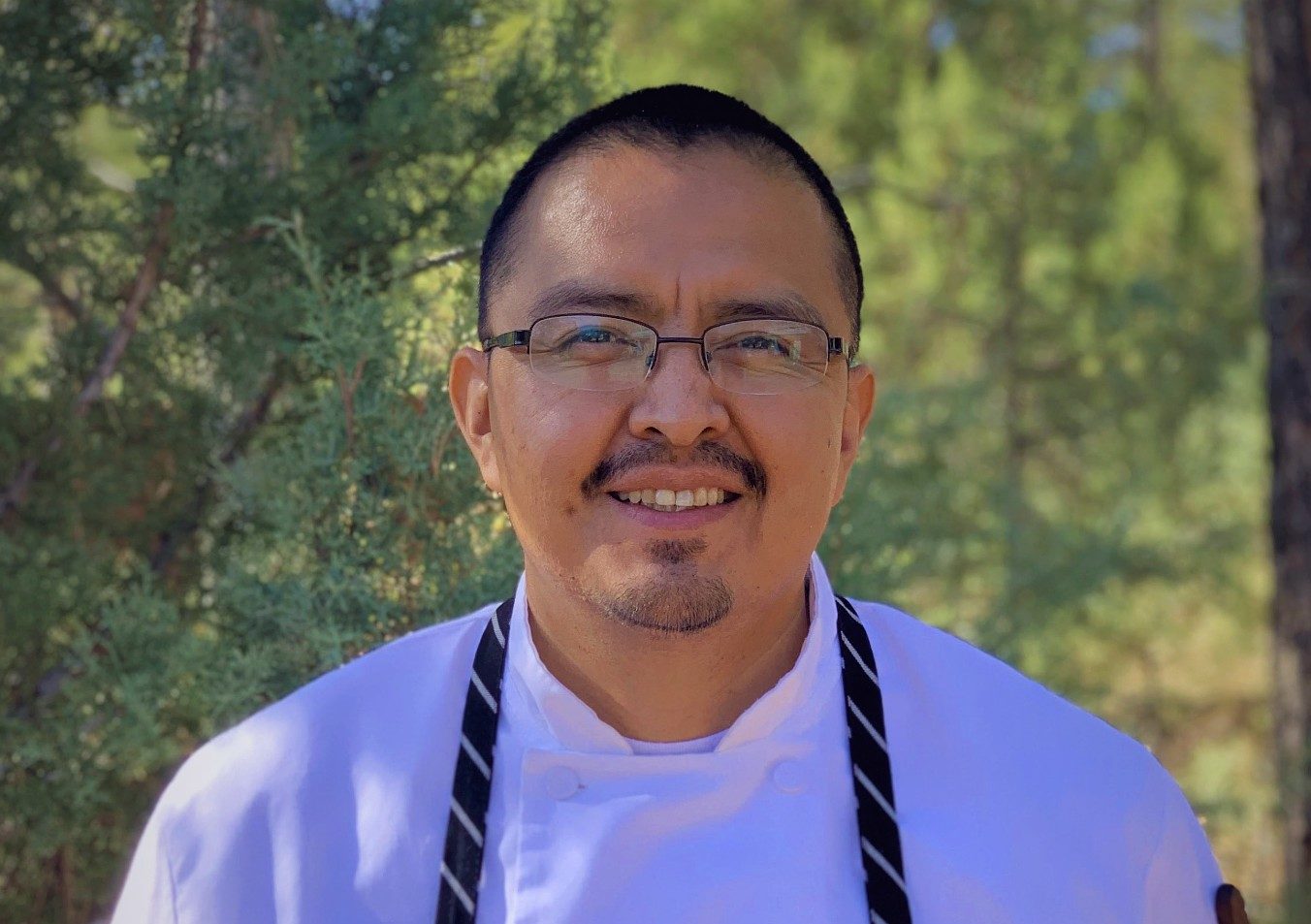
Nephi Craig
Chef
4
APPEARANCES
3
PODCASTS
Sep 17, 2026


Danita MacyHOST
What does that mean to you? How does the landscape within your own homeland shape the way that you cook and eat and heal and how you've been able to understand yourself?

Nephi CraigGUEST
When I use the term landscape is destiny, it's basically that we are a reflection of our landscapes as indigenous people.
Nephi CraigGUEST
So to use my tribe, the White Mountain Apache tribe as an example, our language, our ceremonies, our clan system, our roles as family members, our identity is all informed by our landscape.
Nephi CraigGUEST
So if you were to look at like, This tribal seal that's on here, our tribal seal, it has mountains, it has rainbows, it has lightning, it has our wikiup, it has our colors, it has rivers, streams, and deer on there.
Nephi CraigGUEST
So when we have access to our ancestral landscape, we have access to everything that made us who we are.
Nephi CraigGUEST
And when it comes to the process of colonization, colonization if if landscape is destiny it's also landscape is like a mirror I say so like colonization cause that mirror to be dropped and shattered so we're in this like generation of piecing it back together, so we can see ourselves.
20 MINS LATER

Nephi CraigGUEST
For major American holidays like Thanksgiving, uh, everyday staples like turkey, corn, and squash and cranberries, um, th- those are all important indigenous foods.
Nephi CraigGUEST
And when people ask me what recipes or what ways do we prepare Native foods differently, or the question comes up, "How come I haven't heard of a Native American restaurant?" or, "Why are there no Native American cookbooks?" I usually will say, "Well, you've been eating Native American foods and cuisine since as long as you can remember.
Nephi CraigGUEST
It's just that the stories are not told." All of American cuisine, every region in the United States, is built on the landscapes or the ancestral terroir of Native American foods and food traditions.
Nephi CraigGUEST
Uh, in the American Southwest there's companion planting and, uh, dry farming, the hunting and fishing and agricultural bounty of the Northwest.
8 MINS LATER
Nephi CraigGUEST
It's this terrible, terrible affliction that just causes you to devalue yourself and all of your belongings.
Nephi CraigGUEST
And as my life stripped away of people, places, and things, like places to live, finances, resources, the last things that I held onto were always my chef knives.
Nephi CraigGUEST
Because I knew if I had my chef knives, I could find a job anywhere in the world, literally, because at, by that time I had already traveled around the world.
Nephi CraigGUEST
And so I held onto those to the very, very, very end, and around 2011, those were some of the last things I was willing to pawn off or sell on the street for money.
Nephi CraigGUEST
These knives were special because I had got them on a trip to Japan in 2007, where I prepared a, a seven-course tasting menu of Western Apache cooking and cuisine at the Imperial Hotel of Osaka.
18 MINS LATER

Terry GrossHOST
How did they become Mormons? And oh, I also wanted to mention that Nephi is a prophet in the Book of Mormon.


Nephi CraigGUEST
So when we get violently colonized, forced to stand in line, forced to eat these foods, just naturally our body's adapting and changing, and that's the cycle of food choices that's, that's, that has negative consequences.
Nephi CraigGUEST
But, um, so that's just kind of an example of how, how foods that are not native to our region can impact our bodies.
Nephi CraigGUEST
Um, but I think to go back to that, that core part of the question, it's just like they're, they're there.
7 MINS LATER