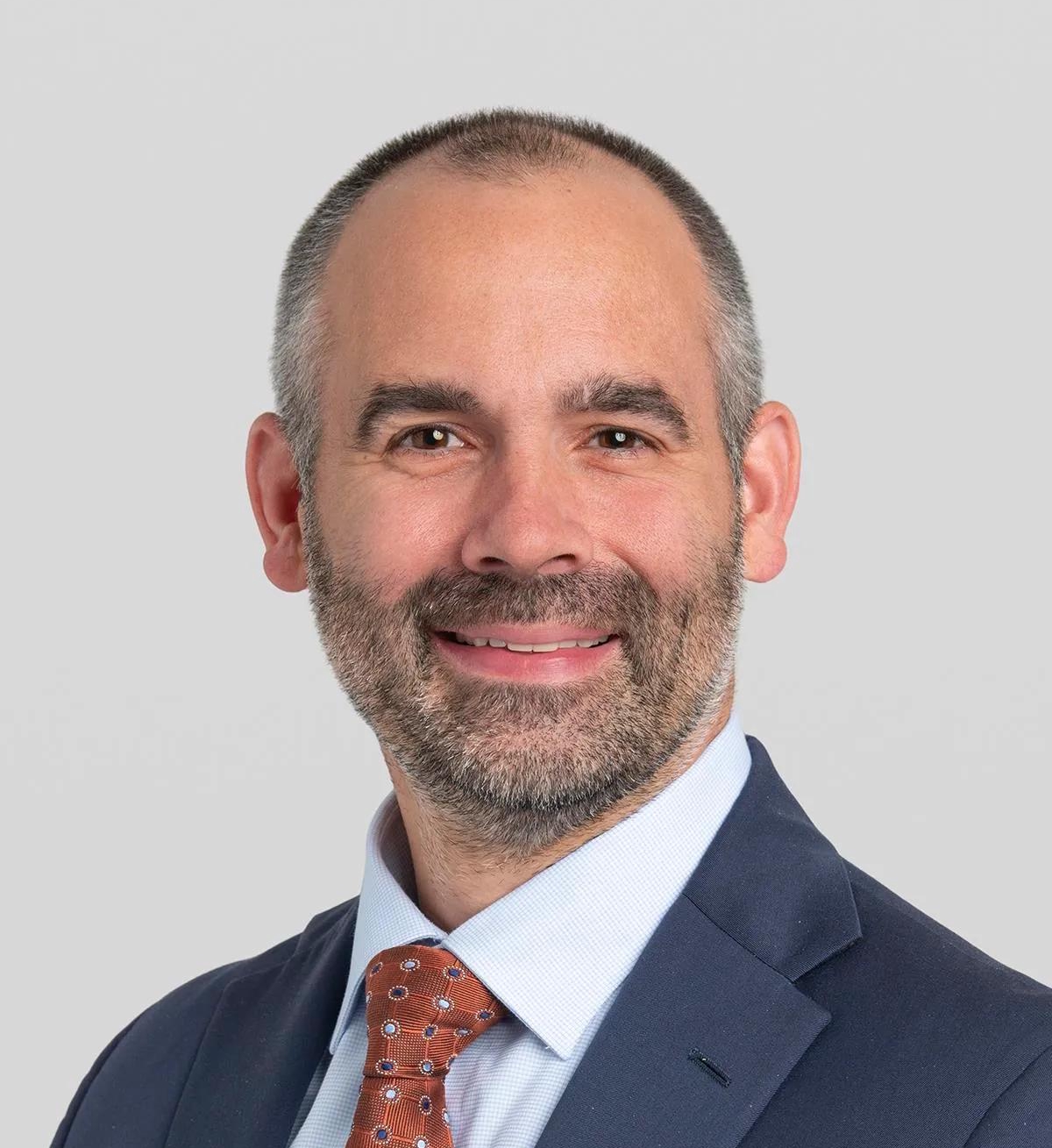
Nathan Mesko
Orthopaedic Oncologist at Cleveland Clinic, Vice Chair of Global Clinical Operations for Orthopaedic Surgery and Center Director for Orthopaedic Oncology.
1
APPEARANCES
1
PODCASTS
Jul 27, 2026


Ahmed EmaraHOST
What does a truly effective conversation look like when you're trying to help a patient navigate the choice in their life changing moments? How does the conversation look like?

Nathan MeskoGUEST
Yeah, there's a lot of hard conversations that we have the opportunity to have in our careers.
Nathan MeskoGUEST
Certainly in my world, the two hardest conversations that I have are, sir, ma'am, I need to tell you that you have cancer.
Nathan MeskoGUEST
And the second broad category of regular difficult conversations that I have is I need to remove a body part, a limb, an amputation conversation.
Nathan MeskoGUEST
It is unequivocally, and I'm absolutely convinced about this, by far and away the most visceral reaction that patients have is not to the cancer conversation.
Nathan MeskoGUEST
I've had patients laugh, cry, joke around, walk out of the room on me, do all kinds of things with the cancer scenario.
22 MINS LATER
Ahmed EmaraHOST
Let's say if you had to distill everything that we talked about right now into one guiding principle, what do you think every orthopedic surgeon should remember when deciding where the limits of surgery really lie?