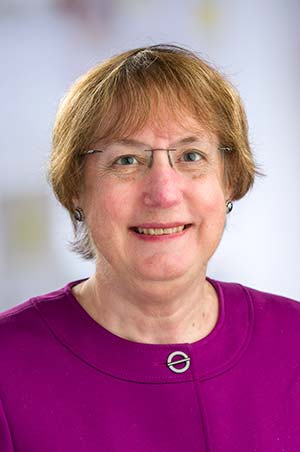
Nancy E. Davidson
Researcher and former president of the American Society of Clinical Oncology
4
APPEARANCES
2
PODCASTS
Oct 23, 2026


Nancy E. DavidsonGUEST
I do think that breast cancer is one of the areas where we really have unequivocal evidence from my perspective that mammography can have an impact.
Nancy E. DavidsonGUEST
We have half a dozen randomized trials that have been done over a long period of time that suggest that there's an impact.
Nancy E. DavidsonGUEST
I think the challenge for consumers, people like me, is that the guidelines have shifted over time as we learn more going along.
Nancy E. DavidsonGUEST
different groups might have different recommendations about how people should proceed.
Nancy E. DavidsonGUEST
But I think that the current thinking would be, first of all, Derek, that we're a lot less focused right now on breast self-exam than we used to be.
25 MINS LATER

Derek AngusHOST
Can you tell us a little bit more about the role of advocacy? What have been the positives and what are some of the points of friction?

Nancy DavidsonGUEST
I do think that breast cancer is one of the areas where we really have unequivocal evidence from my perspective that mammography can have an impact.
Nancy DavidsonGUEST
We have half a dozen randomized trials that have been done over a long period of time that suggest that there's an impact.
Nancy DavidsonGUEST
I think the challenge for consumers, people like me, is that the guidelines have shifted over time as we learn more going along.
Nancy DavidsonGUEST
different groups might have different recommendations about how people should proceed.
Nancy DavidsonGUEST
But I think that the current thinking would be, first of all, Derek, that we're a lot less focused right now on breast self-exam than we used to be.
25 MINS LATER
Derek AngusHOST
Can you tell us a little bit more about the role of advocacy? What have been the positives and what are some of the points of friction?
Nancy E. DavidsonGUEST
And it goes back to a variety of people who are great epidemiologists, including my colleague here at the University of Washington, Mary Claire King.
Nancy E. DavidsonGUEST
So Mary Claire, decades ago, went out thinking that in some cases, breast cancer seems to be hereditary.
Nancy E. DavidsonGUEST
That generation after generation after generation, that there would be a high preponderance of breast cancer in the women and sometimes actually in the men as well.
Nancy E. DavidsonGUEST
And so she did classic epidemiology to try to locate where on the chromosomes, the genetic material, that we all carry, what might track, right? What would be the abnormalities that might track? And she found a particular area on chromosome 17, one of the chromosomes that we have.
Nancy E. DavidsonGUEST
Finally, using the molecular techniques that are now widely available to find the changes in the genes that cause this.
8 MINS LATER
Nancy E. DavidsonGUEST
And it goes back to a variety of people who are great epidemiologists, including my colleague here at the University of Washington, Mary Claire King.
Nancy E. DavidsonGUEST
So Mary Claire, decades ago, went out thinking that in some cases, breast cancer seems to be hereditary.
Nancy E. DavidsonGUEST
That generation after generation after generation, that there would be a high preponderance of breast cancer in the women and sometimes actually in the men as well.
Nancy E. DavidsonGUEST
And so she did classic epidemiology to try to locate where on the chromosomes, the genetic material, that we all carry, what might track, right? What would be the abnormalities that might track? And she found a particular area on chromosome 17, one of the chromosomes that we have.
Nancy E. DavidsonGUEST
Finally, using the molecular techniques that are now widely available to find the changes in the genes that cause this.
8 MINS LATER