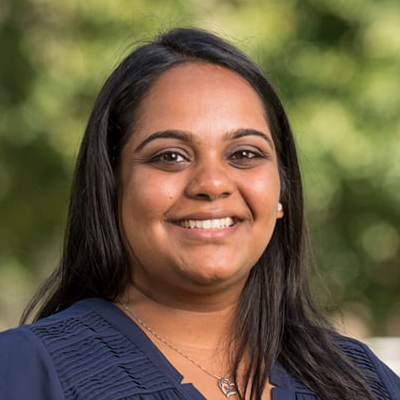
Namrata Singh
Dr. Namrata Singh, MD, MSCI, FACP - Associate Professor of Rheumatology at University of Washington specializing in rheumatoid arthritis, cancer epidemiology, and rheumatology in older adults.
1
APPEARANCES
1
PODCASTS
Jun 4, 2026


Cheryl CrowHOST
Can you just give us a little bit of like a overview of what is the relationship between cancer and conditions like rheumatoid arthritis?

Namrata SinghGUEST
In terms of, I'll take you back to how that, as we've talked, why I gravitated to rheumatology.
Namrata SinghGUEST
Then I was a fellow and trying to, I knew that I wanted to do research, uh, in my career, and then I was talking about, thinking about what was the question that came up from my clinical experience, and then that's where I would, let's say, counsel a patient with rheumatoid arthritis, that we've tried the drugs that we could give you by mouth, like methotrexate or other drugs, but your rheumatoid is active.
Namrata SinghGUEST
And I would get back the pushback in terms of patient's experience being, "Doctor Singh, my friend's cousin's daughter took Enbrel or took Humira," or name another biologic or that you have on your mind today, "and they got cancer.
28 MINS LATER
Cheryl CrowHOST
And last one, this is kind of the central question of this podcast, which is what does it mean to thrive with rheumatic disease? To you, what does that mean? [ Yeah. To me it means, like I'm thinking about a few of these patients. They come back to me and they're like, "I just had my daughter graduate from college. I was up celebrating her all day and all weekend. I went to Boston, had a great time, and here I am coming back just to report to you that this happened." The second example would be, "This summer, Dr. Singh, my goal is to, you know, do X, X mountain climbing and coming back and showing you the pictures of my hike." Third example, "I'm the baseball coach for my daughter's baseball team and this is what gives me joy and I have nothing stopping me, not arthritis, not my drugs, nothing." So, so I think these are real examples from my clinic, Cheryl, that has been the case and sometimes these residents who are rotating with me in the clinic because they're getting rheumatology experience, literally the, maybe two weeks ago, this resident came to me and said she was a second-year resident getting room rotation experience. She comes and says after seeing my first patient with me, "Dr. Singh, I didn't think this is what a arthritis clinic is like. I thought this is gonna be patients who just complain of pain all day long, and your patients are happy. They are doing well. Their arthritis is doing well. I didn't even know this is possible." And I was like, wow, if this is what a resident who's in medicine feels, guess what the other people who are not even in medicine might feel or what the impression people might have of what a rheumatologist clinic looks like. But that's- Wow ... example thriving with arthritis. Uh, the day, nowadays, um, we, our patients are thriving, so if you are not thriving and you're living with arthritis, you just need to switch care. Maybe. Maybe or, and being able to, I do see in my support groups it's, it is a kind of a self-selected population that's, to, a lot of times we have more of a proportion of the people in that difficult to treat category and I've changed my definition of thriving a lot to include with modifications or adaptations sometimes. Absolutely. Sometimes or you have, you're in remission from active disease currently, but you still have maybe a fixed deformity from previous- Right ... disease progression and you might, let's say you love painting, well, you can't do painting exactly how you used to, your prior level of function, but you can do it with an adaptation or a life hack and still participate. That's the OT in me, the participation in meaningful activity despite injury, illness, or disability is really our goal. And so anyway, yeah, that's just the building onto that, but I love that example with your resident. I mean, I think it's just, it's like a paradigm shift for them on what maybe rheumatology- So true, agreed. I, that resonated a lot. I think it's gonna, I'm not gonna forget that comment for years to come. Uh- I hope they choose rheumatology. I know there's- I hope so too. [laughs]