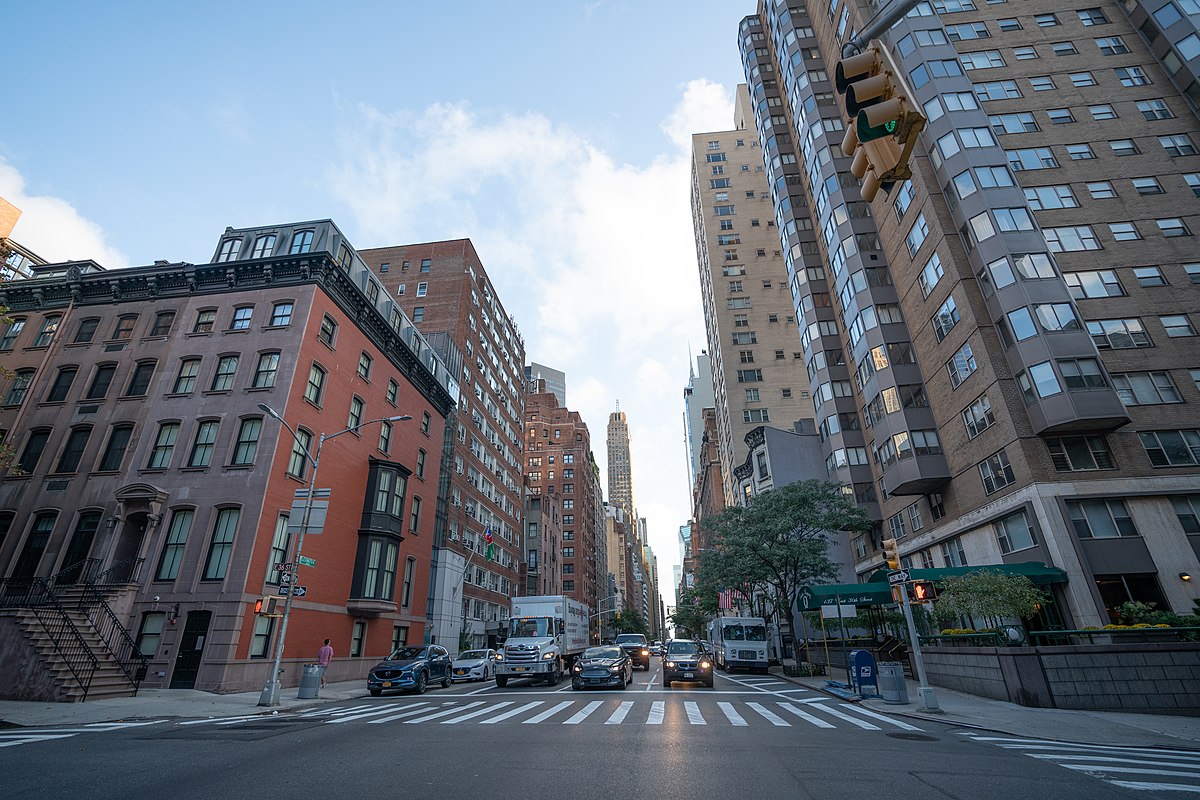
Murray Hill
Neighborhood in New York
13
APPEARANCES
13
PODCASTS
Oct 21, 2026


Murray HillGUEST
entertainer, so I became this whole thing and I never looked back, right? And then, you know, that doesn't work.
Murray HillGUEST
you know, blew up, you know, the drinking, just, you can't be a persona 24 hours a day for decades.
Murray HillGUEST
So it blew up and, you know, around the time right before I filmed Somebody Somewhere on HBO, which is the same time as Life and Beth, you know, kids, trans kids and parents of trans kids where like your character means so much to me, you're such a positive role model, like all this kind of stuff.
6 MINS LATER


Michele NorrisHOST
Difficult also, but there was an epiphany and an awakening and... period of self-discovery for you where you, it just felt in reading the pages almost like you were able to step out of a box that you had been placed in.
Murray HillGUEST
Yeah, it was like a, what are those things called? Jack in the box? That's what it felt like when I left home.
Murray HillGUEST
And, you know, that happened when I moved to Boston from Connecticut to Boston.
Murray HillGUEST
So, you know, I had to unlearn so much and then also be open to what i was seeing and i was a visual artist so i i couldn't believe like you know there's the college experiences and stuff like that but once i started taking photographs in gay nightclubs you know three o'clock in the morning in boston down at commonwealth you know my mind was just it's just like Because my whole life has been, if you're different, you're bad.
20 MINS LATER


Murray HillGUEST
So [sighs] that's kind of like, you know, when you, when you grow up in a dysfunctional and abusive home from your entire childhood, you don't know it's different outside of this unit, and that's why things get, you know, y- y- your psyche gets formed pretty early on.
Murray HillGUEST
And then when you have the messaging of like, "Don't you dare tell anyone what's going on in this house out there," you know, that stuff, and then the religious part of...
Murray HillGUEST
And so when I got to college, when I w- when I got to Boston University and I was away from the family unit, they were not in the same state, I still felt those chains on me.
Murray HillGUEST
I still, I really felt imprisoned in my mind, like I was under my mother's, like, rule, and I didn't think I could question her.
12 MINS LATER


Kyle RidleyHOST
Can you talk about that specific fork in the road and how it reshaped you moving forward?
Murray HillGUEST
You know, I think one of the, one of the challenges of growing up in the household and the town that I did is adults turn the cheek, turn the other cheek.
Murray HillGUEST
You could see people-- I was struggling, and teachers and community people, people in the church, whatever, it's like everyone ignored it because you don't, you don't do any- You...
Murray HillGUEST
He saw that I was this, you know, very charismatic person, enjoying school, having a lot of friends, but then he also saw that I was coming home to the dorm room every, almost every night, completely shit-faced.
22 MINS LATER


John MoeHOST
Well, so now you have a book, Showbiz, that does get into these things from your past, from your childhood, and, um, before we get into exactly who you were then and, and kinda these experiences that you went through that, that led to a bunch of problems, uh, why tell that story now? Why, why did you wanna open up that part of your life when it's been closed off for so long?
Murray HillGUEST
Well, I think, you, you know, this is a good question because I, I, I wouldn't be having this conversation five years ago.
Murray HillGUEST
Um, and I certainly never in a million years would have written a book even 10 years ago, or even thought about it.
Murray HillGUEST
Um, one is I completely had a, a breakdown and went down to the studs, and when you kind of- ... fall apart like that, you know, all of the preciousness and the things I held onto about identity and past and family, you know, di- didn't make sense anymore.
Murray HillGUEST
So, and then, you know, parallel to that is, you know, now we're a culture of sharing and oversharing and social media, right? So, you know, I come from Irish Italian family, and we did not speak.
37 MINS LATER

Murray HillGUEST
And that actually takes the stress and tension away from the audience and from him as a performer.
Murray HillGUEST
Because I had somebody say, a director, a director in all my 30 years in show business, only one gave me a good note.
Murray HillGUEST
And they said, you know, Murray, when things fall apart on stage, which they always do, you know, with either a light breaking and blowing up or an audience starts heckling you, whatever it is, never break character and always react as Murray.

Arroe CollinsHOST
How do you deal with those voices? Because I must have nine or ten different journals that I have to write in every day just so I can get control of those damn voices.

Murray HillGUEST
Showbiz to me is community, right? And, you know, I didn't always look like this, Danny, but kind of similar.
Murray HillGUEST
It was like, you know, let's bring everybody together, disarm people, and we're all going to get along and we're going to see that we're going to connect with the heart first.
Murray HillGUEST
And I always think, even as a little kid, it's like if you're connecting with the heart, then you're not being like, oh, you're this or you're this or you're this.
18 MINS LATER


Terry GrossHOST
What, what do you love about it? 'Cause I know from the book that you love that scene.
Murray HillGUEST
Well, you know, there was a couple of things happening at the same time for that scene.
Murray HillGUEST
So w- you know, Mike and I were in the middle of this field, it was a gorgeous day out, and the crew for this one was way back, like 50 feet behind us.
Murray HillGUEST
So we were actually out there by ourselves, and the director was giving us notes through a walkie-talkie that was in the, in the grass.
Murray HillGUEST
So I actually felt, I don't know if this is transference or if this is what acting is, you know, I came up from the clubs, but you know, I felt like I was in the field with him, talking to him as a very dear friend and consoling him.
Murray HillGUEST
And then I felt from him that he was doing the best that he could for his family and that he was accepting me as a human being.
6 MINS LATER
Terry GrossHOST
Why, why, why did you feel that you wanted to do that both for yourself and to, like, tell the public a- a- after years of not having told y- your good friends about that part of your life?


Murray HillGUEST
So he would have, [laughs] you know, 'cause my, I would look at him at the window, out of my bedroom window.
Murray HillGUEST
He would have a Salem cigarette like this hanging out of his mouth, the ash that big, and he would be going so slow up and down, up, and it wasn't straight lines.
Murray HillGUEST
So he would l- the grass was barely cut, but then you would see these huge patches.
11 MINS LATER


Murray HillGUEST
Um, but all kidding aside, you know, I started do- becoming Murray the persona when I moved to New York.
Murray HillGUEST
You know, I got to New York and I s- uh, and I said to myself as, as a specific choice, "My life starts now." And part of that was I'm gonna ignore and suppress my entire past, not think about it, not deal with it.
Murray HillGUEST
And I-- To make things a little more complicated for myself, I switched genders while I was making that new persona.
24 MINS LATER


Murray HillGUEST
feel like you belong and that you're part of society because regardless of what you do or how you do it or any of that stuff we are part of a society not to go back to sports again but sometimes this is a bizarre connection that i just had i like it i like it when i watch like world cup for example right the nationalism that you see other countries have Like pride.
Murray HillGUEST
But you know, there's a little bit more and it's not obviously not every country, but there's not a sense of we're taken care of here.
Murray HillGUEST
Like when Obama was there and he made healthcare, you know, it wasn't perfect, but it was actually affordable.
Murray HillGUEST
There's a certain thing and you don't know this unless you've been in this position.
9 MINS LATER


Murray HillGUEST
So I went in there with my camera and it was so, it was all about like masculinity and passing and serious and sexuality.
Murray HillGUEST
It wasn't like camp and funny and like the drag queens, right? So anyway, I started photographing and then I saw a space that didn't exist and I was like, okay, there's not somebody that's like a campy drag king.
8 MINS LATER


Murray HillGUEST
You know, I think something that I also find special about the show that it, it's also a time capsule and stuff, that it, it holds up from a political sen- you know, there's a, there's a little feminist stuff in there that you're like, "Ooh," but, you know, it does change over the, you can tell when it starts to change in the, in the late '80s.
Murray HillGUEST
But I just wanna say this and I, and I, I would, I, I have to mention it because, uh, um, and Jill, the character that I played on Somebody Somewhere is a trans man.
Murray HillGUEST
And, uh, you know, here we are in, what, in the 2000s, you know, '20s, that the way that character was played was kind of, you know, still kind of the first to be played like that.
15 MINS LATER
Murray HillGUEST
Real quick, this won't get me in trouble I don't think, but, uh, I did a s- they added a scene with me, uh, and him, uh, Arnold, at, at the end of the night.
Murray HillGUEST
It was like, you know, 15th hour, and Arnold was on his like 30th take of, um, you know, Santa Claus is Coming to Town.