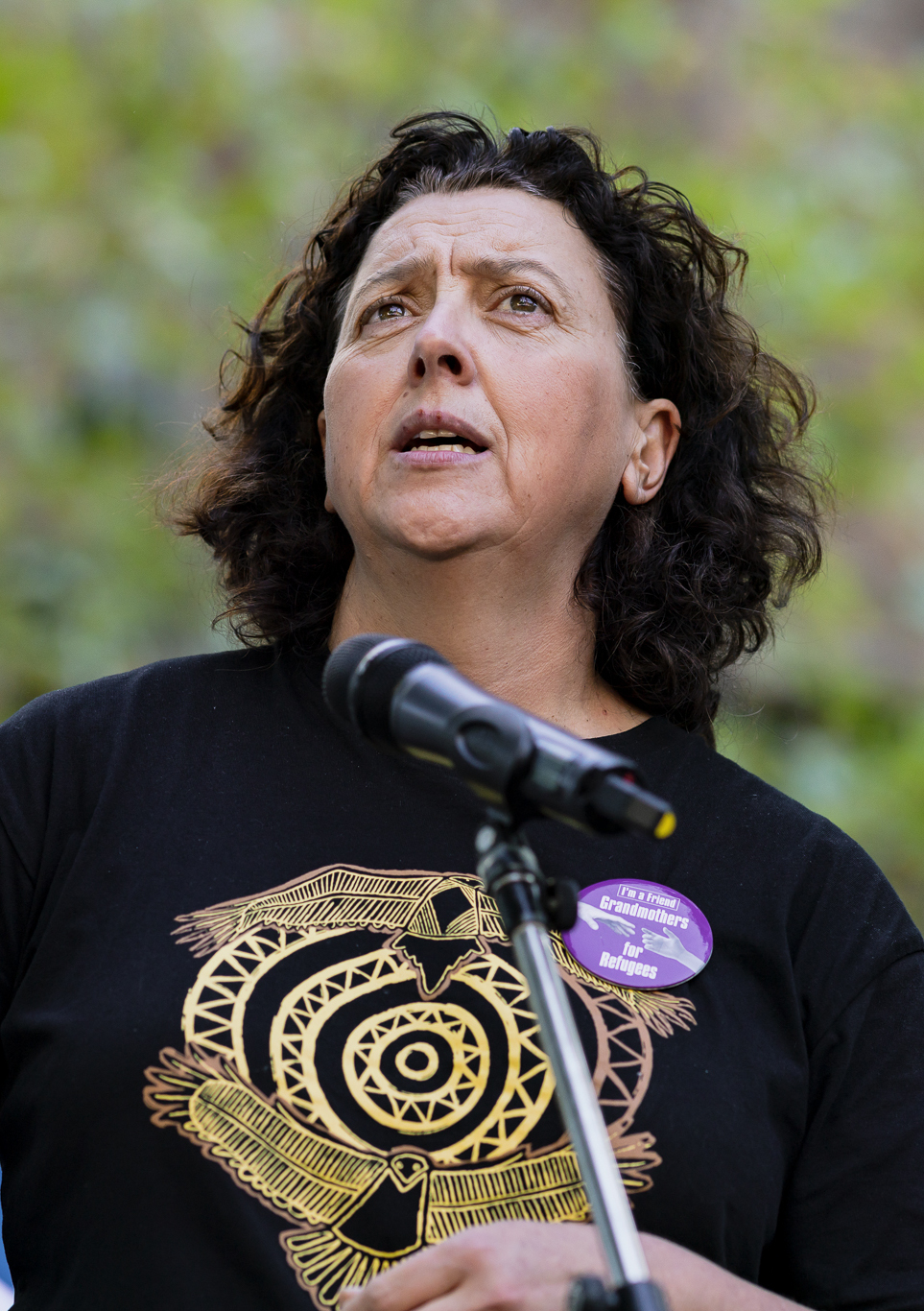
Monique Ryan
Member of the Australian House of Representatives
7
APPEARANCES
5
PODCASTS
Jul 28, 2026


Tim WebsterHOST
Just what you described just then, is that whole system in relation to voluntary assisted dying too complicated?

Monique RyanGUEST
And people understand the need for us to take these sorts of decision making very seriously.
Monique RyanGUEST
I do think we need to improve palliative care services around this country so that people can access these sorts of supports more quickly when they need to.
Monique RyanGUEST
A lot of people unfortunately die before they can access voluntary assisted dying supports because we don't have enough of them.
Tim WebsterHOST
So do you think that through the process, we might talk him around and get the sort of voluntary assisted dying legislation we actually need?

MakaHOST
What are your thoughts?
Monique RyanGUEST
Well, unfortunately, we haven't seen that the government's in a place now where it's ready to move as strongly and effectively as it needs to do on gambling reform.
Monique RyanGUEST
We've got increasing evidence of the harm done to our young people with the normalisation of gambling in virtually every aspect of their online engagement.
Monique RyanGUEST
I think it's become a public health crisis when we look at the impact on youth mental health in particular.

MakaHOST
Do you have a comment on that, Mon?
Monique RyanGUEST
Yeah, I think Zoe is mapping out some of the particular unfairnesses of the electoral donation reform.
Monique RyanGUEST
One of the things I always say to people is... every dollar that I earn each year from donations gets added up at the end of the year and I pay tax on those donations.
Monique RyanGUEST
There's a whole lot of different ways which cumulatively add up to a wave of disadvantage for small parties and independents who don't have these associated third-party entities.

Zoe DanielGUEST
And the thing is, at the end of the day, well, for the moment, AI scrapes what we already
Monique RyanGUEST
Well, HECS indexation is the annual adjustment to graduates' HECS debt, and it's applied...
Monique RyanGUEST
The problem is that it's currently applied before re- repayments from the preceding financial year are applied to graduates' accounts.
Monique RyanGUEST
That means that they've been making payments to their HECS accounts over the course of the year, they've been garnished from their pay, but they haven't actually been applied to the balance.
Monique RyanGUEST
What that means is that you end up paying indexation, which is effectively interest, on debt that you've already repaid.
Monique RyanGUEST
You wouldn't accept that on your credit card, and you wouldn't accept it on your mortgage, but we're expecting graduates to, to basically end up paying back more than they, they should.
Monique RyanGUEST
And in a cost of living crisis, I- My feeling is that the government has created a, a cost of learning crisis with the cost of tertiary education in this country.

MelHOST
Talk me through the challenges it poses for students with debts.
Monique RyanGUEST
Well, HECS indexation is the annual adjustment to graduates' HECS debt, and it's applied ...
Monique RyanGUEST
The problem is that it's currently applied before re- repayments from the preceding financial year, uh, applied to graduates' accounts.
Monique RyanGUEST
That means that they've been making payments to their HECS accounts over the course of the year, they're being garnished from their pay, but they haven't actually been applied to the balance.
Monique RyanGUEST
Uh, what that means is that you end up paying indexation, which is effectively interest, on debt that you've already repaid.
Monique RyanGUEST
You wouldn't accept that on your credit card, and you wouldn't accept it on your mortgage, but we're expecting graduates to, to basically end up paying back more than they, they should on their HECS debts.
Monique RyanGUEST
We already know that the HECS debts that Australian graduates have are holding them back.
MelHOST
Will you be supporting it when it comes to a vote?

Victoria DevineHOST
Do you agree with that? Do you think that, you know, housing supply is the core issue here?
Monique RyanGUEST
I think in terms of getting people into homes that they own, uh, uh, uh, homeless ...
Monique RyanGUEST
Uh, I think in terms of getting people into homes that, that they own, yes, we need more supply.
Monique RyanGUEST
And the Treasury's modeled that we, as a result of these changes announced, yes, they should probably get another 75,000 homes.
Monique RyanGUEST
Although some of the, uh, secondary considerations that they had suggested that it might not be quite that high.
6 MINS LATER
Victoria DevineHOST
So if you can be nimble on that, but sweep this under the rug and say that you didn't have time and you didn't have enough resources for that, I feel like that's just a bit of a get out of jail free card.


Daniel JamesHOST
So what do you worry about the most when it comes to their influence over our leaders?
Monique RyanGUEST
I came from the medical industry, and when I was a doctor, you know, when I first started practicing medicine, people used to come and talk to us all the time, drug reps, and yeah, they gave us gifts and they sponsored conferences and lunches and dinners and that, all that sort of thing, um, and we kind of felt that it was benign because we all felt that we were strong-minded enough that we wouldn't be influenced by those relatively minor inducements.
Monique RyanGUEST
Then the evidence came out that that is actually not the case, that even minor inducements changed the way that doctors prescribed.
Monique RyanGUEST
Now we're seeing that those sorts of inducements are largely unregulated at a federal government level, and the fact is these people are smart people.
Monique RyanGUEST
They wouldn't be spending a whole lot of money in the House to sponsor events or to sponsor individuals who are within the House talking to politicians if they didn't know that they were getting a, a reasonable return on that investment.
Monique RyanGUEST
And so I think we can be sure that the 10,000 plus lobbyists who are in Parliament House are influencing parliamentary decision-making to a significant extent.
Anthony AlbaneseSOUNDBITE_SPEAKER
Uh, provides an opportunity to consider increased transparency and rigor in relation to sponsored passes for Parliament House on the basis of business requirements, particularly in relation to professional lobbyists