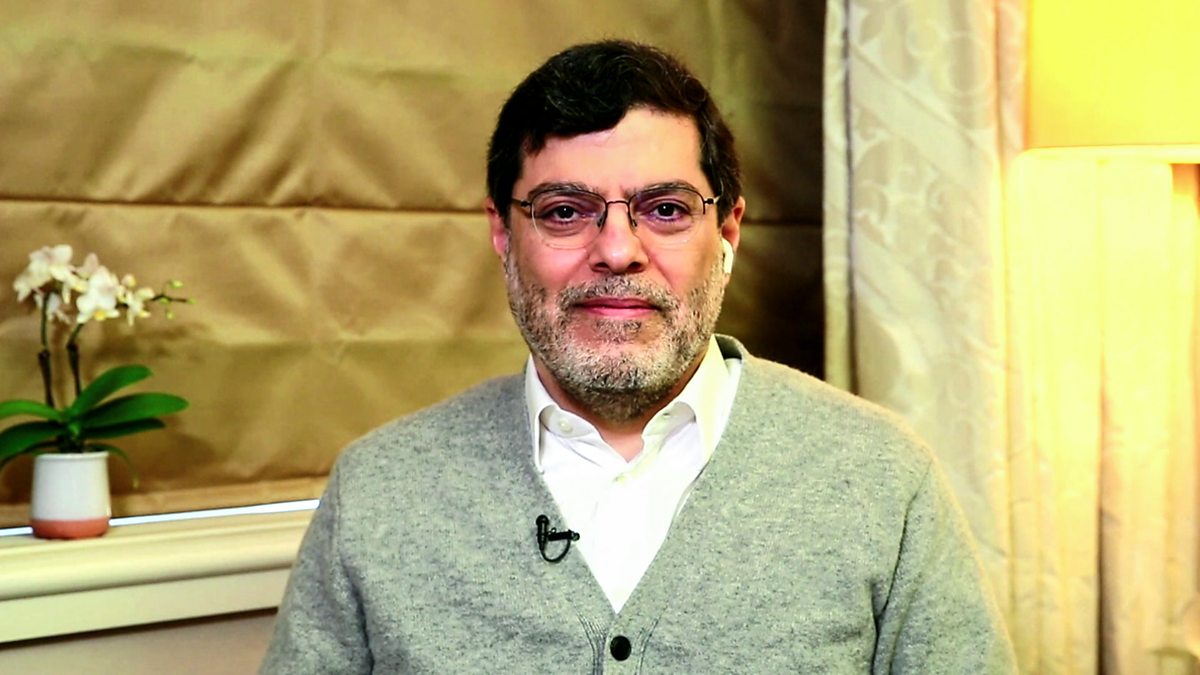
Mohammad Marandi
Iranian academic
109
APPEARANCES
23
PODCASTS
Sep 13, 2026


Mario NawfalHOST
For a Gulf country operating in this post-US empire region, it's a very valid worry to have.
15:03
If these countries were to today gather together their leaders, despite all that they've done to Iran, and they've done a lot, it's not just this war.
15:24
The Soviet Union, the United States, the Europeans, and these regions were supporting Saddam too.
10 MINS LATER
Mario NawfalHOST
Having a good relationship with Syria, influence there, makes it easier to send arms to Hezbollah in Lebanon, which is a very strategically important ally as a deterrent against Israel, and influence over the Mediterranean, which are alternative choke points, energy choke points to the Hormuz Straits.


Glenn DiesenHOST
Uh, I was wondering if you can flesh out what is actually happening there now, and what is the, I guess, the wider significance.
1:02
Uh, it's, it's very confusing, obviously, because so many things are happening simultaneously, and everything is more or less linked to everything else.
1:13
So whenever something changes, you have to sort of think about how it changes the situation on other, uh, battlefields, and that includes Ukraine, that includes the trade wars.
1:29
Everything nowadays, uh, seems to be shifting, and some things are just shifting more than others.
1:38
In Yemen, uh, it began, of course, with a genocidal war by the Saudis and the Emiratis on Yemen, which was supported by, uh, the, the entire region except for Iran and, and the West.
13 MINS LATER
Glenn DiesenHOST
But what, what cards do you see the Houthis having to play here, and how, wh- what, how could the Saudis and the US respond? That's a very large, big question, but, uh, I guess, [laughs] you know, you can go at it as you see fit.


Ben MeiselasHOST
What, what, what, what's the strategic assessment of, of what's taking place in terms of the US and Netanyahu invasion of Iran?

Mohammad MarandiGUEST
Well, we always have to remind ourselves that this is a foolish war that Trump started, uh, and, uh, that Netanyahu imposed, and Netanyahu and his people imposed on the American people.
Mohammad MarandiGUEST
Iranians, uh, know the United States pretty well, and, uh, US American movies are watched here, American music is known here, and the Iranians do follow, uh, events in the United States.
Mohammad MarandiGUEST
There's a very good book, uh, on Iran, uh, written by two former White House officials called Going to Tehran, Flint and Hillary Leverett, which I think if your viewers read, it'll help them get a, uh, have a better understanding of the reality of Iran.
Mohammad MarandiGUEST
Deals with a lot of the myths and, uh, misconceptions and the, and the anti-Iranian propaganda.
Mohammad MarandiGUEST
And these two people who were in the White House, they were mainstream people, they were, uh, basically sidelined because of this book.
15 MINS LATER
Ben MeiselasHOST
Like, this doesn't happen necessarily in a vacuum without US losing the war, um, and, and then the dominoes are falling and maybe more dominoes still fall.


George GallowayHOST
First of all, give us a resume of where things stand in the Persian Gulf right now, because people are confused Is Trump trying to economically strangle you, or is he trying to bomb your children to death? Or is it both?
21:38
Well, George, it's always a great honor being on your show, and whenever you invite me, I'll make sure I'm prepared and ready to be online.
21:54
I think it's clear that The United States, like its allies in occupied Palestine, they use all methods for murder and death and destruction, whether it's through siege.
6 MINS LATER
George GallowayHOST
So how does that help Trump win the elections? Or is he no longer in control of events? Are other forces driving this escalation by another name?
Glenn DiesenHOST
What are we watching here? Is this a new phase of the war or how can you interpret these events?
0:59
It seems we're moving into a new phase of the war, and it could be a very, very destructive and perhaps the most destructive phase of the war.
1:11
When the United States began to recognize that every time they would recognize that their policy fails, instead of taking an off-ramp, they would pursue a new offensive policy.
1:31
During the 40-day war, they recognized that militarily they cannot achieve success and they're losing the war.
16 MINS LATER
Glenn DiesenHOST
is this uh you know what you're describing as a new war doctrine of iran do you think this is something we might see more of now that is striking american warships
Mario NawfalHOST
I think we can focus on the sanctions and the firing of the ballistic missiles at the ships.
3:29
The United States, if it escalates the war, and this is, of course, warfare.
3:43
That's subjective, which again exposes the United States for what it is.
3:50
It is a regime that is brutal, ruthless, barbaric, backward, and medieval.
43 MINS LATER
Bethany FrankelADVERTISER
Jordanian,

5:00

What was the reaction in Iran to the slaughter of innocents at a wedding? Well thank you very much for having me judge and i hope to see you in tehran one of these days hopefully uh i think you if you see tehran your viewers would uh be able to better understand the situation here um unfortunately uh when the when uh the united states attacked iran uh from my understanding three missiles which were highly advanced missiles struck a wedding and five people were killed One, just last night, a 22 year old woman A small child was killed, a teenager was killed and the funeral was of course massive and this further angered Iranians obviously outraged Iranians because the war began
Mohammad MarandiGUEST
beganwith the slaughter of 168 school children, elementary school children and their teachers in Minab.
Mohammad MarandiGUEST
And also with an attack on a sports complex in Lamird where A couple of dozen teenagers, girls and boys were murdered.
Mohammad MarandiGUEST
And you know, Judge, before the show, I did some research on AI, not research, but I asked a few couple of questions about the number of casualties in Arab countries that host U.S. bases during this period, the number of civilian casualties.
Mohammad MarandiGUEST
And it said that these governments altogether have claimed that 41 people have been killed throughout this war.
20 MINS LATER
26:54
Has there been any palpable, uh, response in the Iranian economy to the so-called D-Day sanctions announced by Secretary, uh, Bessent now about a week ago?


Piers MorganHOST
How concerned are you that the upshot of this leverage, which undoubtedly the Iranian regime is currently utilizing very effectively of being able to turn the tap on and off of, uh, of people going through the Strait of Hormuz, that if the Strait of Hormuz ceases to be the big thoroughfare for 20% of the global energy and it simply moves elsewhere, that you could in the end self-sabotage?
Mohammad MarandiGUEST
Uh, oil and LNG and, uh, fertilizers and sulfur and helium and everything else was passing through the Strait of Hormuz for decades without any difficulty for the most part, and, uh, the United States and Israeli regime launched a war, thanks to Netanyahu and the, the, the Zionist lobby.
Mohammad MarandiGUEST
But the Saudis, the Emiratis, the Kuwaitis, the Bahrainis, the Qataris, and of course Jordan, they were all a part of the war.
Mohammad MarandiGUEST
They facilitated the airstrikes, they gave the United States, uh, bases and air bases and jet fuel, and their, u- allowed them to use their airspace and to fire missiles from their, uh, territory.
Mario NawfalHOST
But I think now it's an even more important topic considering the sanctions or economic D-Day as Besson calls it.
2:09
Well, obviously the Iranian economy is not going to collapse and it's definitely not better than it was before.
2:17
I think it's very clear that life is more difficult in Iran today than it was last year.
2:24
And that when you're at war, whether it's siege warfare or maximum pressure sanctions, or when you have airstrikes, Life is going to definitely be more difficult, and when you have all three together, then I think there's no doubt about it.
2:47
But the resilience of the Iranian people is very, it's quite extraordinary.
2:55
And while I'm sure the Americans and the Israelis are doing their best to create some sort of uprising or another armed insurrection, And at some point they'll probably do something.
44 MINS LATER
Glenn DiesenHOST
How accurate is this? But also, how may Iran respond to the US if its economic pressures, uh, well, an economic war on Iran begins to take a real bite?
1:21
Iran does allow a significant amount of oil to get through the strait, uh, because there are countries that Iran is close to, and it does not want to harm them.
1:41
In fact, the resistance in Iraq played a very important role in dealing with the, uh, aggression from Kuwait, um, from northern Iraq, the Kurdish areas, where the, the, the US and the Israelis have huge influence, and also, uh, in central Iraq.
1:59
Uh, so it's not really something that the Iranians would want to do, to block Iraqi oil exports.
2:11
Or China, which is cooperating with Iran, has a very close relationship.
34 MINS LATER
Glenn DiesenHOST
So, uh, but to what extent does this, uh, I guess, impact the geopolitics of the region? And also, if the tables would be turned and, uh, uh, things would worsen between I- Israel and Turkey, how would Iran position itself in such a conflict? Again, a lot of hypotheticals and speculation here, but, uh, nonetheless
Mohammad MarandiGUEST
Well, the messages that do come to Iran from Pakistan, from Oman, from, uh, Qatar, although there may be others that I don't know of, more or less are the same in that he is seeking some sort of solution where, um, which won't look, make him look humiliated.
Mohammad MarandiGUEST
But the Iranians are saying nothing less than the full implementation of the MOU is acceptable.
Mohammad MarandiGUEST
And, uh, article one of that means that the, that the Israeli regime must withdraw from Lebanon and end the war.
8 MINS LATER
22:35
But don't Bessent and his team understand the unshakable economic and geopolitical relationship between Iran and China? And do they really think that they can disturb this? I mean, it is a violation of Chinese law for a Chinese bank voluntarily to comply with an American sanction.


Katie HalperHOST
So why don't you start off with asking you about what the latest is in the state of play between Iran and the US right now, what updates there are to share, and what ordinary life is right now like for Iranians.
Mohammad MarandiGUEST
As you know, Trump is saying that, and his entourage and his people are saying that, uh, the Strait of Hormuz is open, and the Iranians are saying it's closed.
Mohammad MarandiGUEST
It is closed for the most part, but the Iranians do allow some ships to go through.
Mohammad MarandiGUEST
Uh, so for example, the Chinese, uh, they are friendly, very friendly to Iran, so when they, uh, ask to let their, to have their ships pass through, the Iranians, uh, maybe they delay them a bit, but they ultimately let them through or, for example, the Iraqis, because they did not participate in this war against Iran, uh, they too, um, their ships are allowed to go through.
Mohammad MarandiGUEST
Um, some of the other countries, if they do some sort of deal with Iran and, and try to behave better and to, uh, disobey certain US demands, then Iran allows, uh, some of their ships to go through, like the Emiratis right now.
12 MINS LATER


Mohammad MarandiGUEST
A cent a liter, and then there is a second layer of cost, uh, uh, let's say if you s- you, if you purchase more diesel than you, or, or gasoline, you pay, like, three cents a liter, and then if you buy the expensive type, it's five cents a liter.
Mohammad MarandiGUEST
You can buy as much as you want, let's say for, I don't know, six, seven cents a liter.
Mohammad MarandiGUEST
But yes, we may come to a point where they raise the prices and, uh, the subsidies decrease.
Mohammad MarandiGUEST
Yes, and it's going to cause difficulty for people, and of course it's going to make life more difficult.
8 MINS LATER
Glenn DiesenHOST
But, uh, well, from your perspective, what, what is the US strategy, and, uh, how do you think Iran might respond to this?
1:06
Well, as long as Donald Trump is president, I'll never try to give an answer to that question, because it goes far beyond my mental capabilities.
1:17
But, uh, if I was to just guess, I would say that, uh, these are just stabs in the dark.
1:25
They pursue one policy this week and then, uh, grow impatient with it or feel that it's failed, and they move on to a different policy, and that's how, uh, the whole, uh, six months has been, this six months of war.
1:43
Um, I think that obviously the United States never really understood Iran, uh, post-revolution Iran, and, uh, US analysts, uh, misread Iran.
1:56
They, uh, uh, they, their, their understanding of Iran is often not just, uh, problematic, but it is, uh, influenced by, uh, money, by necessity.
2:15
Uh, and so the analysts who work on Iran in think tanks in the United States or in government or even in academic institutions that are, uh, well-funded and that are influential, they have an incentive to create a particular narrative on, on the country.
36 MINS LATER
Glenn DiesenHOST
They can raise the cost of the war for, for the US both in military terms and economic pressure, but what is it that you think Iran may be prepared to do here, going up the escalation ladder?
Mohammad MarandiGUEST
Yes, I think that thanks to the, um, the behavior of the West over the last 47 years, they've gradually prepared Iran to, uh, completely break away and to become, uh, independent as well.
Mohammad MarandiGUEST
Even when Iran tried to repair and improve ties with the United States, United States would increase sanctions.
Mohammad MarandiGUEST
Uh, during the Clinton years, the Iranians were going to give a, uh, an oil field in the Persian Gulf to, uh, Conoco, uh, to develop.
Mohammad MarandiGUEST
And, uh, Mr. Rafsanjani, pres- back then President Rafsanjani, said that this was a goodwill gesture.
Mohammad MarandiGUEST
And they negotiated for about two years, and when they were on the verge of signing, the US passed a law against, uh, investing in Iran's oil and gas sector.
17 MINS LATER
23:54
It's always a great pleasure and a great honor being with you and with your audience.
24:03
The world hasn't changed much, has it? The only difference is that, uh, people across the world are much more awake than they were before back then.
24:14
What they did in 1953 was manipulate the public in Iran, turn people against each other, use money to, uh, uh, to empower rabble-rousers to, uh, do their bidding.
8 MINS LATER
George GallowayHOST
Uh, w- uh, what can you tell us about the relative balance between the two schools?


Pascal LottazHOST
Um, what do you make out of it, and what do you think is Iran's, Iran's approach toward it?
13:35
One is you're right that the Americans, uh, may actually begin striking Iran again.
13:43
Uh, American forces in Saudi Arabia, in Jordan, in Kuwait, Bahrain, Qatar, and, um, the UAE, they are, um, m- they've gathered, they're prepared, and the Iranians have noticed that, uh, over the past few weeks, the United States has become more prepared for some sort of operation and some sort of war against Iran, and some believe it could last between 10 days and two weeks.
14:16
Uh, it doesn't mean it's going to happen, but the way in which they've arranged their forces in these countries, and of course, their naval assets, uh, seems to indicate that they're prepared for, for something that may last, uh, 10 days or, or two weeks.
30 MINS LATER
Kelly RowlandADVERTISER
Ask your doctor about Ebgless, and visit ebgless.com, or call 1-800-Lilly-RX, or 1-800-545-5979.
1:25
Um, I don't believe that the change in the, uh, leadership in the armed forces, or at least for, uh, for the most part, the IRGC, it's not just the IRGC, it's also the regular army, but it's mostly the IRGC.
1:42
I don't think that is, uh, any-- there's any major change in that because, uh, first of all, these, uh, commanders were in charge already.
1:57
I think that the fact that their names have now been declared, uh, shows a greater confidence in Iran about security.
2:04
We also had, almost simultaneous with this news, uh, other news that, uh, President Pezeshkian met Ayatollah Seyyed Mojtaba Khamenei for a seven to eight-hour meeting, uh, which again, uh, shows that things are moving back to normal and that, uh, the news about meetings or, uh, the highest level meetings are being, uh, put out there for the public, that the names of those who are leading the armed forces, uh, the-- who replaced the, the martyrs, they are, they are being declared.
23 MINS LATER
Glenn DiesenHOST
Is there anything there you see having some, uh, great potential or, or, or are these, uh, s- still not, um, you know, worth, uh, what I'm looking for here? They're, they're still not changing the situation on the ground.

speaker_5ADVERTISER
Start free at rss.com.
15:56
I mean, the two things have been done by the axis of res- resistance, among others, that I think are of particular brilliance.
16:06
One is the, the concept of the axis of resistance, to create this network of resistance against the empire.
16:14
In other words, instead of being this lone actor defending an idea where the empire targets you and undermines you, you bring together different actors and different, uh, nodes of resistance, and different, uh, islands of resistance to work together.
16:33
That's why Iran supports these groups, but also that's why Iran supported Venezuela and Cuba.
16:37
In the case of Latin America, of course, what, what we saw in Venezuela is a, is a, is a huge setback, no doubt.
16:44
Uh, and, and also what happened in Syria, which was, of course, a, a successful attempt to undermine this, uh, this resistance.
22 MINS LATER

Mario NawfalHOST
So when I say officials, it could be just members of parliament, which says like two, 300 of them, I think.
Mohammad MarandiGUEST
Yeah, because, uh, there's no doubt that the Israelis have no access to, uh, what the high ranking people in Iran say there's way too much security for that.
Mohammad MarandiGUEST
One of the things about the Iranians is that they put so much information out there that the Israelis and the Americans are often at a loss as to what is right and what is wrong.
Mohammad MarandiGUEST
One of the things about Iranian intelligence that I know of a bit is that when the U.S. embassy was taken, so because the United States supported the Shah, helped the Shah impose a police regime, a police state for two and a half decades.
Mohammad MarandiGUEST
And then, of course, during the revolution, the Shah used his army to gun down people for many months, but ultimately fell.
35 MINS LATER
Mario NawfalHOST
So my question to you is, How significant are these appointments by the Supreme Leader, and what do they indicate on how Iran would look like post this war?
Mohammad MarandiGUEST
Not, not much is going through, and especially during the last two, three days, I think it's even been more so.
Mohammad MarandiGUEST
Um, what Trump is saying and what hi- his, um, uh, his, uh, officials, uh, uh, uh, in the U- US government have been saying are, are nonsense.
Mohammad MarandiGUEST
And the, the evidence is in, in, uh, is that I've been told, uh, first of all, the United States is pr- is at least on the ground preparing for an attack on Iran.
Mohammad MarandiGUEST
Uh, the US has mo- moved, uh, its assets into position and has brought in, uh, uh, more, um, equipment and, and planes to carry out a large offensive.
Mohammad MarandiGUEST
And, uh, the United States has threatened Iran with an attack through its, through, uh, third countries.
Mohammad MarandiGUEST
So if the Strait of Hormuz is open and, uh, everything is as the United States wants, then why is the United States threatening Iran with war? Now, the Iranians believe that if the United States carries out an attack, uh, it could be a, a, a war on the nation, meaning to target, uh, infrastructure and to, in order to bring about societal collapse.
11 MINS LATER
Mohammad MarandiGUEST
It's, if you travel Tehran tonight, and it's 1:00 AM here, but, uh, if you travel Tehran tomorrow and, uh, walked around the streets or took a, a bus or a taxi or traveled around using the metro, uh, it would be very normal.
Mohammad MarandiGUEST
And you would, you would probably not see any damaged buildings because it's a huge city.
Mohammad MarandiGUEST
Um, and, uh, and also some of the, the, the damaged buildings have all been brought down and they're rebuilding them.
Mohammad MarandiGUEST
Uh, if you walk down the streets, the restaurants are full, the shops are full of customers, but I'm sure that if you went and asked the shop owners or the restaurants, how is business doing, they would probably say that it's, uh, not doing all that well, and that, uh, business is, uh, is, is not great.
5 MINS LATER
Ben MeiselasHOST
So how, what, w-one, maybe there's, you all know that, um, you know, w-was there a path forward? Is, is there other-- Is it basically the MOU and it needs compliance with the MOU? What, where, where do we even go from here? Or is it really at this point, just kind of wait it out and, and wait until twenty twenty-nine until another person comes in? Or where, where, where do you see it?


Jamarl ThomasHOST
Um, you know, w- w- what is the meaning of this? Was there ever really a, a deal l- of that sort? Or, I mean, i- is Trump just sort of making these things up? Or, I mean, what's the view in the region?
3:17
Well, the biggest achievement of Trump and Netanyahu was the signing of the deal itself.
3:24
Remember, when this deal was signed, there was huge momentum across the world.
3:30
There were huge demonstrations across Europe and, uh, Australia and Asia, and, uh, people were outraged at the ongoing genocide.
3:41
And then Trump, uh, went to Egypt and co-sponsored a, uh, a gathering, uh, of leaders, um, which unfortunately reg- leaders of our region participated in that gathering.
3:58
They endorsed Trump and whitewashed his crimes, his, his, the genocide that he is a part of, and they, um, basically signed up as guarantors.
4:10
But, uh, since then, the Israeli regime has slaughtered about 1,400 Palestinians in Gaza.
6 MINS LATER

Ted RallHOST
Is that a fair point, that the US is not gonna be allowed to extricate itself from the war without fulfilling the memorandum of understanding?
Glenn DiesenHOST
I was wondering, to what extent is Iran, uh, a, a target or, um, the, the, the, yeah, the reasoning behind this, and, uh, yeah, to what extent should the Iranians worry or how might they react? Sorry, big question.
13:33
Just before, uh, answering that, I, uh, a, a couple of years ago, I don't know, maybe when in one of our first discussions, I, I, I said that I always believe that the collapse of the Soviet Union and, uh, the victory of the United States over Saddam Hussein in Kuwait was the worst thing that could happen to the United States, and that is because it, uh, created an, an arrogance, uh, that, uh, basically led to the swift, uh, collapse of the US empire.
14:07
Uh, the, the ghosts of Vietnam were swept away after Iraq, and it was the unipolar moment.
14:15
And then came, uh, the invasion of Ira- uh, 9/11, which, uh, when you look at the evidence being put forth by the likes of Tucker Carlson, it's obviously, uh, not just Al-Qaeda and those 19 people who were involved.
14 MINS LATER
Glenn DiesenHOST
Do you-- How, how significant would, would this be? And also, what would such a deal actually include? I guess, you know, you don't have it in front of you, but what, what can we expect being the main points here?
10:57
I don't even consider myself close to any I'm just at the University of Tehran, and this is my cell phone, and this is my phone.
11:08
And so I just give my opinions, and I can be very wrong at times, I guess.
11:17
But what I would say is that, yes, from my understanding, the Iranians did not think that he was going to carry out an attack, but they did take precautions because Trump is Trump.
37 MINS LATER
Scroll for more appearances