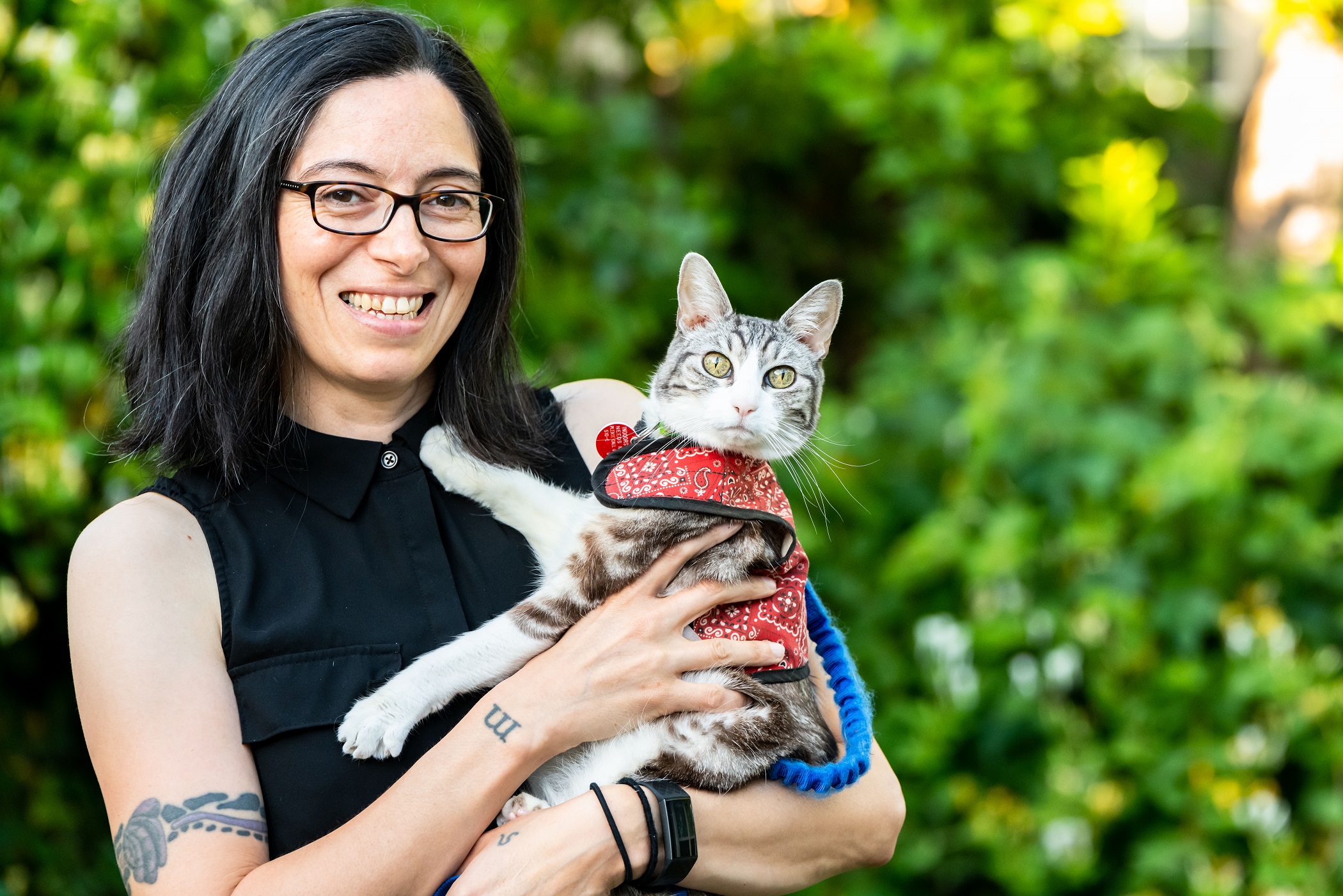
Mikel M Delgado
Researcher
11
APPEARANCES
5
PODCASTS
Oct 26, 2026

Mikel Maria DelgadoGUEST
They're not doing it because they want to stress their cat out or harm them.
Mikel Maria DelgadoGUEST
They are thinking of the end goal, which is I have to get my cat to the vet because we have this appointment.


Tracy HotchnerHOST
Is middle of the night cat wake-ups, waking up the humans, is that pretty common? And then people gripe about it like, I got the lemon of the cat world and he's waking me up at night like it's the cat's problem or the cat's fault.
Mikel Maria DelgadoGUEST
Yeah, we call this nocturnal activity, right? And it can be very disruptive if you like sleeping through the night.
Mikel Maria DelgadoGUEST
And I think people seek help for it, obviously, because they're sleep deprived.
Mikel Maria DelgadoGUEST
of like waking up with their cat, trying to go back to bed, just trying to get the cat to shut up so that they can fall back asleep.

Mikel DelgadoGUEST
I always try to approach those situations with a lot of compassion because, again, the intentions are good, but we know there's a lot of, you know, just obstacles either within the person or just societal.
Mikel DelgadoGUEST
Like, certainly now, like, finances are a big issue for being able to care for pets, um, the way they, they need to be, and we see that, you know, that can be really stressful for people.
Mikel Maria DelgadoGUEST
And so we do see some cats that really love to play in water or get in water.
Mikel Maria DelgadoGUEST
So you know, one thing I would wonder is if this person prefers a certain breed of cat that maybe already has a tendency to like water.
Mikel Maria DelgadoGUEST
Maybe they've never had a bad experience with water, you know, so they're open to it, right? They're like, "Oh, this is kinda fun." Um, so, so I wouldn't be...
Tracy HotchnerHOST
say to the cat, this is yours forever and ever, amen, but then will they think that all furniture is theirs? So what do we do about furniture?
Mikel Maria DelgadoGUEST
Do they have the finances to replace the furniture? Not always possible.
Mikel Maria DelgadoGUEST
And we know that, of course, like you mentioned, scratching is a natural behavior.

CarraHOST
Do you see any benefit of trying pheromones? Yeah, so that's
Mikel DelgadoGUEST
I think I've maybe angered a lot of people because I wrote a blog post, it's definitely my most popular blog post, which was really kind of reviewing at the time, now this was about 10 years ago, the published research about Feliway, which was the only, I think at the time was probably the only product that was kind of dominating the market.
Mikel DelgadoGUEST
And since then, of course, we've seen an explosion of pheromone products on the market.
Mikel DelgadoGUEST
So I fully recognize that I have a biased perspective because most of my clients have tried pheromones and they didn't help.
CarraHOST
What are the kind of mistakes that owners are making? And can you advise in particular about the smell that's left behind and how to actually manage that smell so that it doesn't continue on a sort of vicious cycle?
Mikel Maria DelgadoGUEST
What I have typically heard this behavior described as is elevator butt, right? The cat starts on the ground floor, and then as they're peeing, the butt starts going up.
Mikel Maria DelgadoGUEST
And we really don't know how common this behavior is because it usually doesn't present as a problem for the caregiver, like peeing outside the litter box, as in like house soiling, right? Peeing on your bed, peeing on the carpet, peeing on the counters, right? So because this behavior tends to occur in the litter box, There's really no research on why cats, why some cats do this, right? We know not all cats do.
Mikel Maria DelgadoGUEST
You know, first they'll do a little digging, create a nice little spot for themselves and they'll squat and urinate.
Mikel Maria DelgadoGUEST
Getting my cat's arms through all of those straps is, like, a nightmare.
Mikel Maria DelgadoGUEST
So just make your life easy and pick, you know, uh, know your cat and then pick something that's, you're gonna be able to get on your cat, um, so that you're not, um, struggling, especially at first.
Mikel Maria DelgadoGUEST
Because you're going to spend a little bit of time introducing your cat to the concept of a harness before you even take them outside.
Mikel Maria DelgadoGUEST
So we just wanna briefly get them introduced to that, and then once they're comfortable with that, um, and by comfortable I mean they don't even seem to notice it, they keep eating the treat, whatever, then you can start introducing, like, okay, I'm gonna just secure the front, um, straps.

SteveGUEST
You know, the cats are known for being aloof and, and, and, and separate and self-focused, and I think there's a desire to break down that barrier and, and have some kind of one-on-one with our cats.
Mikel DelgadoGUEST
I think it's always important to consider how cats entered our lives versus dogs, right? The domestication history of dogs is much longer, and we selected dogs to do things for us that were very specific, like things that involve communication, right, and fetching and, um, helping with hunting and helping with guarding.
Mikel DelgadoGUEST
And cats, we didn't do any of that, right? So cats have been domesticated a much shorter time, and really, it was just kind of a domestication of convenience.

Mike PescaHOST
But I want you to tell me if it's changed since you've been doing what you've been doing, this belief that it can happen or does happen or needs to happen, that we have actual human speak to animal speak interaction.
Mike PescaHOST
So what about the I'd like to tell you about what's going to happen at the vet and to reassure you? Any communication tips for that? It's probably very common because cats get very agitated.
Mikel DelgadoGUEST
And so they primarily use body language and scent to communicate with each other.
Mikel DelgadoGUEST
Bad don't really communicate with each other except through hissing, which is not a pleasant sound.
Mikel DelgadoGUEST
That's not a friendly communication, right? That's because cats use body language and scent to communicate with each other.
10 MINS LATER
SteveGUEST
And I think it was a desire to break down that barrier and have some kind of one-on-one with our cats.

Mikel DelgadoGUEST
What we see is that in the Fertile Crescent where humans were settling, storing food, that there is evidence that cats came into people's lives, became part of their lives, right? So we see art depicting cats, um, we see archaeological evidence of cats coexisting with humans.
Mikel DelgadoGUEST
But, you know, the question of, like, are cats truly domesticated really depends on how you think about domestication, and so I prefer to say they're semi-domesticated.
Mikel DelgadoGUEST
But domestication is often described as, like, a process we do to, like, plants and animals to make them usable by humans, right? And that includes dogs.
9 MINS LATER