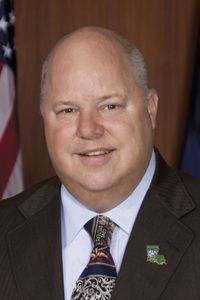
Mike Strain
Agriculture Commissioner of Louisiana
3
APPEARANCES
3
PODCASTS
Oct 13, 2026


Mike StrainGUEST
Well, right now, in many of the agreements, we are lowering or eliminating tariffs.
Mike StrainGUEST
If you look at, uh, the agreements, uh, just in the last two weeks, in the Dominican Republic, they are going to eliminate the tariffs on rice, and they're one of our biggest receivers of Louisiana rice.
Mike StrainGUEST
As we continue to negotiate, if we find a tariff that's an issue, and then we bring that to the attention, I work with Secretary Rollins and, you know, the, the, the, the foreign ag service, that we can reduce, eliminate, or trade those off.
Mike StrainGUEST
So our position is getting better in relation to, uh, to the elimination of tariffs.
Mike StrainGUEST
We're seeing increased exports of our major commodities, uh, including rice, corn, soybeans, and others as we level out these playing fields.
9 MINS LATER


Mike StrainGUEST
More than 33 states and a number of Canadian provinces ship their grain through the inland waterway systems.
Mike StrainGUEST
More than 12 to 14,000 miles of interconnected waterways held up with, with locks and dams and bridges.
Mike StrainGUEST
And so the wealth of America, if you see, we're at the bottom end of America's superhighway.
Mike StrainGUEST
62 to 65% of all grain exported from the United States will come right past this point, and it begins in the inland waterways.
Mike StrainGUEST
Shipping by water puts an additional 15 to 25 cents per bushel in every farmer's pocket that's able to ship that way.
8 MINS LATER

Mike StrainGUEST
We had all the different strike teams from across the United States, local volunteer fire departments from across Louisiana, as well as additional help from every agency in the Department of Ag.
Mike StrainGUEST
And so it shows you what can happen when the weather conditions are right in, you know, the Orleans area.
Mike StrainGUEST
You know, you had the fires in the marsh or what was marsh that was then drained for economic development.