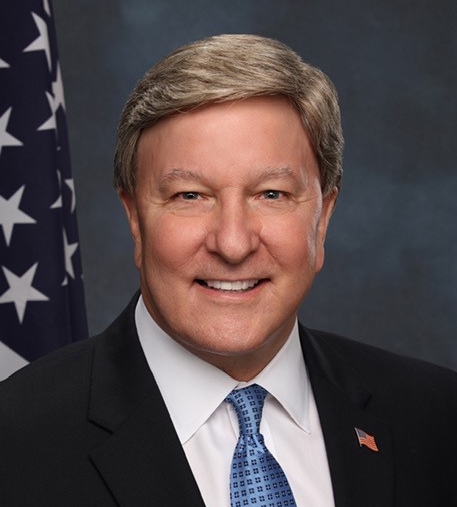
Mike Rogers
Retired U.S. Navy admiral, former Director of the NSA and Commander of U.S. Cyber Command; now a senior advisor at Brunswick Group and operating partner at Team8.
3
APPEARANCES
3
PODCASTS
Aug 7, 2026


Mike RogersGUEST
So what I would be trying to plan against? [chuckles] Put it this way, if I got asked, 'cause, you know, I- I'll, uh, the thing I liked about my previous life is I did cyber offensively as well as defensively.
Mike RogersGUEST
If I was asking myself defensively how would, what would I be anticipating from, uh, from adversaries, and what do I think we'd need prepared to address? Um, number one, we would have, we have to be ready for the potential placement of destructive malware in key components of our infrastructure.
Mike RogersGUEST
We've already seen it in power, but-- and you're gonna see it across the board, um, from financial to tele.
Mike RogersGUEST
In some ways, the virtual world, the digital world, has proven much more resilient than the physical world.
7 MINS LATER

Nathan KikerHOST
What could we do if we decided to go full force against a country like China today, and what should we be doing? What should our aggressive posture be?


Mike RogersGUEST
So for, for many of Oppenheimer's climate-- clients, boy, you know, it's a challenge you're dealing with every day.
Mike RogersGUEST
So first of all, we have created a world and an economy, economic model that is increasingly based on greater, uh, remote access, greater automation, greater use of data, which means we bring data into our models, we collect it in larger and larger amounts, and now with AI as an example, we're developing technologies that are designed to generate more value out of data.
Mike RogersGUEST
If we were only looking at this world from a cybersecurity perspective, this isn't what we would have built.
6 MINS LATER


Vago MuradianHOST
So what does a national plan on this look like? How does that get tied to spectrum sales and allocation? How much would investment be and what's a reasonable time scale to create sort of a national commercially resilient architecture for the United States?
Mike RogersGUEST
So number one, the FCC, as I said, the Federal Communications Commission allocates spectrum broadly in the United States.
Mike RogersGUEST
They broadly come up with what elements of the spectrum will be used for what purposes and who will then control those elements of the spectrum.
11 MINS LATER
Vago MuradianHOST
So where are our adversaries? What is it they've been achieving? And what is it that we need to be doing to better defend and protect ourselves?