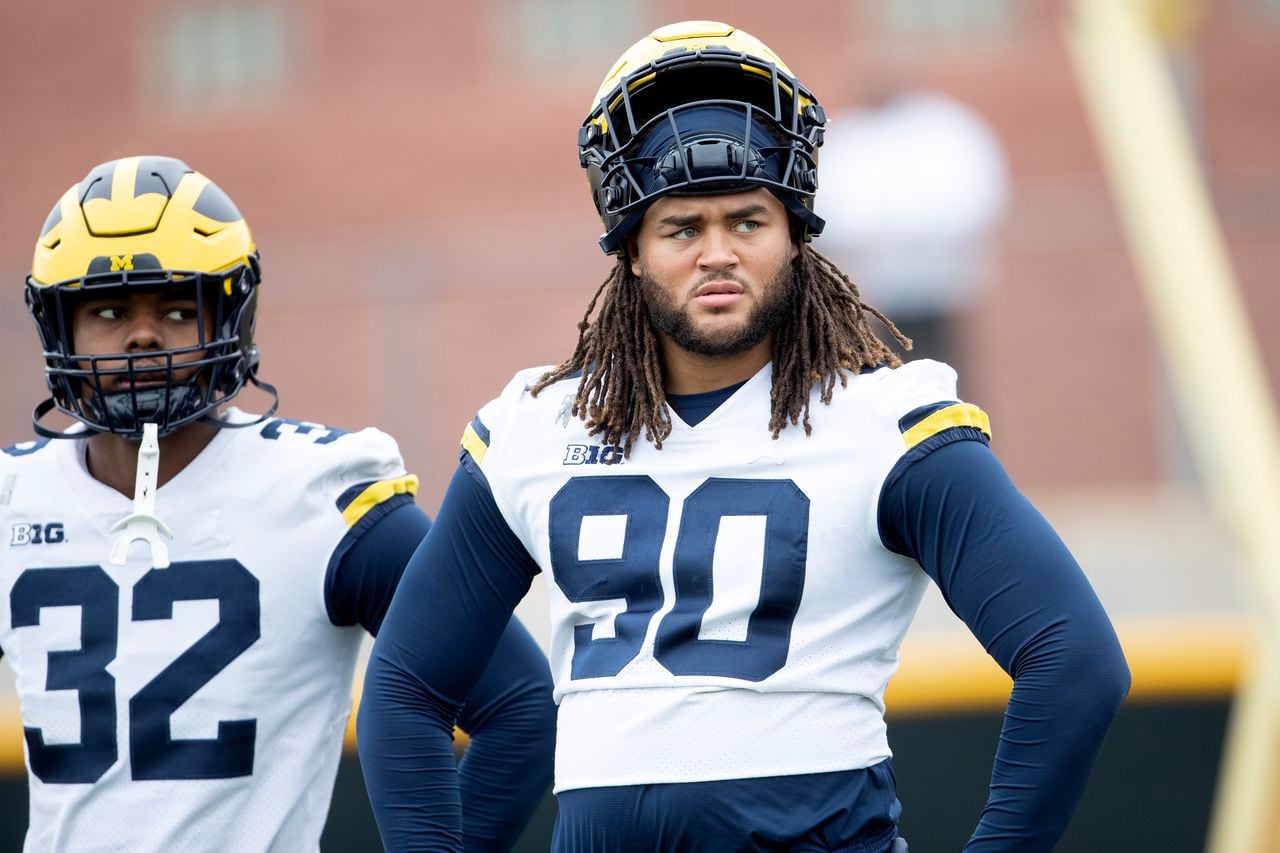
Mike Morris
American American football player
9
APPEARANCES
7
PODCASTS
Aug 14, 2026

Mike MorrisGUEST
Uh, everybody knew each other up there, but I'd probably talked to them for two or three minutes after they got off the bus, chit-chatted before they started walking home.
Mike MorrisGUEST
Kingfisher itself had been along for a long time, pretty much from logging back in the late 1800s, early 1900s, and everybody around there was associated to either the sawmill or logging or farms.

Eve LazarusHOST
You mentioned you were having dinner with your family when Victor, the father, came to your house a- asking if you'd seen them.

Mike MorrisGUEST
It matters, right? So number one, NFL, strong negotiating position by virtue of how popular the content is.
Mike MorrisGUEST
Um, but the part of what you bring up in tying together the last point we just talked about with the bundle, when you have a game on every week and you are paying for that, you need to have a revenue source.
Mike MorrisGUEST
If your revenue source is being part of this bundle where you can continue to push for more and they can't drop you, you understandably can take a, a weekly, weekly package, right? If you are a new entrant, and when you have one game on in a month and somebody signs up for that game, that second game, if the same person stays signed up, you don't make any more money, right? The NFL m- money coming from the bundle, they-- Those channels that, that have the NFL, they even pay with revenue that they're getting out of the NFL season, right? The, it's, it's such a powerful product having the NFL, that you, um, have stickiness to your bundle year-round and, and you make those payments.
Mike MorrisGUEST
For a s- a, a streaming service that, that has these discrete monthly payments that are at much lower price points, it's very hard to justify coming in and competing above the existing price in the market.
14 MINS LATER

Mike MorrisGUEST
Just because you're not Bob Dylan or Billie Eilish or Justin Bieber doesn't mean that you don't have a fan base that's very dedicated to you, that is very loyal to you, that'll listen to not only your legacy catalog, but also everything new that you put out.
Mike MorrisGUEST
So just because your followership may be less than, you know, Billy or Justin doesn't mean that you don't have 10,000, 100,000, a million very dedicated listeners and followers on Spotify or the other platforms.
Mike MorrisGUEST
So I think there is a little bit of a misconception that just because you're a smaller artist, that it's riskier.
Mike MorrisGUEST
The second layer is that what we're doing, and this is important, we would not, even with the best data in the world and the most confidence in the world, we're not going and making isolated bets around a single artist or a couple artists or even five or 10 artists.
20 MINS LATER

Dan RuncieHOST
And then, of course, I'm sure that part of your underwriting process when you're looking at these companies is looking at, okay, what do the exit opportunities look like? And do you have a feel for the company specifically, whether or not you think that, okay, the exit opportunity for this would be more likely to be a financial acquirer or a more strategic move?


Michael TorranceHOST
But in the meantime, how are you seeing companies valuing nature or seeing nature integrated as being a business driver to try to achieve the overarching business goals of the company?
Mike MorrisGUEST
cast my mind back to the Glasgow COP a few years ago probably four years ago I think nature and finance weren't really on the same page and that meeting seemed to that felt like a shift in how companies think about nature and how it sits on on the balance sheet as you say and And Dom's mentioned, there are a number of metrics that have been created and being reviewed by governments and global organizations to determine what is the best approach for understanding nature and how we account for that and what that looks like.
Mike MorrisGUEST
I think at the end of the day, certainly at the moment, it comes down to two potential options as to why companies would get involved from a business perspective in using nature.
Mike MorrisGUEST
One is around resilience and the reduction of risk to that business model the other which is slightly different is around investment but just focusing on risk for a moment don mentioned that we've started to move away from regulatory drivers but they still exist and they're still there in every country and across lots of different sectors and any regulated industry works towards the requirements of their regulator So in the UK, our water industry works to the requirements of the regulator, Ofwat and the Environment Agency, as well as drivers from their investors and customers.
Mike MorrisGUEST
But from the regulator's perspective, they need absolute assurance that any solution, whether it be grey or blue, green, will provide the requirement to meet the legal driver.
Mike MorrisGUEST
So, for example, a percentage change in water quality in a specific river, watershed or storm overflow frequency reductions, which is a big requirement.
Michael TorranceHOST
What role are you seeing the financial sector play in terms of this topic, scaling nature-based solutions, and what is the future of that?


Mike MorrisGUEST
And, and the musicians, uh, m- often are, like brass players will, will use a lot of different mutes so that there's lots of different textures.
Mike MorrisGUEST
And sometimes the, a, a muted brass will, will, will, um, fill in the role of, like, an, an oboe or a, or a, or a bassoon or something just to, to help it, h- help it give it the, the, the varied textures that would be in a larger orchestra.
Mike MorrisGUEST
Um, and then the other thing that I wanted to just point out to you is that a lot of shows on Broadway now, they use sweetener tracks, you know-
Mike MorrisGUEST
Well, the, it, I, I have to give, um, a shout-out to, uh, David Chase, who, uh, is an, a, one of the, one of the most, uh, and amazing and experienced, uh, arrangers on Broadway, and he's been that for the last 25, 30 years.
Mike MorrisGUEST
Uh, a lot of the stuff that we get as orchestrators is sort of fleshed out by the arranger.
Mike MorrisGUEST
Uh, and so we're given little ideas about what to do with the, the, without necessarily indicating exactly what texture that might be needed or desired.

John OurandHOST
Uh, what do you make of, of YouTube's interest in the NFL and, a- and how can we see that sort of start to, start to manifest itself?
Mike MorrisGUEST
Yeah, I mean, it's complicated, especially on that very last point you just brought up about putting it in front of a paywall instead of behind a paywall, right? Making it a sort of broadcast-esque type of business.
Mike MorrisGUEST
First of all, um, Google, YouTube, uh, incredibly powerful company, media company, very deep-pocketed with a number of ambitions across their businesses, um, that span well beyond media.
Mike MorrisGUEST
Uh, and yet YouTube is arguably, you know, one of the largest, if not the largest player in media at this point, uh, at least as measured by the amount of time spent with the property.
Mike MorrisGUEST
So very powerful, and they have existing NFL relationships, one directly with the Sunday Ticket product, one indirectly through their virtual, uh, multi-channel provider, which as you know, YouTube TV is a bundle which offers ESPN and CBS and Fox and, and NBC.
Mike MorrisGUEST
Uh, and so they, they are able to air games on their service, uh, as the, uh, consolidator and distributor of those packages.
John OurandHOST
Do, do they need to make a profit off of, off of this? Uh, how, how, how do they view the business in, in those terms?

Mike MorrisGUEST
Oh, does it, doesn't it, though? Um, look, I think, I think, um, the truth of it, I'm trying to think of how to articulate this somewhat simply.
Mike MorrisGUEST
Like, ultimately, one, I agree with you that the NFL doesn't wanna leave a dime on the table.
Mike MorrisGUEST
But I don't think that that's, um, a bad thing per se, right? That's kind of the, the, the game that we play.
Mike MorrisGUEST
That's, that's something of capitalism, to make sure that they are getting, um, the full value for all of the work.
Mike MorrisGUEST
You think of all the work that is put into what the NFL is, including the athletes, the ownership, everything.
7 MINS LATER
John OurandHOST
Um, for this go around, do you expect the NFL to cede more games towards, uh, toward, towards streaming, or do you expect it to be really still broadcast TV dominant, uh, moving forward?
John OurandHOST
But moving forward, like what is the NFL? What do they want to see a percentage increase off of? Is it an average annual? Is it what you're talking about? The you know, the per viewer minute or what? What should people be focused on here?
Mike MorrisGUEST
Well, don't know the answer i can't speak for the nfl with respect to something they're trying to achieve on a you know uh we're gonna raise our prices by some percentage um i i really think and the nfl has been um uh i i'd say fairly communicative over a long period of time with with the press and and with uh the investment community i think the nfl and and the leadership there has a responsibility to make sure they're generating the maximum value of those media rights both for the near term and long term um and so to the extent they look at that step up at the nba and say hey you know we should be making more there's a little bit of a tug of war in there and the fact that they do have contracts that are through uh as we said the 2029 season with most of their partners 2030 with espn And so how do we sort of reopen those contracts in a way that helps us achieve our growth goals that our partners agree to because they don't necessarily have to go back and re-up their agreement.
Mike MorrisGUEST
It begs the question, what are the NFL rights worth? We would make the argument that they are worth more, but that being worth more is a function of sort of managing the ecosystem such that the consumer's passion for the NFL turns into solid, sustainably solid and growing spend for access to the content.
Mike MorrisGUEST
And that spend more efficiently makes it to the network, to the league, through the network partners.
15 MINS LATER
John OurandHOST
For this go-around, do you expect the NFL to seed more games towards streaming, or do you expect it to be really still broadcast TV dominant moving forward?

Mike MorrisGUEST
You know, with, um, I mean, Right to Work is a, is one for, uh, people who economically inactive, um, but with, with artists, I mean, it's incredibly hard as an artist to actually make it work.
Mike MorrisGUEST
You know, we're having a, an event and can you get such a person?" Quite a high name figure in Liverpool without, without mentioning names.
11 MINS LATER