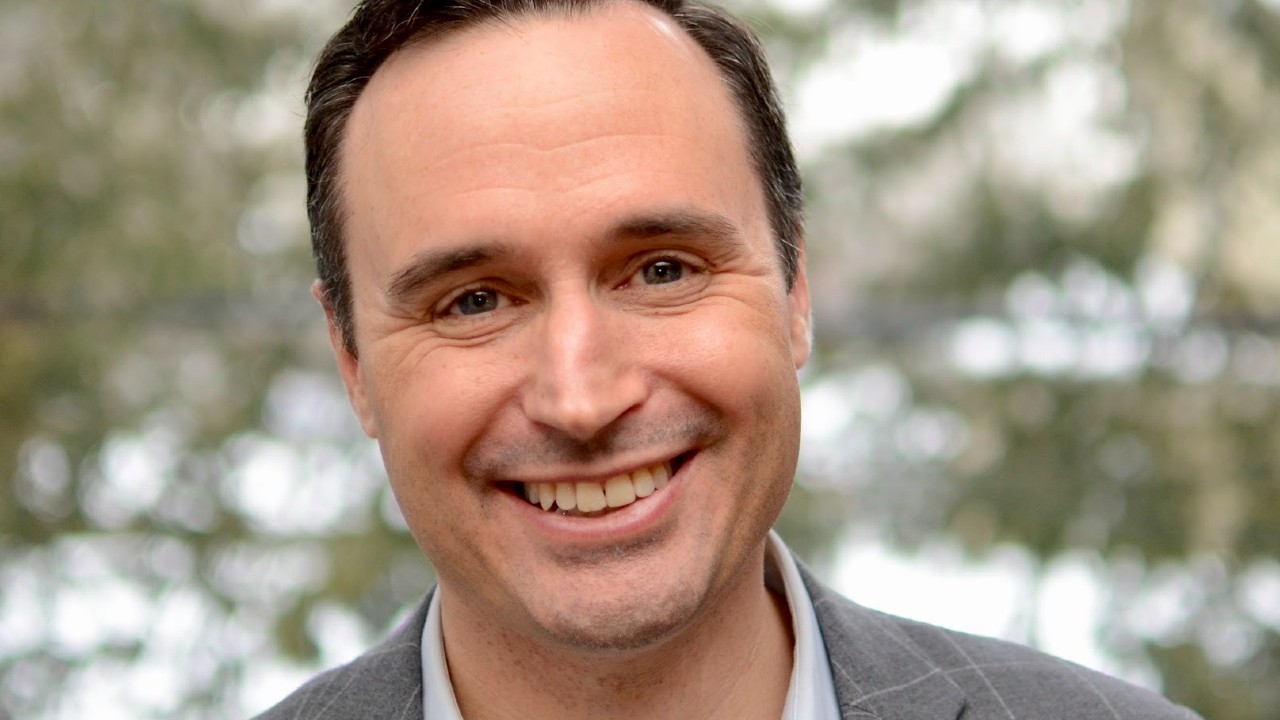
Mike Kelland
4
APPEARANCES
4
PODCASTS
Oct 8, 2026

Matt MaternHOST
I guess a tough question that may come up, I assume somebody else has asked you this, is like, well, what is the negative impact when we're kind of tinkering with the oceans?

Mike KellandGUEST
I mean, I often prompt this question, right? People come and they'll be like, oh, I have a question, but I don't know how to ask you.
Mike KellandGUEST
I'm like, are you asking me if we're going to kill all the fish? Because we're not going to kill all the fish.
Mike KellandGUEST
And everything that we do in the world has some sort of risk associated with it.
10 MINS LATER
Matt MaternHOST
In terms of getting this up to scale even faster, are there other organizations that are working on this same set of problems in a similar way? How do you see it scaling to the level where it's truly making a big impact?

PamHOST
Can I just get you to do, you're the guy in the know to do an overview for listeners as to what exactly planetary is and does?
Mike KellandGUEST
And it was that, you know, in the Mi'kmaq way of knowing that, The ocean is an entity, right? It's its own living entity.
Mike KellandGUEST
So it can be full of fish and all kinds of other living things, but it itself is also alive.
Mike KellandGUEST
And you can kind of feel that, right? When you're on the coast, it has, you know, the ocean has moods, right? Sometimes it's angry, sometimes it's calm and happy.
13 MINS LATER
PamHOST
So it made you think this is something I want to take on.

Luis de LeonHOST
Uh, but first, you know, I think it'd be interesting, you know, to help explain to our audience, like hearing you describe all this, I'm sure people are curious, "Well, where does like a partnership with Shopify and Stripe, British Airways, like where does that all come in? Like what, what exactly is the end result here? Like why, why is that even a thing?" Can you help explain that?
Mike KellandGUEST
As you mentioned in the intro, we need to do a tremendous amount of carbon removal, uh, on Earth.
Mike KellandGUEST
And so, uh, to hit that trillion ton number for carbon removal, we have to scale these technologies up massively from where they are.
Mike KellandGUEST
Like every carbon removal technology, and this is sort of technologies that remove carbon from the air on a permanent basis, so things that, uh, have, you know, greater than 1,000 years of, of permanence of removal from the atmosphere.
Mike KellandGUEST
So they're roughly equivalent to the emission of the carbon in the first place.
9 MINS LATER
Luis de LeonHOST
And so how are you approaching safety and transparency, uh, in your deployment right now, I suppose, in Halifax, and then how you're leveraging that use case for future deployments, like to, to kind of learn about, like, ways to improve or address any sort of, like, safety concerns on, on various levels?


Sonia SennikHOST
Planetary was recently awarded the $1 million X-Factor Prize from XPRIZE Carbon Removal for its breakthrough work, turning the ocean into a natural carbon sink.
Mike KellandGUEST
The easiest way to think about it is that the ocean essentially breathes and everything we put up in the air and everything that's in the atmosphere gets breathed in by the ocean.
Mike KellandGUEST
So when we put extra CO2 up in the air, the ocean is going to breathe all that CO2 in.
Mike KellandGUEST
the co2 concentration of the ocean builds up really quickly and co2 when it gets into water turns into an acid so you can kind of think of the ocean as having like a little bit of heartburn what we do is we work inside coastal plants to reverse some of that acidification we source a natural mineral and we introduce that into the water that flows through power plants and wastewater plants And as we do that, we're going to reduce that acidity in the water that's flowing through.
Mike KellandGUEST
And what that does is it allows the ocean in the local region to essentially breathe again.