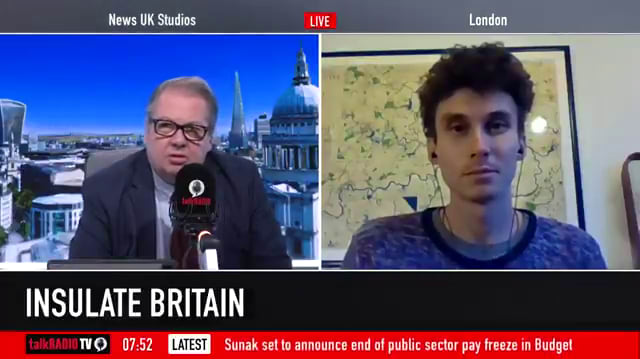
Mike Graham
British journalist
20
APPEARANCES
6
PODCASTS
Oct 27, 2026


Mike GrahamGUEST
Your first job, local paper? no i never did that you see i was kind of i i i went to university and my father had introduced me to the newspapers he was a graphic artist who worked for the evening news and he was actually trained artist he could write he could actually write in times roman you know he was actually taught to be a calligrapher and he was a lithographer and all the things that you learn at art school um so yeah he could write about 15 different typefaces by hand and you know just like wow all the things that you can now do on an ipad he could do like without an iPad, you know? So I used to go into work with him when I was a kid and I thought, this is great because they would have intense moments of really, really busy, you know, edition times when they were drawing maps and, you know, airbrushing, you know, dogs out of pictures and copying pictures out of the evening standard and doing their own version and ripping it off.
24 MINS LATER

Mike GrahamGUEST
Um, well, I think, one, there's nothing wrong with being a populist in the first place.
Mike GrahamGUEST
Um, and I think also the point about the way that things have moved, I guess, is there's no question that Restore have had an influence on Nigel Farage.
Mike GrahamGUEST
You know, he influenced government policy, international policy, uh, on Europe since he was in UKIP, right? There wouldn't have been a referendum on the European Union in 2016 if it hadn't been for Nigel Farage and UKIP.
Mike GrahamGUEST
And so you might say that the Conservative Party were copying in those days what Nigel Farage was saying people should be doing.
24 MINS LATER


Mike GrahamGUEST
mean, if you went into the building now, you wouldn't know that they were a right-wing publisher because one of the things that happened when I was still there was was they basically shut down their operation for 18 months and everybody went to work from home.
Mike GrahamGUEST
They're youngish kids in their 20s, nepo babies who probably got the job because the payment isn't very good and their parents can afford to let them continue to live in Chiswick with them and pay for them to get there and back and take an avocado sandwich.
Mike GrahamGUEST
And when they came back from being at home for 18 months during COVID, they all started complaining.
Mike GrahamGUEST
Because apparently they'd taken a view in the Inside News UK that they would play Times Radio breakfast show in the lift.
9 MINS LATER

Dan WoottonHOST
And to me, what I saw this morning was just pure propaganda, and, and, and I don't think people want that.
Mike GrahamGUEST
No, I mean, I think the problem for, um, for Talk and for Jeremy is that they live in a building which is occupied by an awful lot of people that don't like Nigel Farage, right? So they're already starting from a kind of difficult position because obviously, as you say, Jeremy and, and Nigel know each other.
Mike GrahamGUEST
Um, Jeremy's also not, by his own admission, he would never pretend it, a, a political interviewer, right? He's just not.
Mike GrahamGUEST
In that piece about Giorgia Meloni, there isn't any quotes from Giorgia Meloni.
Mike GrahamGUEST
There is nothing to suggest that she said it, and I've been checking her Twitter account today.


Mike GrahamGUEST
So he got in touch and said he was starting up this new publishing company, would I be interested in, in doing something? And I said, "Yeah, absolutely." And we sort of, we sort of bashed around a couple of ideas, and I said, "Well, I, I'm really quite interested in the relationship at the moment with the media and with, um, the government, and the way that the media's changed since, since I was here, particularly newspapers." And so we came up with this idea.
Mike GrahamGUEST
Um, and I said, "Well," funnily enough, I, it was, it was the beginning of what I was gonna say at CPAC, so I had this kind of project that was already ongoing.
Mike GrahamGUEST
And he said, "It's not, you know, we're not, we're not looking to publish a massively big book."
30 MINS LATER

Mike GrahamGUEST
remember once I was in the car and in those days when we'd all be tuning into, you know, the press conference at five o'clock and I remember, getting in the car and I was driving and he started his question.
Mike GrahamGUEST
A friend of mine rang me and I was on the phone for about 10 minutes, put the phone down.
Mike GrahamGUEST
he was still asking the question, you know, he hadn't actually got to the end of it, you know, and he's so kind of, you know, I would, I would say kind of, it's a vanity project for people like Peston, you know, he's trying to prove himself to be cleverer than the politician.
speaker_1ADVERTISER
know,
Mike GrahamGUEST
They live in this bubble, right, where the only people they talk to are all talking about the same thing that they are.
Mike GrahamGUEST
I don't know if you saw Fraser Nelson this week doing his little monologue to camera.
Mike GrahamGUEST
And I'm not saying that James O'Brien definitely does, but James O'Brien's another one.
Mike GrahamGUEST
who has become kind of lost in the sea of his own wilderness and madness, you know, because since Brexit, he hasn't really known.
Mike GrahamGUEST
in the first quarter of this year to the end of March, and these are recorded figures by the Metropolitan Police.
Mike GrahamGUEST
Every single metric of crime is up, aside from, you know, the one that he claims is down, which is homicide, which is down by about five people over the course of, you know, well, last year.
Mike GrahamGUEST
People are saying they're not sure they wanna buy tickets for it because they don't wanna come to London.
33 MINS LATER
Dan WoottonHOST
So Mike, 60 seconds, why do you think Nigel Farage would make a great prime minister?

Andrew GoldHOST
And one of them was the 26,000 criminals, is it, that have been released? What's going on? Well,
Mike GrahamGUEST
it turns out that Labour have only been in for just over a year, but they've somehow managed to release 26,000 criminals, you know, many of whom were sent to prison for more than 10 years, more than 14 years.
Mike GrahamGUEST
You know, you don't get sent to prison in this country, really, for a very long time.
Mike GrahamGUEST
Normally, I think the average is you've probably committed about 35 crimes before you actually get a custodial sentence.
Mike GrahamGUEST
And so because they've sort of panicked about absolutely almost anything that you can think of, this is a government of panic.
Mike GrahamGUEST
I mean, he's a curious character, Alistair Campbell, because he's done some pretty bad things in his life.
Mike GrahamGUEST
When he was running Downing Street for Tony Blair, he was famously a massive bully.
Mike GrahamGUEST
He used to ring news desks up and start threatening them and start shouting at them.
Mike GrahamGUEST
He used to phone up the BBC if he didn't like the fact that they were leading with a story that wasn't about Tony Blair.
Mike GrahamGUEST
And, you know, what's the difference? You know, you can go into a pub and sit down at a table of six, but you can't sit down at a table of eight.
Mike GrahamGUEST
You know, as long as you go in one side and buy a pint and walk out the other side and drink it over there, that's okay.


Mike GrahamGUEST
Then every single guest I got, "Do you think Keir Starmer is a liar?" "Yeah." So, you know, there was, there was kind of things going on that were suggesting to me that we were, you know, we were not gonna be as free perhaps as, as I wanted to be anyway.
Mike GrahamGUEST
You know, I've been fired-... five times in my life from various different jobs, you know, never for being a racist.
Mike GrahamGUEST
And in fact, I always say to people, "Well, actually, I didn't get fired for being a racist.
Mike GrahamGUEST
I got fired for not giving them my phone." And they put out a statement, which was pretty brutal actually, after 18 years, which basically said that they were gravely concerned that I didn't, um, want to help them out and with their inquiry, and that I reneged on it.
22 MINS LATER
Andrew GoldHOST
And do you think, is politics just a, is it the type of person who wants to be a politician is often a bit odd?
Mike GrahamGUEST
I mean, I've had it once described to me that the house of commons and the whole Westminster parliament is a bit like a school would be if they didn't have any bullies, you know, which is quite an interesting way to look at it.
Mike GrahamGUEST
You know, I'm not suggesting that bullies are things that should be good, you know, but, but it's a bit like all the nerds have kind of taken over and they're all running it and nobody gives them a slap for being a nerd, you know? Um, and they just have very odd, strange, um, interests.
Mike GrahamGUEST
it isn't, because it's still part of the news empire, you know, so it's part of the Murdoch empire.
Mike GrahamGUEST
So it's kind of, it occupies a space, I would say, outside of what you might call the mainstream kind of broadcasting media.
Mike GrahamGUEST
But it's still very much part of, you know, a large organisation, you know, so we're not, I would never pretend that we're sort of like a pirate radio station or anything like that because we're not.
Mike GrahamGUEST
But I think it was around about the Brexit time, really, when we realized that there was something different about what we were doing and something different about what people were saying to us than you would hear anywhere else.
Mike GrahamGUEST
You know, you put the BBC on, And there would be all these kind of stories about how great the European union was and how safe it was for us to be part of it and how we shouldn't leave it.
Mike GrahamGUEST
And anybody who wants to leave, it must be either a racist or an idiot or a bigot or somebody with low IQ.
speaker_1ADVERTISER
And it's like,

Mike GrahamGUEST
I mean, he hired this woman, Vanessa Frake, who I had on my show quite a few times and she knows about prisons, you know, she ran one.
Mike GrahamGUEST
And when I heard her argument, As much as I'm not in favor of putting men in dresses into women's prisons, her argument was quite sensible in as much as she said, look, I'm not going to blanket ban trans women because if there's a woman who has been, or a man who has been a woman and lived as a woman and had the operation and had the hormones and changed into a woman, you can't really put that person into a men's prison.
Mike GrahamGUEST
The thing is with Hollywood, again, a bit like politicians, most people, I think maybe they don't start out being weird, but because of what happens, they become weird.
Mike GrahamGUEST
And we did all sorts of stories on John Travolta, some of which we never published.
Mike GrahamGUEST
Some of which were, you know, not provable, but you know, these guys are so fated and so kind of, um, pampered.
Mike GrahamGUEST
And in some of the sex they get up to is so weird and wild because they get bored.
Andrew GoldHOST
When did you start to feel that something in that mainstreamy world, because talk TV is outside of that, I would say, Well, it is, except
Mike GrahamGUEST
it isn't, because it's still part of the news empire, you know, so it's part of the Murdoch empire.
Mike GrahamGUEST
So it's kind of, it occupies a space, I would say, outside of what you might call the mainstream kind of broadcasting media.
Mike GrahamGUEST
But it's still very much part of, you know, a large organisation, you know, so we're not, I would never pretend that we're sort of like a pirate radio station or anything like that because we're not.
Mike GrahamGUEST
But I think it was around about the Brexit time, really, when we realized that there was something different about what we were doing and something different about what people were saying to us than you would hear anywhere else.
Mike GrahamGUEST
You know, you put the BBC on, And there would be all these kind of stories about how great the European union was and how safe it was for us to be part of it and how we shouldn't leave it.
Mike GrahamGUEST
And anybody who wants to leave it must be either a racist or an idiot or a bigot or somebody with low IQ.
Andrew GoldHOST
And one of them was the 26,000 criminals, is it, that released What's Going On? Well,
Mike GrahamGUEST
it turns out that Labour have only been in for just over a year, but they've somehow managed to release 26,000 criminals, you know, many of whom were sent to prison for more than 10 years, more than 14 years.
Mike GrahamGUEST
You know, you don't get sent to prison in this country really for a very long time.
Mike GrahamGUEST
If you've been... committing crimes normally i think the average is you've probably committed about 35 crimes before you actually get a custodial sentence and to get more than 10 years you've had to do something pretty bad and so because they've sort of panicked about absolutely almost anything that you can think of this is a government of panic there seems to be somebody shouts at them and they go what are we going to do now oh i know um let's get let's get loads of people out of prison and of course we watched them and we had a camera on Brixton Prison and a couple of other prisons, you know, back at the end of last year in the autumn.
Mike GrahamGUEST
Some of them, you know, were really happy and they were walking into the arms of friends of theirs.
Mike GrahamGUEST
I mean, he hired this woman, Vanessa Frake, who I have had on my show quite a few times, and she knows about prisons.
Mike GrahamGUEST
And when I heard her argument, as much as, you know, I'm not in favour of putting, you know, men in dresses into women's prisons, her argument was quite sensible.
Mike GrahamGUEST
in as much as she said, look, I'm not going to blanket ban trans women because if there's a woman who has been, or a man who has been a woman and lived as a woman and had the operation and had the hormones and changed into a woman, you can't really put that person into a men's prison, which I think is a valid point.