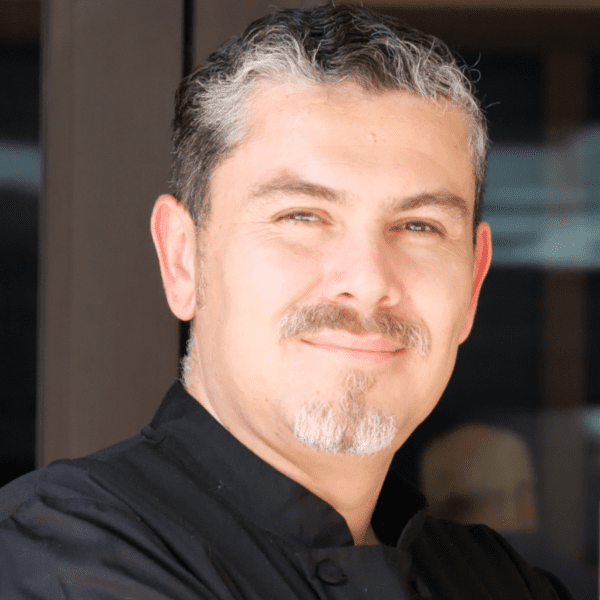
Miguel Bautista
Founder of CFS Recovery, a nervous system retraining program for chronic fatigue syndrome and long COVID recovery
6
APPEARANCES
6
PODCASTS
Jul 29, 2026


Hailey RoweHOST
Can you tell me a little bit more about behavioral recalibration and what you mean by that, how you help people with that?

Miguel BautistaGUEST
So when I was putting the whole system together, it was very, very tricky because first of all, people are dealing with 50 plus symptoms.
Miguel BautistaGUEST
A lot of them can't work, they can't walk, they can't leave the house a lot of the times and nothing is showing up on the tests and scans.
Miguel BautistaGUEST
So where do we even start with people? I had to start with my own journey and had to reverse engineer basically.
Miguel BautistaGUEST
What did I do in the first week and the second week? And when this happened, how did I go from being bedridden to going into a wheelchair, then using a walker, then getting my life back, then exercising, then traveling, then building a business? So I really had to break it down.
10 MINS LATER
Hailey RoweHOST
So at what point did you, were you more so doing it for practice? Were you doing it for testimonials? Were you doing it as a way to give value and then, you know, invite to your offer or like, how did that go for you?

JovonnieHOST
But what were those first three things that you had to do, Miguel, after wrapping your mind around your brain signaling? What had to happen for you in that moment?
Miguel BautistaGUEST
I think, number one, it's interesting because had I been presented that same exact information two years prior or three years prior, I would have brushed it off.
Miguel BautistaGUEST
In fact, I did see some things online before about, oh, neuroplasticity, brain retraining, this and that.
Miguel BautistaGUEST
If you train your brain now, all of a sudden you can go from bedridden to playing sports again.
Miguel BautistaGUEST
And to me, it just didn't make sense how you just oh do you just think your way better is that what you're telling me i would even get personally offended i'm like you think you think it's that simple but i realized okay there's a lot more to this and i was open to the idea at that time because i was in such a bad place like i didn't have any other option and that's typically what we see with people is they reach out to us as the absolute last resort when they've already tried other things for years sometimes even decades and so the first thing In order to actually fix this, after you rule out all the tests and scans and you're clear there, first you have to understand, what are we even trying to fix here? How did this happen in the first place? Why am I even feeling all of these symptoms? What does that mean that there's a glitch in my brain? And so quick crash course on essentially what happened to me and what could be happening to you is everybody has this maximum stress threshold.
25 MINS LATER
JovonnieHOST
Instead of asking, how do I get rid of this symptom? You started asking, what if there's a deeper reason my body is responding this way? How did changing that question change your entire healing journey?


Petra BrunbauerHOST
I imagine this is when you met the doctor you mentioned, but what happened to actually give you some hope and thinking, oh, there might actually be something there that might help?
Miguel BautistaGUEST
Yeah, I think with my journey and for so many people out there who have turned this around and got to the other side of this whole recovery illness journey, sometimes you have to reach almost that breaking point to be open-minded enough to to be receptive to the mind-body approach.
Miguel BautistaGUEST
I heard about this mind-body stuff many times, but I was like, mind? What do you mean mind? I'm feeling this stuff in my physical body.
Miguel BautistaGUEST
But what most mind-body content skips, or at least on the front end, I think it should be called like brain-body approach.
14 MINS LATER
Petra BrunbauerHOST
Now, I guess the million dollar question that our listeners wanted to know is how do you fix all of this? How do you start the healing process? And how do you support people on these journeys of, I want to say, regulating, balancing, grounding, coming more into alignment with themselves and Even after a long time that they may have been experiencing this for, how do you get them started on this road?

ValeriaHOST
but not
Miguel BautistaGUEST
And typically what happens is, In the pursuit of this well-being and trying to get healthier, the whole journey becomes like this checklist.
Miguel BautistaGUEST
And what most people do is they add like nutrition, they add different therapies, they go to acupuncture, breath work, all of these things.
Miguel BautistaGUEST
Like health is... multifactorial like there's so many different elements and people take this holistic approach which means trying to treat all the pieces so you have somebody who works with like multiple different specialists they eat clean they journal daily They do somatic exercises before bed.
ValeriaHOST
So talk to me about your own experience and what made a huge, what made the difference really? What changed everything for you?

May 28 · 51m
Sophie ShepherdHOST
You know what I mean? Like, 'cause I think a lot of people who've been told they have long COVID have a lot of hopelessness because it's so new, and people are like, "Oh, I don't really know what to do for that." I'd just love a little bit of a education from you of, like, what do you think long COVID is? What does it look like? Does it look like what you just said? And what is some hope for people who might have that diagnosis as well?
Miguel BautistaGUEST
So long COVID compared to something like chronic fatigue syndrome or even fibromyalgia, I see them as almost falling under the similar umbrella or same umbrella of a hypersensitive nervous system.
Miguel BautistaGUEST
The only differentiator with long COVID, and this is, uh, as long as, you know, your tests and scans have come back normal, which in most cases they do, the title of it, the actual label is just determined by, you know, what was the trigger.
Miguel BautistaGUEST
About half the people we work with actually are diagnosed with long COVID, and the thing is, it's so new that there is a lot of mystery around it.


Miguel BautistaGUEST
... helped you in your career probably, and hobbies and things you like to do.
Miguel BautistaGUEST
But it can also reach that point where it starts to work against you because you feel like it's never enough, or you feel like you need to get better, and you start seeking that external validation, and that's what will lead to things like burnout.
Miguel BautistaGUEST
That's what can lead to things like getting these symptoms and then going on this downward spiral once you get the symptoms.
Miguel BautistaGUEST
So I think just paying attention to how you're speaking to yourself, how much pressure you're putting on yourself, and if you feel like it's never good enough, that is a telltale sign that, you know, we should probably take our foot off the gas pedal on this particular trait you have and learn to use it to our advantage.
Miguel BautistaGUEST
An example is we had a, we had one of, one of our clients, very bright individual, very confident, very successful.
Miguel BautistaGUEST
I mean, the dude literally built space propulsion technology with, like, SpaceX.
10 MINS LATER