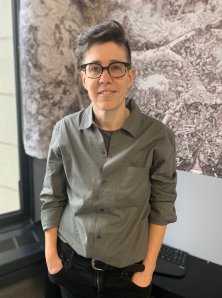
Michelle Murphy
Canadian academic
14
APPEARANCES
10
PODCASTS
Sep 10, 2026


Murray TompsettHOST
But before my first question, can you maybe provide us with some background on your share plan career today, please?

Michelle MurphyGUEST
Yeah, so I've been in share plans for, I don't know, since the late 90s, over 28 years, I think.
Michelle MurphyGUEST
This was when Sainsbury's had, say, the centre and I don't even know, but we had 180,000 employees.
Michelle MurphyGUEST
Everything we used to do was paper and we had two savings carriers and it was a whole different story.


Michelle MurphyGUEST
Suzanne, I'm going to talk us through our proposals in terms of delivering adequate public services.
Michelle MurphyGUEST
Our first ask here is to ensure that the capital allocation for staunch care is delivered, focusing particularly on enhanced community care.
Michelle MurphyGUEST
We're also looking for a further current investment in enhanced community care of 50 million.
Michelle MurphyGUEST
And then looking at, I suppose, enhancing universal access to GPs, particularly in rural areas, and enhancing community health networks with a view to our growing and aging population.
17 MINS LATER

John McGeadyHOST
So basically, is it the reference to universal basic income for carers? And basically, can you just elaborate on that or explain that a bit further?

Michelle MurphyGUEST
The purpose of this was, I suppose, to examine various options in terms of what the Minister for Finance has kind of indicated in recent months and look at where the benefits of those go, whether they're fair or unfair.
Michelle MurphyGUEST
So what we looked at, all of them have a similar cost, but we did look at something that the minister and government have mooted, which is changing the entry point to the top rate of tax, so increasing the standard rate down by €2,000.
Michelle MurphyGUEST
And what we found is that the distributive impact really is not really very fair because if you are in less than €44,000, you won't gain any benefit from that change.
Michelle MurphyGUEST
However, at a similar cost, if you were to increase the two personal tax credits every worker earning €20,000 or more would gain.

Anton SavageHOST
And what do you see as the most unfair aspects of the current taxation system? I suspect one of the most unpopular is the USC, but is it most unfair?

KarenHOST
So just tell us your findings there from that.
Michelle MurphyGUEST
And I suppose what we found, as you said, only three of them really have a fair outcome.
Michelle MurphyGUEST
And the one that has the fair outcome is increasing the two personal tax credits because every worker earning above €20,000 will benefit from that.
Michelle MurphyGUEST
However, what we have heard mooted from government and the Minister for Finance in terms of changing the entry point to the top rate of tax.
KarenHOST
I mean, that would have an impact on businesses already facing challenges.


Ryan ErmanniHOST
Michelle Murphy, talk to me about the impact that the philanthropy for the Variety Myoelectric Center at Corwell Health Children's, what this means.
Michelle MurphyGUEST
Well, we're so grateful to Liz and Nino Cotraro for hosting this evening because it really does provide life-changing support for kids, both at Variety and at Corwell Health.
Michelle MurphyGUEST
And for the Variety Myoelectric Center, it quite literally means giving a child a hand.
Michelle MurphyGUEST
So for children born with an upper limb difference or who lose it due to trauma, often there are very few options or resources for state-of-the-art prosthetic support.
Michelle MurphyGUEST
So at Variety, for 45 years, we have been providing myoelectric upper limbs that are state-of-the-art, lifelike in appearance.

Ryan ErmanniHOST
Michelle Murphy, talk to me about the impact that the philanthropy for the Variety Myoelectric Center at Corwell Health Children's, what this means.
Michelle MurphyGUEST
Well, we're so grateful to Liz and Nino Cotraro for hosting this evening because it really does provide life-changing support for kids, both at Variety and at Corwell Health.
Michelle MurphyGUEST
And for the Variety Myoelectric Center, it quite literally means giving a child a hand.
Michelle MurphyGUEST
So for children born with an upper limb difference or who lose it due to trauma, often there are very few options or resources for state-of-the-art prosthetic support.
Michelle MurphyGUEST
So at Variety, for 45 years, we have been providing myoelectric upper limbs that are state-of-the-art, lifelike in appearance.


John MoynihanHOST
What are the consequences, I suppose, both short and long term of growing up in poverty in Europe today?
Michelle MurphyGUEST
And I suppose the issue with the number of children in poverty is, you know, there's been a target within the EU to reduce that and it hasn't been met.
Michelle MurphyGUEST
So for those children, what it means is, you know, growing up in a household um where you know they're struggling to make ends meet it means your education outcomes are going to be lower than your peers it means your health outcomes your accommodation then when you get to employment there's kind of a lifelong scarring effect in terms of your earnings the types of opportunities that are available to you and for you then as you know, as they move into adulthood, what opportunities are available, the types of accommodation, their health outcomes, etc.
Michelle MurphyGUEST
There's obviously then the state is investing in services to kind of, I suppose, address some of the worst impacts of that.
Michelle MurphyGUEST
But, you know, really in this day and age, you know, the European Union as a whole should be able to address this better.


Michelle MurphyGUEST
And over the past year, looking at the consumer price index, we've seen they've increased as well by more than 3%, and they're kind of one of the key drivers of, um, price increases.
Michelle MurphyGUEST
So we would be concerned, um, because what, what we're seeing now, I suppose, is a sustained period of increased prices driven primarily by the increase in the, the cost of energy.
Michelle MurphyGUEST
And I suppose the households most exposed to this are those on the lowest incomes, and that's a concern to us because they spend most of their income on, on energy and food.
Michelle MurphyGUEST
So I suppose what we'd be looking for is some long-term solutions for those families struggling to make ends meet.

Rachael EnglishHOST
Um, rather than expending, extending those supports, should some of the money, in your view, be diverted to household energy bills?

JessHOST
And I'd love if you could talk to me about like the emotional part and like the emotional eating, because that's probably a big component of what you do with your clients.
Michelle MurphyGUEST
I want to reflect on what you just said of how easy it is, right? It's easy or it's difficult to be healthier.
Michelle MurphyGUEST
Like we all know, like eat these foods, do this movement, use this skincare, like all of these things and routines and supplements that we can do to be healthier.
12 MINS LATER
JessHOST
Yes.
CianHOST
What are they?
Michelle MurphyGUEST
Yeah, so the targeted supports we're looking for is, as I mentioned, the commitment to benchmarking, um, over two budget cycles, and the first one is a targeted 15 euro increase in core welfare rates in budget 2027, and then delivery on the commitments in the program for government for vulnerable groups, so the cost of disability payment, which is in the program for government, delivery on that, delivery on commitment for carers, for example.
Michelle MurphyGUEST
You know, the s- the statement yesterday talked about, um, supporting work and endeavor, but there was nothing in there about the 24-hour-a-day work and endeavor that carers provide to this country.
Michelle MurphyGUEST
And looking to where we're going in terms of demographic change, changes to the age dependency ratio, we need to rethink what work is in this country and realize it's not just paid employment, and we need to support those carers, those people with disabilities, and those people on fixed incomes to make sure that the income gaps that have widened, and really concerning, have grown between, I suppose, lower and middle income households.
Michelle MurphyGUEST
But the gap between them and higher income households is growing, and we need to start closing that now.
CianHOST
How do you get around that?

Jonathan HealyHOST
Michelle, will this help people if we do something for income tax in Budget 27?
Michelle MurphyGUEST
Well, given that the discussions are around basically changing the rate of the higher band, it's not going to do anything for anyone earning under that.
Michelle MurphyGUEST
I mean, our proposal would be if you're going to do anything with the income tax system, do it through tax credits rather than looking at the bands.
Michelle MurphyGUEST
Because I suppose when you're looking at this and you mentioned there the squeezed middle, Jonathan, like looking at the revenue data just after last year's budget, about 60% of the tax cases in the country earn under €40,000.


Rory HearnHOST
And but particularly on that, that AI, the tech sector, that, you know, shifting of money that we know goes on that tax haven status that, you know, how long is that sustainable? How long will it continue? And what happens when the tap is turned off, so to speak?
Michelle MurphyGUEST
And actually, the National Economic Dialogue on Monday, the teacher, he did reference how concerning it is, the proportion of corporate tax that makes up our tax take and how volatile it is.
Michelle MurphyGUEST
But in terms of our overall economic model, as you say, I suppose because we've had the success of attracting multinational corporations into this country, particularly technological and pharmaceutical ones, you could argue that our own indigenous base has been neglected slightly because we haven't needed to, I suppose, progress it in ways that perhaps we should have.
Michelle MurphyGUEST
And I do think now we have an opportunity because notwithstanding what's happening with global tariffs, etc.
Michelle MurphyGUEST
I mean, we do not know what's going to happen to pharmaceuticals in the next five or six years in terms of will some of them move back to the US or not in terms of tech.
14 MINS LATER
Rory HearnHOST
And we haven't created and nurtured the common viewpoint, you know, that we're things we're doing are doing as a society now i think you know in ireland we have particular aspects particularly communities that are really strong families that are really strong that are you know there's there's a coherence still there there is a cohesion still there in many ways done by people at the grassroots themselves and they've nurtured and kept it going um but also then that's we've hit massive isolation now you know huge levels of um you know kind of inequality but the housing crisis impacting different people you talked about generationally you know people with disabilities different groups who are really disadvantaged areas that are you know more compounded disadvantaged than relative to areas of high growth and so we we've this kind of weird fusion of neoliberalism and you know a community orientated kind of solidarity that still exists um and how much you think that kind of neoliberalism has damaged our sense of that common good.
Michelle MurphyGUEST
Yes, so I suppose we welcome the, I suppose the longer term structural measures that the Tánaiste and Minister O'Brien have been speaking about, you know, in terms of the shift to electrification for transport and heat and energy.
Michelle MurphyGUEST
So I suppose along with those long term measures, you need some near term supports for households to help them transition.
Michelle MurphyGUEST
First is in terms of electric vehicles beyond the large scale investment and modal shift in public transport and reduced public transport.
Michelle MurphyGUEST
You need to look at those high mileage users, particularly in rural areas and how you support those users who are basically our car dependent households, they don't have the option of public transport available to them.
Anton SavageHOST
If you take, for instance, the EV thing, how do you find out which people are high mileage users? Because the fact that you live in the countryside does not necessarily mean you are one.

Michelle MurphyGUEST
Look at humans, humans are going to have bias and that's innate, that's the way of the world.
Michelle MurphyGUEST
And actually, would you believe it is a service we do provide ourselves through our people consulting division is fantastic.
Michelle MurphyGUEST
proper interview training to look at the whole area of bias and non-bias and understanding that everybody then in an organisation has the same level of interviewing skills, which is very, very important.
Michelle MurphyGUEST
Because as you said, rightly, everybody has a different way to judge somebody when they meet them and when they talk with them.

Sean MoncrieffHOST
If people know that they're applying for jobs in companies and that AI is going to look at the application, does that encourage people to use AI to formulate that application? Yes.