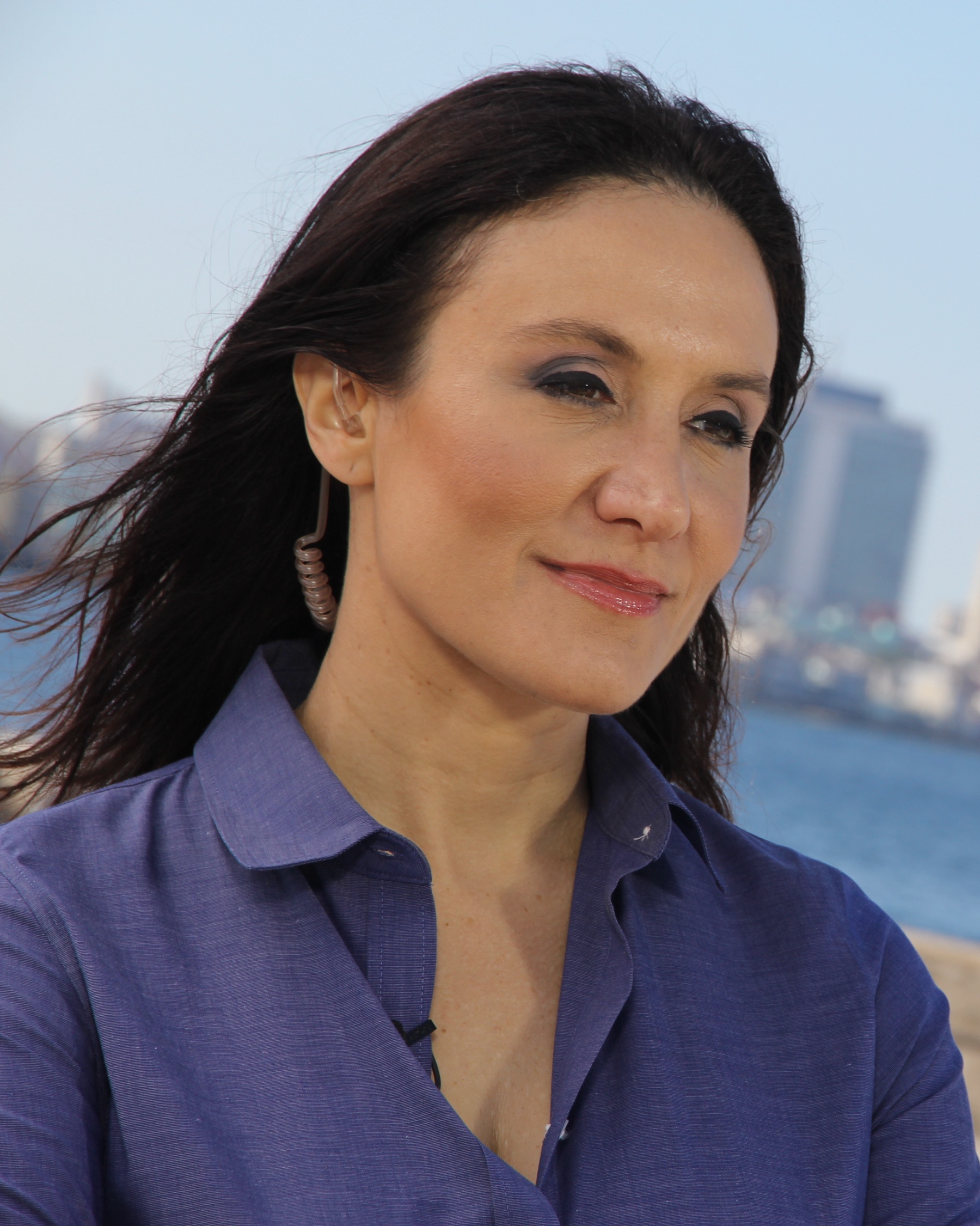
Michelle Caruso-Cabrera
American journalist
40
APPEARANCES
7
PODCASTS
Oct 20, 2026
Morgan BrennanHOST
Michelle, I want to get your reaction to what we just laid out and what Charlotte just reported.
7:11

The situation in France is enormously serious, and it's pretty clear the population doesn't understand what's coming at them.
7:18
First of all, they've got to get the security situation under control because without it, You know, France is historically one of the most visited cities, if not the most visited city in the entire world.
7:35
They desperately need tax revenue because their fiscal situation is so bad.
7:39
And when I say the population doesn't understand what's coming at them.
Morgan BrennanHOST
When you have Germany, for example, today embracing NVIDIA and AI investment, are we starting to see attempts to move towards a position of growth, even as in France they're also trying to cut at least minimally from a fiscal standpoint some of that spending from a budgetary standpoint?

24:18
So the, the housing crisis there comes from similar issues that we're seeing here in the United States.
24:23
Rents and the price of homes have gone up nearly 100% over the last 10 years.
24:30
The current government is a socialist government, and a lot of the laws that they would like to pass, traditional economists would suggest would make the housing crisis even worse But they are facing a lot of the same issues, uh, that we are here as well.
24:43
So he's calling this election, if the election were to happen today, the numbers show that you might actually see a right-wing government come to power.
24:51
The question is, would the center right work with the far right? They haven't wanted to do so in the past, but maybe you might actually see Spain move to the right.
Morgan BrennanHOST
Let's turn to Brazil too now, because that was pretty incredible, what we saw yesterday, and we're seeing the currency rally, you're seeing the bond market rally, you're seeing the stock market rally.

Brian SullivanHOST
And what they're doing is they're largely now just moving to the United States if they can.
27:00

Uh, my strongest remembrance is listening to Mark Haines, the late Mark Haines, who was a great, great anchor, who I learned so much from, uh, just very calmly talk about the situation.
31:35
... economies beneath us should be growing faster because it's easier to grow faster.


Steve MooreHOST
So the question I pose to both of you two, and I'll start with you, Michelle, is what can we do as a nation to create even more millionaires? How can we create 50 million millionaires?
36:06
The capital markets of the United States are so deep and so liquid, and that is a crucial reason why this is able to happen, because we are so efficient at distributing capital.
36:18
I get so frustrated when I hear young people who work on Wall Street say, oh, I'm going to make some money now, and then I'm going to go do some good.
36:29
I hate that, because have you ever been to a country where they don't distribute capital well? It's terrible.
Steve MooreHOST
So the question I pose to both of you two, and I'll start with you, Michelle, is what can we do as a nation to create even more millionaires? How can we create 50 million millionaires?
36:42
Well, the capital markets of the United States are so deep and so liquid, and that is a crucial reason why this is able to happen, because we are so efficient at distributing capital.
36:56
I get so frustrated when I hear young people who work on Wall Street say, oh, I'm going to make some money now, and then I'm going to go do some good.
37:07
I hate that, because have you ever been to a country where they don't distribute capital well? No.


Frank HollinHOST
Has that completely changed? Is it safe to invest and, and put capital there now?
31:28
Venezuela has a terrible track record, and what happened today with Chevron announcing a separate deal from the United States was meant to put that to rest to say it is safe to come back.
31:38
I would say the other, uh, thing that was achieved through this is when I was on the ground in Venezuela, there was consternation that there hadn't been enough movement when it came to the oil sector with enough deals with smaller players trying to get things done.
31:52
But this certainly turbocharges the situation and gets oil, uh, up and running faster, and that's important because the United States, it's in the national interest of the United States.


Brian SullivanHOST
Do you believe this deal will ultimately materialize? A lot of stuff we don't know.
16:03
Yeah, there's a lot we don't know, but we have gotten a lot of details leaked to a variety of outlets.
16:08
And I would say that the spearhead of this deal is the Office of Strategic Capital in the in the Defense Department, excuse me, in the Department of War and the Pentagon.
16:21
And so if there's going to be a deal that's well structured, I think that's a very experienced group of people who will have put it together now.
16:29
I've been to Venezuela recently, and there was a lot of consternation on the ground there amongst industry participants, amongst lawyers, bankers, et cetera, that even though there was a lot of desire from the U.S. to get oil deals going, they hadn't really gotten going yet.

Kelly EvansHOST
If this is a White House deal, what happens if the party in the White House changes?

19:57
Well, we don't know a lot, but every day we're getting clues that post-war Middle East, and there will be a post-war Middle East, is probably gonna look pretty different.
20:07
The Omanis are negotiating with the Iranians, and apparently the United States is allowing them to do that with the help of the Pakistanis.
20:15
Bessent has said just this past week that the strait isn't gonna matter in two years because all of these other countries are making plans to get their oil in different ways, and there's new pipelines, et cetera.
20:27
And then you add to that, that there's the fact that there's, there's people within the Pentagon who very much want the United States to withdraw from the Middle East and spend most of the Pentagon's efforts on dealing with China.
23:35
I would say the outright threat to take Karg Island is another level of escalation that perhaps brought whoever... we don't know who, to the table on the Iran side because that is their cash register.
23:52
And if the U.S. pulls a Venezuela and suddenly decides they're going to be in charge of everything that comes out of Karg Island and control the revenues, that's going to put the Iranian leadership in a very, very different place.
40:36
So h- just this morning is when he posted again saying that they would take Kharg Island perhaps very soon.
40:45
About the time he said, "I'm going to decide in two weeks what I'm going to do with Iran," and then of course Operation Midnight Hammer took them by surprise and took the whole world s- by surprise.
40:57
They're very, very, uh, you know, everything's, everybody's calming down, but I just wait to see what the, what this actually all means in terms of operations-
Brian SullivanHOST
Think there's a chance that Marco Rubio, who is a Cuban-American, would push for and maybe get regime change in Cuba?
37:31
When he's been asked, when he's testifying in front of Congress, he said, yes, they absolutely welcome regime change.
37:38
And that was, you know, Todd Blanch, the acting attorney general, was down in Florida, in Miami, to announce these charges.
37:45
The audience there was extremely excited and very happy about Raul Castro being indicted.
37:51
And many of the reporters asked over and over again, OK, so you've indicted him.
Brian SullivanHOST
No matter what the people want, do they have the ability? Do they have the means, the methods? to take back their own country from a regime that still has them driving around in 1955 Studebakers.
6:44
think the thoughts about Carg Island are that if they take it, they're able to control more about how much oil actually leaves oil.
6:53
Iranians have been able to send oil to the Chinese, their customers.
6:59
The more oil that's out there, the lower the price is going to stay, right? I think the way I continue to think about this always is to focus very much on what the Pentagon says on any given day.
7:09
General Kane, day one, came out and said the military objective is to destroy Iran's ability to project power.
30:25
So there are two headlines, right, that the president of Iran has said something to the effect of that they're willing to have discussions and also that the foreign minister says that there are discussions.
30:41
The question is, are they meaningful? Well, you have to realize what has historically always happened with Iran, and by the way, with Cuba and previously Venezuela, is historically moments like this have been about buying time.
Brian SullivanHOST
But because this came from the president, Does that make you a little more wary than if it came from the, quote, supreme leader? And I hate that term.


26:30
One, um, first of all, there hasn't been actual real destruction of any important energy infrastructure, right, that would lead to permanent supply disruption.
26:42
Number two, when it comes to the very strict military objectives that the US has had, which is destroy the navy, destroy their ability with ballistic missiles, destroy their drone capacity, the US and Israel have actually been extremely effective.
26:58
The reason we see oil prices rising is 'cause concerns about the Strait of Hormuz.
20:41
So there's huge difference between today and yesterday, right? The m- the market seemed to take everything, uh, yesterday in stride, and now things are very different.
20:51
First, you know, Iran clearly sees this as an existential threat, the regime does, and like a cornered animal, they're gonna do everything they can to survive.
21:02
Well, Bill asked, "Why would you attack your neighbors?" It's not that they're attacking their neighbors.

Dominic ChuHOST
So maybe from your standpoint as the person who did the interview, what were the highlights for you?
8:27
First, I was very interested to hear Treasury's involvement in Venezuela.
8:32
I knew it had to be extensive because it's Treasury that imposes sanctions.
8:36
If the oil is going to move in Venezuela, the sanctions have to be removed.
8:41
So him explaining that process, how money is going to go into escrow.
8:45
And then what was also important, I thought, was he described the calls he's getting from potential oil investors in Venezuela.
8:53
There's been a lot of skepticism about whether or not the majors were going to go in.
Dominic ChuHOST
So what exactly is the new evolution, if you will? It's not exactly revolutionary, but what exactly does Secretary Besant think about that situation right now?
31:15
Yeah, you know, we have to see if Delcy Rodriguez will cooperate with the U.S. government.
31:21
It seems she may be forced to the way things have been set up, an offer she can't refuse.
31:26
And speaking to oil executives extensively over the last couple of days, a lot of them think if there is stability on the ground and security on the ground, Venezuela can get to three and a half million barrels per day, which is what they used to produce, by 2030.
31:44
And then they say what's very crucial, and which hasn't been widely reported, is that in 2020, this socialist government passed a law called the anti-blockade law.
Kelly EvansHOST
And I don't know if that was simply just there's kind of more to the story behind the scenes.

Frank HollandHOST
I want to ask you, what does it mean to have her, quote unquote, running the country right now and issuing statements first against the capture of Maduro and now saying she's willing to work with the U.S.?
8:03
And it surprised a lot of people that he did not install Maria Corina Machado or any of the members of the opposition living in exile and instead went with this more, let's call it a more pragmatic route, to work with Delphi Rodriguez, clearly looking for stability in a post-Maduro country.
8:21
to try to affect some of the changes that they'd like to see in Venezuela.
8:26
Secretary of State Marco Rubio was on all the Sunday shows yesterday and at one point said that at some point they will talk about a transition to democracy, but not right now.
Frank HollandHOST
So as we go forward, how does the U.S. navigate this situation if, in fact, they are getting that support from Colombia and Cuba and just the politics of this?

17:48
is without a doubt that they provide cover for the export of drugs.
17:52
Remember, I sat on this set during the Obama administration, did a story about Maduro's stepson being arrested by the DOJ in Haiti.
18:01
He had flown into Haiti in a plane with cocaine, expecting to do a deal with another drug runner.
18:13
So there's no doubt that they, even if they're not producing fentanyl, they're very much involved with the drug trade, for sure.

Morgan BrennanHOST
So let's talk Venezuela and what we're seeing with these dark fleet tankers and the message it's sending.
28:57
The administration is trying to curtail all possible revenue to the Maduro government of Venezuela.
29:02
They started with the drug interdiction by bombing those cigarette boats and the submarines.
29:08
And Secretary Rubio, Secretary of State on Friday, said that they hadn't done any more lately because they believe that they have set a high level of deterrence and that that has stopped.
29:16
They're now going after the oil tankers, which Venezuela, a lot of these tankers, all of them either sanctioned, not allowed to be on the seas, and yet they've been operating for several years.
29:26
And the United States has decided that they are going to do everything they can to prevent oil revenue from going to this regime as well.
29:32
They want stability in the Western Hemisphere, and they think it's very hard to have stability when you have Hezbollah, China, Russia in Venezuela participating in narco-trafficking, participating in illegal oil sales, and also in human trafficking as well.
Morgan BrennanHOST
What kind of message does it send to China, to Russia, as we see Ukraine peace talks underway?
Frank HollandHOST
What are the broader implications of this for oil in particular if the U.S. continues to blockade Venezuela and seize these tankers?
Frank HollandHOST
What would that mean and what would that signal about Trump? Would this be a Trump doctrine that we could see playing out?
23:57
Well, I think the conversations I hear are, do you try to install someone who was elected in a stolen election? They had an election.
24:09
Do you try to put that person in? Or do you make a deal? You say, Maduro, you have to leave.
Frank HollandHOST
So if this regime is toppled, why would this be such an attractive opportunity for investors? What's there that would make it attractive?
28:50
Number one, the largest oil reserves in the world, which are underdeveloped.
28:56
Venezuela used to produce 3.5 million barrels per day, and now they're producing roughly a million barrels per day.
29:03
And they could easily get that up to 4 million barrels per day if they had a much more orthodox rule of law, protection of private property, stable currency, an investment regime in there that actually attracted foreign investment.
29:16
And the Trump administration likely interested in a change down there because the dire economic circumstances have led to nearly 8 million Venezuelans leaving the country.
Frank HollandHOST
So regime change is one thing, but why would this administration support some of these other goals?
3:18
Oh, I think when it comes to the markets, investors are clearly very focused on the idea that interest rates are going down, that the Fed is going to cut at least at the short end of the curve.
3:30
I will say the China news and the trade news is important because it's Well, it may not show progress.
Brian SullivanHOST
How much, if any, of this China boom, of this U.S. continued rally, if this is the by the speculation on the Fed and China, and when the Fed actually cuts rates on Wednesday and maybe makes dovish comments, we'll see, and the China deal gets done, the market yawns because it's already made the move.
Scroll for more appearances