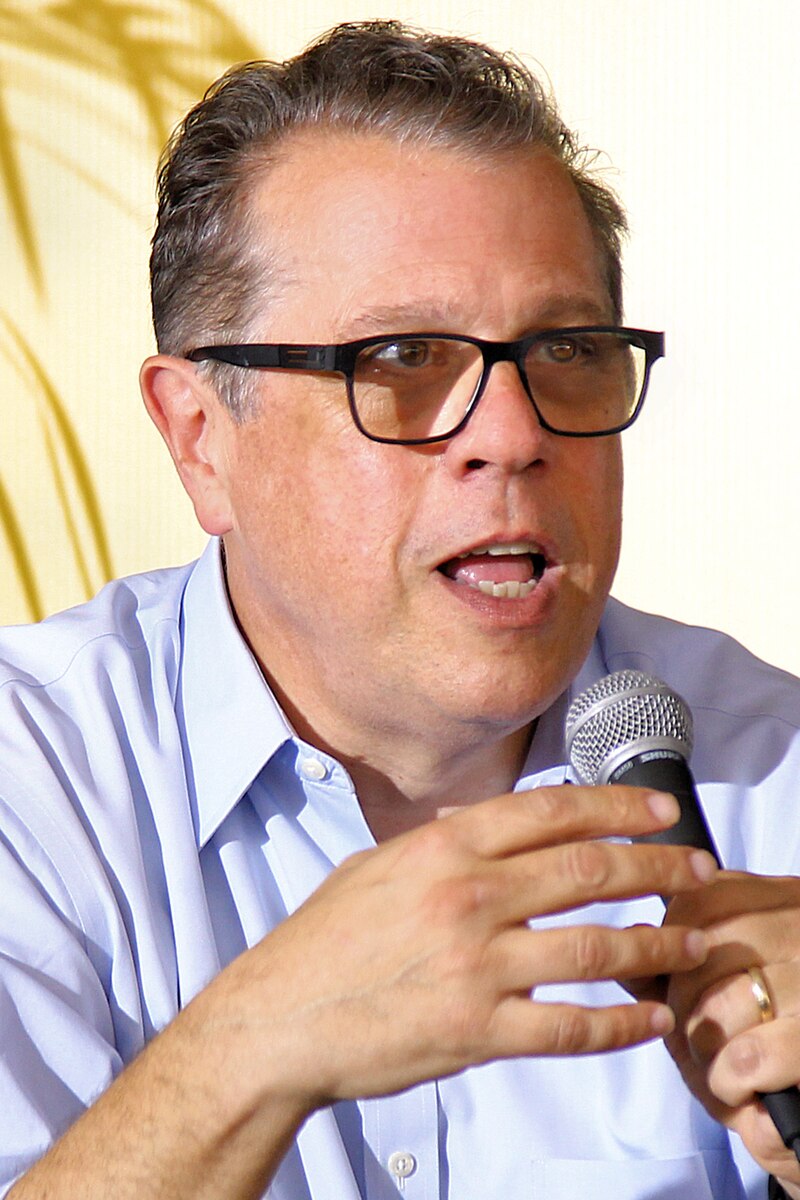
Michael Waldman
Attorney and former White House Director of Speechwriting
29
APPEARANCES
12
PODCASTS
Oct 24, 2026


Antonia HiltonHOST
When you look at what they're trying to do in Alaska and you look at the example of California and elsewhere, do you see a kind of unifying legal strategy emerging here from this administration?

Michael WaldmanGUEST
Donald Trump emphatically over the last year and a half had a concerted campaign to undermine the vote.
Michael WaldmanGUEST
He tried to make it so that you had to produce a passport or birth certificate to register to vote.
Antonia HiltonHOST
What are you bracing for on election day? Before the show started, you and I were talking about the fact that this is probably just the beginning of what's to come.
Michael WaldmanGUEST
It looks like they run out of things to do in some ways to try to undermine the election.
Michael WaldmanGUEST
The bottom line, basic fact we always need to remember over and over is the voters make the decision.
Michael WaldmanGUEST
And once the voters have voted, in all the states, there's certification that takes place.
7 MINS LATER


Michael WaldmanGUEST
Because so much of these efforts are failing, the most important thing that we're worried about right now is that all the news and noise about this stuff will actually keep voters alert.
Michael WaldmanGUEST
We've actually done research that shows that lots of voters think that vote by mail has been ended or that somehow Trump has succeeded in changing the rules.
6 MINS LATER

James CarvilleHOST
Can we have any confidence that all of these groups are kind of working to some extent together and are kind of same goal?


Michael WaldmanGUEST
You know, historians debate whether they intended for there to be judicial review, in other words, that, that the courts could strike down a law if it was contrary to the Constitution.
Michael WaldmanGUEST
This was something they saw as superior to the British system, but it wasn't the way we have it now.
Michael WaldmanGUEST
Whenever the Supreme Court does some big ruling, they try to out Marbury v. Madison and quote it, you know, to cloak themselves in its aura.
Michael WaldmanGUEST
But that was the first time that the Court said it had the power to strike down a law passed by Congress.
27 MINS LATER


Alicia MenendezHOST
Okay, so putting aside the gibberish at the top, "I can do whatever I want," is this what is wrought by a Supreme Court who has granted a president absolute immunity?
Michael WaldmanGUEST
Well, you can see in lots of actions throughout the administration and the executive branch the impact of what the Supreme Court did in granting immunity to presidents from criminal liability even after they leave office.
Michael WaldmanGUEST
Uh, people lower down saying, "Oh, the president ordered me to do that illegal thing," because they think it'll rub off on them.
Michael WaldmanGUEST
But in terms of Congress, uh, it's exactly right that the key thing here is voters are the ones who decide who won the elections.
Michael WaldmanGUEST
Certification of the results, which is a routine thing in states all over the country, that's what matters.
Michael WaldmanGUEST
And in terms of any mischief that Mike Johnson might get up to, I think it is...

Nicolle WallaceHOST
What is in the system at this point to keep him from doing harm with what is still in reach for him?
Michael WaldmanGUEST
Well, the first and the most important point, as you said, is that these actions have all been attempted.
Michael WaldmanGUEST
They have all failed because they're illegal, and the courts have been very resolute.
Michael WaldmanGUEST
Uh, to give one example, the attempts by the Trump Justice Department to get sensitive voter records from the states, there've now been 25 court rulings, and they're 25 against Trump and zero for him.
Michael WaldmanGUEST
Uh, and i- i- i- as much as he complains about these rulings, as much as he Tr- Truth Social posts about them, they actually have some power and some teeth.
Michael WaldmanGUEST
And, uh, i- i- i- i- to give another example of where the system has held, General Caine, the chair of the Joint Chiefs of Staff, it didn't get much attention, but he issued a very strong letter a few weeks ago saying, "No, we have no authority to send troops or the National Guard, uh, into elections or to seize voting machines or to seize ballots.
6 MINS LATER
Nicolle WallaceHOST
And Michael, what in a post January 6th America should we never again fail to imagine is possible around an election and in that period that Ari's talking about?
Michael WaldmanGUEST
He has reacted this way to some rulings, including when the Supreme Court said that he could not, uh, upend mail balloting, which is how one in three Americans vote.
Michael WaldmanGUEST
But let's not forget, this is also the same Supreme Court that gave him and other presidents unprecedented immunity from criminal prosecution.
Michael WaldmanGUEST
In other words, this is a Supreme Court that has done Donald Trump a lot of favors.
Michael WaldmanGUEST
It is the case, though, that they should not, and so far they have not, intervened in this election to bail him out on a lot of things, just like they didn't in 2020.
Michael WaldmanGUEST
And we need this Supreme Court to stand up for the voters, for the Constitution, as they did in 2020, and not, uh, be part of, uh, uh, any effort to, to undo the election, to block the voting, and things like that.


Bianna GolodrygaHOST
Does the evidence support that description we just heard from the president, and are there any vulnerabilities today?
Michael WaldmanGUEST
Oh, what he was saying was emphatically not true, even the commas and the periods, and it's extraordinary to have a president of the United States spouting nonsense like that.
Michael WaldmanGUEST
American elections are secure, and one of the things that is encouraging th- right now is if you look at the primaries that have been going on, turnout has actually been pretty high and results have been uncontested.
Michael WaldmanGUEST
Uh, and when you actually get down into the communities, a lot of this sort of, um, nonsense that you, you hear from, from the president really doesn't affect how politicians on either side are, are, are addressing how, how it all went or, or addressing voters.
Michael WaldmanGUEST
But, uh, but, uh, you know, states have a multiplicity of systems in place to make sure, for example, that only citizens vote.
Michael WaldmanGUEST
You're more likely to be struck by lightning in the United States than to commit voter fraud.
Michael WaldmanGUEST
It is the case that these federal databases and the ones they want to use for voters are full of errors.
Michael WaldmanGUEST
And so if somebody finds themselves kicked off a voter roll because they're on one of these lists and they are surprised when they show up to vote, that would have a significant impact.
Michael WaldmanGUEST
The real worry that I have with all of this right now is that the Supreme Court itself is creating doubt and confusion on the part of voters.
Michael WaldmanGUEST
The reason we have this mess in Missouri with these competing rulings, making different rulings about these maps, is because the Supreme Court gutted the Voting Rights Act in the Calais case a few months ago.

Michael WaldmanGUEST
It's utterly vital that when given a chance, We focus on ethics, on corruption, on strengthening democracy.
Michael WaldmanGUEST
Over and over again, people who want to weaken democracy, as soon as they get a pinky on a lever of power, they tilt the playing field.
Michael WaldmanGUEST
And progressives, Democrats, liberals, when they get into office, they say, oh, you know, I'm not sure people care about this.
8 MINS LATER

Mark GreenHOST
And so you have a Truth and Reconciliation Commission looking at prosecution at the state level and nonpartisan, for example, and exposing obvious lies, tariffs or taxes on foreign countries, for example, so that there's a more holistic attack


Michael WaldmanGUEST
It's okay to have the Justice Department as it has over the years looking to make sure elections are fair, but these people sounded like they were inexperienced and trained by Fox News to ask conspiracy theory questions.
Michael WaldmanGUEST
You see people in state governments in Louisiana, in Utah, states again controlled by Republicans, who've looked at their own voter rolls and said, "You know, really this idea that there's a lot of non-citizens registered to vote, actually it's not true." And of course, the war on mail voting that President Trump and now his Justice Department are waging is giving Republican political operatives, uh, high blood pressure.
Michael WaldmanGUEST
Because of course, Republicans vote by mail as well as Democrats, and they would li- i- in the old days, before it was so controversial, you would think it might be, you know, snowbirds in Florida who were casting [laughs] votes by absentee ballot.
Michael WaldmanGUEST
Uh, so there's a, uh, this whole focus on, on voting by Trump doesn't make the lives and jobs of Republican operatives any easier.
Michael WaldmanGUEST
I should note that the ruling in this case was in a case brought by the Brennan Center and other voting rights groups on behalf of the League of Women Voters of Massachusetts.
Michael WaldmanGUEST
[laughs] I think that this creates confusion to voters, and w- we need clarity from the courts.
Michael WaldmanGUEST
Again, this is clear in the Constitution That states run elections, Congress has a legitimate role passing national legislation, presidents have no role, as the courts have ruled over and over again, and I think they're going to rule that way.
Michael WaldmanGUEST
But it shouldn't be a matter of confusion, not months, but days away from ballots being sent out.
15 MINS LATER
Michael WaldmanGUEST
States, including Republican-led states like Louisiana or Utah, that have looked in detail at their rolls have found an infinitesimally small number of people who shouldn't be registered because they're non-citizens.
Michael WaldmanGUEST
It w- This is all part of undermining, an attempt to undermine, public confidence by this administration in the election.
Mark GreenHOST
Well, in that context, looking back, have there been some of your most influential projects? Events or important accomplishments?
Michael WaldmanGUEST
I would say we have been the Paul Revere crying out that there were attempts being made to suppress the vote going back 10, 15 years and really connecting the dots in a way that others had not done before.
Michael WaldmanGUEST
And now with Donald Trump as president saying it out loud every five minutes, again, it's a lot easier to make that case.
Michael WaldmanGUEST
But what I am most proud of in a lot of ways are the affirmative reforms that we worked to develop.
Michael WaldmanGUEST
that have taken hold in states across the country and have become central to the progressive agenda in the United States.
Michael WaldmanGUEST
The legislation called the Freedom to Vote Act, which you remember, H.R. 1, S. 1, came really close to passing Congress in 2022.
8 MINS LATER


Molly Jong-FastHOST
Then I want you to tell us what Trump could do and what he can't do when it comes to the midterms.
Michael WaldmanGUEST
I think it has required a big fight to get to that point, uh, and will continue to require a fight over the next three months.
Michael WaldmanGUEST
We know that the system has been very strong and very resilient in recent years, but that for the very first time in American history, the federal government, the Trump administration, has a clear and concerted campaign to undermine the midterms and to undermine the elections.
Michael WaldmanGUEST
And it's not just all the things Trump says, though he does certainly say endlessly, uh, a- a- all the things he does to try to undermine confidence.
Michael WaldmanGUEST
It's a whole bunch of different things his administration has done or tried to do.
Michael WaldmanGUEST
Uh, having Bill Pulte and John Solomon and those folks, uh, part of this flanking him just should undermine any notion that there's some reality to this, that it's more than just stirring doubt.
Michael WaldmanGUEST
I mean, I, I think about this notion of a presidential address that's like a, a bad movie mashup of Thirteen Days and Idiocracy.
Michael WaldmanGUEST
Uh, it, it's just not something, from what we can tell, to be taken seriously.
Michael WaldmanGUEST
It's part of this drive to undermine trust, uh, and sow doubt and sow confusion because every time he does something like this, a lot of people think, "Oh, maybe this is gonna mess up the elections or how I'm able to vote."

Jackie AlemanyHOST
What does that mean for our elections and the way the EAC works with states going forward?
Michael WaldmanGUEST
Well, you're right that this brazen move is part of a concerted campaign by the administration to undermine the elections, and it's worth remembering just how extraordinary that is.
Michael WaldmanGUEST
That has not ever happened before in American history, that the federal government would act this way toward the states and toward elections.
Michael WaldmanGUEST
The EAC, uh, as Secretary Fontes says, doesn't have that much power to do things without any commissioners.
Michael WaldmanGUEST
And while it is theoretically possible that he could nominate two Republicans and two Democrats, would be where he would find them, uh, and the Senate would then need to act, it's pretty unlikely that those seats will be filled by election day.
Michael WaldmanGUEST
The one thing to remember, and it's an encouraging thing, he is flailing at this point.
Jackie AlemanyHOST
And, and look, I don't wanna make you lay out a road map or a blueprint, Michael, for what this administration [laughs] should be doing next, but are there any other independent agencies that you feel like the president could go after that could do potentially even more damage when it comes to our election systems and the way November plays out?
Molly Jong-FastHOST
Let's set the stage with one of the most damning Supreme Court decisions of all time.
Michael WaldmanGUEST
We work to strengthen and reform and defend our systems of democracy and justice.
Michael WaldmanGUEST
There's always been an effort to make sure that money doesn't have too big an impact on politics, that, you know, you need money to run for office, and that's not new and a surprise, and you wanna minimize its impact.
Michael WaldmanGUEST
There were laws on the books that were strong in many instances for a century or more.

Tiffany MullerGUEST
Now we'll hear from Michael Waldman about how unregulated campaign finance is.

Lisa RubinCORRESPONDENT
That could throw some of what seems like these victories in court with the defeat of or the lack of success of the Save America Act into some further disarray, right? Because this is everything that they want, which is to clamp down on the number of people whose mail-in ballots get to count, including people who are serving our military overseas.
Michael WaldmanGUEST
If they rule that way, they'll be saying that 18 states have this law that allow you to count the ballots if they come in after Election Day, if they were voted before Election Day, and that it's a law passed by Congress in 1842 that we suddenly have just discovered blocks it.
Michael WaldmanGUEST
If this case comes down, and it could come down that way, People will just need to know they need to vote early.
Molly Jong-FastHOST
So we pretty much think that the John Roberts court is going to kill the Voting Rights Act largely.
Michael WaldmanGUEST
As you know, the Supreme Court has been taking a sledgehammer to the Voting Rights Act.
Michael WaldmanGUEST
It was 61 years ago on the Sunday of this week, as we're talking, that-President Lyndon Johnson went to Congress and called for the enactment of the Voting Rights Act after the Selma march and all the courage and bloodshed that was there.
Michael WaldmanGUEST
And it w- it was an extraordinarily successful law for a lot of reasons we know.
Michael WaldmanGUEST
And in 2013, John Roberts, who has a, a zest for destroying voting rights for Black people and people of color in this country, they did a ruling called Shelby County that gutted the most effective part of the law.
Molly Jong-FastHOST
I've heard, and I don't know if it's right or not, that this might actually not be as bad for Democrats.
Nicolle WallaceHOST
What is in the system? What remains in the system as an antibody to protect against his unconstitutional conduct?
Michael WaldmanGUEST
The Constitution is very clear: States run elections, Congress has a legitimate role in passing national legislation, presidents have no role.
Michael WaldmanGUEST
And already this year, as we've seen this campaign to try to undermine the midterms, courts have stepped up.
Michael WaldmanGUEST
He had an executive order last year purporting to take personal control of elections and require people to produce a passport, not even a birth certificate, but a passport, and it was blocked by the courts-
Michael WaldmanGUEST
Um, there is no legal basis for any of these things that are being reported, and this notional executive action, uh, claiming a Chinese influence in 2020, i- it seems to be based on sort of wackadoodle theories by election deniers with no basis in reality.


Michael WaldmanGUEST
Lots of countries, Ali, have national ID, but it is usually provided by the government, paid for by the government.
Michael WaldmanGUEST
What this would require is not only 21 million people not having access readily to their passport or their birth certificate, but many more than that married women who have changed their names and whose records, therefore, don't match between their birth certificate, say, and their voter registration information.
Michael WaldmanGUEST
You know, lots of states have a requirement for voter ID of some kind to show up at the polls, driver's license or something like that.

1:13

What is the worst case scenario for 2026? Was what happened in Fulton County a rehearsal for confiscating ballots around the country after they've been passed this time?
Michael WaldmanGUEST
His own attorney general at the time, Barr, who was no great shakes from my view generally, told him it was bullshit and that he should stand down.
Michael WaldmanGUEST
And Trump himself more recently has mused, well, maybe I couldn't trust any of those people.
Michael WaldmanGUEST
And to make super clear, so Chavez has been dead for years, so he really had quite amazing powers if he could do that.
Michael WaldmanGUEST
but i want to i want to save um you all from any trouble because the last time people broadcast this kind of conspiracy theory fox news they had to pay seven over 700 million dollars in a libel judgment to the people at the voting machine company so we should be all very clear this is an an absolutely absurd lie and bonkers conspiracy theory that people dropped in 2020, but which now seems to be part of Kelsey Gabbard's effort to get back in good, I guess, with with Trump.
Michael WaldmanGUEST
There was a you know, you have what seems a number of officials scrambling to keep their jobs and scrambling to please Trump by feeding these obsessions and conspiracy theories and helping him to try to undermine the election.
Michael WaldmanGUEST
There was a meeting last week, didn't get a lot of attention because ultimately nothing all that exciting happened, but it's the National Association of Secretaries of State, which you can imagine Yeah, it's important, but it happens every year and it's not usually the source of high drama.
Michael WaldmanGUEST
And it was announced at this meeting that Attorney General Pam Bondi and DHS Secretary Kristi Noem and Tulsi Gabbard were all going to come together to address the secretaries of state and presumably to tell them we're on your case or some big revelation or something like that.
Michael WaldmanGUEST
And then five minutes before they were supposed to speak, it was announced they weren't coming after all.
18:44
What is your data showing about that and other matters involving the elections?
James CarvilleHOST
What are some ways that you anticipate th- that they're gonna try to fool with this election? What, what, what, what is he looking at, is things that people telling him that he can do, that we need to do?
Michael WaldmanGUEST
I mean, first of all, there's, uh, he issued an executive order, and he's trying to use t- this expanded notion of presidential power in a variety of ways to try to take personal control of the election system.
Michael WaldmanGUEST
He said, "The states are just, quote, agents of the federal government when it comes to elections," and they-- at one point, he actually said they were agents of him.
Michael WaldmanGUEST
Um, and, uh, he did an executive order, for example, last March, that, uh, required people to produce just a passport, not even a birth certificate, among many other things.
Michael WaldmanGUEST
We went to court at the Brennan Center with others and got that blocked, but we'll see him trying to abuse and use the power of the presidency, and this is something where the courts, in particular, have actually stood up and need to stand up.
14 MINS LATER
Michael WaldmanGUEST
in seeing the, the rot that is pervasive right now in government and politics in Washington.
Michael WaldmanGUEST
Uh, you know, look, corruption is not exactly a new phenomenon in human history, fair, fair enough to say, and for a long time in our country, there was personal corruption in public office.
Michael WaldmanGUEST
If you think about Tammany Hall, Boss Tweed, people taking money, graft, that kind of thing.
Michael WaldmanGUEST
And then later on, in the late 20th century, that was really supplanted in a lot of ways by the institutional corruption of something like the campaign finance system, when money, big money, became especially really important in how elections got run.
Michael WaldmanGUEST
Now, you see both of those things roaring back and combined, and we see a fusion of public power and private wealth in a way we just have not seen since the Gilded Age of the late 1800s, if that.
Molly Jong-FastHOST
So first, let's talk about the campaign finance, 'cause that seems to be certainly the most obvious when you talk about Elon Musk.
Scroll for more appearances