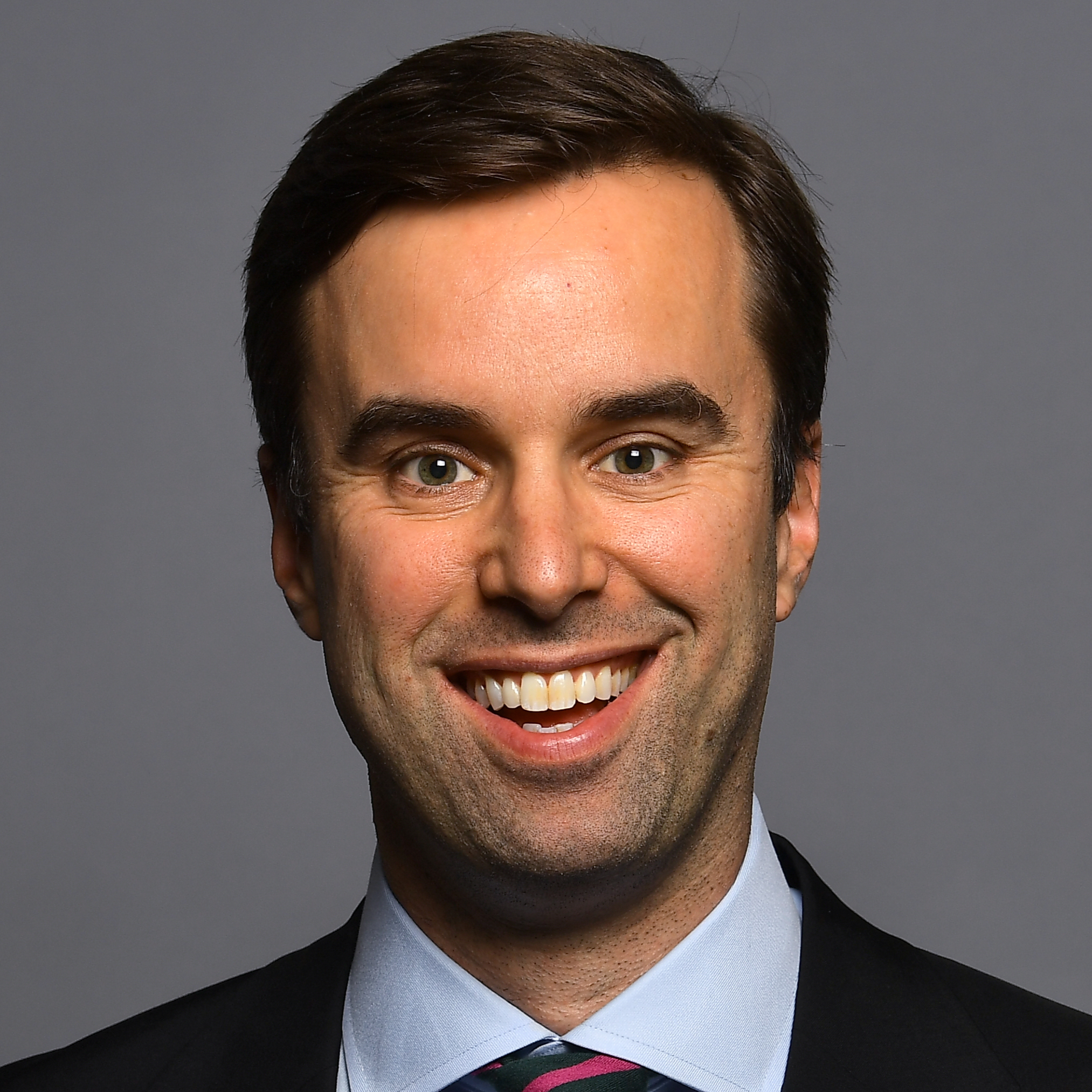
Michael Scherer
American journalist
26
APPEARANCES
18
PODCASTS
Sep 6, 2026


Michael SchererGUEST
You know, traditionally— Presidents do campaign during midterms, but they try and make it a choice.


Michael SchererGUEST
Well, the tensions between Driscoll and Hegseth have been long running and very well reported.
Michael SchererGUEST
Our reporting shows that when Driscoll did go to the White House last week and spoke to the president about his plans to resign, the president was a little bit surprised by some of these tensions.
Michael SchererGUEST
It wasn't clear that the president had been fully briefed on this, that he was um surprised by the turnover in the senior ranks in the pentagon now that said president trump is very happy by all the reporting i have with the job hegseth is doing with his performance of secretary of defense and president trump did want someone to come into the pentagon to sort of break the place in his second term and he's been very successful at that, Hegseth has, in sort of remaking it and making it so that, you know, it's a building, it's a bureaucracy that now very much answers to the president's whims on all kinds of issues through Pete Hegseth.
Michael SchererGUEST
So it's not clear whether Driscoll's complaints to the president has changed the president's view of Hegseth or what's going on at the Pentagon, but it clearly was, you know, a clear marker to have, you know, someone more junior at the Pentagon come to the White House and tell the president directly about real concerns under Hegseth.

Kasie HuntHOST
Michael, what does your reporting say about U.S. readiness, national security readiness, especially in the Army, based around what Driscoll is saying?
Michael SchererGUEST
Yeah, I mean, this has also been something we've been reporting about for months.


Adam HarrisHOST
What does this ad blitz say about the administration and how they're feeling about the election prospects, Michael, and the president's image?
Michael SchererGUEST
So the in party, the people who hold the presidency, and if they also hold the House and the Senate, try their best to make it a choice, not a referendum, to basically put the opposing party in the spotlight, say, look, they're terrible and bad and have done all these awful things.
Michael SchererGUEST
Voters don't see it that way, and voters tend to just say, I'm happy or I'm pissed off.
19 MINS LATER
Adam HarrisHOST
How are they spending it, right? Sort of putting the president's TV ads aside, how are they currently spending that money? And will that have an effect, right? Will that matter?


Michael SchererGUEST
... find something that he can educate in schools, and he came up with the idea of taking two lowercase Fs, turning them to embrace each other.
Michael SchererGUEST
The top part of the F look like the whiskers of a catfish, and down by where the l- Fs criss-cross, put a little tail in there, and looks like the dot of the red fish, and it, it meant families forever.
Michael SchererGUEST
He then worked very closely with Texas Parks and Wildlife, and took their program, uh, with another gentleman by the name of Kevin Rich, and sent it off to Kansas to see, uh, how it would go there.
Michael SchererGUEST
Fast-forward a few months, now they got 70 chapters across the United States.
Michael SchererGUEST
And we do family education due or through family fish camps and chapters that want to do, share your passion with these families.

speaker_1UNKNOWN
Mm-hmm.
Michael SchererGUEST
Um, and, and, obviously he wants a big party, uh, in Washington, uh, [laughs] for the 4th of July.
Michael SchererGUEST
Um, over the course of the first year of his presidency, those plans started to shift.
Michael SchererGUEST
The, the, the Iowa State Fair idea just wasn't practical, so he basically took over, uh, a celebration on the National Mall that was being planned by the Smithsonian Institution and rebranded it the Great American State Fair.
Michael SchererGUEST
Uh, you know, that we had the UFC fight on his birthday a couple weeks ago.
11 MINS LATER
speaker_1UNKNOWN
Mm-hmm.


Katy TurHOST
So, Michael, this coincides almost to the day with the 10-year anniversary of Brexit.
Michael SchererGUEST
And there, you know, while Brexit doesn't explain the entirety of Keir Starmer's departure, it really is kind of the basis for helping you understand what has gone wrong in this country today.
Michael SchererGUEST
over a decade, according to people who live here who have become so frustrated with politicians.
Michael SchererGUEST
They were frustrated with conservative Tory politicians who were in power for 14 years, and they feel and felt like Keir Starmer didn't do a whole lot better to address the the kind of economic stagnation that the country has faced, the higher prices that they deal with every day in their lives, in the sense that for a lot of folks, you know, the services that they see around them, their health care, their education, the training, the basic things that they live with on a day-to-day basis have not gotten better.
Michael SchererGUEST
And I think all of that was promised to have gotten better because of Brexit.


Brian LehrerHOST
So was there anything in America 250's actual programming that supports that charge?
Michael SchererGUEST
What they have done is pushed back against the president basically applying himself to these events.
Michael SchererGUEST
Trump goes to Iowa to the state fairgrounds to announce that he's going to have the great American state fair now, not in Iowa, but in Washington, D.C. a year on.
7 MINS LATER
Brian LehrerHOST
And so what's the issue around that? Why is the Trump team criticizing the spending on that? And is it a legitimate complaint?
Michael SchererGUEST
In 2016, Congress passes a law that says we're gonna plan, uh, for a big celebration in 10 years, sort of a repeat of the 1976 celebrations, if any of your listeners are old enough to remember those, um, uh, for the 200th anniversary, and they've been planning ever since.
11 MINS LATER
Brian LehrerHOST
And so what's the issue around that? Why, why is the Trump team criticizing the spending on that, and is it a legitimate complaint?


Zach BermanHOST
Are we not being aggressive enough with radiation therapy? Should we use dose intensification like SBRT?

Michael SchererGUEST
So that's a great point and certainly the hot topic in radiation treatment for pancreatic cancer.
Michael SchererGUEST
So some of the original dose escalation data from Sloan Kettering, they actually did 25 fractions of radiation and just pushed the dose really high in those 25 fractions.
Zach BermanHOST
So I guess that leads perfectly to the next question is how do you choose between the two? And what does, obviously, if you say the field is moving more towards SBRT, is that because you have better local control? Is it better survivability, et cetera?

Michael SchererGUEST
I've been going, you know, for many, many years now, uh, a couple Saturdays ago when there was this attempted assassination attempt, um, and, and I spent some time afterwards reading up on this person who's alleged to have done it, reading the manifesto, uh, reading the social media accounts that are ascribed to him, and, and I was struck by them.
Michael SchererGUEST
I was struck by how much they sounded like the stuff I read every day, uh, after I post a story.
Michael SchererGUEST
You know, I post a story, I'll put it on Blue Sky, I'll put it on X or Twitter.
Michael SchererGUEST
Uh, you know, we have comments on The Atlantic, and I'll, and I'll, and I'll sort of take in how people are receiving that story.Uh, and, and for, I mean, decades now, I've been watching this machine work, and what tends to happen is, you know, a complicated, nuanced, you know, 2 to 5,000-word story is turned into a headline, which is then retweeted by somebody else, uh, who then basically responds to it by amping up the outrage, uh, about that headline and removing the nuance about that headline.

Rob GuntherHOST
But in the absence of that, if, if Trump is coming at people with bite-size inflammatory actions, how do you convince the public to take a step back? I don't, I don't see how that happens right now.

Michael SchererGUEST
I've been going for many, many years now, a couple of Saturdays ago when there was this attempted assassination attempt.
Michael SchererGUEST
And I spent some time afterwards reading up on this person who's alleged to have done it, reading the manifesto, reading the social media accounts that are ascribed to him.
Michael SchererGUEST
I was struck by how much they sounded like the stuff I read every day after I post a story.
Rob GuntherHOST
But in the absence of that, if Trump is coming at people with bite sized inflammatory actions, How do you convince the public to take a step back? I don't I don't see how that happens right now.

Michael SchererGUEST
Because you have to understand the whole of Trump's psychology, the whole history of Trump.
Michael SchererGUEST
Like, the whole history of Trump has been one in which self-aggrandizement, making himself the best, the prettiest, the biggest, the, you know, most successful, all those things, has been his ticket to everything.
Michael SchererGUEST
So, so he has always at every step of his career been about self-aggrandizement, about making himself the best of any situation he's in, and he happens to be President of the United States right now.
Michael SchererGUEST
And as we write in the piece, he's in his you only live once moment, his YOLO time.
Michael SchererGUEST
Everyone around him says he's very aware that his life is not gonna go on forever, that his presidency is not gonna go on forever, that he's trying to do as much as possible.
Michael SchererGUEST
And the defining fact of this term has been he's doing things that are not politically rational.

Michael SchererGUEST
... was right afterwards in the briefing room where he says, "This wasn't about the press.
Michael SchererGUEST
It is adversarial, but it's also true that our job is to build relationships with the people the American people elect.
Michael SchererGUEST
We build relationships of trust with these people so we can get information from them so that we can deliver it to the American people.
Michael SchererGUEST
And so the fact that we socialize with them or go to events with them, I mean, that is the job of reporting.
9 MINS LATER

Audie CornishHOST
But it feels like there's a little bit of a message being sent here from the fringes of society in going after really symbolic figures.

speaker_0ADVERTISER
effort
Michael SchererGUEST
to lobby Congress to do massive tens of billions of dollars in funding for new federal security service, mostly through ICE, some through Customs and Border Patrol, that would run a deportation program the president had talked about.
Michael SchererGUEST
Furthermore, Miller had been there in the first term when you'd had protests, in some cases riots, over the George Floyd killing.
Michael SchererGUEST
And so Miller was part of this effort to basically reimagine what the federal government's police force would be doing in the United States until this presidency happened.
Michael SchererGUEST
federal authorities were very selective in how they interfered in streets and cities all around the country.
22 MINS LATER

Audie CornishHOST
What was his perception of the concerns people have about the intervention itself?
Michael SchererGUEST
I remember you talking about regime change being a bad thing, about nation building being a bad thing, about we should focus on the home front.
Michael SchererGUEST
And his answer was, when it comes to Venezuela, I don't care what you call it, this is a good thing.
Michael SchererGUEST
I asked him whether this was a hemispheric issue, whether the fact that Venezuela was in our hemisphere made it different from Iraq.
6 MINS LATER
Audie CornishHOST
That doesn't mean we stop looking at it as a civil war, even as there's this obviously cultural divide about it still.


Michael SchererGUEST
I mean, so B- Bobby Kennedy Sr. raised his kids in a sort of classic machismo literature, you know, reading Gunga Din and, and heroic tales and, you know, "You should go out and adventure in the woods." And, you know, Bobby Kennedy was known for taking these long hikes and, and things like that, and, uh, uh, his son inherits all of this, um, but then is, is hit with these enormous traumas, like losing his father, his mother ha- has 11 children.
Michael SchererGUEST
Uh, he's basically unparented for a while, and he falls deeply and very quickly into hard drug use, like, not just, you know, marijuana or something like that, but hard, heavy drug use at, at the age of 15.
8 MINS LATER
Brian LehrerHOST
Can we start on the news? This change in language about vaccines and autism, do you think a line on the CDC website can have real-world consequences for public health?
Michael SchererGUEST
I, I think as part of a broader effort that, that Kennedy is undertaking, absolutely.
Michael SchererGUEST
I, I met with him, you know, six or seven hours over months and at the end, he was really focused on this question of vaccines do not cause autism.
Michael SchererGUEST
During his confirmation, Bill Cassidy, who was the deciding vote to get him into the HHS secretary job, made him promise not to remove that line from the website.
Michael SchererGUEST
The reason he believes it's false is because while there are a number of, just like you read, high-quality studies of thimerosal, an additive to vaccines, and of MMR vaccines, which is a vaccine that's usually given after the first year of life, um, and autism, and there's more recent studies about aluminum, which is a, another adjuvant that's added to vaccines, and autism, that have not found a correlate- a correlation.
13 MINS LATER
Brian LehrerHOST
Michael, do you get into any financial incentives that RFK Jr. might have while he points at others?

Brian LehrerHOST
Can we start on the news? This change in language about vaccines and autism, do you think a line on the CDC website can have real-world consequences for public health?
Michael SchererGUEST
I think as part of a broader effort that Kennedy is undertaking, absolutely.
Michael SchererGUEST
And at the end, he was really focused on this question of vaccines do not cause autism.
Michael SchererGUEST
During his confirmation, Bill Cassidy, who was the deciding vote to get him into the HHS secretary job, made him promise not to remove that line from the website.
21 MINS LATER
Michael SchererGUEST
When Kennedy came to Trump initially about that Tylenol study, he said, we have to be nuanced about this.
Donald TrumpSOUNDBITE_SPEAKER
Clearly, clearly, this conversation, you want me to be on the record saying something negative.

Michael SchererGUEST
I said, "Is that true?" He said, "Well, I don't really contest it." Um, uh, and, and so the, the...
Michael SchererGUEST
It is true that he has, uh, sort of separated himself from the family, but it's also true that he had...
Michael SchererGUEST
There's a, there's a, like, fervor to his effort to reclaim what I, what I describe or what he described as a sort of hero's journey that he was sort of born into that just doesn't exist for most people generally, but even for other people in his family.
Michael SchererGUEST
Um, there's something-... ferocious about his desire to claim, uh, the birthright that was lost to him.
15 MINS LATER

Charlie SykesHOST
What, what do you want people to take out of this story? What will they think about Kennedy afterwards that they didn't understand before?
Audie CornishHOST
We should be rooting out disloyal people the way we, at one point, were trying to root out communists.
Michael SchererGUEST
Yeah, I mean, if you go back to the Red Scare, and it wasn't just McCarthy.
Michael SchererGUEST
She tweeted yesterday that we need to bring back the House Un-American Affairs Committee, which preceded a lot of what McCarthy was doing, going after people in Hollywood as well.
Michael SchererGUEST
There was a similarity in method, right? The idea behind the Red Scare is if you could find a past association, something they had said, someone they were friends with, someone they defended.
Michael SchererGUEST
That was enough to prove communist sympathies, and once you prove communist sympathies, they were disqualified from government service.
Michael SchererGUEST
I mean, Loomer's gone after people simply because they've, in the first term, done something that Trump didn't like, even if it was totally within bounds of their job.
Audie CornishHOST
Do you think Loomer could eventually see some kind of similar backlash to that?


Harry LitmanHOST
Do you see an indication that this crass kind of blame game is actually getting purchase with the American public?
Michael SchererGUEST
The thing that will decide that is not what he says or how people digest his latest interview.
Michael SchererGUEST
And, and we're coming out of a quarter where the economy shrunk, and the definition of a recession is two quarters in a row, usually, that causes a recession.
Michael SchererGUEST
And there's a lot of people predicting we're gonna have another shrinking economy going forward.
Michael SchererGUEST
I mean, if you wanna chart the peak of, you call it hubris or spirit, you know, the animal spirits of the Trump's second term, it would probably be the day before he announced those tariffs.
10 MINS LATER

Michael SchererGUEST
There's a quote, uh, often ascribed to Andy Warhol, I have no idea if he actually said it, that, that, "Perception precedes reality." Uh, and I think that is sort of a cor- I mean, Donald Trump is a promoter.
Michael SchererGUEST
They convince you of the value of something and then that makes that thing valuable.
38 MINS LATER

Jon HeilemannHOST
I know he's proud that he's got a bigger majority and a bigger coalition now, but where that, the what- the r- what the basis is for thinking that what Trump ha- really has his eyes on is changing the fundamental ideological orientation of American politics after he leaves office?

1:44

I- is there any amount of financial chaos that would convince him to reverse course?
Michael SchererGUEST
I, I think that answer though is consistent with what he told us last week, because w- we asked him a similar question, "Could the markets move you to pull back further from your tariff policy if, if they crashed or if there was a real signal in the bond markets that people are moving away from the dollar?" And he said then, "No, that's not gonna be a factor.
Michael SchererGUEST
I mean, you pay attention to the markets, but that's not a factor." Now, that's what he says.
Michael SchererGUEST
If you go back a few weeks, he introduced this very dramatic tariff policy, the bond started to go a little haywire, and the, and the stock market collapsed about 20% and he did pull back.
Michael SchererGUEST
So, I think that he's in, he's in the middle of a negotiating process right now with the world, and I think he's trying to project a very strong negotiating position.
Michael SchererGUEST
But whether he would withstand that and whether his party could withstand it with the-
5 MINS LATER
Michael SchererGUEST
yeah i mean if you remember back during the campaign democrats would argue that uh...
Michael SchererGUEST
there would be no uh... boundaries on a second trump term and be very different than the first and turns out they may have even been understating it uh... you know trump overcame something that really no no leader has overcome before.
Michael SchererGUEST
If you go back to the days after January 6th, where you have multiple Republicans voting to convict him in the Senate, you have, you know, most of the party, corporate America cutting him off, social networks cutting him off.
Michael SchererGUEST
And I think that experience, which is really what we tried to explore in this story, informs the boldness with which he is governing now.
Michael SchererGUEST
He really doesn't see many boundaries to going after people he perceived to be his enemies.
Scroll for more appearances