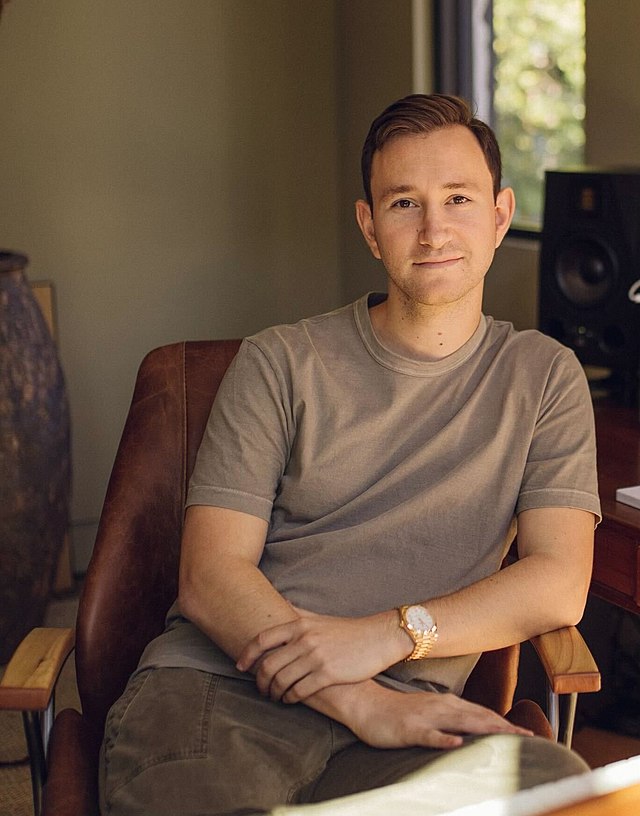
Michael Pollack
Songwriter
4
APPEARANCES
4
PODCASTS
Aug 3, 2026


Michael PollackGUEST
You know, and as you were saying before, right, there's a certain attitude toward vendors from, you know, neighboring businesses or property owners that's different than an attitude toward quote-unquote commercial uses, right? And I mean sort of incorporated, fancy, high-scale commercial uses.
Michael PollackGUEST
So you've got companies like you were mentioning that do scooter rentals, Lime, Bird, Lyft scooters.
Michael PollackGUEST
In many cities, people just leave the scooter on the sidewalk wherever they're done using it.
Michael PollackGUEST
And sometimes that's because the city has not regulated it to prohibit that kind of thing.
Michael PollackGUEST
or they haven't worked with the private company or the private company hasn't worked with them to make that happen, to have them be more organized.
7 MINS LATER


Mike CarruthersHOST
If I have a sidewalk in front of my home, which I do, is it considered public or private property in the sense of if somebody wants to come and protest or do something on the sidewalk, i-is it public land that they can do that because they can assemble in public, or is that my private property since I'm responsible for it and I can say, call the police or say, "Hey, get off my land"?
Michael PollackGUEST
So one of the difficult things about this system of private responsibility that we have is that it also leads property owners to naturally make the same, uh, assumption you just did, right? That because they're responsible for it, they also have rights to control it.
Michael PollackGUEST
I said generally, there are exceptions, but for the most part, they have responsibility but no control.

Michael PollackGUEST
So there's the, as you said, Silicon Valley-backed firms like the delivery robots, also scooter rentals, Lime, Bird, others.
Michael PollackGUEST
These make use of the space in ways that are not only in conflict with adjacent businesses, but also, as you said, with pedestrians and other users of the space.
Michael PollackGUEST
So the delivery robots, for example, I mentioned this pilot program out of Pittsburgh.
Michael PollackGUEST
One of the concerns that they identified was that the delivery robots are often gonna take up most of the width of the sidewalk, which isn't a huge problem for a relatively mobile and active person on two feet to walk around.
Michael PollackGUEST
But a person who uses a wheelchair, a person who is pushing a stroller, or just a person with some other mobility limitation often will find it much harder to get around or past that robot.
Andrew JenningsHOST
Are they a good deal for the public interest? Are they acting in the public interest, or are there aspects of BIDs that should give us some pause?

Michael PollackGUEST
Denver, I think, is a really fascinating and powerful story, and one of the big reasons they wanted to write about Denver in the book was because of what they've achieved.
Michael PollackGUEST
So Denver in the last, it's now almost four years ago, a voter-led referendum was adopted in Denver to change how the sidewalks are maintained and funded.
Michael PollackGUEST
So Denver had had this system of private responsibility and private funding obligations that we were talking about earlier for a very long time.
Michael PollackGUEST
Now, under this referendum, the city's Department of Transportation and Infrastructure, DOTI, is in charge of maintaining and installing sidewalks in Denver throughout the entire city, and this is funded with a small fee imposed on property owners.
Michael PollackGUEST
There had been ongoing debate back and forth about exactly how the fee would be calculated, whether it be by linear foot of frontage on the street or whatnot.
Michael PollackGUEST
They ended up landing on more of a flat fee kind of arrangement, one fee for residential properties and one for commercial properties.
13 MINS LATER