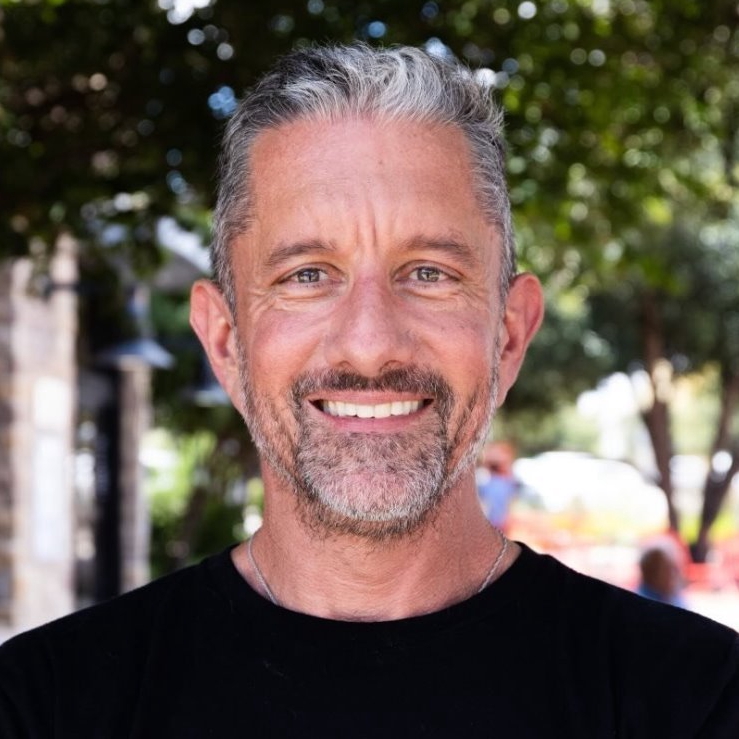
Michael Ostrolenk
Master coach in resilience, leadership, and elite performance; licensed marriage and family therapist and former SEALFIT Unbeatable Mind Master Coach; founder of Resilience Optimized.
6
APPEARANCES
5
PODCASTS
Nov 10, 2026


Michael OstrolenkGUEST
Yeah, I always, for my clients, the first thing I would start with is sleep.
Michael OstrolenkGUEST
Like, you know, get your baseline of sleep and let's look at your REM, your latency, your deep sleep.
Michael OstrolenkGUEST
Like, everything else I heard is obviously really important, but just a few physiological things you can get going.
Michael OstrolenkGUEST
Like, are you getting up and watching the sunrise in the morning? That sets you up for the day and also sets you up for sleeping the next night.
25 MINS LATER
Michael OstrolenkGUEST
So I work with a couple and most of my couples think I'm crazy with the first series of questions I ask them.
Michael OstrolenkGUEST
I ask them about their sleep, their diet and nutrition, their stress management, circadian biology, their movement practices.
20 MINS LATER

Michael OstrolenkGUEST
maybe I hold my breath or some tightness in the neck or the jaw, whatever it is for the individual.
Michael OstrolenkGUEST
There's a way they organize themselves psychophysiologically to deal with whatever the stress is or the emotions are.
Michael OstrolenkGUEST
Once I have them understand how they do the thing, what they mostly discover is that, let me step back.
Michael OstrolenkGUEST
It's not just things happening inside their body, although the brain is part of the body too, but I also have them be aware of The language they use when they're talking to themselves about whatever the thing is and the tone and the volume, all that's really important.
Michael OstrolenkGUEST
And once you know how you do the thing, they start discovering how they kind of repress the thing because they're afraid of their anger or they're afraid of being sad or they're afraid of...
38 MINS LATER


Michael OstrolenkGUEST
That's a great question, and I'll g- give two seemingly like dichotomous answers to that qu- to that question.
Michael OstrolenkGUEST
Now, the human brain works in such a way that it's very conservative, and I don't necessarily mean politically, but it conserves energy.
Michael OstrolenkGUEST
It likes our habits 'cause it doesn't have to use a lot of energy to kind of think outside of the habit that we've developed over time.
Michael OstrolenkGUEST
So for survival purposes, the less energy you use the better, okay? So when we push ourselves through novelty, which can be s- really scary 'cause we're not used to it, it's the mindset, and then the body f- supports the mindset 'cause the brain likes to conserve energy.
8 MINS LATER

Michael OstrolenkGUEST
You know, I brought up Mark Divine's 20 X concept and, and I'll share, I had a countervailing concept that I brought in, into SEALFIT when I worked with Mark, and it's called negative 20 X.
Michael OstrolenkGUEST
And 20 X, I think w- you know, all of us can do 20 times more than we think we can do.
Michael OstrolenkGUEST
But what I found in working with high performers, type triple A personalities, and I, and I came up with this concept working with them, is negative 20 X.
Michael OstrolenkGUEST
You know, what would it be like if you actually slowed down and sat with yourself for some period of time that you'd be spend doing the thing, whatever the thing is.
28 MINS LATER

Lisa LacyHOST
So what happens neurologically and relationally when somebody's nervous system can't tolerate uncertainty or conflict or rejection or loss of control? What happens when we're not present?

1:20

So this thing of, "That makes no sense," that you were talking about before, um, would you like to take us on a sort of a diving back into the past journey into when you first really connected with that and noticed that that was what was going on?
Michael OstrolenkGUEST
So, uh, hopefully it's a long time in the future, but when I have my, my gravestone, it's gonna say two things at least: "That makes no sense," and, "Yes, and..." And I can talk about the, "Yes, and," another time.
Michael OstrolenkGUEST
But that makes no sense is kind of a, a, a driving question that I've had, probably fell out of the womb with a question.
Michael OstrolenkGUEST
[chuckles] But the first time I remember actually a- like, having that in my mind when it w- when I was five.
Michael OstrolenkGUEST
I was diagnosed with an autoimmune disorder, and, uh, and at the time, this is 1975, the CNAs, the, the nursing aides, they come by, you know, they feed you and bathe you and all that kind of good stuff, but they play cards with you.
24 MINS LATER
25:49
So tell, tell us a little bit about your practice now and what, how, what you're helping people with.