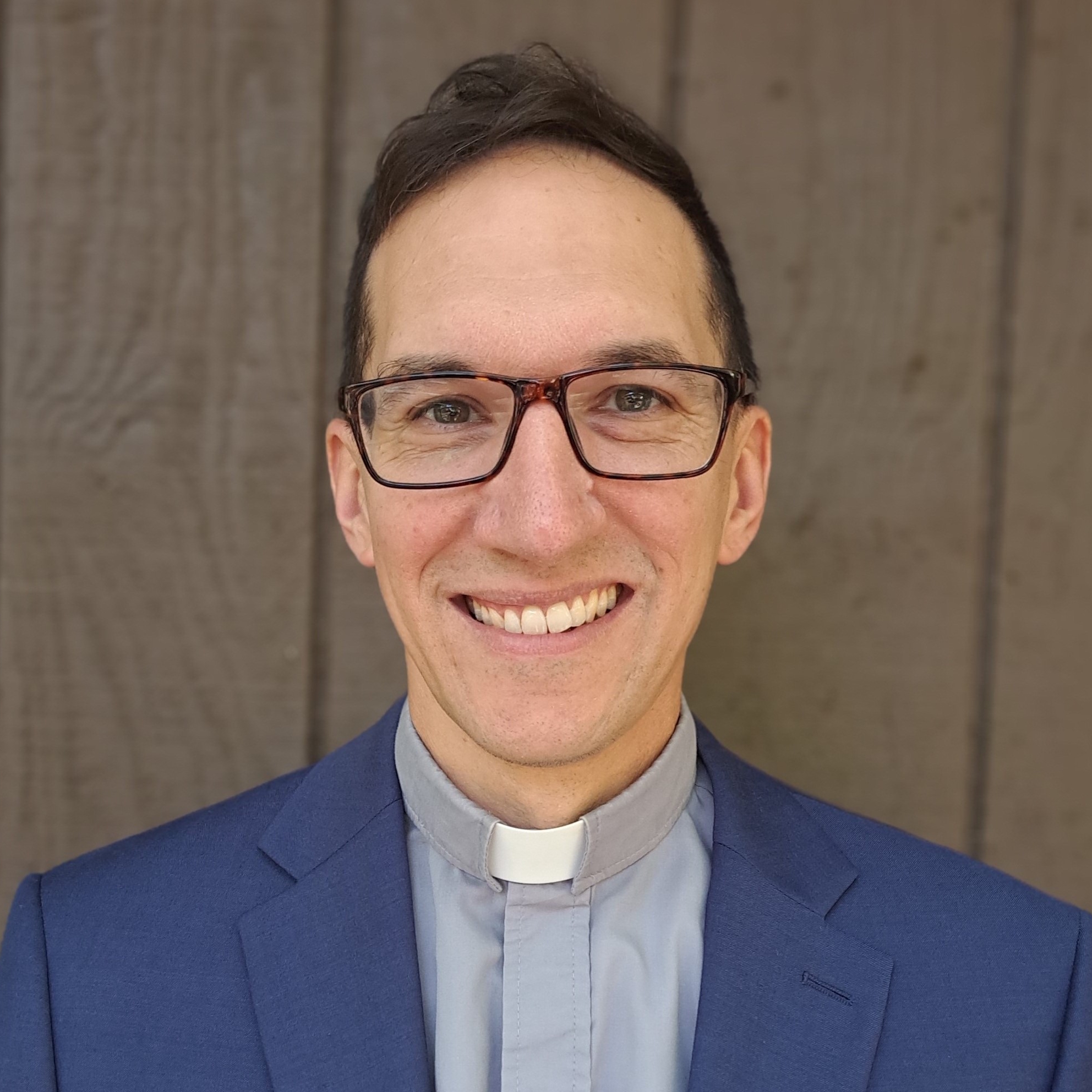
Michael Niebauer
Anglican pastor and founder/director of Heritage Mission, training leaders to start worship services in care facilities; author of From Word to Worship and Virtuous Persuasion.
3
APPEARANCES
3
PODCASTS
Sep 28, 2026


Michael NiebauerGUEST
And so it really wasn't until going through somewhat my master's program, but then really in my PhD program, I had an Old Testament class with this Romanian Orthodox theologian, Bogdan Bacor.
Michael NiebauerGUEST
And it was really through that class and then reading... particularly Ephraim the Syrian and Gregory of Nyssa, kind of reading those works afresh, I think it just sort of clicked for me.
Michael NiebauerGUEST
I both, I think, understood a little bit more what these early Christians were doing when they read scripture, particularly the Old Testament.
Michael NiebauerGUEST
And then I could then go back and read the Old Testament in a similar fashion.
15 MINS LATER

Joel LawrenceHOST
And why have you structured it in this way? And how does that open up to us kind of a deeper understanding of the lectionary and what it's meant to do in the life of the church?

Michael NiebauerGUEST
I would say probably right idea, right text is probably my response to interpretation like that.
Michael NiebauerGUEST
So, you know, I think, again, I think it's assumption that if God, did God really orchestrate all of the events in scripture or not, right? And so that if he really did, then it's probably not an accident that the Israelites are saved out of slavery through water.
Michael NiebauerGUEST
And we have this thing called baptism, which is our salvation from slavery to sin.
Michael NiebauerGUEST
And getting back to your point about how we do this is if we take that as an assumption, you don't need an advanced degree to see that.
Michael NiebauerGUEST
That's actually something that if you just immerse yourself in scripture, you'll see that pretty clearly.
13 MINS LATER

Austin SuggsHOST
But like, what does this really look like? Like, what is an example of this? Can we maybe hit on one or two of those? Mm-hmm.


Zach KendrickHOST
And so how does the lectionary use story and symbol and even sacrament to form the human soul to a narrative that is harmonizes us to to god's story even when we are being formed even by uh secular narratives and and narratives of our own culture
Michael NiebauerGUEST
so you know what i think it all comes down to is god has god has designed us with these specific faculties as human beings and so if god designs us In these particular ways, he wants us to encounter him in these particular ways.
Michael NiebauerGUEST
We exist in time and we have a sense of cohesiveness with ourself that's rooted in the fact that we exist.
Michael NiebauerGUEST
we know where we came from and and so we know where we're going um and so of course god wants to speak to us in that capacity by welcoming us into the the true story of the world um so this comes obviously in scripture it what we typically think of in the biblical story arc creation fall redemption in the lectionary it's giving us into the story of of christ through advent christmas epiphany lent easter and pentecost um we're also symbolic beings meaning that this is one of the ways in which we navigate the world is that we navigate the world through symbols through representations in a very simple way that one thing means another so even as simple as um when we drive a car we know that red means stop and green means go and so these are symbols and they help us navigate the world if if we weren't symbolic beings we wouldn't be able to drive cars in that way um so we are symbolic people and so god wants to reach us through those capacities So, for instance, you know, trees, right? We're supposed to look at a tree and contemplate the wood of the cross and the tree of life, right? Um, that God has actually put trees in the world, not just for, you know, wood and shade and fuel and all those other things, but he has placed trees in our life specifically so that we can contemplate the death of Christ and our eternal home on Mount Zion.
Michael NiebauerGUEST
Um, that's in a sense, the, the ultimate meaning behind trees, um, um and so of course in the lectionary it just it plays that up by showing us these different symbols and how they're they're connected from old testament into the gospel and how they're fulfilled in jesus christ but then also physically they're read within the context of a liturgy that uses these symbols so we've got wooden crosses and we've got wooden staffs and of course we've got the sacrament so we're supposed to see these connections then between the the symbols that exist in the world how these symbols should be interpreted when we read scripture and then how we can go about living our lives as as people who navigate the world through symbols and then sacraments um we're of course physical beings we've got physical senses um and that's how we we experience the world that's how we navigate the world Um, but we also have inner spiritual senses that we, we not only see, taste, touch, smell, but we do these things internally as well.
5 MINS LATER
Zach KendrickHOST
And so how does the lectionary help us experience repentance and obedience and healing and invite us into that as we go through the lectionary?