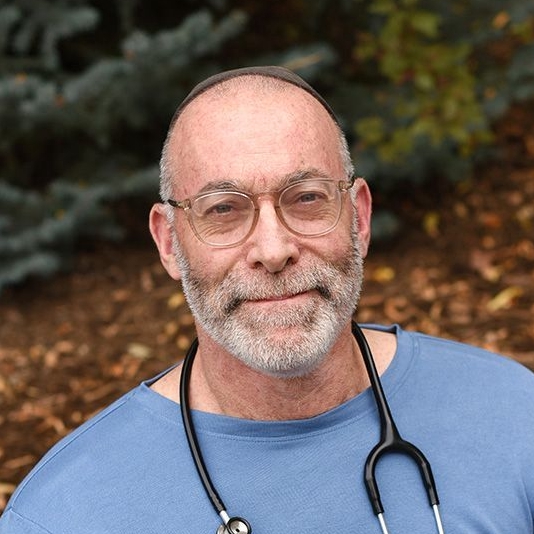
Michael Milobsky
Pediatrician and parenting educator in Castle Rock, Colorado; owner of Pediatrics at the Meadows and co-founder of Chicken Soup Concierge Care.
6
APPEARANCES
6
PODCASTS
Sep 23, 2026


Michael MilobskyGUEST
When we think of ADHD, most people think of that little boy in school who's acting out and making trouble and is a menace.
Michael MilobskyGUEST
And once again, I'm going to credit Russell Barkley, who's an amazing PhD psychologist, has helped me evolve my understanding of ADHD.
27 MINS LATER

Michael MilobskyGUEST
Um, as a parent of seven, having had m- several super colicky kids and a few lower-maintenance kids, and then reading about how this is handled in other parts of the world, what I've come to talk to people about is if everything looks normal, meaning your child is growing, your child is thriving, your child fits that profile of, hey, your mornings are better and your evenings, afternoons are worse, and I don't have any other suspicion, I tell people wear your child more because there's a regulation to that.
5 MINS LATER
Michael MilobskyGUEST
And I've talked to parents who have colicky kids, and it doesn't feel the same.
Michael MilobskyGUEST
But I think the, for parents who are listening, anyone in the audience, if you're gonna be a new parent, typical colicky purple period symptoms have a clear cyclic nature to them, and your days are not all the same, and you are almost always in the morning feels way better than normal, and it gets be- worse in the afternoon or evening-


Gary LipovetskyHOST
And that's part of what led you to social media? Was it around the same time? This
Michael MilobskyGUEST
was the process where I'm figuring out how, and that was dragging me down emotionally.
Michael MilobskyGUEST
and I was emotionally spiraling, but just having to get up and drag myself to work every day because I'm the provider and I have to keep showing up.
Michael MilobskyGUEST
And I had no other thought like, what else can I do? I didn't have the bandwidth because of where I was physically and emotionally to even think outside of that.
34 MINS LATER
Gary LipovetskyHOST
After 30 years of treating children, how concerned are you about what unrestricted smartphones and social media are doing to this generation?

Michael MilobskyGUEST
So I think that with babies, parents with, and I'm going to preface this and sort of lay this on the foundation and that you parented even before there was constant social media and information overload.
Michael MilobskyGUEST
And imagine taking that type of parental anxiety, which by the way, is all of us are worried we're getting it wrong right from the time we bring them home.
Michael MilobskyGUEST
And But the pressure is just ramped up by, you know, 100x when you're getting constant, you know, trolling on social media.
Michael MilobskyGUEST
And then that takes the anxiety from here to here for everyone, right? So...
7 MINS LATER
12:10
As a father of seven, tell me what you see as a kind of general rule about how much is shepherding and how much is, what did you say, engineering?

HannahHOST
To get us started, can you tell us just like a little bit about your journey and what inspired you to work with teens, children, and families?
Michael MilobskyGUEST
And then I opened up my own practice, a private practice about 14 years ago.
Michael MilobskyGUEST
I think what really changed for me was right around the pandemic, what was going on in the office and the practice, like many pediatric practices, I know I'm not alone in this, we were becoming literally overwhelmed.
Michael MilobskyGUEST
with um families wanting mental health services for their teenagers it really was this explosion it was to the point it was like crippling the office meaning that we have enough we didn't have enough space to see the other you know well checks and coughs and sore throats because of the demand for this and it really made me understand that the system for mental health was profoundly broken access is poor there's not enough uh community-based resources for families who who are struggling and oftentimes don't even seek help until there's a crisis.
Michael MilobskyGUEST
And so that's what really inspired, inspired me, inspired us to, to take the step to change that or to provide something different, provide something that's physician led, community-based, really focused on adolescent mental health.
HannahHOST
It

Michael MilobskyGUEST
... and leading with, um, the nuance that, you know, I, I know as a parent, I've done it, and I know that so many parents struggle with this, these middle-of-the-night decisions about, um, if, if you're nursing and, and wh- and where your baby's sleeping.
Michael MilobskyGUEST
So I, I would love to know what you guys are doing so we can just talk about the best ways to approach it.
Michael MilobskyGUEST
And if, leading with that instead of, you know, "How dare you not follow guidelines and da, da, da." And once again, I, I think that comes from experience.
Michael MilobskyGUEST
I think that you have to be a parent on some level to be able to put, be in that place with them.
Michael MilobskyGUEST
You know, uh, uh, people ask me, "Do you have to be a parent to be a good pediatrician?" No, you don't.
21 MINS LATER
Mona AminHOST
Um, the next one was a breastfeeding parent, which you talked about, like, um, having a breastfeeding parent, but why can that reduce the risk of SIDS? Why that, why may that be something that someone may do in approach bed sharing?
Michael MilobskyGUEST
So we do know that breastfeeding moms are, are deeply tuned into cues from their kids co- un- unconsciously.