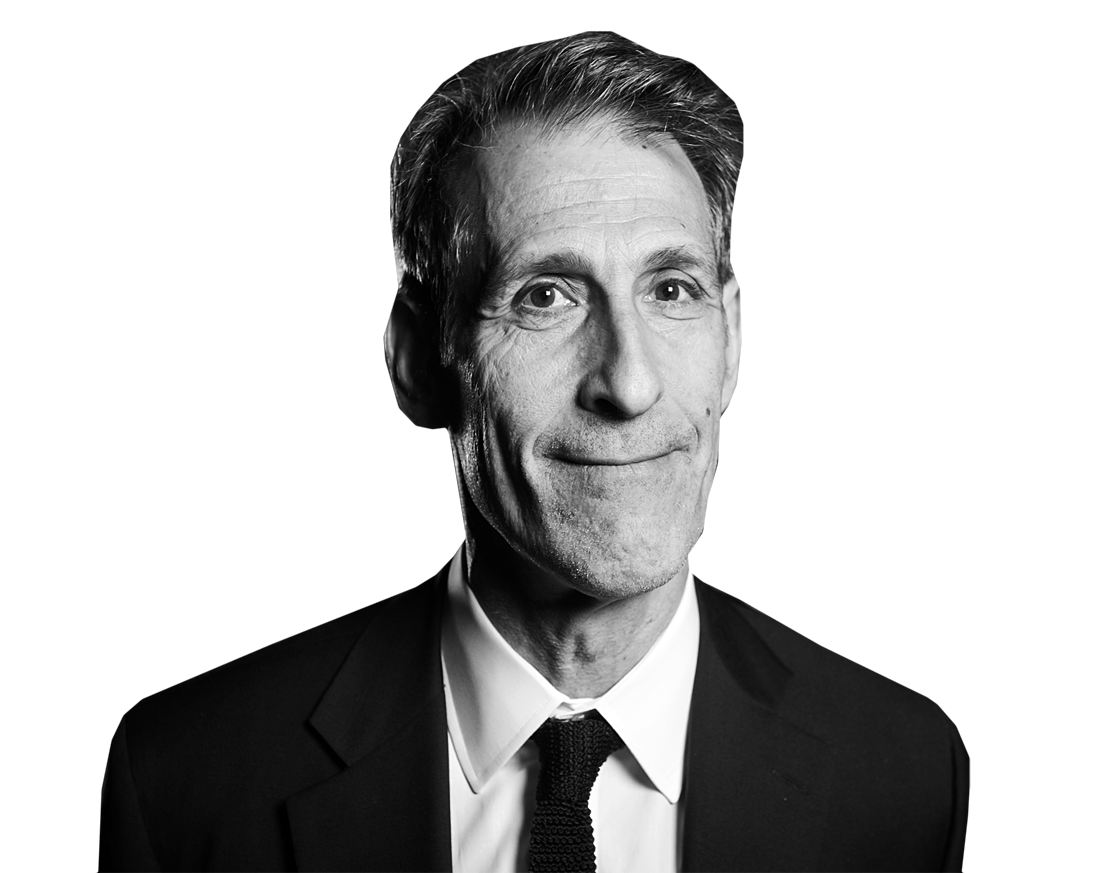
Michael Lynton
Chairperson of Snap Inc.
14
APPEARANCES
14
PODCASTS
Sep 2, 2026


Yossi GarmaziHOST
And maybe if you can give us a little bit background about what actually happened with the movie they interviewed.

Michael LyntonGUEST
Maybe it's helpful to go back to sort of the origins of the book, how it came about, because it relates to the mistake as well.
Michael LyntonGUEST
So I've written this book with my partner, Josh Steiner, and it was actually his idea.
Michael LyntonGUEST
And Josh and I went for a walk one day and Josh turned to me and he said, this was about five years ago, five years after the hack, which happened 10 years ago, said, And he was very involved and helped me during the hack.
Michael LyntonGUEST
And he said, look, Michael, I know you feel you've made a big mistake in that moment and you've always tried to avoid talking about it with me.
18 MINS LATER
Yossi GarmaziHOST
How do you think AI is going to really reshape these industries if you need to look, let's say, five years from now? Is it going to be a whole different ballgame or?


Michael LyntonGUEST
It was very complicated to try and talk to the employees at Sony who understandably had not really signed up for something like this.
Michael LyntonGUEST
You know, the majority of people there were there to make commercial television and film.
Michael LyntonGUEST
They were not trying to stand up for putting movies out that foreign hostile powers didn't wanna have out.
Michael LyntonGUEST
And so to encourage people to continue to come to work and to continue to participate was really complicated.
Michael LyntonGUEST
It was complicated and unpleasant to see the way that the media treated my partner, Amy Pascal.
Michael LyntonGUEST
It was unpleasant and complicated to see h- how my personal emails were put out all over the place.

Michael LyntonGUEST
I had been at Sony Pictures at the time for a little more than a decade, and we had a very good process in place for a green-- for green-lighting movies.
Michael LyntonGUEST
Uh, we typically got them to a point where we knew who all the actors were, we knew the budget, and then we brought a people-- group of people together in a room, people from marketing, finance, public policy, et cetera, and then we would come to a decision along the lines of what I said earlier about things that have ambition.
Michael LyntonGUEST
In this particular case, and what you're referring to is a movie called The Interview.
9 MINS LATER

Michael LyntonGUEST
So it was about 10 years ago, and, um, I was running Sony Entertainment at the time.
Michael LyntonGUEST
He'd also made a bunch of comedies at Universal, so it was a competitive situation always as to who could make them.
Michael LyntonGUEST
And he presented this movie called The Interview, which is about two hapless journalists played by James Franco and Seth Rogen going off to North Korea under the instructions of the CIA to assassinate Kim Jong Un.
11 MINS LATER
McGraw MilhavenHOST
And I guess, was your mistake you just didn't listen to the little man inside you?

Michael LyntonGUEST
It's 44 acres of art deco buildings and beautiful sound stages that go back to the '20s and the '30s.
Michael LyntonGUEST
And across the street from that is, there's this very modern, not very nice-looking building, and in the bottom of the building, there was a, there was a very large room, and that's where we had the read-through.
6 MINS LATER
Malcolm GladwellHOST
How long did it take you to come to what you believe to be the best understanding of why you, why you decided to greenlight that m- that movie in that way?

Michael LyntonGUEST
It's forty-four acres of art deco buildings and beautiful sound stages that go back to the '20s and the '30s.
Michael LyntonGUEST
It's the, it's the lot where they made, uh, The Wizard of Oz, and across the street from that is-- there's this very modern, not very nice-looking building, and in the bottom of the building, there was a, there was a very large room, and that's where we had the read-through.
Michael LyntonGUEST
Um, the creative folks are also d-- you know, they're almost indistinguishable in their dress, to be honest, from the, from the actors, and then there's me in a dark suit [chuckles] and a white shirt, pair of laced-up leather shoes, and you know, I stand out like a sore thumb.
7 MINS LATER

Malcolm GladwellHOST
[gentle music] How long did it take you to come to what you believe to be the best understanding of why you, why you decided to greenlight th- that movie in that way?


Michael LyntonGUEST
And we had-- we were under time pressure to do so because if we weren't gonna say yes, Universal would probably say yes.
24 MINS LATER


speaker_7ADVERTISER
You two are going to be in a room alone with Kim.

Michael LyntonGUEST
It's about mistakes, and it was Josh's idea originally when he came to me and said, "You have a mistake your, your, you, you, you made, and you haven't really discussed it with me." Josh had a mistake as well.
Michael LyntonGUEST
And the distinction was between that and a failure, where people come together and they make a serious decision that doesn't work.
Michael LyntonGUEST
Mistakes you do in the moment, and they're very emotionally charged, and that was the case here.
Michael LyntonGUEST
Normally, in a, in making a movie or rather deciding to make a movie, you'd have everybody around a table, finance, marketing, and you'd have a very thoughtful discussion.


Walter IsaacsonCORRESPONDENT
What made it interesting to me reading about it is you had to look deep in yourself and you said, "Okay, why did I do that? Why did I want to be the cool person who green-lit this movie?"
Michael LyntonGUEST
So backing up for a moment, where, you know, the origins of this was that Josh and I were walking one day, we've been friends for many years, and Josh had this idea that he thought we should both explore our mistakes and potentially write a book about it.
Michael LyntonGUEST
He knew that I had harbored this problem or this issue in me, that I had made this mistake many years ago.
Michael LyntonGUEST
Josh equally had one, and he thought by exploring those mistakes and trying to get to the bottom of why we made them, we perhaps could release ourselves of...
Michael LyntonGUEST
And so when we went through the process of this, it really involved an investigation.

Malcolm GladwellHOST
Is there a version of your story where someone senior at Sony with whom you trust pulled you aside afterwards and said, Michael, you sure you wanna not do our normal process here and be more deliberative?
Michael LyntonGUEST
Yeah, in that instance, I mean, I think if I were to look, if I were going to stretch the point you're trying to make, and by the way, I think there is a lot in the law that tries to make the distinction between a crime of passion, which is a mistake, and not here and elsewhere.
Michael LyntonGUEST
But if I were really going to, that person or that individual, I would look to the community that I was sitting in at the time.
Michael LyntonGUEST
And by way of contrast, and it's in the book, and it also is what motivated me so much to make sure we got the movie out, In a previous life, I had been at Penguin Books, and that had been a few years after they had published Satanic Verses.
Michael LyntonGUEST
And that was an even worse disaster in some ways, because three people were actually killed.
Michael LyntonGUEST
The Satanic Verses gets published, and it's the first time we actually witnessed extreme Islamic furor in its most extreme.
9 MINS LATER

Morris PanitzHOST
So I wanna give each of you a chance to share whatever it is you wanna share this afternoon about the mistakes you made, the consequences of those mistakes, and what you learned from them.
Michael LyntonGUEST
So what I explored, and we were talking earlier about this, was the singular decision to make this movie The Interview, which is a comedy involving Seth Rogen, who I know is a member of this congregation.
Michael LyntonGUEST
And Seth had come to us with a movie that was designed as an R-rated comedy about where two hapless journalists, played by himself and James Franco, go with the direction of the CIA to North Korea, ostensibly to interview Kim Jong-un, but really the reason for it is to assassinate Kim Jong-un.
Michael LyntonGUEST
And we were in a competitive situation in that moment with Universal, because we had made a lot of movies with Seth.
10 MINS LATER


Brian SozziHOST
But is there still that separation between the suits, like you call it, and these celebrities? Do you feel part of their community?
9 MINS LATER

Michael LyntonGUEST
And then at the June of that year, we put out a trailer to say the movie's coming in the Christmas season.
Michael LyntonGUEST
And at that point, the North Korean government, through the envoy in New York, sort of sent us a warning that something bad could happen.

David WestinHOST
Would it have been different if you'd had all the time in the world to think it through, to talk to Josh about it? Would it have come out differently?


Michael LyntonGUEST
The Hollywood Reporter did report on this with restraint, and they, and they talked about the business side of things.
Michael LyntonGUEST
A lot of other outlets did not, and they went deeply into personal matters of different people at the studio, and I was really disappointed in that, uh, uh, uh, in, in, in the journalists.
Michael LyntonGUEST
On Seth, my, my disappointment was not that he wasn't apologetic enough, but that he never acknowledged the fact that all of these folks at Sony had, had, you know, they were, they were made incredibly uncomfortable.
Michael LyntonGUEST
They had a really tough time of it, and I would've, I would've hoped that he would've thanked them at a very minimum, you know, in some way, shape, or form, but he didn't.
6 MINS LATER