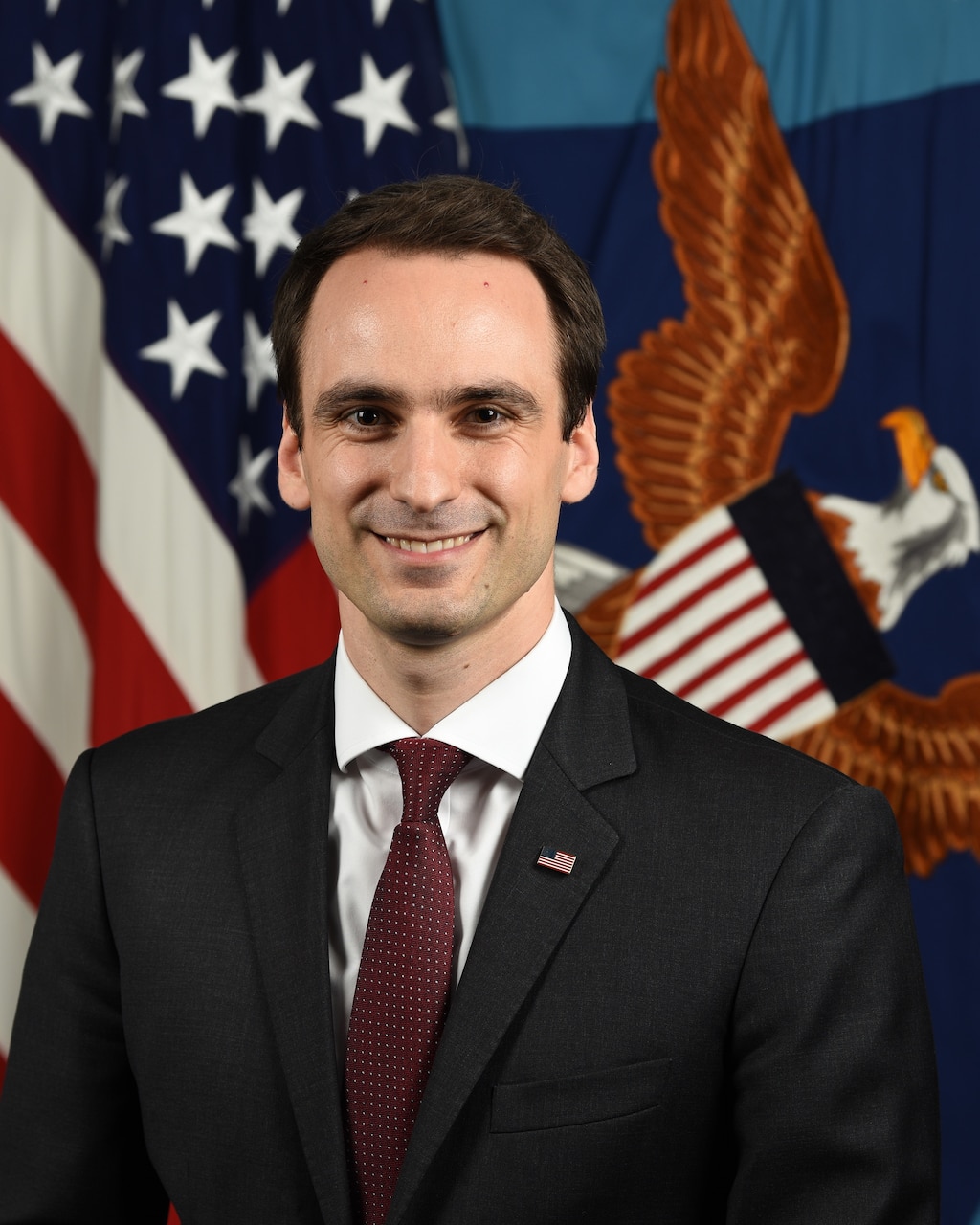
Michael Kratsios
Science Advisor to the President of the United States
19
APPEARANCES
12
PODCASTS
Oct 22, 2026


Tyler CowenHOST
How does that background, which is different from traditional science, how does that shape the plan you came up with, which is outlined in this book, Science, A New Golden Age?

Michael KratsiosGUEST
I think when I first started in the first Trump administration, I was the chief technology officer of the United States.
Michael KratsiosGUEST
And I came into government very interested in trying to find ways to improve the regulatory environment in the United States so emerging technologies could succeed.
Michael KratsiosGUEST
Things like how do you get autonomous vehicles on the road? How do you get drones flying for package delivery? How do you get AI-powered medical diagnostics more quickly through the FDA pipeline? And what I quickly realized was that the United States government has a very powerful role to play in agenda setting for the direction of American science.
Michael KratsiosGUEST
And I think for many years, I think the government has sort of, you know, stepped away from that role and have sort of taken the position that we should not be risk takers.
7 MINS LATER

Jackie HeinrichHOST
Is it fair for the president to dismiss these concerns as politically motivated?
Michael KratsiosGUEST
Well, a lot of the hysterics that the left is pushing around AI certainly do need to be dismissed.
Michael KratsiosGUEST
This idea that AI is going to take over the world, that we're going to have Terminator running on the streets, and the government suddenly has to do something in the next six weeks before an election, I think is like the wrong narrative to be sending back to the American people.
Michael KratsiosGUEST
The key is the administration has been working on this and thinking about it for a very long time.
Michael KratsiosGUEST
I think if we roll back the tape, even to the first Trump administration, President Trump was the first president in history to ever sign an executive order around artificial intelligence.
Michael KratsiosGUEST
And that EO itself kind of laid the groundwork of where we are today, where AI needs to be approached from a use case specific, industry specific way, not through these one size fits all approaches.
Jackie HeinrichHOST
Tell us from the White House perspective just how urgent an issue it really is.

Jackie HeinrichHOST
Is it fair for the president to dismiss these concerns as politically motivated?
Michael KratsiosGUEST
Well, a lot of the hysterics that the left is pushing around AI certainly do need to be dismissed.
Michael KratsiosGUEST
This idea that AI is going to take over the world, that we're going to have Terminator running on the streets, and the government suddenly has to do something in the next six weeks before an election, I think is like the wrong narrative to be sending back to the American people.
Michael KratsiosGUEST
The key is the administration has been working on this and thinking about it for a very long time.
Michael KratsiosGUEST
I think if we roll back the tape, even to the first Trump administration, President Trump was the first president in history to ever sign an executive order around artificial intelligence.
Michael KratsiosGUEST
And that EO itself kind of laid the groundwork of where we are today, where AI needs to be approached from a use case specific, industry specific way, not through these one size fits all approaches.
Jackie HeinrichHOST
Tell us from the White House perspective just how urgent an issue it really is.


Larry KudlowHOST
Give us a sense of what happened in Chapel Hill at your innovation meeting of the G20.
Michael KratsiosGUEST
We just concluded the G20 Innovation Ministerial that was co-chaired by me and Secretary Lutnick.
Michael KratsiosGUEST
And I think the key message that we want to deliver there was that we wanted all of our G20 countries to focus on growth.
Michael KratsiosGUEST
And this was something that was also expressed at the at the Asheville meeting with Secretary Besson.
Michael KratsiosGUEST
But the key distinction here at the Innovation Ministerial was that we kind of came to a consensus and tried to push the narrative that technology is the biggest driver of growth.
Larry KudlowHOST
What happened down in Chapel Hill? Did anybody make the case? Are you making the case? You can't let this go, can you? We're not going to let the Chinese overtake us.

Michael KratsiosGUEST
I think the short answer is yes, and I think what we advocate for and argue in, in science and New Golden Age is that we have lost our way on doing that.
Michael KratsiosGUEST
I think back to even what I mentioned earlier, I think most Americans sort of look back favorably on things like the Apollo mission.
Michael KratsiosGUEST
There was a discrete goal of something you were trying to accomplish, and only the federal government could sort of marshal the resources to do that.
Michael KratsiosGUEST
Not that's the only thing we should do, but that should be one of the things we do along with everything else I just mentioned.
6 MINS LATER

David FriedbergHOST
How do we think about allocating capital amongst those four channels, w- why they're good, why they're not good, and how the balance needs to shift over time for us to get better ROI on our science dollars?
Unknown podcast
Michael Kratsios: Trump's Science Agenda, Anti-Science Claims, Fauci's Damage, DEI & China
Aug 24 · 55m
David FriedbergHOST
Do we have the capacity as a nation to tackle big meaty projects that can really make incredible breakthroughs for humanity, but require significant capital and time and a long-term commitment?
Michael KratsiosGUEST
And I think what we advocate for and argue in Science's new golden age is that we have lost our way on doing that.
Michael KratsiosGUEST
I think back to even what I mentioned earlier, I think Most Americans sort of look back favorably on things like the Apollo mission.
Michael KratsiosGUEST
There was a discrete goal of something you're trying to accomplish, and only the federal government could sort of marshal the resources to do that.
7 MINS LATER
David FriedbergHOST
How do we think about allocating capital amongst those four channels? Why they're good, why they're not good? how the balance needs to shift over time for us to get better ROI on our science dollars.


Peter DiamandisHOST
Uh, how does, how does America think about that? And maybe this is not necessarily your realm, but I'd love, I'd love your thoughts on that.
Michael KratsiosGUEST
We launched something, um, called the American AI Exports Program, and the vision behind it was, look, we have the best AI stack in the world.
Michael KratsiosGUEST
We have the very best chips in companies like NVIDIA and AMD and many other new entrants.

Comfortably SmugHOST
Like, everyone's been told that now electricity's gonna be costing, like, 10 times as much as you're paying, and this directly addresses that, especially with the, uh, president's rate protect- pr- rate protection pledge.
Michael KratsiosGUEST
So the, the framework calls for Congress to enshrine into law the president's Ratepayer Protection Pledge.
Michael KratsiosGUEST
And if you remember, a few weeks ago, the president brought to the White House all the executives from the top AI and data center companies and got them to agree to either build, bring, or buy their own power whenever they build a data center, essentially having them guarantee that any time they build a data center, it will not increase the electricity prices of everyday Americans.
Michael KratsiosGUEST
This is what Americans expect and want, and the government can play a very critical role in helping not only get these data centers built out, but ensure that the American people are not the ones that, that bear the, the, the burden of this excess electricity price.
10 MINS LATER
Comfortably SmugHOST
... who are watching us right now, what takeaway do you want them to have from the framework that's released? What assurances can they have that this administration has them in mind and their interests in mind?
Michael KratsiosGUEST
Number one, I think it protects American parents, and that's the very first section about finding a way to protect America's children and empower parents to have the tools they need, uh, to, to oversee what their children are doing online.


Michael KratsiosGUEST
I think in the, in the last administration where a lot of this type of stuff was being thought at was at places that were essentially regulatory bodies and saying, like, "We're gonna do these tests and if we don't like the answer to this test, then, you know, we may ban you or nationalize you or something." I think in our case, we think it purely from a kind of a national security standpoint, where we want our, our experts that are thinking about the way that these models work to support our war fighters and, and ensure our own cybersecurity, have the tools they need to, to do the testing to see where these models are ultimately going.
Michael KratsiosGUEST
And, and I think that's probably a very natural and appropriate role for the government to play.
Michael KratsiosGUEST
We should be creating programs and spending the resources that Congress is appropriating, uh, a- appropriating to the executive branch to be able to go out there and actually prepare Americans for the next generation jobs.
Michael KratsiosGUEST
And we talk about that in, in, uh, in, in the framework, and it's something that we're gonna, we're gonna continue to do.
Michael KratsiosGUEST
Um, you know, we've done a lot of work on how, on how AI is affecting small business.
Michael KratsiosGUEST
I don't know if you guys had an opportunity to ever talk with Kelly Loeffler, who's our small business administrator.
Unknown podcast
Inside America's AI Strategy: Infrastructure, Regulation, and Global Competition
Jan 23 · 47m
Michael KratsiosGUEST
And back to David's initial point about the progress we've seen in these frontier models, I think the very early ones sort of started with just general knowledge.
Michael KratsiosGUEST
And you have to go back and understand, like, why? And the question was, what was the data available for those model builders to start training their models? And for the early ones, you could just scrape the Internet and just kind of cram everything to a model and train it.
Michael KratsiosGUEST
And that's where you kind of had this first phase of large language models.
Michael KratsiosGUEST
And if you think about how do you get a really good coding model, you have to train it on existing code.
16 MINS LATER

Michael KratsiosGUEST
And, and back to, to, to David's initial point about the progress we've seen in these frontier models, I think the very early ones sort of started with just general knowledge, and you have to go back and understand, like, why.
Michael KratsiosGUEST
And the question was: What was the data available for those model builders to start training their models? And for the early ones, you could just scrape the internet and just kind of cram everything into a model and train it.
Michael KratsiosGUEST
And, and that's where you kind of had this, this first phase of, of large language models, and the second one was coding.
Michael KratsiosGUEST
And if you think about how do you get a really good coding model, you again, you have to train it, you have to train it on existing code, and that is, again, something that is, you know, r- relatively easier to, to acquire than other types of data, and you saw great progress and jumps in, in the coding models.
16 MINS LATER
Maria BartiromoMODERATOR
What can you tell us in terms of where we are in that?
24 MINS LATER
JordyHOST
(laughs)
Michael KratsiosGUEST
You know, we- we have been the home for boss dynamics for, you know, over- over two decades.

Michael KratsiosGUEST
For us, I think winning the s- the AI race, uh, generally is focused on adoption.
Michael KratsiosGUEST
This question of how the American tech stack can be the dominant technology stack adopted around the world.
Michael KratsiosGUEST
In order to do that, um, we lay out sort of a three-pronged strategy to make that a reality.
Michael KratsiosGUEST
The first big thing we have to do is make sure that we lead on innovation, meaning that the US has to be the home where the next great AI discoveries happen.
Michael KratsiosGUEST
And we need a regulatory system that can allow our greatest AI technology companies and our AI innovators to actually deploy those technologies.
Michael KratsiosGUEST
Now, married with all that innovation, you have to have the infrastructure to drive an AI revolution, and that means we need the power and we need the data centers in order to do all that.
13 MINS LATER

Jessica MendozaHOST
Uh, one question that, um, honestly I get asked a lot by our listeners on the general podcast, uh, people are very interested in AI, but are you worried about an AI bubble?

Gregory C. AllenMODERATOR
So to just sort of level set for the rest of the conversation, and we're going to get into the weeds here, what is in these orders that we all should be paying attention to?
Michael KratsiosGUEST
I was very excited and lucky to work with you in the first administration, and for those of you who don't know, Greg played an extraordinarily integral part in kind of launching of the first AI efforts at the Pentagon.
Michael KratsiosGUEST
And the things that we talk about today, Jake and CDAO and everything that's happened there, it all started because of this guy here.
Michael KratsiosGUEST
So he's a real patriot and made a huge impact on the way we think about AI and national security.
Michael KratsiosGUEST
For me, last week I think was a big week for the United States, for the president, and for the future of artificial intelligence in this country.
8 MINS LATER
Gregory C. AllenMODERATOR
So what's the problem that you were trying to solve in this executive order and with this part of the plan? Yeah,
Michael KratsiosGUEST
Like, what barriers should we remove so that better stuff can happen in America, so that more people can use technology, so our economy can grow, so our national security can be stronger? Um, but the Biden people are like, "No, we have to think of everything that could possibly go wrong with AI and then create a very long executive order to make that happen." And what it essentially did was hamstring our AI industry.
Michael KratsiosGUEST
And they were absolutely paranoid that they would be regulated to death and they wouldn't be able to actually do all the things that, um, we want them to do, as in exporting our AI and allowing all of our companies to use it and create new jobs and all this great stuff.
Michael KratsiosGUEST
Um, so ultimately what happened is we had to, we had to turn, turn the page on it.
Michael KratsiosGUEST
Um, and I know you guys may know Marc Andreessen who works at, uh, Andreessen Horowitz, a16z, and he recounts, I mean, if, if you believe him, he recounts a story when he went to the White House.
Michael KratsiosGUEST
And the White House essentially told him that, you know, this is during the Biden years, that, uh, they really want only two or three AI companies to exist so that the government-

Ed LudlowHOST
Of the 23 pages, which section do you think gets enacted by this administration first?
Michael KratsiosGUEST
I think the one piece that you didn't mention, which I think is also very critically important, is this focus on exporting American AI.
Michael KratsiosGUEST
This idea that we want the entire world to be running on American artificial intelligence stack.
Michael KratsiosGUEST
All of that needs to be exported and packaged to the world so that we become the ecosystem of choice globally.
Michael KratsiosGUEST
And that is something that Secretary Lutnick and Secretary of State Rubio have been tasked to work on and put together for the country.
Ed LudlowHOST
Do we get a successor to the diffusion rule? Have you started drawing up some guidelines?
Unknown podcast
Winning the AI Race Part 1: Michael Kratsios, Kelly Loeffler, Chris Power, Shyam Sankar, Paul Buchheit, Jake Loosararian
Jul 23 · 1h 34m

David SacksHOST
And then I guess if you want, flesh out some more of the important details as you see it.
Michael KratsiosGUEST
Once the president signed the executive order assigning us this task, the first thing we did was actually issue an RFI, very exciting government activity.
Michael KratsiosGUEST
And we asked the country, hey, what should we include in this plan? And I think to be honest, I think we were all surprised with what came back.

Jason CalacanisHOST
What do we have to do? What is the administration's philosophy on recruiting the world's best AI talent?
Michael KratsiosGUEST
And I think it really showed how impactful this particular technology is to everyone in every industry in the US.
Michael KratsiosGUEST
So we ingested a lot of those comments, went out to all the, uh, agencies that work with and in some ways touch AI, and came together with this, with this plan.
Michael KratsiosGUEST
Now, if you think about it, um, you know, there's been a lot of national strategies that companies put, that countries put out there over the last five or six years.
Michael KratsiosGUEST
And what we really wanted to focus on, um, is in the title itself, an action plan.
Michael KratsiosGUEST
We wanted things that we could accomplish in the next six to nine months to accelerate and ensure that we can win this race.
15:58

Is that an open source philosophy? Is that a licensing philosophy? How do you think it should best serve the American economy to get this stuff out there?
Ed LudlowHOST
Are those priorities achievable, AI leadership from America with the tariffs that we have in place and the technology export controls, some of which were amplified overnight on the likes of NVIDIA and AMD?
Michael KratsiosGUEST
If you think back to the strategy that we discussed a couple days ago, in order to achieve this leadership position, we have to do both promotion and protection.
Michael KratsiosGUEST
A lot of our regulatory policy has been driven by the spirit of fear, this idea that we should be worried about these emerging technologies.
6 MINS LATER
Ed LudlowHOST
Just as our audience, Bloomberg Technology, gets to know you, Mr. Kratios, and your work in the White House, have you had the opportunity to meet with Jensen Huang and his peers about what they plan to do in America and also critical markets for them, which once included China?