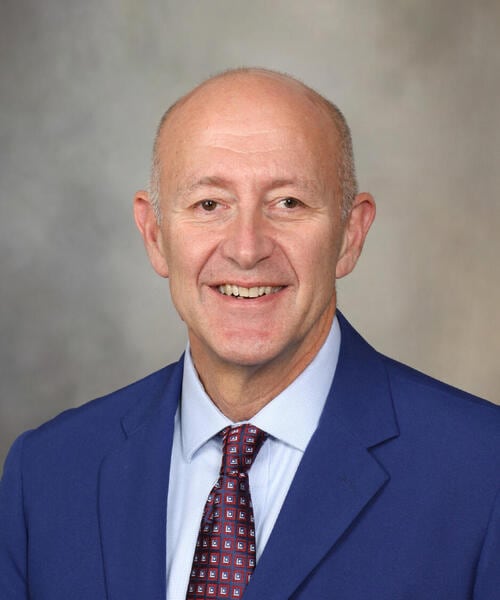
Michael Joyner
Anesthesiologist and physiologist
3
APPEARANCES
3
PODCASTS
Sep 25, 2026


Michael JoynerGUEST
A whole bunch of information began to be available in the 70s and 80s when I was a medical student and a beginning student of exercise physiology about how...
Michael JoynerGUEST
And that included the lactate threshold and also what we call running economy or perhaps efficiency on the bike.
Michael JoynerGUEST
And it turns out in the late 1970s, when I was quite young, 19 years old, I became a subject in the very first study on the lactate threshold.
30 MINS LATER


Michael JoynerGUEST
what happened is is you know i took this data that was out there and came up with the the range of values for these factors that had been published and then just did all the possible combinations uh high low medium and and made these estimates of running speed.
Michael JoynerGUEST
And so why do people make models? People make models in an effort to try to understand what they understand or understand what they know and how it all works together.
Michael JoynerGUEST
And at the time, the record was around 207, and obviously the estimated speed optimal value was much faster.
Michael JoynerGUEST
So the question is, what didn't we know? You know, what was wrong with what we knew? Did lab-based measures translate perfectly to field-based performances? Were the measurements, as you guys know, in a lab that are made in five or 10 or 20 minute bouts of exercise, how did that change over time? And, and, uh, Andy Jones and others have done some excellent work on what they call physiological resilience.
5 MINS LATER

Michael JoynerGUEST
So the, the idea was, we, we, in the, in the 1970s and 1980s, ideas about the physiology of endurance sports, and especially distance running, and to some ex-ex-extent, cycling, really came into focus.
Michael JoynerGUEST
There started to be really good data on a number of elite athletes at the time, like Derek Clayton, for example, and we knew what their maximal oxygen consumption is, or VO2 max, which is sort of the upper limit of aerobic function.
Michael JoynerGUEST
We began to understand something called the lactate threshold, which is the percent of their VO2 max that they can sustain for a couple of hours.
Michael JoynerGUEST
And then the question is, is, is how much speed could they generate? Some people are more efficient than other people.
Michael JoynerGUEST
And so I simply said, if the same athlete had the best value ever reported for all three of those variables, how fast would they go? And came up with a time in the high 1:58s if that happened.
Natasha BellingHOST
To what degree do you believe modern technology, especially with exercise equipment and shoes, like the shoes today are next level, to what degree do you think this equipment has helped break down those barriers and people being able to achieve those world records?