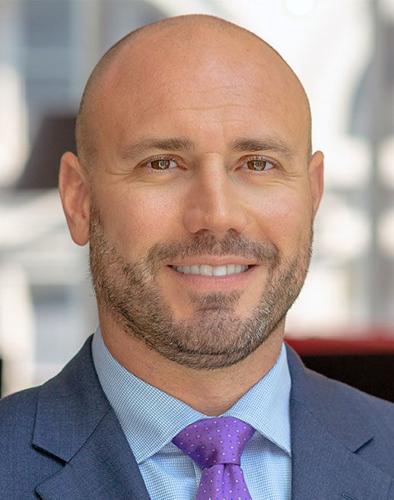
Michael Halen
Senior Restaurant and Foodservice Analyst at Bloomberg Intelligence; host of the Choppin' It Up podcast
49
APPEARANCES
1
PODCASTS
Oct 13, 2026


Michael HalenGUEST
That was probably, uh, the biggest red flag on the call, right? Um, Domino's has had strong net unit growth for years, and that's kind of something that, um, investors and Wall Street has banked on year after year.
Michael HalenGUEST
And, and, you know, their commentary about, you know, franchisees pro- franchisee profitability dropping and that impacting net unit growth, uh, I don't think was taking, taken very well by the Street, and I think that's a big reason why the stock is down so much, right? I think there's some concern now that, you know, number one, they're not gonna hit their 125 to 105, 150 s- US store goal for this year.
Michael HalenGUEST
But that net unit growth as a system may come in lighter next year than, uh, investors had expected.
Michael HalenGUEST
For big business, AI opened up a world of promise, but that world of promise turned into a world of pain.
Michael HalenGUEST
Costs spiraling, data scattered across disconnected systems, security and governance increasingly complex, AI initiatives struggling to scale, and ROI that remains frustratingly out of reach.
8:19
What are the costs here? What would it cost a franchisee to get on board with McDonald's overhaul plan?
Michael HalenGUEST
McDonald's is asking for 1.2 million, which we think is, is a huge ask for franchisees that are, you know, being squeezed by, by higher commodity costs, right? And, and also suffering from lower traffic, and some of it may have been induced by, by management, right? K- Chris Kempczinski, um, was, uh, you know, widely ridiculed for his, uh, very weak bite of the big arch, uh, a- and his calling it a product, right? And, and then since then, some of their competitors, particularly Burger King, really kinda latched on that, onto that and has, have seen some really strong same store sales growth.
Michael HalenGUEST
So, you know, f- franchisees can't be happy with management right now, and we don't see many franchisees ex- you know, willing to pay 1.2 million.
Michael HalenGUEST
We think there'll be, uh, some sort of negotiation and, and a much smaller, uh, remodel and investment package-
Paul SweeneyHOST
back to earnings uh jersey mike's recently came public here um you know it's becoming a has become a really really big uh chain across the country and they want to get bigger they want to go to the uk and all this kind of stuff so had a ipo recently they reported some numbers here let's check in with michael halen he covers all the restaurants for uh bloomberg intelligence mike talk to us about jersey mike so what do we learn with the most recent report
Michael HalenGUEST
So, you know, since they already have a stake in it, we kind of take this with a grain of salt.

Michael HalenGUEST
Yeah, there's a lot of low-hanging fruit here because this brand has been severely mismanaged for some time.
Michael HalenGUEST
And so number one is going to be revamping the menu and making sure that there's everyday value on that menu.
Michael HalenGUEST
Bob Wright on the call mentioned that people come away feeling that the experience was worth it and being happy about their overall experience when they leave.
Scarlet FuHOST
Michael, how do Burger King's numbers in particular compare against McDonald's, which came out with results earlier this week and were kind of disappointing to the point where they needed to change leadership as well?
Michael HalenGUEST
Yeah, and I think when you see McDonald's slow, that tends to help other QSR chains.
Michael HalenGUEST
But I would suggest most of this gain here at Burger King is due to the changes that they made over the last few years.
Michael HalenGUEST
Patrick Doyle, chairman of the board, bought into this chain some years ago and has done a really good job of mentoring the management team and helping them turn that business around.
Michael HalenGUEST
You know, one thing I thought was interesting that McDonald's mentioned on their call was that they need to get more families back in the stores.
Michael HalenGUEST
And, you know, it sure seems like they mentioned that because Burger King seems to be taking some share there.
Michael HalenGUEST
Yeah, so last year they did a good job of re-establishing themselves as the value leader.
Michael HalenGUEST
This year we thought it was, we didn't think it was a great idea to just try to lap these really strong comps with just value.
Michael HalenGUEST
a uh b they kind of screwed up the whole value thing they pulled bogos buy one get one offers um they took away a lot of discounts on the app which their lower income consumers use all the time and they pushed uh a 10 items for three dollar menu that kind of fell flat and so all of those changes that happening that happened actually created an increase uh of prices for their their consumers so you know that paired with a tough year-over-year comparison you know showed up in their
Paul SweeneyHOST
results today the company is embarking on a multi-year plan to become more than just a fast cheap meal with the aim of being the first choice for family outings and other occasions how are they going to do that
Scarlet FuHOST
Do you think, given the increased role that individual investors play in the market, that there's going to be enough demand to absorb all of this supply?
Michael HalenGUEST
Yeah, and that's been the real macro dynamic change this year, that finally we're going to have more supply than demand.
Michael HalenGUEST
We know free cash flows come off from the hyperscalers and some of the mega tech, so that's even more questionable next year.
Michael HalenGUEST
But to your point, we keep getting new bites of additional paper coming to fund not only CapEx in AI, but even elsewhere with other IPOs coming more than expected as people are sort of rushing in.
Michael HalenGUEST
And with credit markets now looking a little more wobbly and some of the rejection there from the paper that we've recently gotten, it means AI is Paper may even come more for stocks.

Tom KeeneHOST
Are we asleep about any instabilities to come up here? I mean, in personal finance, retirement, wealth management, are we all asleep right now?
Michael HalenGUEST
So right now, as the macro picture stands with growth and inflation where it is, I think we can expect maybe a reversal of the Powell cuts and maybe a subsequent maybe 75 basis points of hikes just to reset the levels and basically get markets even.
Michael HalenGUEST
Maybe it was Chipotle who was one of the first to admit it because they didn't have that many low income consumers.
Scarlet FuHOST
Does that mean that if they're going to have trouble selling cars at full price, they might need to discount or look to package it a little bit differently?
Michael HalenGUEST
Well, China's been a really difficult market for the German brands over the past few years.
Paul SweeneyHOST
So if I'm a global automaker in Germany, in the U.S., Japan, how do I view the Chinese market here today? I mean, it seems like I'm hearing a lot of bad news from a competitive standpoint in that market just generally.
Michael HalenGUEST
Since last fall, they had announced that they were looking for strategic options here for Pizza Hut, which has been struggling for years.
Michael HalenGUEST
It allows their very talented management team to focus on their two real growth brands, Taco Bell, which is a monster.
Scarlet FuHOST
Can you talk to us about international growth? Is it becoming a bright spot and can that offset some weakness they're seeing in their business?
Michael HalenGUEST
So so they are they've done a good job, like I said, of taking share here in the United States.
Michael HalenGUEST
That's one reason why investors do like this name, because the U.S. economy has been more resilient than, say, a place like Europe, especially with the higher inflation that they've seen over there.
Paul SweeneyHOST
Texas Roadhouse, I know reading your research from the past, they're trying to strive value here, and that seems like a pitch that would work in today's economy.
Michael HalenGUEST
So, you know, what we wrote today was that they're trying to walk a tightrope right now.
Michael HalenGUEST
They're comping some very strong results, you know, over the last over a year ago, starting in 2Q.
Michael HalenGUEST
But they're trying to do that with value, which which risks a trade down from some of your consumers that are doing a little bit better.
Michael HalenGUEST
So, you know, Sequentially, same-star sales and growth rates are going to decelerate starting in the second quarter.
Scarlet FuHOST
What are the financials behind the beverage category versus the food category? I'm guessing higher margins, perhaps bringing in lower demographics as a benefit.
Michael HalenGUEST
Well, you know, the entire commodity complex is starting to become of real concern for these restaurant chains.
Michael HalenGUEST
And that's why we've seen them kind of reverse their strong gains of the previous three months.
Michael HalenGUEST
And they feel that they can because they have not raised prices much over the post-pandemic period.
Scarlet FuHOST
What will you be listing for from the other restaurants that report? Are we going to see similar themes play out for them?
Paul SweeneyHOST
Mikey, what's Novo doing here? Are they going for market share? What's the plan here?
Michael HalenGUEST
Yeah, I think that, I mean, the slashing of the list price would, I mean, would essentially improve access.
Michael HalenGUEST
I think in terms of the price cut, say 50% on the list, so it's bringing down the monthly cost down from $1,350 to about $675 per month.
Michael HalenGUEST
So I think it's important to kind of make that distinction between the list and the net.
Michael HalenGUEST
I mean, what it does mean is, you know, NOVA will be essentially negotiating with insurers off a lower base, and then you'll probably see some adjustment in the discount or rebate offered.
Paul SweeneyHOST
What's the next big thing? Is it just improving it, maybe lowering the side effects? What are you looking for next?
Michael HalenGUEST
So, you know, to your point, they are outperforming the market pretty handily today.
Michael HalenGUEST
Yes, the food innovation stuff crust isn't groundbreaking, but it's something that their national competitors had already offered.
Scarlet FuHOST
That's good for the bottom line, but does it sour relationships with franchise operators? I mean, how does Domino's manage that going forward?
Michael HalenGUEST
So, you know, it was kind of mixed results versus what the street was looking for.
Michael HalenGUEST
You know, I, I look at the underlying trends and I think they're still strong.
Michael HalenGUEST
So the reason why it's down right now is, you know, Burger King showed an acceleration in the U S which is, is pretty promising.
Michael HalenGUEST
Um, uh, You know, they showed strong results at International and International is a pretty well oiled machine for this company.
Michael HalenGUEST
But there was some deceleration in the Tim Hortons numbers, which makes up 60 percent of adjusted EBITDA.
Paul SweeneyHOST
I first asked Michael to break down how CEO Brian Nichols turnaround plan is going at Starbucks.
Michael HalenGUEST
And results really improved, rising, you know, four percent system wide, same store sales, U.S. as well.
Michael HalenGUEST
They rolled out new operating standards late last year, and they seem to be really boosting the speed of service, which is creating happier customers that come back more frequently.
Michael HalenGUEST
You have some of these younger chains that seem to do really well with Gen Z, like Dutch Bros and Seven Brew.
Michael HalenGUEST
And they're opening up these drive-thru cans throughout the suburbs across America.
Michael HalenGUEST
In the cities, there's a lot of competition with these very high-end coffee shops that are using very... very high-quality coffee and offering an elevated food experience.
Michael HalenGUEST
We think sales are set to improve here in 2026, especially in the first half.
Michael HalenGUEST
You know, oil, gasoline prices are down, you know, 13-ish percent versus one Q of last year.
Michael HalenGUEST
We're lapping, you know, bad weather, cold weather, snow, and a really bad flu season from a year ago.
Michael HalenGUEST
And then we have tax relief, which historically really helps restaurant spending and um you know and then we have a couple things on the upside i mean this administration is looking into um you know potentially credit card reform and i don't know if they're done with with the tax reform and we could see more interest rate cuts so all those things we think are going to feed into better consumer sentiment and we saw that in some of the economic data last month and we think it spells you know a much better year for restaurant spending
23:11

Are there any specific chains that you think will be bigger beneficiaries than others?
Michael HalenGUEST
Well, outside of those two, you know, Kava and Wingstop are a couple of the names that we think can have big bounce back years.
Michael HalenGUEST
You know, Kava, you know, in a vacuum, it had a very good year, right? But they didn't hit lofty targets that they had set and earnings slowed off of a very strong 2024.
Michael HalenGUEST
Yeah, we think sales are set to improve here in 2026, especially in the first half.
Michael HalenGUEST
We're lapping bad weather, cold weather, snow, and a really bad flu season from a year ago.
Michael HalenGUEST
And then we have tax relief, which historically really helps restaurant spending.
Michael HalenGUEST
I mean, this administration is looking into, you know, potentially credit card reform.
29:23
So Michael, what does that mean? Are we going to go into a McDonald's and see robots making our fries? What does this mean for jobs at restaurant chains?
Michael HalenGUEST
There's been some issues with the vaccines not covering the current strains that are out there.
Michael HalenGUEST
And so December was pretty rough, you know, quick service and fast casual did better.
Michael HalenGUEST
Quick service sales were down slightly, you know, fast food chains like McDonald's and whereas fast casual like Chipotle, Shake Shack, they were up slightly in December.
Scarlet FuHOST
So what do these casual dining chains do to change the trajectory of what seems like a pretty set trend at this point?

Michael HalenGUEST
I mean, you know, first, let's, you know, to be fair, it was a great year to own AI stocks.
Michael HalenGUEST
But Burry really did throw some cold water on the trade in a very high-profile manner in early November when he disclosed put positions in Palantir and NVIDIA in his hedge fund, Sion Asset Management.
Paul SweeneyHOST
We first asked Michael to break down Cracker Barrel's most recent earnings report.
Michael HalenGUEST
Guidance was cut, and this was their fiscal first quarter, so it's always tough to have a guidance revenue and EBITDA cut after your first report, but they hadn't seen a bounce yet in their traffic post-logo change controversy and everything that went along with it.
Michael HalenGUEST
You know, on the positive side, they said, you know, traffic has now steadied at this down 10 to 11 percent level, which is translating into, you know, a down a mid single digit same store sales.
Michael HalenGUEST
You know, so if you're if you're a glass half full investor, you're saying that, you know, after the stabilization comes an improvement, you know, their new guidance comes has a pretty wide range so the low end of the range is assuming no improvement through year-end which we think could be sounds pretty conservative to us you know and then on the higher end they would see a gradual slow improvement in traffic going forward so what are they going to do you know it's it's going to be a continue to be about improving the operations right that's been you know, a key tenant under CEO Julie Massino.
Paul SweeneyHOST
Michael, what did the company report today, and what's management saying about kind of the future plans here?
Michael HalenGUEST
So it's always tough to have a guidance revenue and EBITDA cut after your first report.
Michael HalenGUEST
But they hadn't seen a bounce yet in their traffic post logo change controversy and everything that that went along with it.
Michael HalenGUEST
You know, on the positive side, they said, you know, traffic has now steadied at this down 10 to 11 percent level, which is translating into, you know, a down a mid single digit same store sales.
Michael HalenGUEST
You know, so if you're if you're a glass half full investor, you're saying that, you know, after the stabilization comes an improvement, you know, their new guidance says, has a pretty wide range so the low end of the range is assuming no improvement through year end which we think could be sounds pretty conservative to us you know and then on the higher end they would see a gradual slow improvement in traffic going forward so what are they going to do you know it's it's going to be a continue to be about improving the operations right that's been you know, a key tenant under CEO Julie Massino.
Paul SweeneyHOST
What's the shareholders been saying? Has there been any pushback other than selling the shares?
Scroll for more appearances