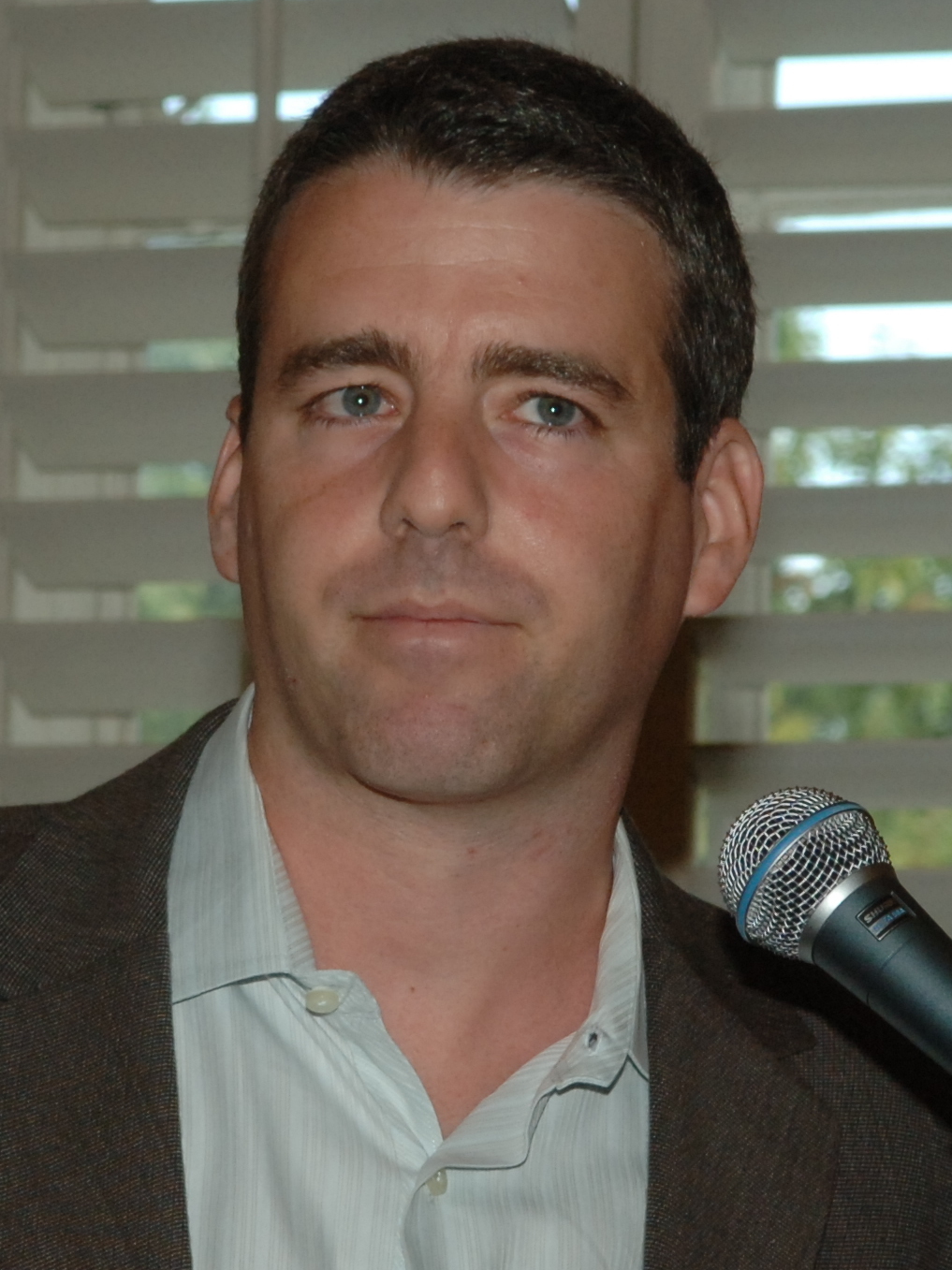
Michael Grunwald
American journalist and author
13
APPEARANCES
12
PODCASTS
Oct 27, 2026


Michael GrunwaldGUEST
Look, agriculture, there are so many farmers who are doing their best to be good stewards of the land, but collectively, you're stewarding a mess.
14 MINS LATER


Michael GrunwaldGUEST
The first lab-grown burger was unveiled in 2013, and it cost $330,000 to manufacture in the lab.
Michael GrunwaldGUEST
Today, this stuff is just getting to market and it's clearly still going to be a premium product.
Michael GrunwaldGUEST
But until it's as cheap as the chicken or beef that you can get at the meat counter today, it's going to be very hard to make a case for it because most people aren't interested in eating something just because it's 90% less land use or 100% less animal slaughter.
14 MINS LATER

Michael GrunwaldGUEST
Three-quarters of our agricultural land is either pasture or it's growing crops that we feed to animals before we eat them.
Michael GrunwaldGUEST
Um, so yes, so we have to eat less meat, and also on the demand side, we need to waste less food, right? Because we waste about a quarter of our food.
Michael GrunwaldGUEST
[laughs] But then, as you said, you know, this isn't just gonna be s- ... solved on the demand side, and we are going to have to make more food with less land.
7 MINS LATER

Michael GrunwaldGUEST
You know, I wrote about dozens of pretty promising solutions in this book, and none of them really have any traction, at least not yet.
Michael GrunwaldGUEST
You know, in many ways, we have not solved the fossil fuel problem, but we do know how to solve it, right? We need to electrify the global economy and run it on clean electricity.
Michael GrunwaldGUEST
And we've made some progress there, right? We're having this incredible clean energy revolution.
Michael GrunwaldGUEST
Where 90% of the new power plants built in the world last year were wind or solar or some other zero-emissions technology.
Ariana BrociousHOST
And so rotational grazing helps them move around in a way that other animals and other livestock do where they make better use of the plants


Michael GrunwaldGUEST
I would just say that those of us who do care about government, I mean, Ted, you're probably right about what the Trump people are probably trying to do, and they're trying to make Snap look bad.
Michael GrunwaldGUEST
But another thing that makes Snap look bad is this idea that, you know, sort of poor people are spending all our money on crap, right? um in the same way that like those of us who have real concerns about about farm subsidies you know we hate the idea that we're just throwing money at rich farmers to uh you know to to grow very few strings attached yeah exactly and we're saying like hey you know there should like if we're going to give 20 billion dollars a year to uh you know to some of the wealthiest you know people in rural america um you know maybe we should attach some strings we should have some conditions some environmental conditions um all you know some Economic conditions.
Michael GrunwaldGUEST
But I do think that those of us who believe in government should want to, you know, setting aside what the Trump people are doing, if you want to have a program to help low-income people afford food, you should try to make it as good a program as possible that works well and that also is something that people are going to be proud of and not pissed off about.
Michael GrunwaldGUEST
So I do think that, you know, this is one area where it's like, huh, it is a little bit hard to justify, you know, whether or not you think sugar is poison.
20 MINS LATER

Michael GrunwaldGUEST
Three-quarters of our agricultural land is either pasture or it's growing crops that we feed to animals before we eat them.
Michael GrunwaldGUEST
Um, so yes, so we have to eat less meat, and also on the demand side, we need to waste less food, right? Because we waste about a quarter of our food.
Michael GrunwaldGUEST
Uh [laughs] but then as you said, you know, this isn't just gonna be s- solved on the demand side, and we are going to have to make more food with less land, and that means we are gonna have to increase our yields.
11 MINS LATER

Amy ScottHOST
Michael says in the US, we get about 3% of our calories from beef, but it uses about half of our agricultural land.
Michael GrunwaldGUEST
It's just this very simple notion that basically the animals that we eat are using an awful lot of the earth.
Michael GrunwaldGUEST
(laughs) Um, and it's- it's one of those things that once you see it, you can't unsee it, right? We- if you ever take a cross-country flight and you see all those squares and circles out the window, I mean, you can tell that there's a lot of agriculture out there, but there is a lot of agriculture out there, (laughs) right? It's now two of every five acres on earth.There's just not going to be room for the forests and wetlands that store so much of the carbon that's stabilizing the climate.
Michael GrunwaldGUEST
You know, even if we stopped using fossil fuels tomorrow, um, just through deforestation from the expansion of agriculture, we're on track to blow through all of our climate targets by 2050.
Michael GrunwaldGUEST
Um, so in many ways, the, the energy problem, it's a really big problem, but we kind of know what to do with it, do about it, right? We just need to electrify the global economy and run it on clean electricity, right? Simple, right? (laughs)
Amy ScottHOST
And here you are telling me that they're not, or at least they're not as good as we thought they were.
Michael GrunwaldGUEST
The fact is that the real environmental disaster of agriculture was the initial transformation of nature into those nice rustic farms.

Michael GrunwaldGUEST
There was that moment in 2019 where Beyond Meat had the biggest popping IPO of the 21st century, and its stock went to $250 a share, and it was worth a third as much as Tyson Foods.
Amy ScottHOST
People were so sure that these meat alternatives might upend the whole industry, but then came the bust.
Michael GrunwaldGUEST
Beyond went from $250 a share to $2, and all of the investment dried up, and now people have decided that was just a fad, a dumb idea, how could we even think of taking on this trillion dollar industry? And I do think there's some discomfort with the idea that food and agriculture should be somehow tied to technology.
Michael GrunwaldGUEST
Ultimately, I think these things go in cycles, and venture capitalists tend to follow the herd.


Michael GrunwaldGUEST
... um, which is kind of the convening for all the different kinds of fake meats and fake milks.
Michael GrunwaldGUEST
And it was right after Beyond went public, and the exuberance was just off the charts.
Michael GrunwaldGUEST
There were kind of serious conversations about whether we're gonna get rid of the entire $1.5 trillion meat industry in-
8 MINS LATER
Michael GrunwaldGUEST
(laughs) And we haven't come up with a better way to do it, and-and, you know, we should appreciate that our farmers, they do, they do hard work, they, they, you know, the, you know, 0.5% of us who farm make it possible for the other 99.5% of us to have cool shows and write books about the problems with agriculture-


Jonathan CohnHOST
... who don't know who Michael Pollan is, tell people who Michael Pollan is, so.
Michael GrunwaldGUEST
Um, he's a, he write, he's a beautiful writer who, who essentially is sort of calling for kind of old-fashioned farms, like old McDonald, where, uh, you know, without all these chemicals, without these terrible feed lots.
11 MINS LATER


Michael GrunwaldGUEST
I mean, the earth is becoming an animal farm, right? I mean, I talked about how, you know, two of every five acres of, uh, of, of the, of the planet are now, are now agricultural.
Michael GrunwaldGUEST
And if you include all the crops that we feed to animals, really, like, 3/4 of our agricultural land are basically to, you know, to provide stuff for animals to eat before we eat them.
Michael GrunwaldGUEST
Um, so, you know, again, we're eating 350 million tons of meat every year, and, uh, and it would be really exciting to have, to be able to keep doing that without having such a dramatic impact on the planet.


Stephen LaceyHOST
So, can you talk about, like, some of the feel-good agricultural solutions a bit deeper and w- why they have caught on and why people think that they are a solution, and what the actual reality is?
Michael GrunwaldGUEST
What, what I would say is I try not to be prescriptive about how people should farm.
Michael GrunwaldGUEST
Um, you know, the specific practices, uh, you know, whether we should be regenerative or industrial.
Michael GrunwaldGUEST
Um, but I am, I do think it's really important that it needs to be productive and efficient and high yield, um, because otherwise, we're gonna eat a lot more of the Earth.
Michael GrunwaldGUEST
Right now, we're on track to deforest another dozen California's worth of land, uh, to feed, you know, nearly 10 billion people.

Jigar ShahHOST
I mean, the other piece of this, obviously, was in the first Trump administration, you had this trillion trees effort that people were kind of, you know, sort of backing, right? And so, like, you know, how does this work not just from a technology standpoint, but from a politics standpoint?


Michael GrunwaldGUEST
We're essentially kind of outsourcing our deforestation, right? 'Cause we already, you know, Indiana used to be 85% forest, and, uh, you know, we already tore down our Amazon.
Michael GrunwaldGUEST
Um, but it's true, and right now you hear a lot from both on the left from the kind of Bernie Sanders and, uh, you know, Cory Booker types.
Michael GrunwaldGUEST
But also some on the right from, uh, from Joe Rogan or, uh, or Robert Kennedy Jr., this idea that, "Oh, well, we just need these kind of twee organic farms with no chemicals," um, and, uh, and there are some nice things about that.
Michael GrunwaldGUEST
But if you're making less food per acre, you're gonna need a lot more acres to make food, and that's essentially gonna eat more of the Earth.