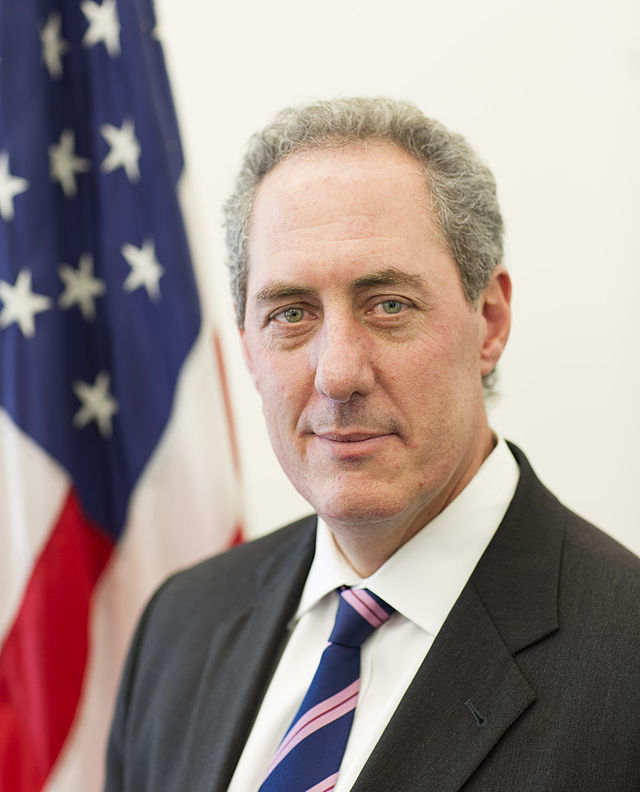
Michael Froman
Lawyer and former United States Trade Representative
26
APPEARANCES
19
PODCASTS
Sep 25, 2026


David WestinHOST
If things keep going the way they go right now, where do we end up? Whether it's US or Europe, what happens to that imbalance? What response can the US or Europe have to it?

Michael FromanGUEST
We put tariffs up on, on Chinese, uh, imports, and as I said, it has reduced those imports to a certain degree, although China itself is not finding any difficulty finding other markets.
Michael FromanGUEST
Europe ideologically, in part because of the whole European Union integration of, uh, ideology, they are more committed, at least rhetorically, to free trade, so it's harder for them to be protectionist in the same way that the US, uh, has become protectionist, but they are heading in that direction as they see their auto sector and other key parts of their manufacturing sector beginning to get, uh, beginning to get hollowed out.
Michael FromanGUEST
I think the real challenge is, is that it was one thing when China was half the size as it is now, exporting its way, ex- exporting excess capacity to the rest of the world, and exporting at a rate, uh, two or three times the, the rate of, of global growth.

Michael FromanGUEST
No, there was a lot more pageantry than, than substance, at least from the outside.
Michael FromanGUEST
Uh, and this, as you said, it's a lost opportunity because there's really nothing more valuable than a leader's time.
Michael FromanGUEST
And when you get leaders together like this, it's a, a real opportunity to try and address the major outstanding issues between them.
Michael FromanGUEST
Uh, instead, on the trade side, they extended the, the tariff truce for, for a couple more months, but didn't really deal with the underlying issues, which is China's excess capacity, and they're exporting, uh, their way towards, uh, growth at the expense of the rest of, of the world.
Michael FromanGUEST
Um, on Taiwan, it's unclear that there was, uh, any, any movement on either side.
Michael FromanGUEST
That's probably a good thing since China was pressing the president to come out more strongly against Taiwanese independence.

Jonathan LemireHOST
Which seems to me, for whatever effort, when he's in the room with one of these guys, he's just sort of awed and, and doesn't, like, try to use the bully pulpit of the presidency to push for American values or security.

Michael FromanGUEST
There's a big emphasis on pageantry, including the president going to Joint Base Andrews yesterday to welcome President Xi himself, the flyover, et cetera.
Michael FromanGUEST
In terms of expectations of outcomes, I think Secretary Besson has already announced that there will be a short extension of the trade truce for a couple of months beyond November.


Michael FromanGUEST
Well, look, we have a lot of strengths in our economy, uh, clearly, and we're, uh, we're, we're growing.
Michael FromanGUEST
Uh, from a technological perspective on AI, we are still, uh, very much, uh, i- in, in the lead, at least in terms of, of innovation.


Melissa LeeHOST
Michael, the president talked about, uh, you know, bombing or attacking, uh, Kharg, uh, which would be the oil facilities in Iran, and I'm wondering if that changes the equation, if you actually sort of, you know, k- knock them out at the knees in terms of their ability to even produce, uh, crude.
Michael FromanGUEST
Well, there are a lot of things the US could do to really shut in oil production in Iran, including, uh, maintaining the blockade, which has now been, been lifted.
Michael FromanGUEST
Uh, over a period of t- they would have to shut down and shut in, uh, some of that production, and as you know, that gets, that's expensive and takes time to, to reopen.
Michael FromanGUEST
Um, attacking infrastructure as well, it takes time to rebuild that infrastructure.
Michael FromanGUEST
I think right now a lot of the countries in the region are looking to find ways to get their products out of the region without having to rely on the straits, including building more pipelines and finding other ways of getting products out of the region.
Michael FromanGUEST
And the buyers are looking to diversify so that they're not so reliant on product coming out of there, uh, uh, out of there as well.
Michael FromanGUEST
Uh, but, you know, the most likely case here is that we, the issues don't get resolved in the, in the near term, um, and that we're likely to see escalation and de-escalation.
Mike SantoliHOST
Do you think what they're actually playing for is just, I, I guess an acknowledgement that they do, uh, and can assert control over the strait?
Mike SantoliHOST
Um, I, I guess, uh, not too unusual perhaps for each side to accentuate different priorities or interpretations of what's happening, but how does this all fit together with, I guess, what process we're in? Is it sort of managed disengagement between the US and China or, or whatever else?
Michael FromanGUEST
Well, the, the Chinese leader laid out a, a pl- a, a phrase around a constructive China-US relationship of strategic stability, and it seems like strategic stability is what, uh, he is certainly seeking and what President Trump is, is, is seems to be seeking, in terms of not dealing with a lot of the major underlying conflictual issues, but trying to just get through the next year or two with relatively détente, relative stability between the two powers.
Michael FromanGUEST
Uh, as, as you're, uh, as Eamon mentioned, uh, Taiwan was raised to a, a higher level rhetorically by Xi, who, who warned about collision and po- potential conflict with the US if the US mishandles, uh, the relationship.
Michael FromanGUEST
Uh, there were some, um, uh, modest sales of, of airplanes and soybeans and energy.
Michael FromanGUEST
Uh, but the underlying issues in terms of, uh, the, the conflicts between the United States and China over economic imbalances, technology, competition, um, uh, the South China Sea, the nuclear program, North Korea, et cetera, those still remain very much, uh, unaddressed.
Melissa LeeHOST
Um, do you think President Xi sees that this is the ultimate card that they have to play? That having a, a chokehold on physical AI for all the players around the world is the ultimate position that he would want to be in?
Michael FromanGUEST
Well, I, I think he has made clear for some time that the Taiwan issue was paramount, of paramount importance, uh, to China and to him personally, and that he wanted to r- resolve the issue, including what he calls the rejuvenation of the Chinese nation, um, on his watch, during his time as, as leader.


Michael FromanGUEST
The alternative narrative is, uh, you know, they had a, um, a senior-level envoy in Caracas meeting with Maduro 24 hours before we went in with a, uh, extremely effective, uh, plan that used, uh, hundreds of planes, um, uh, uh, special forces, electronic warfare, cyber attacks, and, you know, managed to, to, to, to get Maduro out without any US casualties, uh, either to equipment or, or to, or to the, the troops them- themselves.
Michael FromanGUEST
Um, and their intelligence didn't seem to pick up on any of this, otherwise their envoy wouldn't have been in Caracas 24 hours before.
Michael FromanGUEST
And I think they were probably caught off guard at just how effective the US military and intelligence capabilities are.
Michael FromanGUEST
Now, while we are not, you know, while we are still bogged down there, or we are s- we have not completed that operation, you know, the, the 12-day war, the targeting of, of the nuclear facilities with that precision that was done, the burying of the, the centrifuges and the uranium and all of that, that i- is an amazing military achievement.
28 MINS LATER


David FaberHOST
Uh, Michael, just give me your take right now on where things stand, particularly again as we also get reports that the Iranians may run out of places to store oil that they are not able to bring to market.
Michael FromanGUEST
Well, there's a lot of uncertainty about how much excess storage they have left and whether they can put out, uh, some more floating storage.
Michael FromanGUEST
At some point, whether it's a matter of weeks or a couple of months, they may have to shut down wells and shut in production, and that can take a very long time to get restarted, and for some of their older wells may not happen, uh, at all.
Michael FromanGUEST
And so I think the US is counting that time is on its side, that, uh, as long as it provides pressure on Iran, it will ultimately run out of storage and see its oil production go down.
Michael FromanGUEST
Uh, but on the other hand, to maintain the kind of blockade that we have, I think Iran is counting that it has time on its side because it's gonna require a major naval presence for the US for a long time.
Michael FromanGUEST
Right now we have three, uh, carrier strike groups there, which is more than we've ever had before, and the question is how long can we s- stay in that kind of presence.


speaker_9UNKNOWN
So given that you've participated in con- in talks like this, w- how do you handicap what the outcome of this even looks like?
Michael FromanGUEST
Yeah, look, I think the positive element of it is it was basically a, a, a, a, it's just a ceasefire announcement, an agreement to stop, uh, bombing of some sort, stop the, the, the killing, um, and to create space for negotiation of the real underlying issues.
Michael FromanGUEST
The real underlying issues remain, you know, very difficult to resolve because the Venn diagram between what the US is insisting on and what the Iranians are insisting on, there's almost no overlap.
Michael FromanGUEST
And the question is whether they can use this two-week period or whatever period it's extended to over time to, to get to those more difficult issues.
Michael FromanGUEST
It could end up just being a stalemate where there isn't any overall agreement, where, uh, the US agrees to, to stop the military action, uh, Iran agrees to, to open the straits, hopefully without, uh, uh, limiting by the, the, the Iranian military how many ships can go through, and charging a toll, and making it a, a...
Michael FromanGUEST
Uh, creating more friction in the global trading system and the global energy system.
speaker_13UNKNOWN
if it's, if it's handled right from here on out, or, or no?

43:19

Number one, do you agree with any of that? And then number two, how would you help Israel in this situation?
Mike FromanGUEST
And, you know, the Israel's reputation has over the last few years, uh, over the course of the Gaza War because of the way it was prosecuted, but also because of, of, of the reporting on it and the protests and, and all that, I think, uh, has really led to, as you say, an isolation of Israel internationally and a decline of the coalition of support that has traditionally been there for it, uh, domestically.
Mike FromanGUEST
And I think that it's a tragic situation because, you know, Israel has been a very important partner of the United States in the region, very effective in going after Iran's proxies, Hamas, Hezbollah, uh, the Houthis, uh, and others.
Mike FromanGUEST
Uh, very important in terms of stabilizing the situation in, uh, Syria, and of course, very important with regard to Iran itself in terms of, of, of attacking its nuclear capabilities and setting that back in a substantial way.
Mike FromanGUEST
And, and while a lot of the neighbors in the region, uh, will, will say critical things, I think they are secretly quite supportive or behind the scenes quite supportive-
49:31
Here is everything." Would you have made the decision based on everything that we know today, hindsight not being 2020, hindsight being 2010, would you make the decision?
Michael FromanGUEST
think?Well, look, I, I think, uh, there are military, there're diplomatic, and there're economic elements o- of- of the current conflict.
Michael FromanGUEST
Um, we had Rich Colby, the senior Pentagon, uh, official here at the Council on Foreign Relations.
Michael FromanGUEST
He laid out what the military objectives were, which were to very much degrade the military, the missile capabilities of Iran, um, uh, to sink their navy and make sure that they couldn't defend their nuclear program any further.
Michael FromanGUEST
Now, however, ch- L- Iran has basically, uh, waged war against the global economy by closing the Strait of Hormuz, and we are now fighting to reestablish an opening of the Strait of Hormuz, which was of course open before this conflict began.

Sara EisenHOST
I mean, as the administration has laid out, wh- where are they at this point in, in doing that so that Iran can't threaten the world and the West with, you know, heavy weapons and terror as it has been?
Sara EisenHOST
What, what are you hearing? How, how do you think this resolves, and are we in some sort of final chapter here?
Michael FromanGUEST
Well, on one hand, a lot of the military objectives have been, um, achieved.
Michael FromanGUEST
Uh, Prime Minister Netanyahu said yesterday that, uh, Iran's capability to enrich uranium, uh, or to build, uh, new missiles have been largely destroyed.
Michael FromanGUEST
This now all becomes really about Iran's retaliation and about the Strait of Hormuz and, um, whether we can get it reopened again, um, and, and, and reduce the, the pressure on the global economy from these increased oil prices.
Michael FromanGUEST
And so Iran's attack on, on, uh, Kuwaiti oil refinery, on, uh, on Qatari, uh, uh, uh, gas hub, all are putting pressure on the global economy.
Michael FromanGUEST
And now the, the focus is really very much focused on, on that, on energy on the strait, as opposed to-

Carl QuintanillaHOST
So where does that all direct us to, uh, in terms of kind of getting to, to some kind of escalate to deescalate moment?
Michael FromanGUEST
So there's this 450 kilograms of enriched uranium, 60% enriched uranium, which is not necessarily enough to be put on a missile and sent, not enriched enough to that level, but it can still make several bombs that could be used against its neighbors, against Israel, uh, and, and others.
Michael FromanGUEST
And so, uh, if the president wants to make sure that Iran can never possess a nuclear weapon, it's got to deal with, we've got to deal with those, uh, 450 kilograms of enriched uranium.
Michael FromanGUEST
Um, and to get it out, it would probably take boots on the ground of some sort or another, whether it's special forces and, and other forces, something much more significant than we saw in Venezuela and something much more significant than we're seeing now in terms of not just attacks from the air, but attacks on the ground as well.
Melissa LeeHOST
From Iran's standpoint, Michael, do you think that they have seen sort of the threshold of pain that the administration is willing to endure in this conflict, um, seeing that the administration's already looking for ways to, uh, ease higher oil prices, which haven't, according to a lot of oil analysts, actually gone as high as maybe one would think given what is going on, uh, in the Strait of Hormuz and, and what is going on with, with production being shut in?
Michael FromanGUEST
Now they're back down to about, uh, 90, which is still about a 45% increase over where they were at the beginning of the year, but down from, uh, from the peak.

Katherine RampellHOST
[laughing] Um, why don't we start with your just giving me your top line reaction to the court's decision today?
Mike FromanGUEST
So first, I, I think, um, uh, it's important to just note that the court made a decision, and, um, by, uh, uh, a majority of 6-3, that the court provided, I thought, important oversight of the administration.
Mike FromanGUEST
And regardless of what it thinks about the substance, at a time when a lot of people are questioning institutions and whether the checks and balances of our system are working, this is an example of, of checks and balances working as the, the founders intended.
Mike FromanGUEST
On the, on the decision itself, uh, what was significant about it is a very clear decision that IEEPA, the International Economic Emer- Emergency Economic, uh, Powers Act, uh, cannot be used to impose tariffs.
Mike FromanGUEST
Um, and the, the court looked to the fact that it had never been used that way, that there's no mention of the word tariffs.
Mike FromanGUEST
The taxing power lies with the Congress, and that unless the Congress specifically, um, uh, gives the executive that authority, as they have in a number of other cases, but not in IEEPA, then it- uh, then the, the president can't do it under IEEPA, and that became quite, um, that became quite clear.
10 MINS LATER
Katherine RampellHOST
And, uh, without this weaponry and without the ability to trust any, even a handshake deal with this president, why would they con- why would they continue to work with the president?

1:40

I'm curious, though, from your perspective, given your experience in trade for so many years, what did you take away from today's events? What were your big takeaways?
Michael FromanGUEST
Well, I think first and foremost, the Supreme Court, by 6-3 majority, determined that IEPA, that International Economic Emergency Powers Act, could not be used to impose tariffs.
Michael FromanGUEST
And the reason why the president liked to use IEPA is that it really doesn't require any process.
Michael FromanGUEST
But the Supreme Court made it clear that It doesn't mention the word tariffs.
12 MINS LATER


Ian BremmerHOST
Again, if you were a European leader today, if you were a Canadian leader today, would you see the United States as an adversary?
Michael FromanGUEST
Look, I think Prime Minister Carney was right to call it a rupture, because it is a big disruption of everything we have known for the last 80 years, purposefully, to raise questions that heretofore have been closed, uh, that we thought were solved, and now we have to wrestle with those questions again.
Michael FromanGUEST
The, the French, the Europeans may not like everything that, that this administration is doing, but their national interests, including their security interests, are still quite well-aligned with the United States.
Michael FromanGUEST
And I think the fact that just last week there was a ministerial in Washington of countries coming together to talk about critical minerals, just shows how countries are willing to hold their nose, come to Washington, work with the United States, because it's in their national interest to do so.
20 MINS LATER

Mika BrzezinskiHOST
What did you make of, uh, Rubio's testimony yesterday, and also that interaction with Rand Paul, uh, about, you know, notifying Congress, but also whether or not this actually is an act of war?
Mike FromanGUEST
Well, I imagine the answer to Senator, Senator Paul's, uh, question would be, "Of course, we would consider it to be an act of, of war." And there's, look, a long-standing debate between Congress and the executive about when War Powers Act should be invoked.
Mike FromanGUEST
Uh, as I recall, when President George H.W. Bush, uh, took the action against Noriega, uh, there, too, they did not call it an act of war, and they did not go to Congress for advanced, uh, approval.
Mike FromanGUEST
But I thought what was interesting about Secretary Rubio's testimony yesterday was really the strategy he laid out for Venezuela, what has been done over the first few weeks since the, uh, since the attack, and what the pathway is going forward.
Mike FromanGUEST
And there are a lot of open questions about, about the future of the oil industry there, about the future of democracy and, and elections there, and what lessons the administration might be taking from Venezuela into other domains, including, uh, halfway across the world in Iran.

Steve RattnerCORRESPONDENT
What would be the outcome of strikes? Would this regime actually be in danger?
Mike FromanGUEST
Well, I think it's very complicated, and much more complicated perhaps than the, than the Venezuela, uh, action.
Mike FromanGUEST
I think of, of, um, taking the armada to, uh, offshore, uh, Iran is to put pressure on Iran, first and foremost, to come to the table to negotiate around nuclear weapons, uh, nuclear, um, uh, materials, enrichment, uh, of nuclear, uh, materials, the ballistic missile program, and the support for the proxies.


Kristen WelkerHOST
Hoping that help is on the way." What do you think an effective response would look like at this point?
Mike FromanGUEST
Well, first of all, we should note that we don't have a lot of good, direct information about what's going on on the ground there.
Mike FromanGUEST
The news, there are very few journalists on the ground, the internet is down, and so, uh, we're all sort of looking for, for more accurate, uh, information.
Mike FromanGUEST
Uh, it's possible that the regime canceled some scheduled public hangings, but, uh, there could well be killings still going on on the street of protesters, as, as Senator Graham, uh, said.
Mike FromanGUEST
Look, I think in terms of the response, you know, the president has said, "We're locked and loaded, and help is on its way." That's pretty far out there on a limb.
Mike FromanGUEST
Now, if his, uh, the quid pro quo is no public executions, and therefore I won't do anything, then he can say he's achieved victory.
Kristen WelkerHOST
In other words, regime change in Iran is infinitely more complicated than it was in Venezuela, and Venezuela was obviously remarkably complicated.

Mike FromanGUEST
Well, as you said, he's decapitated the Venezuelan regime, but he's left the regime largely in place, including the vice president, who's now the acting president, the defense minister, the interior minister, and the whole corrupt criminal system that preexisted.
Mike FromanGUEST
Getting the oil that they're exporting sent to the United States is probably the easy part.
Mike FromanGUEST
That can be done by our Navy, by interdicting tankers, as we've been doing, and, and, uh, and, and controlling it that way.
Mike FromanGUEST
Uh, getting the regime to change, though, without changing the leadership is a much more difficult, is a much more difficult operation.
10 MINS LATER


Mike FromanGUEST
... like, the President has laid out what his national security strategy is, and he was pretty clear that the Western Hemisphere was gonna be number one on the list.
Mike FromanGUEST
And links it back to Homeland Security, to the border, to issues around migration and drugs, and ostensibly was going after, first the boats, uh, off the coast of Venezuela, and then after Maduro, because he was a, an indicted, uh, criminal for trafficking drugs to the United States.
Mike FromanGUEST
Um, of course, once he took Maduro, uh, the, the narrative very much shifted to the oil, and that we wanted the oil for ourselves.
Mike FromanGUEST
We're actually an oil, uh, exporter, uh, and, and the companies that have been involved in, uh, exploring oil in places like Venezuela, um, their, their calculation has somewhat changed in that they've got a lot of other options, whether it's investing in the United States or looking into places that may have a greater degree of political stability or predictability, like Guyana or, or elsewhere.
Michael FromanGUEST
Well, first, I don't think that, uh, there's any great tears to be shed over, over Maduro, who was a, a ruthless leader and, and alleged to be quite corrupt and criminal in his activity.
Michael FromanGUEST
You know, however, going in and decapitating a government certainly seemed at odds with the president's, uh, initial views on regime change and getting involved in the internal affairs of other countries.
Michael FromanGUEST
Um, we now have a situation where we've sort of done regime change without, at least so far, changing the regime, and that we've got the rest of the Maduro government, uh, including the defense minister, the interior minister, the vice president, who's now acting president, very much maintaining control.
Michael FromanGUEST
You know, I think from an international perspective, as you said, uh, this hearkens back to a period of time when, when the US would just declare that it, it was gonna use force or other means to, to expand or to secure access to resources.

Scott DetrowHOST
I mean, you're speaking about this very rationally and strategically, but don't we have a lot of evidence at this point that a lot of the decision-making is just, "I would like to add to the United States, I would like to leave my mark in one way or another" with, with the Trump White House and President Trump specifically? Like, it seems like he's talked out loud about that being kind of what, w- part of the reasons he's taking these actions.
Michael FromanGUEST
Well, look, uh, a little bit like, uh, the, the comment about running Venezuela but basically doing it, or leaving the, the current government in, in place and really focusing on a few issues that the US cares a lot about, like oil, not so much on democracy or on economic reform in Venezuela, et cetera, I, I think one could take that same approach to Greenland.


Michael FromanGUEST
... over the last few decades, uh, does have ramifications outside of China, has ramifications for the rest of the world, for manufacturing in the rest of the world, for, for other factors.
Michael FromanGUEST
If, if China gets to where it's going because it steals intellectual property, um, because it produces over capacity, so it produce, it creates far more factories than it needs to for the reasonable demand for a product in order to drive other producers out of the market in other countries, that has an adverse effect on us.
Michael FromanGUEST
If they subsidize state-owned enterprises, um, or even private enterprises in such a way that it creates this unlevel playing field, then it affects the rest of us as well.
Michael FromanGUEST
And I think that's what's really happened, is that, uh, China, whether it's the state-owned enterprises, subsidization, intellectual property rights theft, government intervention into the private sector, all towards positioning China as the leading manufacturer, but it has come at the expense of other industrialized countries, in some cases, other emerging economies.
9 MINS LATER


Michael FromanGUEST
Um, I think, uh, when the Obama administration came in, for example, there was a big multilateral negotiation going on under the World Trade Organization called the Doha Round, and it was designated to be the development round.
Michael FromanGUEST
And if you go back and read the documents of the Doha Round, it's really quite astounding because it, it was basically saying countries like China shouldn't be asked to do, uh, as much as countries like the United States and, and the US, Europe, the other developed countries should have strong disciplines on their behavior, but developing countries, and China was very much defined as a developing country, should have much freer rein.
Michael FromanGUEST
In 2009 as we're looking at what China had become in over a relatively short period of time over the previous, uh, eight or nine years, that just was not palatable.
Michael FromanGUEST
You couldn't imagine locking that in and the, and the Obama administration...
29 MINS LATER

Dan Kurtz-PhelanHOST
You know, if they do succeed, if they do succeed in building a n- a new system, what would that vision look like? I mean, can you imagine a, a reasonably, uh, positive scenario that would come out of that?

Lynne ThomanHOST
If you're a family buying a car or food, clothes, or appliances, what's the hidden cost of tariffs that they might not realize that they're already paying?
Mike FromanGUEST
It's a great question because as President Trump has increased the average tariff rate facing u- imports into the United States from about 2.5% to about 17%, that cost has to be passed on somehow, and we're waiting to see exactly how it's passed on.
Mike FromanGUEST
To some degree, it might be eaten by the exporters, by the foreign companies that are exporting things to the United States by lowering their prices.
Mike FromanGUEST
So if Walmart has a lot of negotiating power, it can turn to its suppliers and say, "We'll only take things at 10 or 15% discount to take into account some of the costs of the tariffs." That may take up some of it.
Mike FromanGUEST
The second part is that companies that import, whether they're retailers or whether they're manufacturers who import inputs into the manufacturing process, they may have to eat some of that cost as well.
Mike FromanGUEST
That should show up in the earnings of companies and ultimately in the stock market.
Mike FromanGUEST
So if we see companies beginning to report lower earnings because of tariffs, that will be part of that.
6 MINS LATER
Lynne ThomanHOST
Can you talk very briefly about that system and what the biggest benefits have been for American companies and workers and also for other countries?

Michael FromanGUEST
Well, the challenge we have now is, is the US is playing by its own set of rules, and frankly China has been playing by its own set of rules.
Michael FromanGUEST
And so you have the two largest economies in the world who aren't really following the rules-based system, and that's why I think the system is, is basically dead.
Michael FromanGUEST
And so the, the question is can we come together, coalitions of the willing, coalitions of the ambitious, countries that come together with common interests, and define a new set of rules around issues that they can agree on? For some countries, that might mean opening their economy, free trade agreements.
Michael FromanGUEST
For other countries like the United States, we have a lot of interest in trying to bring other countries together around our view of competition with China, our view on technology, our view on the digital economy.
Michael FromanGUEST
Can we play a leadership role in setting the rules of the road for, for those issues and begin to create rules even in the absence of a fully multilateral rules-based system?

Ari ShapiroHOST
When you look at the state of the world right now, what do you think is actually likely to happen?
Scroll for more appearances