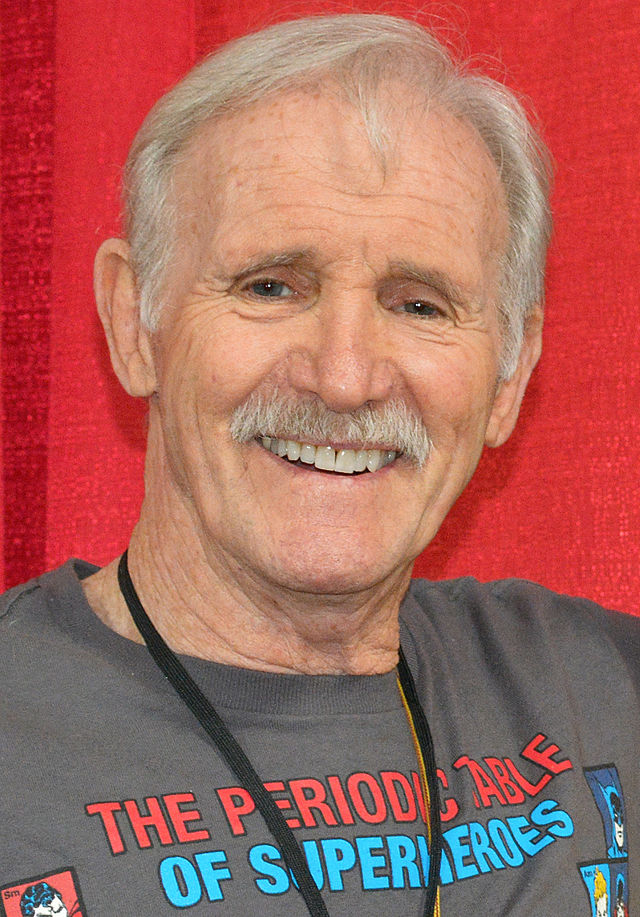
Michael Bell
American actor
17
APPEARANCES
15
PODCASTS
Sep 17, 2026


James MarkhamHOST
Well, that's the kind of great physician that we have, and people that have chronic pain, I think that's a very important part of the treatment regimen.

Michael BellGUEST
Last time, Dr. Markham, we went over what chronic pain is, some of the diagnosis, and also some of the treatments for chronic pain.
Michael BellGUEST
Where we didn't get to go is into some of the natural remedies for chronic pain.
Michael BellGUEST
I'm sure there's a lot of listeners who would like to know if there's any way or any natural remedies that are out there.
James MarkhamHOST
And Michael, let's go ahead and start answering some of these questions, because if one person has a question, lots of people have these questions.
Michael BellGUEST
We had call after call after call, people wanting to know about what they could do about their pain.
Michael BellGUEST
But actually, the first question that we have comes in and it says, what is chronic pain and how is it diagnosed? People want to know what is chronic pain and how is it treated? How do you know if you actually have chronic pain or just a normal pain?
18 MINS LATER
Michael BellGUEST
Before we get too much farther in here, let's move on to another type of chronic pain here, arthritis.
Michael BellGUEST
There's a lot of people out there probably listening right now that have arthritis.


Michael BellGUEST
And I was down on vacation in Panama City Beach down in 30A, which is like, I don't know if you've been to Panama City Beach, but I guess we will.
18 MINS LATER

Michael BellGUEST
So I think, l- like anything, I think it's one of those things you've gotta try and spend that time, um, looking at multiple partners.
Michael BellGUEST
Um, we were fairly early adopters, um, so there wasn't the choices that there are now.
Michael BellGUEST
Um, so w- we were lucky that we chose a really strong partner in Impel, um, on, on to the day one.
Michael BellGUEST
Um, but I think it's really important that you look at the models that are there.
Michael BellGUEST
Um, AI without guardrails is dangerous and, um, I think it's there to work with, um, and slowly build it into the business.

James BaggottHOST
And what about the negatives? Has there been any of those when it's come to deploying this technology?


Jo McCarrollPANELIST
Michael, what do you think of Creative New Zealand's plans to devolve some funding into the regions? Will that see an equalisation of some of these ratios that seem a bit askew?
Michael BellGUEST
So we were really excited to see that development because absolutely, if you're living and breathing, like speaking from Christchurch, if you're living and breathing Christchurch, if you've lived through the earthquakes, and you're turning up to things.
Michael BellGUEST
If you're going to all the arts organisations, you are going to be able to make more informed decisions about the city.
Michael BellGUEST
And a concern I've got for next year is that if they get it over the line next year, Well, they've locked up most of the funding for the next three years.


Michael BellGUEST
I mean, I didn't, I didn't read it to the fullest 'cause I know that those things change when you get on set.
Michael BellGUEST
And, and I, I really didn't know who was gonna be pl- other than our, our usual team of, of greats who were gonna be doing it.
56 MINS LATER

KyleHOST
You know, um, I don't think I
Michael BellGUEST
I understand childhood cancer is, doesn't have the numbers that other cancers have, you know, several hundred thousand, a couple hundred thousand women are diagnosed with breast cancer every year.
Michael BellGUEST
And when I say only, uh, 12,000 children are diagnosed with cancer every year.
14 MINS LATER
KyleHOST
It's come up now twice and wanted to shout them out too.

Michael BellGUEST
Yeah, so those that don't know who we are, what we do, we are a graphene producer.
Michael BellGUEST
So graphene is a nanomaterial, it's a carbonous type product, and you use it in other materials as an additive to enhance things like electrical conductivity, strength, abrasion resistance, fire retardancy, all those sorts of good things.
Michael BellGUEST
So we spent the first few years in existence of developing a factory in Western Australia to make graphene.

Andrew MusgraveHOST
So what's actually happening on the ground in that environment at the moment?
Michael BellGUEST
The optics in that shooting were very similar to the optics in my son's shooting.
Michael BellGUEST
You have four officers standing over somebody that's being subdued and lethal force was being used.
Michael BellGUEST
And the state statute requires them to render aid and they put them in handcuffs and it didn't seem like aid was there.

Libby CollinsHOST
What's the key here when you're saying it may have been justified, but not necessary?
Michael BellGUEST
The optics in that shooting were very similar to the optics in my son's shooting.
Michael BellGUEST
You have four officers standing over somebody that's being subdued, and lethal force was being used immediately, and it seemed like without remorse.
Michael BellGUEST
And the state statute requires them to render aid, and they put them in handcuffs, and it didn't seem like aid was there.

JonathanHOST
you yourself
Michael BellGUEST
Took the opportunity after getting elected onto the Assembly for the third time.
JonathanHOST
third term being elected, you've been working quite hard as part of that role around treaty.

Michael BellGUEST
So we have additive using graphene, and we've mainly done it based on what is happening in the United Kingdom.
Michael BellGUEST
We have a great partner there, Breeden Group, who controls about sort of 50% of the cement manufacturing within the United Kingdom.
Michael BellGUEST
And, you know, if we penetrate that market 100 percent, it might be worth 300, 350 million to us US dollars.

Steve DarlingHOST
Can you talk us through what it is, what it does and why it's useful for cement and concrete?

Owen RaskHOST
Is it a sim-- like, is there, is it a simple weighting? Like, how do you think about that?
Michael BellGUEST
So, um, they're weighted based on the expected returns that we have for each of those, um, companies.
Michael BellGUEST
So the higher the expected return, the higher the- Active position size will be.
Michael BellGUEST
So if we've got a company with a, a 10% expected return, for example, it will have a 1% active position in it, 15%, 1.5%.
13 MINS LATER
Owen RaskHOST
Um, can you talk to us about how you, how you see the, the kind of risk return or just even just the, the opportunity set of income versus capital growth? Maybe this is through the lens, Michael, of why would people choose that strategy over, say, the core strategy.

Michael BellGUEST
I think it's just a testament to the resilience that this team has shown so far this season.
Michael BellGUEST
You know, we conceded first in four out of our five games and today we took the fight to them.
Michael BellGUEST
So just that mentality that, you know, even though we may concede, we have the quality, we have the mentality and the players to go and score again.

Josh WestHOST
I know you're feeling pretty rough, but what's the message to your team and all the fans moving
Michael BellGUEST
forward? I just want to say thank you to all my fans that support HFC and the team.
Michael BellGUEST
You know, we have a meet and greet this Friday, you know, just making sure that they know about it so they come out and meet the players.


Eva O'NeillCORRESPONDENT
What's your sort of regime when you're aiming a horse towards the Royal Meeting?
Michael BellGUEST
So nothing really different with training, but you've probably had these races in mind for a while.
Michael BellGUEST
And I've always actually said training good horses is much easier than training bad horses because the programme is there for you and you know your targets, whereas with a bad horse, you're ducking and driving, trying to find the right race.
Michael BellGUEST
Nothing massively different, just keeping calm and, you know, trying to get them there in good shape on the day.


Michael BellGUEST
And, uh, and they said, um, "Okay, go ahead, Mike." And I go do the thing with butter Parkay, and the kids laugh, and it's okay.
Michael BellGUEST
But by the second and third take, the kids are going, "Ah." And it's terrible.
Michael BellGUEST
So the director doesn't know what to do, and I said, "Let me get under the table." I know this sounds gross, but I get under the table, and these two little patent leather feet are kicking.
Michael BellGUEST
And he goes, "Let's make Mommy breakfast." And they go, "Okay, make Mommy breakfast." And then lid goes, "Butter." And I went, "Cock-a-poo-poo." Well, they weren't expecting it-
21 MINS LATER
ChrisHOST
[laughs]
Michael BellGUEST
So I went inside, and I got, and I got my, uh, and I got my banana bread that I, that a friend had given me, and I took a slice and toasted it and came back in and ate it.


Michael BellGUEST
And I think that, you know, as educators, it educa- As you know, it's very easy to get caught up in the weeds of everything that, that, that's happening in the moment, but they really need to protect their spark more.
Michael BellGUEST
Um, this protec- you know, this profession, I mean, it, it consumes you and, if you let it.
Michael BellGUEST
But-Students deserve, I believe, to see someone who is still alive creatively, still curious, still experimenting, still becoming.
Michael BellGUEST
And the best teachers that I've ever known, they're all, you know, still learners and makers themselves.
Michael BellGUEST
I mean, they are people that wanna script confidence onto a child's blank pages, and maybe not give them a fairy tale ending, but maybe, uh, allow them to open the door to some meaning and, and some successes that they might not have experienced otherwise.
16 MINS LATER

Matt GrundlerHOST
I'm just curious, what, what's one thing that you've learned in your classroom as an educator, um, even as administrator, that you, you simply just couldn't learn from, you know, teacher classes or when you were becoming an educator?